
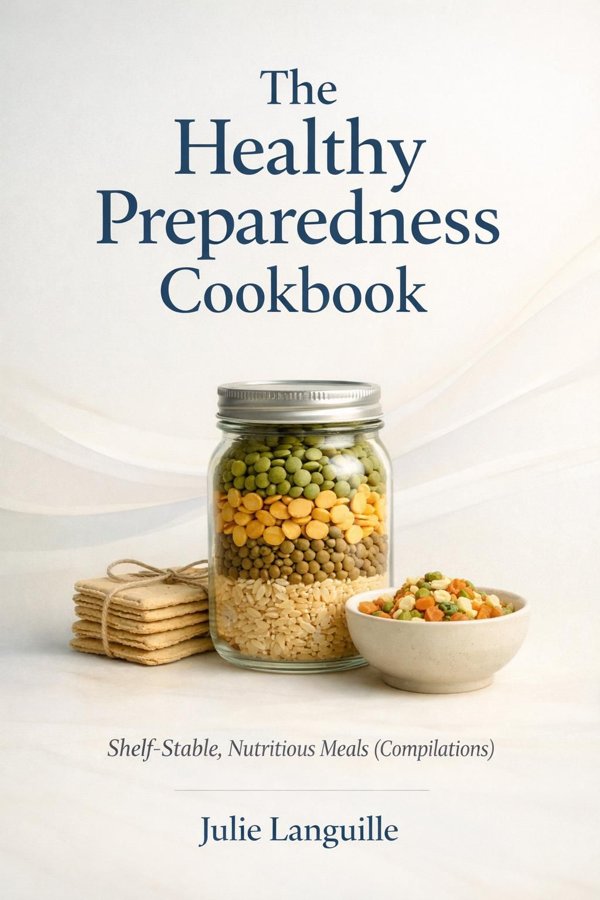
The Healthy Preparedness Cookbook: Shelf-Stable, Nutritious Meals (Compilations): Summary & Key Insights
 10 min8 chaptersAudio available
Key Takeaways from The Healthy Preparedness Cookbook: Shelf-Stable, Nutritious Meals (Compilations)
A resilient pantry is not built from panic; it is built from thoughtful care.
The smartest pantry foods do more than sit on a shelf; they actively support well-being.
Food preservation is not only a storage technique; it is a confidence-building skill.
A pantry is only as useful as the meals it can produce.
Monotony is one of the most underestimated threats in food preparedness.
What Is The Healthy Preparedness Cookbook: Shelf-Stable, Nutritious Meals (Compilations) About?
The Healthy Preparedness Cookbook: Shelf-Stable, Nutritious Meals (Compilations) by Julie Languille is a nutrition book spanning 6 pages. The Healthy Preparedness Cookbook: Shelf-Stable, Nutritious Meals by Julie Languille reframes emergency food storage as an act of everyday care rather than a last-minute survival tactic. Instead of focusing on bland staples or fear-driven stockpiling, the book shows readers how to build a pantry filled with practical, long-lasting ingredients that can become satisfying, balanced meals. It blends preparedness, nutrition, and home food preservation into a clear system for feeding yourself and your family well during disruptions, tight budgets, or simply busy seasons of life. What makes this book valuable is its insistence that stored food should still support health. Languille emphasizes protein, fiber, vitamins, variety, and meal planning, helping readers avoid the common trap of collecting calories without considering nourishment. She also brings a practical, grounded authority to the subject through her focus on food preservation, sustainable living, and self-reliance. Rather than overwhelming readers with extreme scenarios, she offers realistic strategies for choosing ingredients, storing them safely, rotating supplies, and turning pantry basics into comforting meals. The result is a guide that makes preparedness feel accessible, sensible, and deeply useful.
This FizzRead summary covers all 8 key chapters of The Healthy Preparedness Cookbook: Shelf-Stable, Nutritious Meals (Compilations) in approximately 10 minutes, distilling the most important ideas, arguments, and takeaways from Julie Languille's work. Also available as an audio summary and Key Quotes Podcast.
The Healthy Preparedness Cookbook: Shelf-Stable, Nutritious Meals (Compilations)
The Healthy Preparedness Cookbook: Shelf-Stable, Nutritious Meals by Julie Languille reframes emergency food storage as an act of everyday care rather than a last-minute survival tactic. Instead of focusing on bland staples or fear-driven stockpiling, the book shows readers how to build a pantry filled with practical, long-lasting ingredients that can become satisfying, balanced meals. It blends preparedness, nutrition, and home food preservation into a clear system for feeding yourself and your family well during disruptions, tight budgets, or simply busy seasons of life.
What makes this book valuable is its insistence that stored food should still support health. Languille emphasizes protein, fiber, vitamins, variety, and meal planning, helping readers avoid the common trap of collecting calories without considering nourishment. She also brings a practical, grounded authority to the subject through her focus on food preservation, sustainable living, and self-reliance. Rather than overwhelming readers with extreme scenarios, she offers realistic strategies for choosing ingredients, storing them safely, rotating supplies, and turning pantry basics into comforting meals. The result is a guide that makes preparedness feel accessible, sensible, and deeply useful.
Who Should Read The Healthy Preparedness Cookbook: Shelf-Stable, Nutritious Meals (Compilations)?
This book is perfect for anyone interested in nutrition and looking to gain actionable insights in a short read. Whether you're a student, professional, or lifelong learner, the key ideas from The Healthy Preparedness Cookbook: Shelf-Stable, Nutritious Meals (Compilations) by Julie Languille will help you think differently.
- ✓Readers who enjoy nutrition and want practical takeaways
- ✓Professionals looking to apply new ideas to their work and life
- ✓Anyone who wants the core insights of The Healthy Preparedness Cookbook: Shelf-Stable, Nutritious Meals (Compilations) in just 10 minutes
Want the full summary?
Get instant access to this book summary and 100K+ more with Fizz Moment.
Get Free SummaryAvailable on App Store • Free to download
Key Chapters
A resilient pantry is not built from panic; it is built from thoughtful care. One of the book’s foundational ideas is that preparedness should not be driven by anxiety or extreme thinking, but by the desire to keep yourself and others nourished under changing conditions. Julie Languille challenges the image of emergency food as joyless survival rations and replaces it with a healthier, more humane standard: food storage should support physical health, emotional comfort, and practical independence.
This idea matters because many people prepare in a way that prioritizes quantity over quality. They collect inexpensive calories, highly processed foods, or random canned goods without considering whether those ingredients can become balanced meals. Languille argues that real preparedness means storing food you can actually use, enjoy, and combine into recipes that meet everyday nutritional needs. In her view, preparedness is not separate from ordinary life. A well-stocked pantry serves during storms, job loss, supply interruptions, illness, tight schedules, and rising grocery prices.
The concept also broadens the purpose of self-reliance. Preparedness is not simply about enduring an emergency; it is about preserving routine, dignity, and health when routines are disrupted. A pantry with beans, grains, canned vegetables, dried fruit, healthy fats, and seasonings can support normal eating patterns even when fresh options are limited. It can also reduce stress because decision-making becomes easier when you already know what meals are possible.
A practical application is to think of your food storage as an extension of your weekly kitchen, not a separate bunker. Stock ingredients your household already likes, organize them by meal type, and ensure each shelf contributes to actual nourishment. Actionable takeaway: start your preparedness plan by asking, “Can I make balanced, comforting meals from this food?” If the answer is no, improve the quality of what you store.
The smartest pantry foods do more than sit on a shelf; they actively support well-being. Languille emphasizes that ingredient selection is the heart of healthy preparedness, because the nutritional quality of your stored food determines whether your pantry becomes a source of energy and resilience or merely a reserve of empty calories. The challenge is to select foods that are both shelf-stable and genuinely useful in balanced cooking.
She encourages readers to build around durable staples such as beans, lentils, rice, oats, pasta, canned fish, powdered milk, nuts, seeds, dehydrated vegetables, canned tomatoes, and long-lasting spices. These ingredients work because they offer flexibility. Beans and lentils provide protein and fiber, grains offer energy, canned proteins add convenience, and preserved produce helps maintain vitamin intake when fresh foods are unavailable. Rather than depending on novelty items or expensive specialty kits, the book promotes affordable foods that can be mixed and matched into many meals.
Another important point is variety. If all your storage consists of starches, your meals become nutritionally thin and psychologically tiring. Languille suggests balancing food categories so your pantry includes proteins, carbohydrates, fats, flavor boosters, and preserved fruits and vegetables. For example, a simple shelf-stable meal might combine brown rice, canned chicken, dried herbs, dehydrated peas, and olive oil for both calories and nourishment.
This idea also helps with budgeting. By prioritizing ingredients with multiple uses, you avoid waste and reduce the need to buy separate “emergency” foods. Oats can become breakfast, baking ingredients, or fillers for savory dishes. Canned beans can become soups, stews, chili, or salads.
Actionable takeaway: audit your pantry by category. Make sure you have long-lasting sources of protein, fiber, healthy fats, and preserved produce, not just bulk starches and snack foods.
Food preservation is not only a storage technique; it is a confidence-building skill. In this part of the book, Languille explores methods for maintaining food quality over time, showing that long-term preparedness depends on more than buying packaged goods. It also depends on understanding how to preserve, protect, and monitor what you store so that it remains safe, flavorful, and useful when needed.
The core principle is simple: shelf life improves when food is shielded from its main enemies—moisture, oxygen, light, heat, and pests. That means choosing proper containers, using cool and dark storage spaces, labeling items clearly, and rotating stock regularly. Languille’s perspective turns preservation from a vague concern into a practical household habit. Rice in a poorly sealed bag may degrade quickly or attract pests, while the same rice in airtight storage, dated and kept in a stable environment, remains dependable.
She also highlights the value of home preservation methods such as dehydrating, canning where appropriate, and storing dried ingredients strategically. The point is not to become an expert in every method overnight, but to learn enough to broaden your options. Dehydrated vegetables, for example, can provide color, nutrients, and flavor to soups and casseroles without requiring refrigeration. Properly stored herbs and spices can transform repetitive staples into satisfying meals.
Preservation also has a psychological benefit. When you understand how your food is stored and how long it will last, uncertainty decreases. You stop guessing and start managing your pantry as a reliable system.
A practical application is to create a simple preservation checklist: inspect containers, date every item, rotate older stock forward, and monitor storage conditions monthly. Actionable takeaway: improve one preservation practice this week—better containers, clearer labels, or a cooler storage area—and your pantry will become both safer and more dependable.
A pantry is only as useful as the meals it can produce. One of Languille’s most practical contributions is her focus on cooking from storage, which moves preparedness beyond collecting ingredients and into the realm of daily usability. Many households accumulate shelf-stable foods but never practice turning them into satisfying recipes. As a result, when disruption arrives, they own food but lack meal systems. The book addresses this gap directly.
Languille treats shelf-stable cooking as a skill that can be learned and enjoyed. Meals built from storage should be simple, adaptable, and comforting. A pot of lentil soup with canned tomatoes and dried herbs, a rice and bean skillet with shelf-stable spices, or oats enhanced with dried fruit and seeds are examples of how ordinary ingredients can become substantial meals. The point is not culinary perfection; it is confidence, nourishment, and repeatability.
This idea also restores an emotional dimension to preparedness. Comfort matters during stressful times. Warm soups, familiar casseroles, and seasoned grain dishes can stabilize morale as much as calories stabilize the body. That is why flavor, texture, and meal structure matter. By including seasonings, sauces, broth bases, and preserved aromatics, stored foods become more than emergency fuel.
Practicing storage-based cooking before it is necessary also reveals weaknesses in your pantry. You may discover you have plenty of grains but too little protein, or lots of canned goods but not enough flavor variety. These lessons are far easier to correct in normal times.
Actionable takeaway: choose one day each week to cook a meal entirely or mostly from pantry storage. This habit will help you test your supplies, refine your recipes, and ensure your preparedness plan works in real life, not just on paper.
Monotony is one of the most underestimated threats in food preparedness. Languille makes the case that variety is not a luxury but a necessity because eating the same few foods repeatedly can lead to nutrient gaps, appetite fatigue, and lower morale. A pantry that technically contains enough calories may still fail if the meals become so repetitive that people eat poorly, lose interest, or miss essential nutrients over time.
Her solution is to think in layers of diversity. First, vary your staple categories: include multiple grains, several protein sources, different preserved fruits and vegetables, and a range of seasonings. Second, vary textures and formats. Dried beans, canned beans, powdered soups, oats, noodles, nut butters, and dehydrated produce all create different eating experiences even when the shelf itself is limited. Third, vary flavor profiles through herbs, spices, broths, and condiments. A simple pot of rice and lentils can feel completely different when seasoned as a curry, a tomato-herb stew, or a smoky chili.
Languille also links variety to sustainability. If you rotate a diverse pantry through daily meals, food is less likely to expire unused. Diversity encourages creativity and makes the storage system feel integrated into normal cooking. For example, canned salmon might become patties one week and pasta the next, while dried apples might appear in oatmeal, baking, or a savory grain salad.
This chapter’s broader lesson is that resilience depends on maintaining both body and spirit. Nutritious food supports health, but appealing food supports consistency. People are more likely to maintain a preparedness system when they actually enjoy the foods in it.
Actionable takeaway: review your stored foods and identify one category where you lack variety—protein, produce, grains, or seasonings. Add two or three new options that increase both nutritional range and meal flexibility.
A food plan is only truly resilient if it works for the people who depend on it. Languille emphasizes that preparedness cannot be one-size-fits-all, because households differ in age, health conditions, allergies, dietary preferences, cultural tastes, and cooking capacity. The most carefully stocked pantry still falls short if it ignores the actual needs of the family using it.
This idea encourages readers to move from generic lists to personalized planning. If someone in the household needs low-sodium meals, the pantry should emphasize ingredients and flavor systems that reduce dependence on overly salty packaged foods. If a child has texture sensitivities, a storage plan should include familiar and acceptable options rather than idealized foods they will refuse to eat. If a family member has diabetes or needs higher protein intake, stock choices should reflect that reality through legumes, canned fish, nuts, seeds, and lower-sugar staples.
Languille also points to cooking equipment, fuel, and preparation time as part of adaptation. Foods that require long boiling times may be impractical in some disruptions. In those cases, quicker-cooking lentils, rolled oats, canned proteins, or ready-to-use preserved items become more useful than raw ingredients that demand a lot of energy and time. Preparedness must account for what is possible under stress.
This chapter deepens the book’s overall message: resilience is built through alignment. Your pantry should match your body, your household, and your likely circumstances. A beautifully stocked shelf that ignores allergies, fuel limitations, or personal preferences is less prepared than a smaller but highly tailored one.
Actionable takeaway: create a household preparedness profile listing dietary needs, favorite meals, cooking limits, and essential ingredients. Use that list to customize your pantry so it supports real people, not an abstract emergency scenario.
Food security improves when stored food keeps moving. One of the most useful preparedness principles underlying Languille’s approach is stock rotation: the practice of using and replacing pantry goods regularly so that your reserve stays fresh, familiar, and financially efficient. Without rotation, food storage becomes a graveyard of expired cans, forgotten grains, and wasted intentions.
The strength of rotation is that it connects long-term planning with daily life. When you cook with stored ingredients during ordinary weeks, you naturally learn what your family likes, what gets used quickly, and what tends to linger. This transforms the pantry from a static backup into a dynamic household resource. A can of beans should not sit untouched for years if it can become tonight’s soup and be replaced on the next grocery run.
Languille’s philosophy suggests a simple rhythm: store what you eat, eat what you store, and replenish consistently. This keeps quality higher and stress lower. It also helps spread costs over time. Instead of spending heavily on emergency kits you may never use, you gradually build a pantry through normal shopping habits. Buying an extra bag of oats, two more cans of fish, or additional dried fruit each trip can create meaningful reserves without financial shock.
Rotation also reveals practical gaps. If you never reach for powdered milk or a certain grain, that item may not belong in your core plan. If canned tomatoes disappear quickly, you know they are high-value ingredients worth storing more deeply.
Actionable takeaway: adopt a first-in, first-out system. Move older items to the front, label purchase dates clearly, and choose several pantry ingredients each week to include in regular meals. Rotation is what makes preparedness sustainable.
In uncertain times, decision fatigue can be as draining as food scarcity. Languille’s broader method shows that meal planning is a crucial preparedness tool because it helps households use stored ingredients efficiently, maintain balanced nutrition, and avoid the stress of improvising under pressure. Planning does not need to be elaborate to be powerful. Even a modest framework can make a shelf-stable pantry feel calm and organized instead of chaotic.
The basic idea is to think in meal templates rather than isolated recipes. For example, you might create repeatable structures such as “grain + protein + vegetables,” “soup + starch,” or “oats + fruit + seed.” Once these patterns are clear, it becomes much easier to substitute what you have on hand. Rice can replace pasta, lentils can replace beans, and dehydrated vegetables can stand in for canned ones. This flexible planning style suits both normal life and emergencies because it does not depend on perfect ingredients.
Planning also supports nutrition. If you map out several days of meals, you are more likely to notice whether you are overusing refined carbs or neglecting proteins and produce. It can also help households budget more effectively by reducing duplicate purchases and forgotten stock.
A practical example is keeping a list of ten pantry meals your family already enjoys: bean chili, tomato lentil soup, tuna pasta, oatmeal with dried fruit, chickpea curry, and similar options. These become your low-stress defaults. When grocery access is limited, that familiarity matters.
Actionable takeaway: write down five to ten shelf-stable meal templates using ingredients you already own. Post the list in your kitchen so your pantry becomes easier to use, rotate, and trust.
All Chapters in The Healthy Preparedness Cookbook: Shelf-Stable, Nutritious Meals (Compilations)
About the Author
Julie Languille is an American author and food preservation expert whose work centers on emergency preparedness, sustainable living, and practical self-reliance. She is known for translating topics that can feel intimidating—such as long-term food storage, pantry management, and preservation—into accessible advice for everyday households. Rather than approaching preparedness through fear or extremes, Languille emphasizes calm planning, useful systems, and nutritious meals made from shelf-stable ingredients. Her writing often highlights the connection between food security and health, encouraging readers to think beyond calories and focus on balance, variety, and usability. Through her books, she helps readers create storage plans that are realistic, affordable, and tailored to real family needs. Her practical style makes her especially valuable to beginners seeking a grounded introduction to preparedness cooking.
Get This Summary in Your Preferred Format
Read or listen to the The Healthy Preparedness Cookbook: Shelf-Stable, Nutritious Meals (Compilations) summary by Julie Languille anytime, anywhere. FizzRead offers multiple formats so you can learn on your terms — all free.
Available formats: App · Audio · PDF · EPUB — All included free with FizzRead
Download The Healthy Preparedness Cookbook: Shelf-Stable, Nutritious Meals (Compilations) PDF and EPUB Summary
Key Quotes from The Healthy Preparedness Cookbook: Shelf-Stable, Nutritious Meals (Compilations)
“A resilient pantry is not built from panic; it is built from thoughtful care.”
“The smartest pantry foods do more than sit on a shelf; they actively support well-being.”
“Food preservation is not only a storage technique; it is a confidence-building skill.”
“A pantry is only as useful as the meals it can produce.”
“Monotony is one of the most underestimated threats in food preparedness.”
Frequently Asked Questions about The Healthy Preparedness Cookbook: Shelf-Stable, Nutritious Meals (Compilations)
The Healthy Preparedness Cookbook: Shelf-Stable, Nutritious Meals (Compilations) by Julie Languille is a nutrition book that explores key ideas across 8 chapters. The Healthy Preparedness Cookbook: Shelf-Stable, Nutritious Meals by Julie Languille reframes emergency food storage as an act of everyday care rather than a last-minute survival tactic. Instead of focusing on bland staples or fear-driven stockpiling, the book shows readers how to build a pantry filled with practical, long-lasting ingredients that can become satisfying, balanced meals. It blends preparedness, nutrition, and home food preservation into a clear system for feeding yourself and your family well during disruptions, tight budgets, or simply busy seasons of life. What makes this book valuable is its insistence that stored food should still support health. Languille emphasizes protein, fiber, vitamins, variety, and meal planning, helping readers avoid the common trap of collecting calories without considering nourishment. She also brings a practical, grounded authority to the subject through her focus on food preservation, sustainable living, and self-reliance. Rather than overwhelming readers with extreme scenarios, she offers realistic strategies for choosing ingredients, storing them safely, rotating supplies, and turning pantry basics into comforting meals. The result is a guide that makes preparedness feel accessible, sensible, and deeply useful.
You Might Also Like
Eating by the Seasons Cookbook: Seasonal Produce-Focused Recipes
Clare Foster
10 min
From Crook to Cook: Platinum Recipes from Tha Boss Dogg's Kitchen
Snoop Dogg with Ryan Ford
10 min
Juicing for Beginners: The Essential Guide to Juicing Recipes and Juicing for Weight Loss
Rockridge Press
10 min
The Food Therapist: Break Bad Habits, Eat with Intention, and Indulge Without Worry
Shira Lenchewski
10 min
The Mediterranean Diet Meal Plan: A 4-Week Meal Plan for Optimal Health and Weight Loss
Various Contributors
10 min
The Well Plated Cookbook: Simple, Wholesome Recipes for Everyday Meals
Erin Clarke
10 minBrowse by Category
Ready to read The Healthy Preparedness Cookbook: Shelf-Stable, Nutritious Meals (Compilations)?
Get the full summary and 100K+ more books with Fizz Moment.