
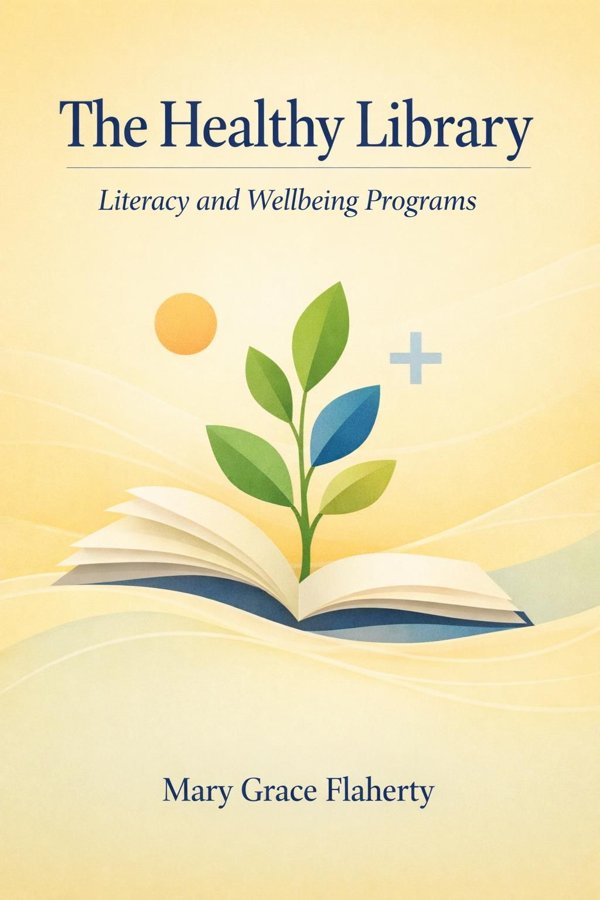
The Healthy Library: Literacy and Wellbeing Programs: Summary & Key Insights
 10 min9 chaptersAudio available
Key Takeaways from The Healthy Library: Literacy and Wellbeing Programs
A library card may not look like a health intervention, but in many communities it functions like one.
The idea of the library as a wellness hub feels modern, yet Flaherty shows that it has deep historical roots.
Sometimes the healthiest thing a library offers is not a program but a feeling: safety without pressure.
Libraries do not need to become clinics to influence physical health.
Loneliness is not just an emotional experience; it is a public health issue.
What Is The Healthy Library: Literacy and Wellbeing Programs About?
The Healthy Library: Literacy and Wellbeing Programs by Mary Grace Flaherty is a education book spanning 8 pages. Libraries have always been places of knowledge, but Mary Grace Flaherty argues they can also become engines of healthier communities. In The Healthy Library: Literacy and Wellbeing Programs, she shows how literacy, access to information, and community care naturally intersect. Rather than treating health as something that belongs only in hospitals or clinics, the book positions libraries as trusted public institutions that can support physical health, emotional resilience, social connection, and informed decision-making. What makes this book especially valuable is its practical focus. Flaherty does not merely celebrate the idea of a “healthy library”; she explains how librarians and educators can design programs, build partnerships, evaluate impact, and create inclusive spaces that meet real community needs. Her perspective carries weight because it comes from deep experience in librarianship, information literacy, and public-facing service design. She understands both the promise and the constraints of library work. For anyone interested in the future of education, community wellbeing, and public service, this book offers a persuasive vision: libraries are not peripheral to health. They are essential civic spaces where learning, belonging, and wellbeing can grow together.
This FizzRead summary covers all 9 key chapters of The Healthy Library: Literacy and Wellbeing Programs in approximately 10 minutes, distilling the most important ideas, arguments, and takeaways from Mary Grace Flaherty's work. Also available as an audio summary and Key Quotes Podcast.
The Healthy Library: Literacy and Wellbeing Programs
Libraries have always been places of knowledge, but Mary Grace Flaherty argues they can also become engines of healthier communities. In The Healthy Library: Literacy and Wellbeing Programs, she shows how literacy, access to information, and community care naturally intersect. Rather than treating health as something that belongs only in hospitals or clinics, the book positions libraries as trusted public institutions that can support physical health, emotional resilience, social connection, and informed decision-making.
What makes this book especially valuable is its practical focus. Flaherty does not merely celebrate the idea of a “healthy library”; she explains how librarians and educators can design programs, build partnerships, evaluate impact, and create inclusive spaces that meet real community needs. Her perspective carries weight because it comes from deep experience in librarianship, information literacy, and public-facing service design. She understands both the promise and the constraints of library work.
For anyone interested in the future of education, community wellbeing, and public service, this book offers a persuasive vision: libraries are not peripheral to health. They are essential civic spaces where learning, belonging, and wellbeing can grow together.
Who Should Read The Healthy Library: Literacy and Wellbeing Programs?
This book is perfect for anyone interested in education and looking to gain actionable insights in a short read. Whether you're a student, professional, or lifelong learner, the key ideas from The Healthy Library: Literacy and Wellbeing Programs by Mary Grace Flaherty will help you think differently.
- ✓Readers who enjoy education and want practical takeaways
- ✓Professionals looking to apply new ideas to their work and life
- ✓Anyone who wants the core insights of The Healthy Library: Literacy and Wellbeing Programs in just 10 minutes
Want the full summary?
Get instant access to this book summary and 100K+ more with Fizz Moment.
Get Free SummaryAvailable on App Store • Free to download
Key Chapters
The idea of the library as a wellness hub feels modern, yet Flaherty shows that it has deep historical roots. Libraries have long been more than warehouses of books; they have served as moral, educational, and civic institutions shaped by the needs of their communities. In earlier decades, libraries promoted sanitation information, child development advice, adult education, and practical household knowledge. They often functioned as stabilizing social spaces during periods of rapid urbanization, immigration, and economic change.
This history matters because it challenges the assumption that health-related programming is mission drift. In reality, library work has always adapted to urgent public needs. When literacy was the pressing issue, libraries expanded reading access. When workforce development became central, libraries built job support services. As communities now face mental health strain, chronic disease, loneliness, misinformation, and unequal healthcare access, the next evolution is naturally toward wellbeing programming.
Flaherty traces this transition from information halls to wellness hubs as a gradual broadening of what counts as service. A library no longer serves only the mind in a narrow academic sense. It serves the whole person in context: their stress, family responsibilities, financial constraints, physical limitations, and need for belonging. This shift is especially important in public libraries, school libraries, and academic institutions serving vulnerable populations.
Examples include libraries hosting social workers, creating quiet reflection spaces, offering exercise classes for seniors, or curating multilingual health collections. These are not departures from library identity but contemporary expressions of it. Understanding the past helps library leaders advocate for the future with confidence.
Actionable takeaway: When proposing a health or wellbeing initiative, frame it as part of the library’s historical tradition of responding to community needs rather than as a completely new mission.
Sometimes the healthiest thing a library offers is not a program but a feeling: safety without pressure. Flaherty treats emotional and mental wellbeing as central to the library’s community role. In an age of anxiety, burnout, isolation, and information overload, libraries can provide calm, predictable, and stigma-free environments that help people regulate stress and reconnect with others.
This begins with design and atmosphere. Quiet spaces, welcoming signage, trauma-informed customer service, comfortable seating, and sensory-sensitive areas can all reduce emotional strain. For some patrons, especially teens, older adults, caregivers, unemployed residents, or people in crisis, the library may be one of the few public places where they can exist without having to buy something, explain themselves, or feel judged.
Flaherty also explores formal mental wellbeing programming. Libraries can host mindfulness sessions, grief support reading circles, journaling workshops, art-based expression programs, and talks on stress management. Staff can build curated collections around depression, parenting stress, trauma recovery, or resilience, while ensuring materials are trustworthy and inclusive. Partnerships with counselors, social workers, or local mental health organizations can expand the library’s role without expecting librarians to act as clinicians.
An important nuance in the book is that libraries should support mental wellbeing without overstepping professional boundaries. The goal is not therapy but access, referral, and compassionate service. Staff training in de-escalation, active listening, and crisis referral is therefore essential. The healthier library is one that knows both how to help and when to connect patrons to specialized support.
Actionable takeaway: Identify one low-barrier mental wellbeing improvement you can implement immediately, such as a quiet corner, a themed resource guide, or staff training on trauma-informed service.
Libraries do not need to become clinics to influence physical health. Flaherty makes a compelling case that their greatest strength lies in partnership. Because libraries are trusted, accessible, and already embedded in neighborhoods, they can amplify the work of health agencies, hospitals, nonprofits, schools, and fitness organizations by acting as conveners and connectors.
Physical health programming can take many forms. A library might host blood pressure screenings through a local hospital, offer chair yoga with a senior center, coordinate healthy cooking demonstrations with a nutrition educator, or provide walking clubs led by community volunteers. During public health emergencies, libraries can distribute timely information, support vaccination outreach, and help residents navigate changing guidelines. In rural or underserved communities, they may be one of the few places where health information and internet-enabled telehealth access are readily available.
Flaherty emphasizes that partnerships work best when they are mutually beneficial and clearly defined. Libraries contribute space, audience trust, communication channels, and logistical support. Health partners contribute specialized expertise and licensed services. This division protects staff while increasing program quality. It also allows programming to be tailored to actual needs, whether that means maternal health support, chronic disease education, mobility programs for older adults, or youth sports wellness initiatives.
The practical challenge is sustainability. One-off events can raise awareness, but ongoing relationships create real impact. Libraries should document outcomes, gather participant feedback, and identify which partnerships align most strongly with community demand and institutional mission.
Actionable takeaway: Start by mapping three local health-related organizations your library could collaborate with, then propose one pilot program where each partner brings a distinct and manageable contribution.
Health literacy should not be hidden in a separate corner of the library; Flaherty argues it should be woven into ordinary service. This is one of the book’s most practical insights. Patrons do not experience their needs in neat categories. Someone asking for help with a computer may actually be trying to access a medical portal. A parent looking for children’s books may also need nutrition information. A job seeker may need guidance on stress, insurance, or sleep.
Integrating health literacy into traditional services means seeing these overlapping realities. Reference support can include help evaluating medical websites. Digital literacy classes can teach participants how to use telehealth platforms, refill prescriptions online, or identify scams related to health products. Family literacy programs can include early childhood wellness themes. Collection development can prioritize plain-language, multilingual, and culturally responsive health materials alongside standard educational resources.
Flaherty also notes that integration makes health-related programming less intimidating. Some patrons may avoid anything labeled “health” because of stigma, fear, or confusion. But they may comfortably join a technology class, parenting workshop, or financial literacy session that includes wellbeing content. In this way, libraries can normalize health learning as part of everyday life rather than a specialized activity for times of crisis.
The challenge is staff preparedness. Librarians need confidence in evaluating sources, understanding patron privacy, and making referrals without giving medical advice. Clear protocols and curated tools can make this manageable.
Actionable takeaway: Add a health literacy component to one existing service this month, such as including reliable medical website evaluation in a digital skills workshop or creating a wellness-themed pathfinder for family programming.
The most compassionate program can still fail if it is built on assumptions. Flaherty repeatedly returns to the principle that effective health and wellbeing programming begins with community listening. Libraries should not simply import popular wellness trends or copy another institution’s model. They must understand what their specific patrons need, value, and are actually able to use.
That process begins with assessment. Surveys, focus groups, patron interviews, circulation patterns, local public health data, and conversations with partner organizations can all reveal meaningful gaps. A neighborhood with many older adults may benefit from fall prevention workshops and Medicare navigation help. A campus library might see demand for stress reduction during exams. A multilingual urban branch may need culturally relevant maternal health resources and community health worker partnerships.
Flaherty then connects design to evaluation. It is not enough to count attendance. Libraries should ask whether participants learned something useful, changed a behavior, felt more supported, or became aware of further resources. Short feedback forms, story-based outcomes, repeat participation, and partner reflections can provide richer evidence. That evidence matters for grant writing, advocacy, and long-term sustainability.
Sustaining programs also requires realistic planning. Staff time, training, space, liability considerations, and partner reliability all shape whether a good idea can endure. Flaherty encourages libraries to start small, measure honestly, and scale what works. The goal is not to offer everything; it is to offer the right things well.
Actionable takeaway: Before launching any new wellbeing initiative, gather at least two forms of local evidence, define one measurable outcome beyond attendance, and build a simple review process after the pilot ends.
A wellness program is only as strong as its accessibility. Flaherty makes clear that libraries cannot promote health meaningfully without addressing inequity. Health outcomes are deeply shaped by income, race, disability, geography, language, housing, and digital access. If library services ignore these realities, they may unintentionally reinforce the very disparities they hope to reduce.
This is where the concept of social determinants of health becomes especially useful. Libraries may not control healthcare systems, but they can reduce everyday barriers that affect wellbeing. They can provide internet access for telemedicine, transportation information for clinic visits, multilingual materials for immigrant families, adaptive technologies for patrons with disabilities, and welcoming programming for populations that may distrust formal institutions. They can also make choices about timing, cost, registration requirements, and communication style that determine who truly feels invited.
Flaherty encourages librarians to think beyond equal access toward equitable design. Equal access means everyone can attend a workshop. Equitable design means the workshop is offered in multiple languages, held at an accessible time, available without a complicated sign-up process, and shaped by the people it is intended to serve. The difference is profound.
This lens also strengthens partnership strategy. Libraries should collaborate with organizations already trusted by marginalized communities rather than expecting underserved groups to come automatically to them. Outreach may need to happen in schools, shelters, faith communities, senior centers, or housing complexes rather than only inside library walls.
Actionable takeaway: Examine one health or literacy service through an equity lens and identify at least three barriers to participation, then remove or reduce one of them within the next program cycle.
The library of the future, Flaherty suggests, will be judged not only by what it holds but by how it helps people live. Her final vision is expansive yet grounded: libraries are becoming holistic institutions that connect literacy, wellbeing, technology, education, and civic belonging. This does not mean every library must do everything. It means every library should understand its role in helping communities flourish.
Several trends make this future especially relevant. First, public trust in institutions is fragile, while libraries remain among the most trusted civic spaces. Second, misinformation, especially about health, spreads rapidly and demands skilled mediation. Third, social isolation and mental strain have become defining challenges across age groups. Fourth, digital systems increasingly govern access to care, benefits, and knowledge, making library support indispensable.
Flaherty’s future-oriented argument is not utopian. She recognizes funding limitations, staff burnout, and the risk of overextension. That is why she advocates strategic integration rather than mission overload. Libraries should identify the wellbeing roles they are best positioned to play, invest in training and partnerships, and communicate their value in ways policymakers and communities can understand.
The deeper contribution of the book is philosophical. It redefines literacy itself as something broader than reading text. To be literate in modern society is to navigate systems, evaluate claims, care for oneself, and participate in community life. A healthy library cultivates all of that.
Actionable takeaway: Create a three-year vision for your library that names one realistic way it will strengthen community wellbeing through literacy, trust, and partnership rather than treating health support as a temporary trend.
All Chapters in The Healthy Library: Literacy and Wellbeing Programs
About the Author
Mary Grace Flaherty is an American librarian, scholar, and educator whose work focuses on the changing role of libraries in community life. Her interests include library management, information literacy, public service design, and the ways libraries can support health, resilience, and social wellbeing. Across her professional and academic work, she has examined how libraries respond to complex public needs while remaining grounded in access, trust, and inclusion. Flaherty is especially recognized for exploring the connection between literacy and community health, showing how libraries can become active partners in wellbeing through thoughtful programming and partnerships. Her writing combines professional practicality with a broad civic vision, making her a valuable voice for librarians, educators, and public service leaders thinking about the future of community-centered institutions.
Get This Summary in Your Preferred Format
Read or listen to the The Healthy Library: Literacy and Wellbeing Programs summary by Mary Grace Flaherty anytime, anywhere. FizzRead offers multiple formats so you can learn on your terms — all free.
Available formats: App · Audio · PDF · EPUB — All included free with FizzRead
Download The Healthy Library: Literacy and Wellbeing Programs PDF and EPUB Summary
Key Quotes from The Healthy Library: Literacy and Wellbeing Programs
“A library card may not look like a health intervention, but in many communities it functions like one.”
“The idea of the library as a wellness hub feels modern, yet Flaherty shows that it has deep historical roots.”
“Sometimes the healthiest thing a library offers is not a program but a feeling: safety without pressure.”
“Libraries do not need to become clinics to influence physical health.”
“Loneliness is not just an emotional experience; it is a public health issue.”
Frequently Asked Questions about The Healthy Library: Literacy and Wellbeing Programs
The Healthy Library: Literacy and Wellbeing Programs by Mary Grace Flaherty is a education book that explores key ideas across 9 chapters. Libraries have always been places of knowledge, but Mary Grace Flaherty argues they can also become engines of healthier communities. In The Healthy Library: Literacy and Wellbeing Programs, she shows how literacy, access to information, and community care naturally intersect. Rather than treating health as something that belongs only in hospitals or clinics, the book positions libraries as trusted public institutions that can support physical health, emotional resilience, social connection, and informed decision-making. What makes this book especially valuable is its practical focus. Flaherty does not merely celebrate the idea of a “healthy library”; she explains how librarians and educators can design programs, build partnerships, evaluate impact, and create inclusive spaces that meet real community needs. Her perspective carries weight because it comes from deep experience in librarianship, information literacy, and public-facing service design. She understands both the promise and the constraints of library work. For anyone interested in the future of education, community wellbeing, and public service, this book offers a persuasive vision: libraries are not peripheral to health. They are essential civic spaces where learning, belonging, and wellbeing can grow together.
You Might Also Like

Bedtime Biography: Florence Nightingale
Isabel Thomas
10 min
Introduction To Museum Studies
Howard H. Hoyt
10 min
A Mind for Numbers: How to Excel at Math and Science (Even If You Flunked Algebra)
Barbara Oakley
10 min
AI for Educators: Learning Strategies, Teacher Empowerment, and the Future of Education
Matt Miller
10 min
Animation For Beginners
Morr Meroz
10 min
Artificial Intelligence for Learning
Donald Clark
10 minBrowse by Category
Ready to read The Healthy Library: Literacy and Wellbeing Programs?
Get the full summary and 100K+ more books with Fizz Moment.