
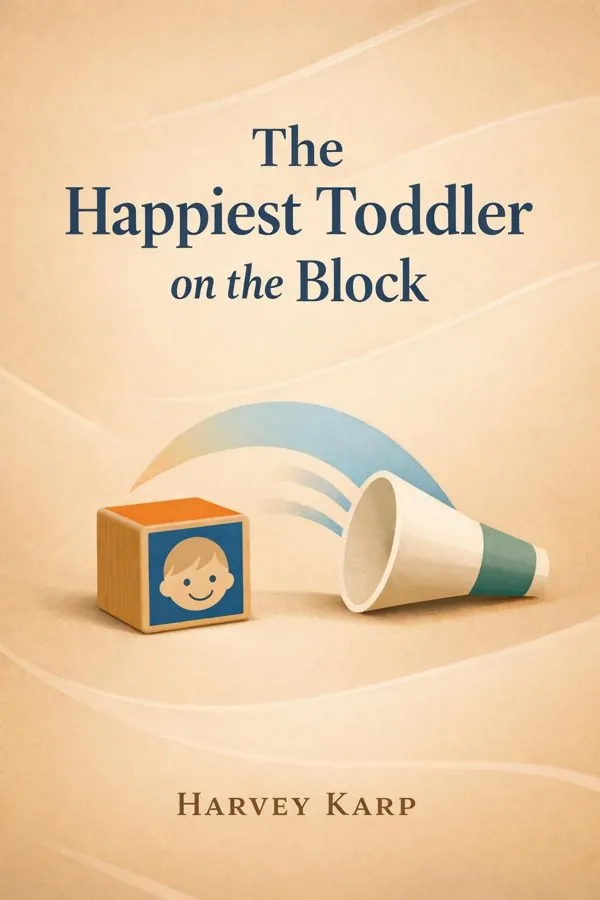
The Happiest Toddler on the Block: How to Eliminate Tantrums and Raise a Patient, Respectful, and Cooperative One- to Four-Year-Old: Summary & Key Insights
by Harvey Karp
 10 min10 chaptersAudio available
What Is The Happiest Toddler on the Block: How to Eliminate Tantrums and Raise a Patient, Respectful, and Cooperative One- to Four-Year-Old About?
The Happiest Toddler on the Block: How to Eliminate Tantrums and Raise a Patient, Respectful, and Cooperative One- to Four-Year-Old by Harvey Karp is a parenting book spanning 10 pages. A practical parenting guide that teaches effective communication techniques to help parents understand and calm toddlers, reduce tantrums, and foster emotional growth. Dr. Harvey Karp introduces the concept of 'Toddler-ese'—a way to speak to young children in their own emotional language—to build cooperation and respect.
This FizzRead summary covers all 10 key chapters of The Happiest Toddler on the Block: How to Eliminate Tantrums and Raise a Patient, Respectful, and Cooperative One- to Four-Year-Old in approximately 10 minutes, distilling the most important ideas, arguments, and takeaways from Harvey Karp's work. Also available as an audio summary and Key Quotes Podcast.
The Happiest Toddler on the Block: How to Eliminate Tantrums and Raise a Patient, Respectful, and Cooperative One- to Four-Year-Old
A practical parenting guide that teaches effective communication techniques to help parents understand and calm toddlers, reduce tantrums, and foster emotional growth. Dr. Harvey Karp introduces the concept of 'Toddler-ese'—a way to speak to young children in their own emotional language—to build cooperation and respect.
Who Should Read The Happiest Toddler on the Block: How to Eliminate Tantrums and Raise a Patient, Respectful, and Cooperative One- to Four-Year-Old?
This book is perfect for anyone interested in parenting and looking to gain actionable insights in a short read. Whether you're a student, professional, or lifelong learner, the key ideas from The Happiest Toddler on the Block: How to Eliminate Tantrums and Raise a Patient, Respectful, and Cooperative One- to Four-Year-Old by Harvey Karp will help you think differently.
- ✓Readers who enjoy parenting and want practical takeaways
- ✓Professionals looking to apply new ideas to their work and life
- ✓Anyone who wants the core insights of The Happiest Toddler on the Block: How to Eliminate Tantrums and Raise a Patient, Respectful, and Cooperative One- to Four-Year-Old in just 10 minutes
Want the full summary?
Get instant access to this book summary and 100K+ more with Fizz Moment.
Get Free SummaryAvailable on App Store • Free to download
Key Chapters
Toddlers are often described as little cavemen—and that’s not an insult. Their brains are still under construction; the parts responsible for language and impulse control are developing rapidly, yet they often lag behind emotional intensity. Imagine living in a world where you feel everything deeply but have few words to express it. That gap between feeling and communication fuels frustration.
In this stage of life, toddlers are trying to assert their independence while still craving parental security. They experience overwhelming emotions like anger, sadness, and excitement without the neurological tools to regulate them. Their tantrums are primitive expressions of unmet needs and misunderstood feelings. Parents who expect adult logic from toddlers frequently find themselves locked in power struggles that only deepen the child’s sense of helplessness.
To change this dynamic, I ask parents to look beneath the behavior. When your toddler screams because you peeled the banana incorrectly, it’s not about the fruit—it’s a protest against lost control. Understanding that core emotion allows you to respond with empathy rather than frustration. Throughout this book, I teach you to decode these emotional signals and use them to guide responses that reassure rather than scold. Discipline, after all, is most effective when rooted in understanding.
The cornerstone of my communication method is 'Toddler-ese.' It’s a way of talking that mirrors how toddlers speak and feel. When you use short, repetitive phrases and a tone that reflects their emotional intensity, your words finally begin to land in their world. If your toddler is furious, your calm reasoning sounds alien; but if you match their emotional pitch briefly—'You’re mad! You’re really mad!'—you show that you hear them deeply. Once that emotional bridge is formed, their storm begins to settle.
Parents often fear that echoing a toddler’s emotion will reinforce the tantrum, but it does the opposite. What toddlers crave most in distress is validation. When they feel truly understood, their need to scream fades. This technique transforms even high-voltage encounters into opportunities for empathy. Speaking Toddler-ese is not about mimicking baby talk; it’s about translating emotional intensity into language your child understands. Through examples and practice, you’ll learn how to adjust tone, emotion, and pace to soothe your child, teaching them in the process how to express feelings constructively.
+ 8 more chapters — available in the FizzRead app
All Chapters in The Happiest Toddler on the Block: How to Eliminate Tantrums and Raise a Patient, Respectful, and Cooperative One- to Four-Year-Old
About the Author
Harvey Karp, M.D., is an American pediatrician and child development expert known for his bestselling parenting books and his work on infant sleep and behavior. He is also the creator of the SNOO Smart Sleeper and a professor of pediatrics at the University of Southern California.
Get This Summary in Your Preferred Format
Read or listen to the The Happiest Toddler on the Block: How to Eliminate Tantrums and Raise a Patient, Respectful, and Cooperative One- to Four-Year-Old summary by Harvey Karp anytime, anywhere. FizzRead offers multiple formats so you can learn on your terms — all free.
Available formats: App · Audio · PDF · EPUB — All included free with FizzRead
Download The Happiest Toddler on the Block: How to Eliminate Tantrums and Raise a Patient, Respectful, and Cooperative One- to Four-Year-Old PDF and EPUB Summary
Key Quotes from The Happiest Toddler on the Block: How to Eliminate Tantrums and Raise a Patient, Respectful, and Cooperative One- to Four-Year-Old
“Toddlers are often described as little cavemen—and that’s not an insult.”
“The cornerstone of my communication method is 'Toddler-ese.”
Frequently Asked Questions about The Happiest Toddler on the Block: How to Eliminate Tantrums and Raise a Patient, Respectful, and Cooperative One- to Four-Year-Old
The Happiest Toddler on the Block: How to Eliminate Tantrums and Raise a Patient, Respectful, and Cooperative One- to Four-Year-Old by Harvey Karp is a parenting book that explores key ideas across 10 chapters. A practical parenting guide that teaches effective communication techniques to help parents understand and calm toddlers, reduce tantrums, and foster emotional growth. Dr. Harvey Karp introduces the concept of 'Toddler-ese'—a way to speak to young children in their own emotional language—to build cooperation and respect.
More by Harvey Karp

You Might Also Like
Never Enough
Jennifer Breheny Wallace
10 min
Bluey: Sleepytime
Joe Brumm
10 min
In My Heart: A Book of Feelings
Jo Witek
10 min
Love From The Crayons
Drew Daywalt, Oliver Jeffers
10 min
Pete The Cat: Big Easter Adventure
James Dean, Kimberly Dean
10 min
Smart Money Smart Kids: Raising the Next Generation to Win with Money
Dave Ramsey, Rachel Cruze
10 minBrowse by Category
Ready to read The Happiest Toddler on the Block: How to Eliminate Tantrums and Raise a Patient, Respectful, and Cooperative One- to Four-Year-Old?
Get the full summary and 100K+ more books with Fizz Moment.