
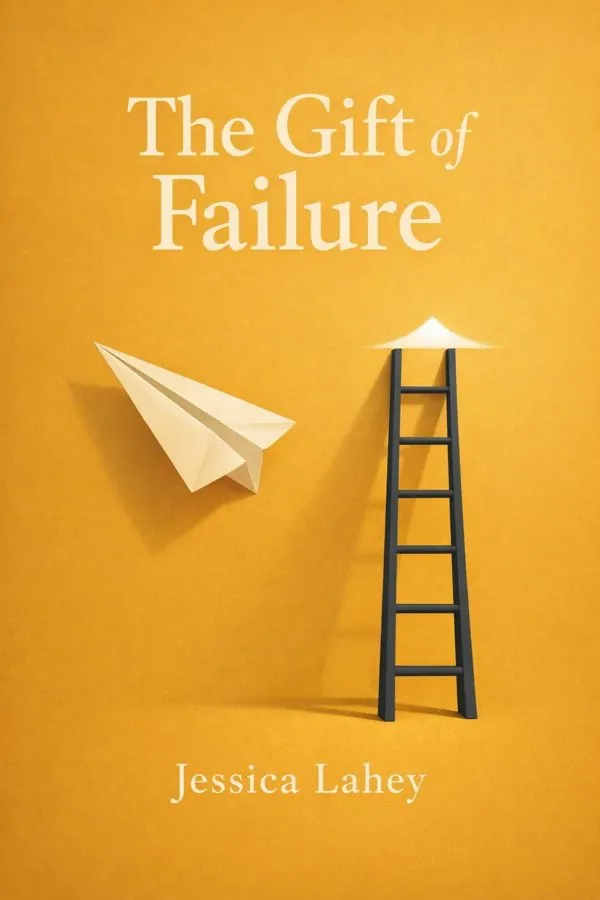
The Gift of Failure: How the Best Parents Learn to Let Go So Their Children Can Succeed: Summary & Key Insights
 10 min10 chaptersAudio available
What Is The Gift of Failure: How the Best Parents Learn to Let Go So Their Children Can Succeed About?
The Gift of Failure: How the Best Parents Learn to Let Go So Their Children Can Succeed by Jessica Lahey is a parenting book spanning 10 pages. In this insightful and compassionate book, Jessica Lahey explores how parental overprotection and fear of failure can hinder children’s growth. Drawing on research and her experience as a teacher and parent, Lahey argues that allowing children to experience setbacks is essential for developing resilience, autonomy, and motivation. The book offers practical strategies for parents to step back, foster independence, and help their children learn from mistakes.
This FizzRead summary covers all 10 key chapters of The Gift of Failure: How the Best Parents Learn to Let Go So Their Children Can Succeed in approximately 10 minutes, distilling the most important ideas, arguments, and takeaways from Jessica Lahey's work. Also available as an audio summary and Key Quotes Podcast.
The Gift of Failure: How the Best Parents Learn to Let Go So Their Children Can Succeed
In this insightful and compassionate book, Jessica Lahey explores how parental overprotection and fear of failure can hinder children’s growth. Drawing on research and her experience as a teacher and parent, Lahey argues that allowing children to experience setbacks is essential for developing resilience, autonomy, and motivation. The book offers practical strategies for parents to step back, foster independence, and help their children learn from mistakes.
Who Should Read The Gift of Failure: How the Best Parents Learn to Let Go So Their Children Can Succeed?
This book is perfect for anyone interested in parenting and looking to gain actionable insights in a short read. Whether you're a student, professional, or lifelong learner, the key ideas from The Gift of Failure: How the Best Parents Learn to Let Go So Their Children Can Succeed by Jessica Lahey will help you think differently.
- ✓Readers who enjoy parenting and want practical takeaways
- ✓Professionals looking to apply new ideas to their work and life
- ✓Anyone who wants the core insights of The Gift of Failure: How the Best Parents Learn to Let Go So Their Children Can Succeed in just 10 minutes
Want the full summary?
Get instant access to this book summary and 100K+ more with Fizz Moment.
Get Free SummaryAvailable on App Store • Free to download
Key Chapters
Everywhere I look, I see parents haunted by the same specter: the fear that mistakes will define their children forever. Our culture reinforces this anxiety relentlessly—grades, trophies, test scores, and curated social media successes create an illusion that only perfection ensures security. Yet this fear, while rooted in love, has become one of the greatest barriers to genuine growth.
When we protect children from failure, we are not protecting them from pain; we are protecting them from learning. Research shows that fear-based parenting leads to fragile self-esteem and conditional motivation. Children internalize the message that mistakes are shameful rather than instructive. I saw this in my students who, after years of micromanagement, froze when faced with unsupervised challenges. They knew how to comply, not how to think. Their confidence was tethered to adult approval.
The paradox is painful: the more we try to ensure success, the less equipped our children become to manage it independently. This fear doesn’t vanish—it transfers from parent to child, manifesting as perfectionism or avoidance. To reclaim growth, we must confront the fear ourselves. As parents, we can model acceptance of imperfection and self-compassion. When we stop rushing to erase every error, children learn that failure is information, not identity. They develop emotional resilience—the strength to start again without fear that falling means defeat.
In the end, releasing our fear of failure is not just a gift to our children; it’s a gift to ourselves. It frees us from the impossible task of scripting their lives and reconnects us with the joy of watching them unfold into who they are meant to be.
Research in psychology and education reveals that failure is central to learning. When children make errors and correct them, their brains actually grow stronger connections—a phenomenon called neuroplasticity. The science supports what teachers see every day: students who wrestle with confusion, seek feedback, and try again retain knowledge more deeply than those who receive perfect instruction.
In my classroom, I witnessed this vividly. A struggling student who miscalculated an algebra problem became far more capable once she analyzed her mistake. That moment of discomfort led to insight. Each time she fixed her own error, her confidence expanded—not because she succeeded, but because she persevered. Intrinsic motivation flourishes when children experience mastery through effort, not smoothness.
Self-Determination Theory explains why this happens. We thrive when our needs for autonomy, competence, and connection are met. Failure, paradoxically, fulfills these needs when we are allowed to own the process. It teaches competence in problem-solving, autonomy in choosing strategies, and connection through shared struggle. When parents intervene too quickly—fixing, rescuing, or over-guiding—they interrupt this cycle. The child’s motivation shifts from intrinsic curiosity to extrinsic compliance.
Understanding the science helps us shift our approach. When a child fails, we can focus on process rather than outcome, asking, “What did you learn from that?” instead of, “Why did you get it wrong?” This subtle change transforms mistakes into opportunities and reinforces that success is cumulative, not instant. The truth is simple yet profound: every successful adult has a history filled with failures that taught them how to succeed.
+ 8 more chapters — available in the FizzRead app
All Chapters in The Gift of Failure: How the Best Parents Learn to Let Go So Their Children Can Succeed
About the Author
Jessica Lahey is an American educator, writer, and speaker known for her work on parenting, education, and child development. She has written for publications such as The Atlantic and The New York Times, and is the author of several books focused on fostering resilience and learning through failure.
Get This Summary in Your Preferred Format
Read or listen to the The Gift of Failure: How the Best Parents Learn to Let Go So Their Children Can Succeed summary by Jessica Lahey anytime, anywhere. FizzRead offers multiple formats so you can learn on your terms — all free.
Available formats: App · Audio · PDF · EPUB — All included free with FizzRead
Download The Gift of Failure: How the Best Parents Learn to Let Go So Their Children Can Succeed PDF and EPUB Summary
Key Quotes from The Gift of Failure: How the Best Parents Learn to Let Go So Their Children Can Succeed
“Everywhere I look, I see parents haunted by the same specter: the fear that mistakes will define their children forever.”
“Research in psychology and education reveals that failure is central to learning.”
Frequently Asked Questions about The Gift of Failure: How the Best Parents Learn to Let Go So Their Children Can Succeed
The Gift of Failure: How the Best Parents Learn to Let Go So Their Children Can Succeed by Jessica Lahey is a parenting book that explores key ideas across 10 chapters. In this insightful and compassionate book, Jessica Lahey explores how parental overprotection and fear of failure can hinder children’s growth. Drawing on research and her experience as a teacher and parent, Lahey argues that allowing children to experience setbacks is essential for developing resilience, autonomy, and motivation. The book offers practical strategies for parents to step back, foster independence, and help their children learn from mistakes.
More by Jessica Lahey
You Might Also Like
Never Enough
Jennifer Breheny Wallace
10 min
Bluey: Sleepytime
Joe Brumm
10 min
In My Heart: A Book of Feelings
Jo Witek
10 min
Love From The Crayons
Drew Daywalt, Oliver Jeffers
10 min
Pete The Cat: Big Easter Adventure
James Dean, Kimberly Dean
10 min
Smart Money Smart Kids: Raising the Next Generation to Win with Money
Dave Ramsey, Rachel Cruze
10 minBrowse by Category
Ready to read The Gift of Failure: How the Best Parents Learn to Let Go So Their Children Can Succeed?
Get the full summary and 100K+ more books with Fizz Moment.