
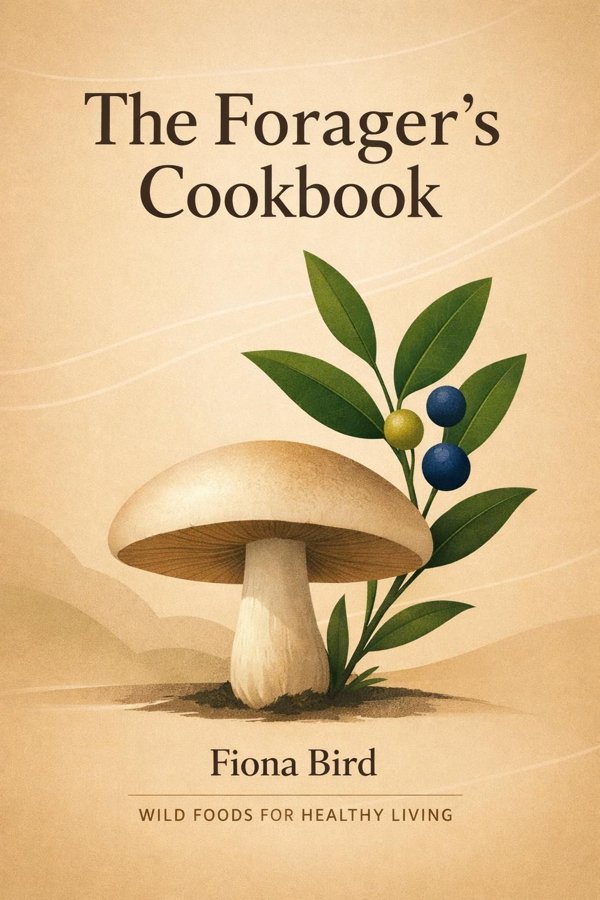
The Forager’s Cookbook: Wild Foods for Healthy Living: Summary & Key Insights
by Fiona Bird
 10 min9 chaptersAudio available
Key Takeaways from The Forager’s Cookbook: Wild Foods for Healthy Living
Before you gather a single leaf or mushroom, you have to change the way you see yourself in nature.
Good foraging begins long before you reach for a basket.
The wild is generous, but it does not forgive carelessness.
A wild ingredient becomes truly valuable not when it sits admired in a basket, but when it enters your kitchen with purpose.
Most people move through landscapes without really seeing them.
What Is The Forager’s Cookbook: Wild Foods for Healthy Living About?
The Forager’s Cookbook: Wild Foods for Healthy Living by Fiona Bird is a nutrition book spanning 5 pages. What if some of the most nutritious, flavorful foods available to you were growing quietly at the edge of a footpath, along a shoreline, or beneath the trees in a nearby wood? In The Forager’s Cookbook: Wild Foods for Healthy Living, Fiona Bird invites readers to rediscover the edible abundance of the natural world and to approach food with greater curiosity, care, and self-reliance. Part field guide, part practical manual, and part recipe collection, the book shows how to identify, gather, prepare, and enjoy wild plants, fruits, seaweeds, and fungi in ways that are safe, sustainable, and deeply satisfying. Bird’s perspective matters because she writes not as a distant theorist, but as an experienced Scottish forager and food writer with a strong grounding in seasonal living and wild ingredients. Her guidance blends common sense, culinary imagination, and ecological ethics. The result is more than a cookbook: it is an invitation to see landscapes differently, to eat more attentively, and to build a healthier relationship with both food and place.
This FizzRead summary covers all 9 key chapters of The Forager’s Cookbook: Wild Foods for Healthy Living in approximately 10 minutes, distilling the most important ideas, arguments, and takeaways from Fiona Bird's work. Also available as an audio summary and Key Quotes Podcast.
The Forager’s Cookbook: Wild Foods for Healthy Living
What if some of the most nutritious, flavorful foods available to you were growing quietly at the edge of a footpath, along a shoreline, or beneath the trees in a nearby wood? In The Forager’s Cookbook: Wild Foods for Healthy Living, Fiona Bird invites readers to rediscover the edible abundance of the natural world and to approach food with greater curiosity, care, and self-reliance. Part field guide, part practical manual, and part recipe collection, the book shows how to identify, gather, prepare, and enjoy wild plants, fruits, seaweeds, and fungi in ways that are safe, sustainable, and deeply satisfying. Bird’s perspective matters because she writes not as a distant theorist, but as an experienced Scottish forager and food writer with a strong grounding in seasonal living and wild ingredients. Her guidance blends common sense, culinary imagination, and ecological ethics. The result is more than a cookbook: it is an invitation to see landscapes differently, to eat more attentively, and to build a healthier relationship with both food and place.
Who Should Read The Forager’s Cookbook: Wild Foods for Healthy Living?
This book is perfect for anyone interested in nutrition and looking to gain actionable insights in a short read. Whether you're a student, professional, or lifelong learner, the key ideas from The Forager’s Cookbook: Wild Foods for Healthy Living by Fiona Bird will help you think differently.
- ✓Readers who enjoy nutrition and want practical takeaways
- ✓Professionals looking to apply new ideas to their work and life
- ✓Anyone who wants the core insights of The Forager’s Cookbook: Wild Foods for Healthy Living in just 10 minutes
Want the full summary?
Get instant access to this book summary and 100K+ more with Fizz Moment.
Get Free SummaryAvailable on App Store • Free to download
Key Chapters
Before you gather a single leaf or mushroom, you have to change the way you see yourself in nature. Fiona Bird argues that foraging is not a free-for-all or a treasure hunt driven by greed; it is a relationship based on restraint, observation, and respect. The true beginner’s lesson is not how to pick, but how to pause. Ethical foraging means taking only what you can identify with certainty, harvesting only what you will genuinely use, and leaving enough behind for wildlife, plant regeneration, and other people. In this way, foraging becomes an act of stewardship rather than extraction.
Bird emphasizes that wild foods are part of living ecosystems. Pulling up entire plants when only a few leaves are needed, stripping a bush bare, or disturbing fragile coastal areas can damage habitats that take years to recover. She encourages foragers to learn local laws, avoid polluted roadsides or contaminated waters, and stay away from protected species or vulnerable populations. Gratitude also matters: when you gather with humility, you become more attentive to where food comes from and what it costs the land to provide it.
Practical examples make this principle concrete. Instead of taking every elderflower cluster from one tree, harvest a small portion from several healthy trees. When collecting nettles, cut only the top fresh growth and leave the roots intact. When gathering seaweed, trim parts of established fronds rather than ripping whole plants from the rocks. These habits preserve future harvests and reduce ecological harm.
Actionable takeaway: adopt a personal foraging rule—harvest only what you can identify, use, and replace through careful restraint.
Good foraging begins long before you reach for a basket. Bird makes the important point that success in gathering wild food depends less on fancy equipment than on preparedness and timing. A simple knife, scissors, gloves, baskets, paper bags, and a notebook can take you far, but the most valuable tool is seasonal awareness. Knowing when a plant is tender, when berries are ripe, when seaweed is at its best, or when fungi are worth searching for turns random wandering into informed practice.
Each season offers a different pantry. Spring brings young greens such as nettles, wild garlic, and sorrel. Summer expands into flowers, herbs, and soft fruits. Autumn yields nuts, berries, roots, and mushrooms. Winter sharpens the eye for bark, preserved stores, and coastal foods such as some seaweeds. Bird encourages readers to develop a rhythm with the year, returning to the same places and noticing small changes in growth, abundance, and flavor. This habit creates confidence and reduces mistakes.
Technique matters too. A basket allows air circulation so delicate leaves do not wilt and mushrooms do not sweat. Paper bags help keep different finds separate for later identification. Clean cuts with scissors or a knife reduce damage to plants. Labeling unknown finds, recording locations, and noting weather conditions help build experience over time. Even washing and storing your harvest properly affects quality and safety.
Bird’s broader lesson is that foraging rewards patience more than speed. Instead of expecting abundance on every outing, she recommends treating each walk as practice in observation. Over time, you begin to recognize habitats, patterns, and signals that others miss.
Actionable takeaway: create a seasonal foraging calendar for your area and bring only a few reliable tools, using each trip to sharpen observation rather than maximize volume.
The wild is generous, but it does not forgive carelessness. One of Bird’s central contributions is showing that the pleasure of foraging depends on disciplined identification. Edible plants, fruits, fungi, and seaweeds can be delicious and nutritious, yet some have toxic lookalikes or require special handling. The excitement of discovery must always be balanced by methodical caution. In practical terms, this means learning a small number of species well before expanding your repertoire.
Bird introduces the idea of the “wild pantry” as a collection of categories rather than a chaotic mass of unfamiliar ingredients. Leafy greens such as nettles, chickweed, and wild garlic offer easy starting points. Hedgerow fruits like blackberries, rosehips, sloes, and elderberries extend the range of flavor and preservation. Seaweeds add minerals, umami, and culinary novelty. Fungi, while alluring, demand the greatest care and are best approached slowly, often with expert help.
A useful strategy is to learn plants in context: where they grow, what season they appear in, what they smell like, and what features distinguish them. For example, wild garlic can often be identified by its unmistakable scent, while mushrooms generally require far more than a quick visual check. Bird’s guidance helps readers appreciate that safe foraging is built from repeated observation, trusted reference materials, and humility. If there is any doubt, the answer is simple: do not eat it.
Practical application may involve choosing three beginner-friendly wild foods to master first, such as nettles, blackberries, and one common seaweed. Cook them repeatedly, compare harvests from different environments, and note flavor changes throughout the season. Confidence grows through familiarity, not risk.
Actionable takeaway: start with a shortlist of easily identified wild foods and refuse to eat anything unless you are completely certain of its identity and safety.
A wild ingredient becomes truly valuable not when it sits admired in a basket, but when it enters your kitchen with purpose. Bird’s cookbook approach shows that foraging is not about novelty for its own sake. It is about expanding the flavors, textures, and nutritional possibilities of ordinary meals. Wild foods can be folded into soups, stocks, salads, pestos, breads, teas, preserves, and desserts, often replacing or complementing cultivated ingredients with more complex taste.
This culinary emphasis matters because many people are interested in foraging in theory but feel unsure what to do with their harvest. Bird closes that gap. Nettles can become soup, tea, or a spinach-like addition to pasta fillings. Elderflowers can be infused into cordials, syrups, and light desserts. Seaweeds can season broths, enrich breads, or add savory depth to stews. Rosehips can be turned into vitamin-rich syrups or jams. Even modest harvests can be meaningful when used creatively.
Bird also encourages flexibility. You do not need a larder full of rare ingredients to cook from the wild. A handful of sorrel can brighten an omelet; a few blackberries can elevate porridge or yogurt; chopped wild herbs can enliven butter, vinegar, or soft cheese. The key is to treat wild foods as ingredients with personalities rather than as tokens of rustic authenticity.
There is a nutritional message here too. Freshly gathered foods are often nutrient-dense and minimally processed, and they can help diversify the diet. More importantly, cooking with them changes the emotional quality of eating. Meals become seasonal, place-based, and memorable.
Actionable takeaway: choose one familiar recipe this week and replace or supplement a standard ingredient with a safely identified wild food you know how to prepare.
Most people move through landscapes without really seeing them. Bird suggests that foraging reverses this habit by teaching us to pay attention to the character of a place. A hedgerow stops being anonymous when you know it offers blackberries in late summer, rosehips in autumn, and young leaves in spring. A shoreline becomes more than scenery when you recognize edible seaweeds attached to specific rocks and tides. Through foraging, place becomes legible.
This deepened awareness changes more than what you eat. It alters your sense of belonging. Returning to the same woods, dunes, or lanes across the year trains you to notice weather, soil, biodiversity, and human impact. You begin to see how drought changes fruiting, how storms reshape coasts, or how pollution affects what is safe to gather. Bird presents foraging as a practical route into ecological literacy: by seeking food, you learn habitat.
There is also a social dimension. Knowledge of local foods has long been part of regional culture, and foraging can revive traditions that industrial food systems have pushed aside. Families can share walks, compare finds, and swap recipes. Communities can document local edible species and protect green spaces that support them. What starts as curiosity can become a source of local pride and conservation-minded behavior.
Bird’s perspective is especially valuable because she ties nourishment to relationship. Food gathered from a familiar place often feels different from food purchased anonymously. It carries memory, season, and effort. That emotional connection can foster gratitude and reduce waste.
Actionable takeaway: pick one nearby landscape and visit it regularly for a season, keeping notes on what grows there and how your understanding of that place changes over time.
One of the paradoxes of wild food is that abundance often arrives all at once. Bird addresses this by showing that preservation is not an optional extra but a core part of the forager’s craft. If elderflowers bloom briefly, berries ripen quickly, or mushrooms appear in a flush, the wise response is not to overeat in the moment but to capture that season for later. Preservation transforms fleeting encounters into a year-round resource.
The book points readers toward practical methods such as drying, freezing, infusing, pickling, fermenting, bottling, and making syrups, jams, chutneys, and cordials. Each method suits different ingredients. Herbs and some seaweeds dry well. Soft fruits become preserves or freezer stores. Rosehips lend themselves to syrups. Wild garlic can be blitzed into pesto and frozen in portions. Mushrooms may be dried for soups and sauces, if identified and handled correctly.
Preservation also encourages discipline in harvest levels. Rather than gathering large quantities without a plan, Bird implies that a forager should know in advance how the harvest will be used. A basket of sloes may become infused spirits or jelly; a glut of blackberries can be frozen flat for winter baking. This habit reduces waste and honors the labor of gathering.
The broader value is psychological as well as practical. Opening a jar of wild plum jam in winter or adding dried seaweed to a broth months after a coastal walk keeps the connection to season alive. It turns foraging into an ongoing practice rather than a one-off hobby.
Actionable takeaway: before your next forage, decide on one preservation method for the ingredient you hope to find and prepare the necessary jars, bags, or containers in advance.
Bird’s subtitle, Wild Foods for Healthy Living, points to an idea bigger than recipes: health is shaped not only by calories or trends, but by diversity, freshness, and engagement with real food. Wild ingredients often broaden the diet beyond the narrow range of cultivated produce many people rely on. Leaves, berries, seaweeds, herbs, and roots can contribute fiber, vitamins, minerals, phytonutrients, and strong natural flavors that make meals more satisfying.
But Bird’s view of health is not merely biochemical. She links nourishment to movement, outdoor time, seasonality, and mindful eating. A walk taken to gather food is different from exercise performed mechanically; it has purpose and rewards attention. Preparing a foraged meal invites slowness and care. Eating something you have identified, gathered, cleaned, and cooked yourself often leads to more appreciation and less mindless consumption.
This does not mean wild foods are magical cures or that every meal should come from hedgerows. Bird avoids that fantasy. Instead, she presents foraged ingredients as additions to a balanced way of living. A nettle soup may replace a processed lunch. Seaweed can add flavor without relying solely on salt. Wild berries may diversify breakfast or dessert. Even small substitutions can shift habits toward greater freshness and variety.
The most useful insight is that healthy living is relational. When food comes from known places and requires your direct involvement, you are more likely to treat it as nourishment rather than mere fuel. That attitude can have lasting effects on how you shop, cook, and eat.
Actionable takeaway: add one safely foraged whole ingredient to your weekly meal routine and notice how it changes both flavor and your attention to eating.
In foraging, overconfidence is more dangerous than ignorance. Bird’s practical wisdom repeatedly points readers toward slow learning, especially when dealing with plants that have poisonous relatives or with fungi, where errors can be severe. The temptation for beginners is to collect a long list of species quickly, but real competence comes from repetition, cross-checking, and accepting limits.
A careful learner uses multiple reference points: field guides, local experts, foraging groups, habitat knowledge, smell, texture, and season. Bird’s approach encourages building certainty through layers of evidence rather than relying on a single photo or memory. It is also wise to introduce new foods gradually, even when correctly identified, because some wild ingredients can cause digestive upset in certain people or may need proper cooking.
Practical caution includes avoiding harvests from contaminated areas, steering clear of roadside verges with heavy traffic, not gathering from land that may have been sprayed, and understanding local warnings about shellfish or marine pollution. Beginners should also know that legal and ethical boundaries matter. Some places prohibit gathering, and some species are protected. Responsible foraging includes respecting those limits.
Bird’s larger point is that caution does not diminish the joy of foraging; it protects it. Confidence earned slowly is durable. It frees you to cook and eat with pleasure rather than uncertainty. A notebook of observations, photos of plants in different stages, and repeated visits to the same sites can be more valuable than chasing novelty.
Actionable takeaway: commit to mastering only a few species at a time and verify each one through more than one trusted source before bringing it to the table.
Modern food culture often celebrates convenience, uniformity, and constant availability. Bird offers a quiet challenge to that mindset by reminding readers that wild foods were once woven into everyday survival, local cuisines, and seasonal rituals. To forage today is not merely to gather ingredients; it is to reconnect with older ways of noticing, preserving, and sharing food knowledge that industrial systems have made easy to forget.
This legacy appears in the recipes themselves. Cordials, preserves, soups, herbal preparations, and simple cooked greens all reflect traditions built around making the most of what the landscape provided. These methods are humble, but they carry deep intelligence. People learned when plants were at their best, how to process bitter or fibrous foods, and how to preserve a short harvest for leaner months. Bird presents this inheritance not as nostalgia, but as practical wisdom still relevant now.
There is also a cultural value in passing such knowledge on. Teaching a child to recognize elderflowers, to collect blackberries without crushing them, or to stir a pan of wild-garlic pesto creates continuity between generations. Sharing jars of jam or seaweed seasoning with friends turns foraging into a communal act. In this sense, the legacy of foraging is not only about ingredients but about memory, skill, and reciprocity.
Bird’s spirit is generous rather than romantic. She does not suggest abandoning modern life, but enriching it with practices that restore attentiveness and resilience. Wild foods can remind us that good eating is not always bought; sometimes it is noticed, gathered, and made by hand.
Actionable takeaway: learn one traditional preparation from the book or your local food culture and share it with someone else to keep the knowledge alive.
All Chapters in The Forager’s Cookbook: Wild Foods for Healthy Living
About the Author
Fiona Bird is a Scottish forager, food writer, and educator known for her expertise in wild ingredients and seasonal cooking. Her work centers on helping people rediscover edible foods growing in woods, hedgerows, fields, and along coastlines, while emphasizing sustainability and careful identification. Bird combines practical field knowledge with a cook’s sensibility, showing readers not only what can be gathered but how it can be turned into nourishing, flavorful meals. She has been recognized in the food world as a former BBC Food and Farming Awards finalist, and her writing reflects a deep commitment to reconnecting people with nature through food. Through her books and teaching, Bird has become a respected voice in modern foraging, blending traditional knowledge with contemporary healthy living.
Get This Summary in Your Preferred Format
Read or listen to the The Forager’s Cookbook: Wild Foods for Healthy Living summary by Fiona Bird anytime, anywhere. FizzRead offers multiple formats so you can learn on your terms — all free.
Available formats: App · Audio · PDF · EPUB — All included free with FizzRead
Download The Forager’s Cookbook: Wild Foods for Healthy Living PDF and EPUB Summary
Key Quotes from The Forager’s Cookbook: Wild Foods for Healthy Living
“Before you gather a single leaf or mushroom, you have to change the way you see yourself in nature.”
“Good foraging begins long before you reach for a basket.”
“The wild is generous, but it does not forgive carelessness.”
“A wild ingredient becomes truly valuable not when it sits admired in a basket, but when it enters your kitchen with purpose.”
“Most people move through landscapes without really seeing them.”
Frequently Asked Questions about The Forager’s Cookbook: Wild Foods for Healthy Living
The Forager’s Cookbook: Wild Foods for Healthy Living by Fiona Bird is a nutrition book that explores key ideas across 9 chapters. What if some of the most nutritious, flavorful foods available to you were growing quietly at the edge of a footpath, along a shoreline, or beneath the trees in a nearby wood? In The Forager’s Cookbook: Wild Foods for Healthy Living, Fiona Bird invites readers to rediscover the edible abundance of the natural world and to approach food with greater curiosity, care, and self-reliance. Part field guide, part practical manual, and part recipe collection, the book shows how to identify, gather, prepare, and enjoy wild plants, fruits, seaweeds, and fungi in ways that are safe, sustainable, and deeply satisfying. Bird’s perspective matters because she writes not as a distant theorist, but as an experienced Scottish forager and food writer with a strong grounding in seasonal living and wild ingredients. Her guidance blends common sense, culinary imagination, and ecological ethics. The result is more than a cookbook: it is an invitation to see landscapes differently, to eat more attentively, and to build a healthier relationship with both food and place.
You Might Also Like
Eating by the Seasons Cookbook: Seasonal Produce-Focused Recipes
Clare Foster
10 min
From Crook to Cook: Platinum Recipes from Tha Boss Dogg's Kitchen
Snoop Dogg with Ryan Ford
10 min
Juicing for Beginners: The Essential Guide to Juicing Recipes and Juicing for Weight Loss
Rockridge Press
10 min
The Food Therapist: Break Bad Habits, Eat with Intention, and Indulge Without Worry
Shira Lenchewski
10 min
The Mediterranean Diet Meal Plan: A 4-Week Meal Plan for Optimal Health and Weight Loss
Various Contributors
10 min
The Well Plated Cookbook: Simple, Wholesome Recipes for Everyday Meals
Erin Clarke
10 minBrowse by Category
Ready to read The Forager’s Cookbook: Wild Foods for Healthy Living?
Get the full summary and 100K+ more books with Fizz Moment.