
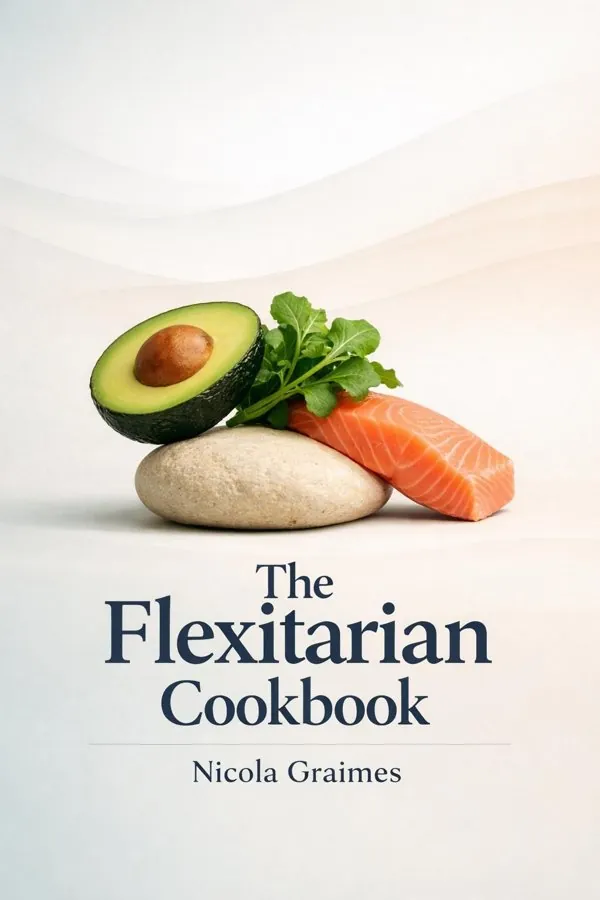
The Flexitarian Cookbook: Sustainable Flexible Plant-Forward Meals: Summary & Key Insights
 10 min9 chaptersAudio available
Key Takeaways from The Flexitarian Cookbook: Sustainable Flexible Plant-Forward Meals
The most sustainable food philosophy is often the one people can actually live with.
The most effective transformation rarely begins with a radical overhaul; it begins with one repeatable change.
A plant-forward diet is healthiest not when it is fashionable, but when it is well composed.
Climate-friendly eating is not only about grand gestures; it is shaped by what lands in your shopping basket each week.
People do not keep eating well because they are disciplined; they keep eating well because the food is appealing.
What Is The Flexitarian Cookbook: Sustainable Flexible Plant-Forward Meals About?
The Flexitarian Cookbook: Sustainable Flexible Plant-Forward Meals by Nicola Graimes is a nutrition book spanning 5 pages. The Flexitarian Cookbook: Sustainable Flexible Plant-Forward Meals is both a practical cookbook and a persuasive guide to eating in a way that is healthier, more sustainable, and far easier to maintain than rigid diets. Nicola Graimes makes the case for a plant-forward lifestyle built on abundance rather than restriction: vegetables, legumes, grains, nuts, seeds, herbs, and seasonal produce take center stage, while meat and fish appear occasionally and more thoughtfully. That balance is what makes the book so relevant. In a world shaped by climate concerns, rising health awareness, and busy everyday routines, Graimes offers an approach that feels realistic for modern life. What gives the book authority is Graimes’s long experience as a respected food writer and former editor of Vegetarian Living magazine. She understands nutrition, flavor, and the habits that keep people from changing the way they eat. Instead of preaching perfection, she provides encouraging guidance, smart kitchen strategies, and appealing recipes that help readers reduce their reliance on animal products without feeling deprived. The result is a book that shows sustainable eating can be delicious, flexible, and genuinely achievable.
This FizzRead summary covers all 9 key chapters of The Flexitarian Cookbook: Sustainable Flexible Plant-Forward Meals in approximately 10 minutes, distilling the most important ideas, arguments, and takeaways from Nicola Graimes's work. Also available as an audio summary and Key Quotes Podcast.
The Flexitarian Cookbook: Sustainable Flexible Plant-Forward Meals
The Flexitarian Cookbook: Sustainable Flexible Plant-Forward Meals is both a practical cookbook and a persuasive guide to eating in a way that is healthier, more sustainable, and far easier to maintain than rigid diets. Nicola Graimes makes the case for a plant-forward lifestyle built on abundance rather than restriction: vegetables, legumes, grains, nuts, seeds, herbs, and seasonal produce take center stage, while meat and fish appear occasionally and more thoughtfully. That balance is what makes the book so relevant. In a world shaped by climate concerns, rising health awareness, and busy everyday routines, Graimes offers an approach that feels realistic for modern life.
What gives the book authority is Graimes’s long experience as a respected food writer and former editor of Vegetarian Living magazine. She understands nutrition, flavor, and the habits that keep people from changing the way they eat. Instead of preaching perfection, she provides encouraging guidance, smart kitchen strategies, and appealing recipes that help readers reduce their reliance on animal products without feeling deprived. The result is a book that shows sustainable eating can be delicious, flexible, and genuinely achievable.
Who Should Read The Flexitarian Cookbook: Sustainable Flexible Plant-Forward Meals?
This book is perfect for anyone interested in nutrition and looking to gain actionable insights in a short read. Whether you're a student, professional, or lifelong learner, the key ideas from The Flexitarian Cookbook: Sustainable Flexible Plant-Forward Meals by Nicola Graimes will help you think differently.
- ✓Readers who enjoy nutrition and want practical takeaways
- ✓Professionals looking to apply new ideas to their work and life
- ✓Anyone who wants the core insights of The Flexitarian Cookbook: Sustainable Flexible Plant-Forward Meals in just 10 minutes
Want the full summary?
Get instant access to this book summary and 100K+ more with Fizz Moment.
Get Free SummaryAvailable on App Store • Free to download
Key Chapters
The most sustainable food philosophy is often the one people can actually live with. That is the central strength of the flexitarian approach: it avoids all-or-nothing thinking and replaces it with a simple shift in emphasis. Rather than demanding strict vegetarianism or constant dietary vigilance, Nicola Graimes encourages readers to make plants the foundation of everyday meals while leaving room for occasional meat or fish. This makes the approach psychologically gentler and practically more durable.
The concept matters because many people fail with rigid diets not from lack of motivation, but from fatigue, social pressure, or the sense that one deviation equals failure. Flexitarianism removes that trap. A lentil curry on Monday, a vegetable grain bowl on Tuesday, and a roast chicken dish shared with family on Sunday can all fit within the same eating pattern. The point is not purity; it is proportion. If most meals are plant-rich, the cumulative impact on health and the environment can be significant.
Graimes also frames the lifestyle as positive rather than restrictive. Readers are invited to discover ingredients and recipes they may have overlooked: beans that add substance, grains that provide texture, and vegetables that become deeply satisfying when cooked with care. This changes the emotional tone of dietary change. Instead of focusing on what is being removed, the book highlights what is being added.
In practice, this might mean replacing half the meat in a bolognese with lentils, planning two or three meat-free dinners each week, or building lunches around grains, greens, and beans. These small adjustments create momentum without demanding a dramatic identity shift.
Actionable takeaway: Stop aiming for a perfect label and start aiming for a better pattern—make plants the default in most meals this week, and let flexibility support consistency.
The most effective transformation rarely begins with a radical overhaul; it begins with one repeatable change. Graimes understands that many readers want to eat more sustainably but feel overwhelmed by where to start. Her answer is refreshingly simple: begin where you are, use what you already enjoy, and gradually increase the plant content of your meals.
This transition strategy matters because habits are deeply tied to routines, shopping patterns, comfort foods, and family expectations. A person who normally eats meat at every dinner may find it easier to start with one plant-based soup, one bean chili, or one vegetable pasta each week than to attempt a sudden complete reset. By lowering the barrier to entry, flexitarian eating becomes accessible to people with busy schedules, mixed households, and limited confidence in plant-based cooking.
Graimes’s approach also emphasizes substitution over deprivation. If you love tacos, fill them with black beans, roasted squash, and avocado. If you rely on stir-fries, use tofu, tempeh, or edamame in place of some or all of the meat. If breakfast usually centers on eggs and bacon, try porridge with seeds and fruit, or toast topped with hummus and tomatoes. Familiar formats reduce resistance while expanding your range.
Over time, your tastes adapt. Ingredients that once seemed like side dishes become satisfying centerpieces. Cooking skills improve, your pantry becomes more versatile, and the idea of a meat-free meal starts to feel normal instead of special.
The brilliance of this method is that it respects real life. It does not shame occasional convenience foods or family compromises. It simply asks for direction: Are your choices, on balance, moving toward more plants, more variety, and more intention?
Actionable takeaway: Pick one meal category—breakfast, lunch, or dinner—and redesign just two meals this week to be plant-forward using familiar ingredients and recipes.
A plant-forward diet is healthiest not when it is fashionable, but when it is well composed. Graimes treats nutrition as a matter of balance, variety, and common sense rather than obsession. Moving toward flexitarian eating does not mean living on salad or assuming every plant-based choice is automatically nourishing. It means building meals that provide energy, satiety, and a broad range of nutrients.
That requires understanding the roles different foods play. Legumes such as lentils, beans, and chickpeas provide protein and fiber. Whole grains like brown rice, oats, barley, and quinoa contribute steady energy, minerals, and texture. Nuts and seeds supply healthy fats and help meals feel more complete. Fruits and vegetables deliver vitamins, antioxidants, and diversity. Animal products, when included, are used more selectively and often in smaller portions.
Graimes’s nutritional perspective is especially useful for readers worried that reducing meat will leave them hungry or deficient. She shows that satisfaction comes from meal structure. A vegetable soup may feel light on its own, but paired with beans and whole-grain bread it becomes substantial. A roasted vegetable traybake becomes a complete dinner when served with tahini, grains, and a scattering of seeds. A curry with chickpeas, spinach, and brown rice can deliver both comfort and nutritional density.
Sustainability and nutrition also align here. Foods that are good for long-term health—beans, grains, seasonal produce, moderate portions, less ultra-processing—often carry a lighter environmental footprint as well. The book avoids turning food into a moral test and instead presents healthy eating as a pattern of sensible combinations repeated over time.
Actionable takeaway: Build your next meal using this simple formula: one protein-rich plant food, one whole grain or starchy base, plenty of vegetables, and a source of healthy fat for flavor and fullness.
Climate-friendly eating is not only about grand gestures; it is shaped by what lands in your shopping basket each week. One of Graimes’s most important contributions is showing how food sustainability becomes practical at the household level. By placing vegetables, pulses, grains, and seasonal produce at the heart of cooking, readers can reduce their environmental impact without feeling as though they are participating in a punishing regimen.
The environmental logic is straightforward. Diets heavy in meat, especially when consumed frequently and in large portions, generally require more land, water, and energy than diets centered on plant foods. But Graimes does not argue for absolutism. Instead, she advocates moderation, care, and quality. If you do eat meat or fish, choose it less often, use smaller amounts, and appreciate it more. A little can go a long way when it supports a dish rather than dominates it.
She also broadens sustainability beyond protein choices. Seasonal ingredients usually travel less and taste better. Using the whole vegetable—from stalks to leaves when appropriate—reduces waste. Planning meals prevents forgotten produce from spoiling in the fridge. Cooking larger batches of soups, stews, or grains can save both money and resources. Even simple acts such as reusing leftovers in salads, wraps, or frittatas help create a more responsible kitchen.
This framing is empowering because it replaces eco-anxiety with agency. Readers may not control agricultural systems overnight, but they do control dinner. A family that swaps several meat-heavy meals each week for bean stews, roasted vegetable trays, and grain bowls is already making a meaningful contribution.
Actionable takeaway: Choose one sustainability habit to practice this week—buy seasonal produce, halve the meat in a favorite recipe, or plan leftover use before you cook.
People do not keep eating well because they are disciplined; they keep eating well because the food is appealing. Graimes understands that long-term dietary change depends on pleasure, and that is why creativity is central to her cookbook. A flexitarian kitchen should not feel like a place of compromise. It should feel expansive, colorful, and full of possibility.
Creativity starts with treating plant ingredients as worthy of attention. Roasting can intensify sweetness in carrots, cauliflower, squash, and onions. Spices can turn basic beans into something rich and aromatic. Herbs, citrus, dressings, and crunchy toppings transform simple bowls into layered meals. Texture is especially important: creamy hummus, crisp seeds, tender grains, caramelized vegetables, and fresh greens can create satisfaction that rivals more conventional meat-centered dishes.
Graimes also shows how recipe structure helps home cooks improvise. Once you understand a few patterns—soup plus garnish, grain bowl plus dressing, traybake plus sauce, legume stew plus herbs—you can vary ingredients based on season, budget, or what is already in the kitchen. This makes plant-forward cooking less dependent on strict recipes and more adaptable to real life.
For example, leftover roasted vegetables can become a salad with lentils and feta, a wrap with hummus, or a topping for toast. A pot of cooked grains can support several meals across the week. A flavorful sauce or dressing can revive plain ingredients and prevent repetition. This is creative cooking not as performance, but as practical resourcefulness.
When meals look vibrant and taste complex, the question shifts from “What am I giving up?” to “What should I make next?” That shift is essential for sustaining change.
Actionable takeaway: Learn one versatile flavor booster this week—a herb sauce, tahini dressing, yogurt topping, or spice blend—and use it to elevate at least three plant-forward meals.
Changing what you cook matters, but changing how you relate to food matters just as much. Graimes’s flexitarian philosophy is not merely a recipe framework; it is a mindset of awareness, moderation, and appreciation. Mindful eating enters the picture because sustainability is not only about ingredients. It is also about habits: how we shop, portion, consume, and notice what truly satisfies us.
Mindfulness begins with paying attention to appetite and enjoyment instead of eating automatically. When meals are built around high-quality plant ingredients, they invite a different pace—more chopping, tasting, seasoning, and noticing. This can strengthen the link between food and intention. Rather than grabbing the default option, readers are encouraged to ask: What do I want to feel after this meal? Energized? Comforted? Full but not heavy? What choice supports both my health and my values?
The book’s flexible approach also supports a healthier psychology around food. There is less guilt attached to occasional indulgence or to meals that include animal products. Because the overall pattern matters more than isolated moments, readers can avoid the cycle of overcontrol followed by rebound eating. Mindful flexitarianism is sustainable precisely because it allows for context, pleasure, and imperfection.
This outlook extends to social eating. Family dinners, holidays, travel, and restaurant meals do not have to become sites of stress. You might choose the vegetable-rich option most of the time, share meat rather than ordering your own portion, or simply return to your usual plant-forward rhythm after a special occasion.
When awareness replaces rigid rules, healthier choices become easier to repeat.
Actionable takeaway: Before one meal each day this week, pause for ten seconds and ask what balance of nourishment, enjoyment, and sustainability you want that meal to provide.
Good intentions often fail at 6 p.m. when the fridge looks uninspiring and everyone is hungry. One of the quiet lessons behind Graimes’s cookbook is that a flexitarian lifestyle becomes much easier when the kitchen is set up for success. A well-stocked pantry reduces reliance on last-minute meat-based convenience meals and makes plant-forward cooking fast, affordable, and low stress.
Core staples do much of the work. Tinned beans, lentils, chickpeas, tomatoes, coconut milk, and stock can become soups, curries, stews, and sauces with minimal effort. Whole grains such as quinoa, brown rice, bulgur, couscous, and oats provide versatile bases. Nuts, seeds, dried fruit, olives, and nut butters add richness and texture. Flavor builders—garlic, onions, spices, vinegars, mustard, soy sauce, tahini, and herbs—turn simple ingredients into satisfying dishes.
Frozen vegetables are part of this practical system too. Peas, spinach, mixed vegetables, and berries can save time, reduce waste, and expand options when fresh produce is limited. Likewise, a few reliable refrigerator ingredients such as yogurt, eggs, hard cheese, tofu, or hummus can help bridge the gap between planning and improvisation.
The point is not to stock everything at once. It is to build a repeatable foundation so that nourishing meals become the easiest option. With the right ingredients on hand, dinner can be a chickpea tagine, a quick grain bowl, a bean chili, or a vegetable frittata rather than an expensive takeaway.
Kitchen confidence grows from readiness. The more often readers experience plant-forward meals as convenient, the more naturally the habit sticks.
Actionable takeaway: Create a flexitarian staple list of 15 ingredients you will always keep on hand, then use those staples to plan three quick weeknight meals.
One of the most overlooked benefits of flexitarian cooking is that it can make the kitchen more economical as well as more sustainable. Graimes’s philosophy naturally pushes readers toward ingredients that are often budget-friendly—beans, lentils, grains, seasonal vegetables—and toward habits that extract more value from what they buy. In a time when food costs matter deeply, this practical dimension strengthens the appeal of the entire approach.
Waste often happens through poor planning, overbuying, or lack of imagination with leftovers. A bunch of herbs wilts, half a cabbage languishes in the crisper, or yesterday’s cooked grains are forgotten. Graimes’s plant-forward method helps solve this by encouraging ingredient overlap and flexible reuse. Roasted vegetables can become tomorrow’s lunch. Leftover lentils can be folded into soup, salad, or pasta sauce. Vegetable scraps can enrich homemade stock. Slightly soft produce can still become stew, curry, frittata, or sauce.
There is also a financial logic in using animal products more sparingly. Instead of building every meal around an expensive large portion of meat, readers can use smaller amounts for accent and flavor while relying on cheaper plant foods for bulk and nourishment. For example, a little chorizo can season a bean dish, or a small amount of smoked fish can transform a vegetable meal without becoming the main volume of the plate.
This approach encourages respect for ingredients. When food is chosen carefully, cooked imaginatively, and fully used, the kitchen becomes more efficient and more satisfying. Sustainability stops being an abstract environmental ideal and starts showing up in the household budget.
Actionable takeaway: Plan one “use-it-up” meal at the end of each week that turns leftover vegetables, grains, and legumes into soup, fried rice, frittata, or a mixed grain bowl.
A healthy way of eating only succeeds if it can survive ordinary life. Graimes’s flexitarian framework is especially powerful because it works within families, shared households, and mixed preferences. Not everyone at the table wants the same thing, and not every day offers time for ambitious cooking. The book’s flexibility allows one meal to satisfy multiple needs without requiring separate menus.
This matters because dietary change often fails at the social level. A person may be enthusiastic about eating more plants, but their partner wants meat, their children resist unfamiliar foods, or their work schedule leaves little room for experimentation. Graimes offers a more adaptable model: create meals with a plant-based foundation and allow optional additions when needed. A grain bowl can be topped with roasted vegetables for one person and some grilled chicken for another. A vegetable curry can stand on its own or be served alongside fish. Pasta with tomato-lentil sauce can please both committed vegetarians and cautious omnivores.
The model also helps children and reluctant eaters become more comfortable with plant-rich food over time. Exposure matters. When vegetables, beans, and grains appear regularly in familiar forms—soups, tacos, pasta sauces, patties, traybakes—they become less intimidating. The goal is not to force ideological agreement but to normalize variety.
Because the approach is moderate, it is also easier to sustain during holidays, travel, and busy periods. Readers can return to core habits without feeling that a few indulgent meals erase progress. This resilience is a major strength.
Actionable takeaway: Build one “base meal” this week—such as pasta, curry, tacos, or grain bowls—that is plant-forward by default and allows optional animal-protein additions for anyone who wants them.
All Chapters in The Flexitarian Cookbook: Sustainable Flexible Plant-Forward Meals
About the Author
Nicola Graimes is a British food writer, editor, and cookbook author with a strong reputation for making healthy, plant-centered cooking practical and appealing. She is a former editor of Vegetarian Living magazine, a role that helped establish her as an informed and influential voice in contemporary vegetarian and flexitarian food culture. Over the course of her career, she has written numerous cookbooks covering vegetarian meals, nutritious everyday cooking, and sustainable eating. Her work is known for combining clear nutritional awareness with approachable recipes and realistic kitchen advice. In The Flexitarian Cookbook, Graimes brings that experience to readers who want to eat more plants without embracing rigid dietary rules, offering a balanced philosophy that values flavor, flexibility, and long-term sustainability.
Get This Summary in Your Preferred Format
Read or listen to the The Flexitarian Cookbook: Sustainable Flexible Plant-Forward Meals summary by Nicola Graimes anytime, anywhere. FizzRead offers multiple formats so you can learn on your terms — all free.
Available formats: App · Audio · PDF · EPUB — All included free with FizzRead
Download The Flexitarian Cookbook: Sustainable Flexible Plant-Forward Meals PDF and EPUB Summary
Key Quotes from The Flexitarian Cookbook: Sustainable Flexible Plant-Forward Meals
“The most sustainable food philosophy is often the one people can actually live with.”
“The most effective transformation rarely begins with a radical overhaul; it begins with one repeatable change.”
“A plant-forward diet is healthiest not when it is fashionable, but when it is well composed.”
“Climate-friendly eating is not only about grand gestures; it is shaped by what lands in your shopping basket each week.”
“People do not keep eating well because they are disciplined; they keep eating well because the food is appealing.”
Frequently Asked Questions about The Flexitarian Cookbook: Sustainable Flexible Plant-Forward Meals
The Flexitarian Cookbook: Sustainable Flexible Plant-Forward Meals by Nicola Graimes is a nutrition book that explores key ideas across 9 chapters. The Flexitarian Cookbook: Sustainable Flexible Plant-Forward Meals is both a practical cookbook and a persuasive guide to eating in a way that is healthier, more sustainable, and far easier to maintain than rigid diets. Nicola Graimes makes the case for a plant-forward lifestyle built on abundance rather than restriction: vegetables, legumes, grains, nuts, seeds, herbs, and seasonal produce take center stage, while meat and fish appear occasionally and more thoughtfully. That balance is what makes the book so relevant. In a world shaped by climate concerns, rising health awareness, and busy everyday routines, Graimes offers an approach that feels realistic for modern life. What gives the book authority is Graimes’s long experience as a respected food writer and former editor of Vegetarian Living magazine. She understands nutrition, flavor, and the habits that keep people from changing the way they eat. Instead of preaching perfection, she provides encouraging guidance, smart kitchen strategies, and appealing recipes that help readers reduce their reliance on animal products without feeling deprived. The result is a book that shows sustainable eating can be delicious, flexible, and genuinely achievable.
You Might Also Like
Eating by the Seasons Cookbook: Seasonal Produce-Focused Recipes
Clare Foster
10 min
From Crook to Cook: Platinum Recipes from Tha Boss Dogg's Kitchen
Snoop Dogg with Ryan Ford
10 min
Juicing for Beginners: The Essential Guide to Juicing Recipes and Juicing for Weight Loss
Rockridge Press
10 min
The Food Therapist: Break Bad Habits, Eat with Intention, and Indulge Without Worry
Shira Lenchewski
10 min
The Mediterranean Diet Meal Plan: A 4-Week Meal Plan for Optimal Health and Weight Loss
Various Contributors
10 min
The Well Plated Cookbook: Simple, Wholesome Recipes for Everyday Meals
Erin Clarke
10 minBrowse by Category
Ready to read The Flexitarian Cookbook: Sustainable Flexible Plant-Forward Meals?
Get the full summary and 100K+ more books with Fizz Moment.