
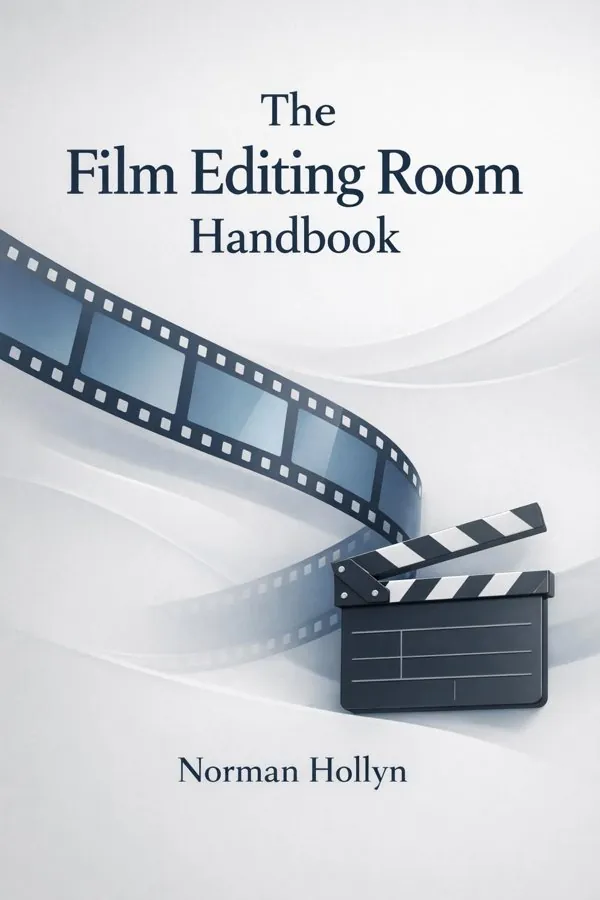
The Film Editing Room Handbook: How to Tame the Chaos of the Editing Room: Summary & Key Insights
 10 min12 chaptersAudio available
What Is The Film Editing Room Handbook: How to Tame the Chaos of the Editing Room About?
The Film Editing Room Handbook: How to Tame the Chaos of the Editing Room by Norman Hollyn is a performing_arts book spanning 12 pages. A comprehensive guide to the practical and creative aspects of film editing, this handbook provides detailed insights into the workflow, organization, and collaboration required in professional editing rooms. Norman Hollyn draws on his extensive experience in Hollywood to explain how editors can manage the technical and interpersonal challenges of post-production, from dailies to final cut.
This FizzRead summary covers all 12 key chapters of The Film Editing Room Handbook: How to Tame the Chaos of the Editing Room in approximately 10 minutes, distilling the most important ideas, arguments, and takeaways from Norman Hollyn's work. Also available as an audio summary and Key Quotes Podcast.
The Film Editing Room Handbook: How to Tame the Chaos of the Editing Room
A comprehensive guide to the practical and creative aspects of film editing, this handbook provides detailed insights into the workflow, organization, and collaboration required in professional editing rooms. Norman Hollyn draws on his extensive experience in Hollywood to explain how editors can manage the technical and interpersonal challenges of post-production, from dailies to final cut.
Who Should Read The Film Editing Room Handbook: How to Tame the Chaos of the Editing Room?
This book is perfect for anyone interested in performing_arts and looking to gain actionable insights in a short read. Whether you're a student, professional, or lifelong learner, the key ideas from The Film Editing Room Handbook: How to Tame the Chaos of the Editing Room by Norman Hollyn will help you think differently.
- ✓Readers who enjoy performing_arts and want practical takeaways
- ✓Professionals looking to apply new ideas to their work and life
- ✓Anyone who wants the core insights of The Film Editing Room Handbook: How to Tame the Chaos of the Editing Room in just 10 minutes
Want the full summary?
Get instant access to this book summary and 100K+ more with Fizz Moment.
Get Free SummaryAvailable on App Store • Free to download
Key Chapters
The editing room is less a location than a living organism — a place where the heartbeat of the film accelerates and slows in response to every decision. In this first section, I emphasize that the editing room is both sanctuary and battlefield. It’s the center of post-production, where creativity meets relentless logistics. As an editor, your true responsibilities are to control chaos while nurturing sensitivity to performance and emotion.
The room’s design matters immensely: its physical arrangement can either empower your mind or clutter it. I urge editors to keep the space organized, not because tidiness is virtuous but because the room mirrors your mental clarity. A cluttered environment breeds fragmented thinking. Whether you’re surrounded by bins and reels or digital timelines and folders, the principle remains: create systems that allow you to forget the mechanics and focus on storytelling.
Within this space, relationships define success. You’re the bridge between director, producer, and the sprawling technical crew. Your task is to interpret their visions into tangible edits, finding compromise when artistic ideals collide with budgetary demands. Purpose in the editing room isn’t merely to “assemble footage” — it’s to lead a conversation between creative voices while keeping fidelity to the film’s heart. Once you recognize the editing room as a creative hub rather than a technical pit, its chaos begins to make sense.
Organization, both physical and digital, is the foundation of editing sanity. In this section, I walk readers through setting up the room for clarity of thought and seamless collaboration. Every monitor, drive, and sound channel has to serve a purpose — not just exist. Whether working with analog tape or modern nonlinear systems like Avid and other NLEs, the principle is timeless: label, catalog, and maintain a sense of hierarchy in your materials.
I devote considerable attention to how editors handle data and storage — backups, naming conventions, versions, and logs. Your future self is your most important collaborator. When a director asks for an alternate take from day three, or a producer wants a cut restored from last week, your discipline in file management determines whether you respond with confidence or panic. Organization is your invisible art form — it protects your creativity from being derailed by chaos.
In the editing room, this extends to people as well. An assistant editor is not a subordinate, but a partner in maintaining flow. A well-organized workspace welcomes teamwork; it communicates respect for everyone’s time. I remind editors constantly that cleanliness — of files, of notes, of soundtracks — is an act of creative generosity. When the workflow runs fluidly, your mind is free to explore rhythm and emotion without being hindered by confusion.
+ 10 more chapters — available in the FizzRead app
All Chapters in The Film Editing Room Handbook: How to Tame the Chaos of the Editing Room
About the Author
Norman Hollyn (1952–2019) was an American film editor, educator, and author known for his work on films such as 'Heathers' and 'The Cotton Club'. He served as a professor at the USC School of Cinematic Arts and was widely respected for his contributions to film editing education.
Get This Summary in Your Preferred Format
Read or listen to the The Film Editing Room Handbook: How to Tame the Chaos of the Editing Room summary by Norman Hollyn anytime, anywhere. FizzRead offers multiple formats so you can learn on your terms — all free.
Available formats: App · Audio · PDF · EPUB — All included free with FizzRead
Download The Film Editing Room Handbook: How to Tame the Chaos of the Editing Room PDF and EPUB Summary
Key Quotes from The Film Editing Room Handbook: How to Tame the Chaos of the Editing Room
“The editing room is less a location than a living organism — a place where the heartbeat of the film accelerates and slows in response to every decision.”
“Organization, both physical and digital, is the foundation of editing sanity.”
Frequently Asked Questions about The Film Editing Room Handbook: How to Tame the Chaos of the Editing Room
The Film Editing Room Handbook: How to Tame the Chaos of the Editing Room by Norman Hollyn is a performing_arts book that explores key ideas across 12 chapters. A comprehensive guide to the practical and creative aspects of film editing, this handbook provides detailed insights into the workflow, organization, and collaboration required in professional editing rooms. Norman Hollyn draws on his extensive experience in Hollywood to explain how editors can manage the technical and interpersonal challenges of post-production, from dailies to final cut.
You Might Also Like

Harriet Tubman: Live in Concert
Bob the Drag Queen
10 min
The Art of Stagecraft
Robert Edmond Jones
10 min
The Art of Stop-Motion Animation
Ken A. Priebe
10 min
Thunderstorm
Cao Yu
10 min
Acting In Film: An Actor's Take on Movie Making
Michael Caine
10 min
Character Animation Crash Course!
Eric Goldberg
10 minBrowse by Category
Ready to read The Film Editing Room Handbook: How to Tame the Chaos of the Editing Room?
Get the full summary and 100K+ more books with Fizz Moment.