
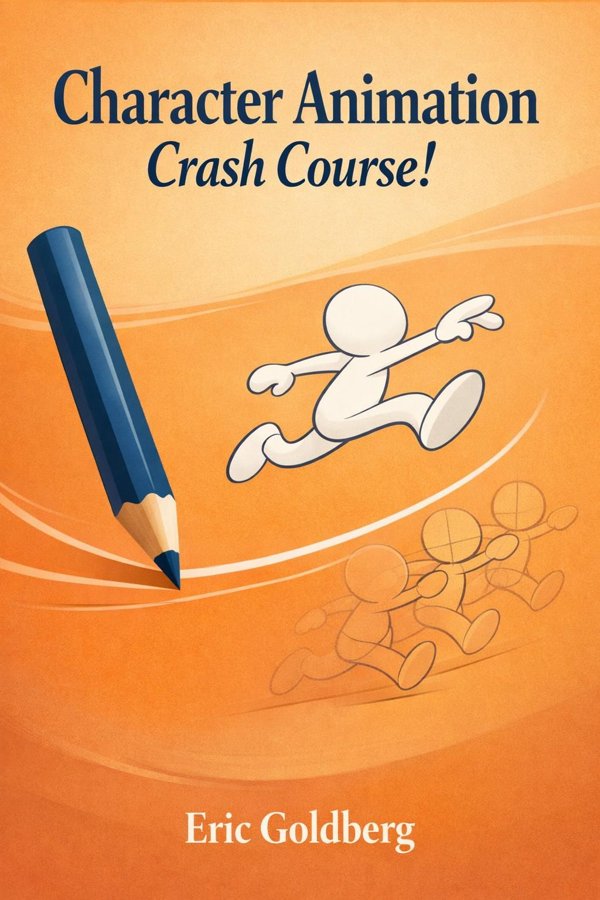
Character Animation Crash Course!: Summary & Key Insights
 10 min11 chaptersAudio available
What Is Character Animation Crash Course! About?
Character Animation Crash Course! by Eric Goldberg is a performing_arts book spanning 11 pages. This comprehensive guide by veteran Disney animator Eric Goldberg explores the principles of character animation through detailed explanations and illustrations. It teaches animators how to create expressive, believable characters by understanding movement, timing, and personality. The book includes step-by-step lessons and examples that demonstrate classic animation techniques, accompanied by a CD with animated clips for practical study.
This FizzRead summary covers all 11 key chapters of Character Animation Crash Course! in approximately 10 minutes, distilling the most important ideas, arguments, and takeaways from Eric Goldberg's work. Also available as an audio summary and Key Quotes Podcast.
Character Animation Crash Course!
This comprehensive guide by veteran Disney animator Eric Goldberg explores the principles of character animation through detailed explanations and illustrations. It teaches animators how to create expressive, believable characters by understanding movement, timing, and personality. The book includes step-by-step lessons and examples that demonstrate classic animation techniques, accompanied by a CD with animated clips for practical study.
Who Should Read Character Animation Crash Course!?
This book is perfect for anyone interested in performing_arts and looking to gain actionable insights in a short read. Whether you're a student, professional, or lifelong learner, the key ideas from Character Animation Crash Course! by Eric Goldberg will help you think differently.
- ✓Readers who enjoy performing_arts and want practical takeaways
- ✓Professionals looking to apply new ideas to their work and life
- ✓Anyone who wants the core insights of Character Animation Crash Course! in just 10 minutes
Want the full summary?
Get instant access to this book summary and 100K+ more with Fizz Moment.
Get Free SummaryAvailable on App Store • Free to download
Key Chapters
Animation begins with belief—the belief that drawings can act, express, and move with personality. My fundamental philosophy is that an animator is not a technician but an actor with a pencil. The first thing you learn in character animation is observation: watching how people behave, how they shift weight, how their eyes communicate. Without observation, movement feels mechanical. The animator must become a student of life. You must notice how a laugh changes the body’s rhythm or how hesitation alters a gesture. Animating isn’t copying life; it’s interpreting it.
In the early days at Disney, we talked about everything as performance. That’s what separates the animator from the artist who merely draws well. Every frame, every key pose must answer a single question: what is the character thinking and feeling right now? If you lose sight of that, your animation loses its soul. Whether you work in pencil, digital tools, or 3D, the responsibility remains: you bring drawings to life through thought and emotion.
This is also why staging and clarity matter so deeply. Your audience’s eye should move naturally to whatever is important in your scene. When Genie bursts onto the screen or Pocahontas turns toward the river, every movement and pose focuses us emotionally. The animator orchestrates that attention, guiding viewers like a conductor guides a symphony. Movement becomes storytelling; storytelling becomes empathy.
The twelve principles formulated by Disney’s masters—including squash and stretch, anticipation, and timing—remain fundamental because they embody universal truths about motion. When I say *squash and stretch*, I’m talking about elasticity—the very essence of life. Things deform when they move; even rigid objects carry subtle distortion. Squash gives weight; stretch gives energy. Together they make movement feel organic.
*Anticipation* sets expectation. A jump isn’t believable without the preparation—the character crouching before launching upward. It’s that psychological buildup that tells the audience something is about to happen. *Timing* and *spacing* are then the rhythm of that belief. Timing determines emotion: slow for tenderness, quick for surprise, erratic for fear. Spacing controls how motion accelerates and decelerates, giving nuance to what could otherwise feel mechanical.
As I teach these principles, I remind animators that they’re not rules—they’re instruments. You play them according to the melody of your scene. Overlapping action, follow-through, secondary action, staging—all reinforce the viewer’s intuition about natural movement. Combined, they tell the eye what’s alive and what’s not. These principles are why even a simple bouncing ball can make us smile—it has tension, release, and rhythm. That rhythm is the heartbeat of animation.
+ 9 more chapters — available in the FizzRead app
All Chapters in Character Animation Crash Course!
About the Author
Eric Goldberg is an acclaimed American animator, film director, and voice actor best known for his work at Walt Disney Animation Studios. He directed animation for iconic characters such as the Genie in 'Aladdin' and co-directed 'Pocahontas'. His expertise in traditional animation and character design has made him a respected figure in the industry.
Get This Summary in Your Preferred Format
Read or listen to the Character Animation Crash Course! summary by Eric Goldberg anytime, anywhere. FizzRead offers multiple formats so you can learn on your terms — all free.
Available formats: App · Audio · PDF · EPUB — All included free with FizzRead
Download Character Animation Crash Course! PDF and EPUB Summary
Key Quotes from Character Animation Crash Course!
“Animation begins with belief—the belief that drawings can act, express, and move with personality.”
“The twelve principles formulated by Disney’s masters—including squash and stretch, anticipation, and timing—remain fundamental because they embody universal truths about motion.”
Frequently Asked Questions about Character Animation Crash Course!
Character Animation Crash Course! by Eric Goldberg is a performing_arts book that explores key ideas across 11 chapters. This comprehensive guide by veteran Disney animator Eric Goldberg explores the principles of character animation through detailed explanations and illustrations. It teaches animators how to create expressive, believable characters by understanding movement, timing, and personality. The book includes step-by-step lessons and examples that demonstrate classic animation techniques, accompanied by a CD with animated clips for practical study.
You Might Also Like

Harriet Tubman: Live in Concert
Bob the Drag Queen
10 min
The Art of Stagecraft
Robert Edmond Jones
10 min
The Art of Stop-Motion Animation
Ken A. Priebe
10 min
Thunderstorm
Cao Yu
10 min
Acting In Film: An Actor's Take on Movie Making
Michael Caine
10 min
Dance as Medicine: The Story of Healing Dance
Anna Halprin
10 minBrowse by Category
Ready to read Character Animation Crash Course!?
Get the full summary and 100K+ more books with Fizz Moment.