
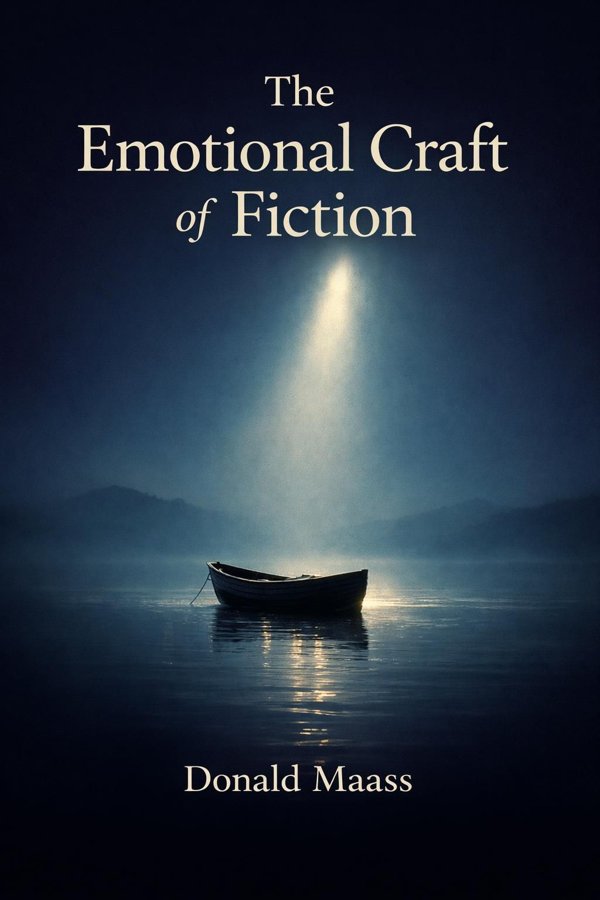
The Emotional Craft of Fiction: How to Write the Story Beneath the Surface: Summary & Key Insights
by Donald Maass
 10 min12 chaptersAudio available
What Is The Emotional Craft of Fiction: How to Write the Story Beneath the Surface About?
The Emotional Craft of Fiction: How to Write the Story Beneath the Surface by Donald Maass is a writing book spanning 12 pages. In this guide for fiction writers, literary agent and author Donald Maass explores how to evoke genuine emotional responses in readers by crafting stories that resonate on a deeper level. He provides techniques for developing characters, scenes, and narrative structures that engage readers’ empathy and imagination, helping writers move beyond surface-level storytelling to create emotionally powerful fiction.
This FizzRead summary covers all 12 key chapters of The Emotional Craft of Fiction: How to Write the Story Beneath the Surface in approximately 10 minutes, distilling the most important ideas, arguments, and takeaways from Donald Maass's work. Also available as an audio summary and Key Quotes Podcast.
The Emotional Craft of Fiction: How to Write the Story Beneath the Surface
In this guide for fiction writers, literary agent and author Donald Maass explores how to evoke genuine emotional responses in readers by crafting stories that resonate on a deeper level. He provides techniques for developing characters, scenes, and narrative structures that engage readers’ empathy and imagination, helping writers move beyond surface-level storytelling to create emotionally powerful fiction.
Who Should Read The Emotional Craft of Fiction: How to Write the Story Beneath the Surface?
This book is perfect for anyone interested in writing and looking to gain actionable insights in a short read. Whether you're a student, professional, or lifelong learner, the key ideas from The Emotional Craft of Fiction: How to Write the Story Beneath the Surface by Donald Maass will help you think differently.
- ✓Readers who enjoy writing and want practical takeaways
- ✓Professionals looking to apply new ideas to their work and life
- ✓Anyone who wants the core insights of The Emotional Craft of Fiction: How to Write the Story Beneath the Surface in just 10 minutes
Want the full summary?
Get instant access to this book summary and 100K+ more with Fizz Moment.
Get Free SummaryAvailable on App Store • Free to download
Key Chapters
Readers do not feel emotion because we tell them something sad happened—they feel because we awaken recognition, memory, and imagination. Emotion arises when readers identify with our characters, when they empathize with their struggle, and when their own inner lives intersect with what unfolds on the page. I emphasize that fiction is not an emotional lecture; it’s an emotional experience. Readers participate imaginatively—they supply part of the feeling themselves. That’s why simply depicting tears or grief rarely succeeds. You must build situations and choices that invite them to engage.
In this section, I discuss how identification operates at different levels—from shared human experience to specific psychological resonance. Empathy, in fiction, is a delicate transaction between what’s written and what’s perceived. It’s rooted in authenticity, not performance. When you capture the complexity of how people hide, contradict, and rationalize their feelings, readers recognize truth; they project themselves into it. They imagine what it’s like to live those choices.
The emotional craft, therefore, demands restraint and respect for the reader’s own imagination. Give them room to fill in emotional meaning. They should feel invited, never forced. Write so that they feel the trembling between the words—the unsaid longing, the quiet struggle—and they will supply the emotion themselves, often more powerfully than you could describe.
Emotion in fiction begins with the people who inhabit it. Characters are the emotional engines of your story. But for a character’s feelings to touch readers deeply, those feelings must come from credible inner conflict—tension between desire, fear, duty, and truth. I show how to move beyond flat emotions by exploring contradictory impulses. A hero’s courage is most affecting when mixed with self-doubt. Love is felt more keenly when shadowed by loss or uncertainty.
I encourage writers to ask questions that reveal what shapes a character’s emotional world: What do they yearn for yet cannot admit? What belief guards them against pain but also keeps them from joy? When you uncover those emotional paradoxes, you access the truth beneath appearance. Scenes then become opportunities not simply to depict action, but to reveal what each action means emotionally.
In this section, I illustrate how subtle gestures, choices, or silence can express more than exposition. A character’s restraint can be louder than a scream; a lie told to protect someone can wound more deeply than open cruelty. The emotional landscape is terrain of contradiction and transformation. Build it honestly, and readers will not only understand your characters—they will inhabit them.
+ 10 more chapters — available in the FizzRead app
All Chapters in The Emotional Craft of Fiction: How to Write the Story Beneath the Surface
About the Author
Donald Maass is a veteran literary agent and author of several influential books on writing craft, including 'Writing the Breakout Novel' and 'The Fire in Fiction'. He is the founder of the Donald Maass Literary Agency in New York and is known for his workshops and seminars that help writers elevate their storytelling skills.
Get This Summary in Your Preferred Format
Read or listen to the The Emotional Craft of Fiction: How to Write the Story Beneath the Surface summary by Donald Maass anytime, anywhere. FizzRead offers multiple formats so you can learn on your terms — all free.
Available formats: App · Audio · PDF · EPUB — All included free with FizzRead
Download The Emotional Craft of Fiction: How to Write the Story Beneath the Surface PDF and EPUB Summary
Key Quotes from The Emotional Craft of Fiction: How to Write the Story Beneath the Surface
“Readers do not feel emotion because we tell them something sad happened—they feel because we awaken recognition, memory, and imagination.”
“Emotion in fiction begins with the people who inhabit it.”
Frequently Asked Questions about The Emotional Craft of Fiction: How to Write the Story Beneath the Surface
The Emotional Craft of Fiction: How to Write the Story Beneath the Surface by Donald Maass is a writing book that explores key ideas across 12 chapters. In this guide for fiction writers, literary agent and author Donald Maass explores how to evoke genuine emotional responses in readers by crafting stories that resonate on a deeper level. He provides techniques for developing characters, scenes, and narrative structures that engage readers’ empathy and imagination, helping writers move beyond surface-level storytelling to create emotionally powerful fiction.
You Might Also Like
The Art of Perspective
Christopher Castellani
10 min
Making a Point: The Persnickety Story of English Punctuation
David Crystal
10 min
The Elements Of Eloquence: How To Turn The Perfect English Phrase
Mark Forsyth
10 min
The Pocket Muse: Ideas and Inspirations for Writing
Monica Wood
10 min
A Little Book on Form: An Exploration into the Formal Imagination of Poetry
Robert Hass
10 min
Adventures In The Screen Trade: A Personal View Of Hollywood And Screenwriting
William Goldman
10 minBrowse by Category
Ready to read The Emotional Craft of Fiction: How to Write the Story Beneath the Surface?
Get the full summary and 100K+ more books with Fizz Moment.