
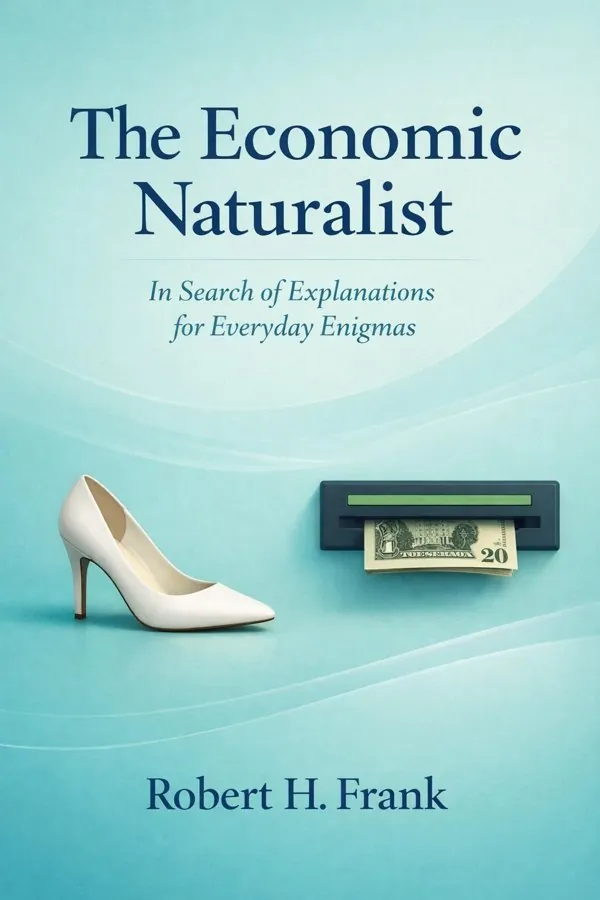
The Economic Naturalist: In Search of Explanations for Everyday Enigmas: Summary & Key Insights
 10 min9 chaptersAudio available
What Is The Economic Naturalist: In Search of Explanations for Everyday Enigmas About?
The Economic Naturalist: In Search of Explanations for Everyday Enigmas by Robert H. Frank is a economics book spanning 9 pages. In this engaging and accessible book, economist Robert H. Frank uses simple yet powerful economic principles to explain puzzling aspects of everyday life—from why drive-through ATMs have Braille to why brides spend so much on wedding dresses. Through these examples, Frank demonstrates how economic reasoning can illuminate the hidden logic behind human behavior and social phenomena.
This FizzRead summary covers all 9 key chapters of The Economic Naturalist: In Search of Explanations for Everyday Enigmas in approximately 10 minutes, distilling the most important ideas, arguments, and takeaways from Robert H. Frank's work. Also available as an audio summary and Key Quotes Podcast.
The Economic Naturalist: In Search of Explanations for Everyday Enigmas
In this engaging and accessible book, economist Robert H. Frank uses simple yet powerful economic principles to explain puzzling aspects of everyday life—from why drive-through ATMs have Braille to why brides spend so much on wedding dresses. Through these examples, Frank demonstrates how economic reasoning can illuminate the hidden logic behind human behavior and social phenomena.
Who Should Read The Economic Naturalist: In Search of Explanations for Everyday Enigmas?
This book is perfect for anyone interested in economics and looking to gain actionable insights in a short read. Whether you're a student, professional, or lifelong learner, the key ideas from The Economic Naturalist: In Search of Explanations for Everyday Enigmas by Robert H. Frank will help you think differently.
- ✓Readers who enjoy economics and want practical takeaways
- ✓Professionals looking to apply new ideas to their work and life
- ✓Anyone who wants the core insights of The Economic Naturalist: In Search of Explanations for Everyday Enigmas in just 10 minutes
Want the full summary?
Get instant access to this book summary and 100K+ more with Fizz Moment.
Get Free SummaryAvailable on App Store • Free to download
Key Chapters
At the heart of every sound economic decision lies what economists call opportunity cost — the value of the next best alternative forgone. It’s the invisible price tag attached to every choice you make. When you choose one path, you automatically give up another. Understanding opportunity cost is the first step toward understanding how rational decisions emerge from scarcity.
Early in my teaching career, I found that students often misunderstood this principle. They thought of costs only in monetary terms. But when a student spends four years pursuing a degree in business instead of literature, the cost isn’t just tuition — it’s the experiences and career paths left unexplored. When someone waits two hours in line for discounted concert tickets, the price isn’t just what they pay at the window but also what they could have earned or enjoyed during those two hours. Once people begin to see their time, energy, and attention as scarce resources, their world becomes a field of trade-offs instead of arbitrary choices.
Opportunity cost also explains many social behaviors that at first seem irrational. Take the case of long queues at popular restaurants. People who stay in line signal that their leisure time may be less valuable than the prestige or pleasure of eating at that particular place. Similarly, the reason top students pursue medical school despite its grueling long-term commitments is not that they ignore the effort involved; it’s that they compare it against alternative careers and find the perceived return, social respect, and intrinsic reward higher.
When we ignore opportunity cost, we become easy prey to illusion — believing something is free because no price tag is shown. But everything costs something, even if that cost appears only as what you do not get instead. Economic naturalists learn to see these costs everywhere: in environmental policy, in business investment, and in everyday time management. Once you internalize this way of thinking, the fog lifts. Decisions become transparent; priorities align with actual values rather than superficial appearances.
If opportunity cost tells us what we give up, incentives tell us why we choose one option over another. The world runs on incentives — not only financial but psychological and social ones. Yet many of our greatest blunders happen when we design incentives poorly or misunderstand how powerfully they shape behavior.
Consider executive perks such as first-class flights and luxury retreats. To outsiders, these may seem wasteful, but they function as incentives for loyalty and prestige within competitive hierarchies. When companies offer such rewards, they are acknowledging a fundamental truth: people respond not only to salary but also to signals of status and recognition. And those signals motivate effort beyond what raw numbers could achieve.
Similarly, people buy extended warranties not because they expect their electronics to fail but because the incentive mechanism at work is emotional insurance — paying for peace of mind. Economically speaking, the choice may be irrational if you calculate pure expected value, yet perfectly sensible once you recognize the behavioral side of incentives. This helps us see why public policy must be designed with human psychology in mind. If we want people to conserve water, for example, it’s not enough to issue pleas; we must make conservation the incentivized choice, whether through pricing or prestige.
Incentives are also the invisible architects of organizational systems. Poorly designed incentive structures lead to outcomes nobody intended — bankers taking excessive risks because their bonuses reward short-term gains; teachers teaching to the test because evaluation depends on scores. Every society must therefore reckon with how incentives align private interests with social welfare. Economic naturalism equips us with the lens to see these connections before they erupt into crisis. It encourages us to ask not only what the rules are but what behaviors they reward.
+ 7 more chapters — available in the FizzRead app
All Chapters in The Economic Naturalist: In Search of Explanations for Everyday Enigmas
About the Author
Robert H. Frank is a professor of economics at Cornell University and a columnist for The New York Times. He is known for his work on behavioral economics, inequality, and the role of emotions in economic decision-making. His books, including 'The Winner-Take-All Society' and 'Luxury Fever,' have been widely acclaimed for making complex economic ideas accessible to general readers.
Get This Summary in Your Preferred Format
Read or listen to the The Economic Naturalist: In Search of Explanations for Everyday Enigmas summary by Robert H. Frank anytime, anywhere. FizzRead offers multiple formats so you can learn on your terms — all free.
Available formats: App · Audio · PDF · EPUB — All included free with FizzRead
Download The Economic Naturalist: In Search of Explanations for Everyday Enigmas PDF and EPUB Summary
Key Quotes from The Economic Naturalist: In Search of Explanations for Everyday Enigmas
“At the heart of every sound economic decision lies what economists call opportunity cost — the value of the next best alternative forgone.”
“If opportunity cost tells us what we give up, incentives tell us why we choose one option over another.”
Frequently Asked Questions about The Economic Naturalist: In Search of Explanations for Everyday Enigmas
The Economic Naturalist: In Search of Explanations for Everyday Enigmas by Robert H. Frank is a economics book that explores key ideas across 9 chapters. In this engaging and accessible book, economist Robert H. Frank uses simple yet powerful economic principles to explain puzzling aspects of everyday life—from why drive-through ATMs have Braille to why brides spend so much on wedding dresses. Through these examples, Frank demonstrates how economic reasoning can illuminate the hidden logic behind human behavior and social phenomena.
More by Robert H. Frank
You Might Also Like
Business Adventures
John Brooks
10 min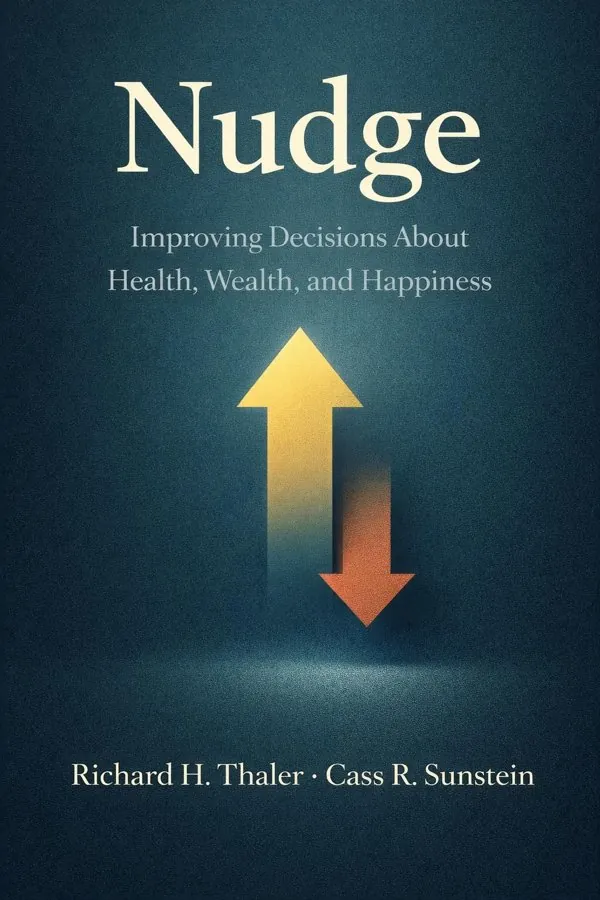
Nudge
Richard H. Thaler, Cass R. Sunstein
10 min
The Hitchhiker"s Guide to the Galaxy
Douglas Adams
10 minThe Muqaddimah
Ibn Khaldun
10 minThe Outsiders
William N. Thorndike
10 min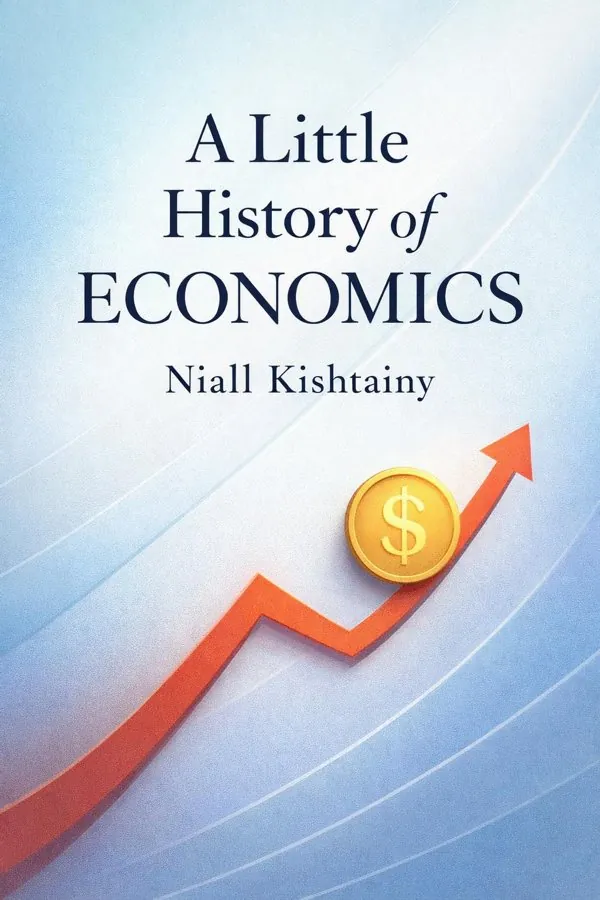
A Little History of Economics
Niall Kishtainy
10 minBrowse by Category
Ready to read The Economic Naturalist: In Search of Explanations for Everyday Enigmas?
Get the full summary and 100K+ more books with Fizz Moment.