
The Economic Consequences of the Peace: Summary & Key Insights
 10 min10 chaptersAudio available
What Is The Economic Consequences of the Peace About?
The Economic Consequences of the Peace by John Maynard Keynes is a economics book spanning 10 pages. The Economic Consequences of the Peace is a seminal work by British economist John Maynard Keynes, first published in 1919. In this book, Keynes offers a critical analysis of the Treaty of Versailles, arguing that the harsh reparations and economic terms imposed on Germany after World War I would lead to severe economic hardship and political instability in Europe. His insights foreshadowed many of the economic and political crises that followed in the interwar period.
This FizzRead summary covers all 10 key chapters of The Economic Consequences of the Peace in approximately 10 minutes, distilling the most important ideas, arguments, and takeaways from John Maynard Keynes's work. Also available as an audio summary and Key Quotes Podcast.
The Economic Consequences of the Peace
The Economic Consequences of the Peace is a seminal work by British economist John Maynard Keynes, first published in 1919. In this book, Keynes offers a critical analysis of the Treaty of Versailles, arguing that the harsh reparations and economic terms imposed on Germany after World War I would lead to severe economic hardship and political instability in Europe. His insights foreshadowed many of the economic and political crises that followed in the interwar period.
Who Should Read The Economic Consequences of the Peace?
This book is perfect for anyone interested in economics and looking to gain actionable insights in a short read. Whether you're a student, professional, or lifelong learner, the key ideas from The Economic Consequences of the Peace by John Maynard Keynes will help you think differently.
- ✓Readers who enjoy economics and want practical takeaways
- ✓Professionals looking to apply new ideas to their work and life
- ✓Anyone who wants the core insights of The Economic Consequences of the Peace in just 10 minutes
Want the full summary?
Get instant access to this book summary and 100K+ more with Fizz Moment.
Get Free SummaryAvailable on App Store • Free to download
Key Chapters
When the armistice silenced the guns in November 1918, the world was torn, exhausted, and hungry for redemption. The Peace Conference convened in Paris carried the hopes of a generation who had been told that this would be the 'war to end wars.' The mood was a strange mixture of elation and revenge; the euphoria of victory mingled with the craving to punish. Into that atmosphere came the great men of the age — President Woodrow Wilson of the United States, Premier Georges Clemenceau of France, and Prime Minister David Lloyd George of Britain.
Wilson brought ideals. His 'Fourteen Points' had stirred even the defeated nations with their promise of a just peace and self-determination. But ideals are fragile in the presence of politics. Clemenceau came not to heal but to safeguard France’s security, to ensure that Germany could never again rise to threaten her borders. Lloyd George, caught between a weary public demanding spoils and his own understanding of Britain’s dependence on European trade, wavered. I, as part of the British delegation, observed this trinity of men — each struggling between conscience and constraint — and saw how their differences shaped the fate of Europe.
Behind the grand speeches, the conference was a theater of calculation. The victors argued over territorial spoils, the division of colonies, and the disposition of debts. The defeated had no voice. Germany was summoned only to sign. I watched the Allied leaders barter compensation with the same spirit as merchants haggling over a bill. The result was not a peace treaty in the spirit of reconstruction, but an act of economic retaliation clothed in legal phrases. The purpose was not to rebuild Europe, but to extract payments and secure political triumphs for domestic audiences.
I began to see that France’s insistence on security, Britain’s demand for repayment, and America’s withdrawal into moral abstraction were weaving a tapestry of disaster. The conference could have been the birth of a new international order; instead, it became the funeral of European unity.
In dissecting the Treaty of Versailles, one must begin with its core economic provisions. At its heart lay the demand for reparations — payments by Germany to the Allied powers intended to compensate for war damages. The figure was left undefined in the treaty, to be determined later by a commission, but the magnitude implied was astronomical. The treaty also stripped Germany of territories rich in coal and iron, confiscated her overseas colonies, and required the surrender of her merchant fleet. All this under the guise of justice.
In theory, the Treaty sought to restore balance. In practice, it destroyed the machinery of European production. By removing Germany’s capacity to trade, produce, and export, the treaty rendered the payment of reparations impossible except through borrowing or further impoverishment. The Allies thereby cut off the very source of the wealth they intended to extract.
Equally destructive were the territorial adjustments. Alsace-Lorraine was restored to France; parts of Prussia and Silesia were ceded to the new Poland; the Saar Basin was placed under League supervision for French use. Each transfer dismembered not only German territory but the economic coherence of central Europe. Coalfields now lay on one side of a border and the factories they fed on another. Railways no longer ran through a unified network but through hostile customs posts.
The treaty’s authors believed they were building security. What they built was paralysis. They imagined reparations as tribute; they ignored that modern economies are interdependent systems. To make one nation pay is to make another nation fail. The notion that Europe could bleed Germany without growing anemic itself was a contradiction in terms.
I concluded that the treaty, far from ensuring peace, created an economic structure incapable of sustaining the livelihoods of millions. It was a peace in name, but war by economic means.
+ 8 more chapters — available in the FizzRead app
All Chapters in The Economic Consequences of the Peace
About the Author
John Maynard Keynes (1883–1946) was a British economist whose ideas fundamentally changed the theory and practice of macroeconomics and the economic policies of governments. He is best known for his advocacy of government intervention to mitigate the adverse effects of economic recessions and depressions, as articulated in his later work, The General Theory of Employment, Interest and Money.
Get This Summary in Your Preferred Format
Read or listen to the The Economic Consequences of the Peace summary by John Maynard Keynes anytime, anywhere. FizzRead offers multiple formats so you can learn on your terms — all free.
Available formats: App · Audio · PDF · EPUB — All included free with FizzRead
Download The Economic Consequences of the Peace PDF and EPUB Summary
Key Quotes from The Economic Consequences of the Peace
“When the armistice silenced the guns in November 1918, the world was torn, exhausted, and hungry for redemption.”
“In dissecting the Treaty of Versailles, one must begin with its core economic provisions.”
Frequently Asked Questions about The Economic Consequences of the Peace
The Economic Consequences of the Peace by John Maynard Keynes is a economics book that explores key ideas across 10 chapters. The Economic Consequences of the Peace is a seminal work by British economist John Maynard Keynes, first published in 1919. In this book, Keynes offers a critical analysis of the Treaty of Versailles, arguing that the harsh reparations and economic terms imposed on Germany after World War I would lead to severe economic hardship and political instability in Europe. His insights foreshadowed many of the economic and political crises that followed in the interwar period.
More by John Maynard Keynes

You Might Also Like
Business Adventures
John Brooks
10 min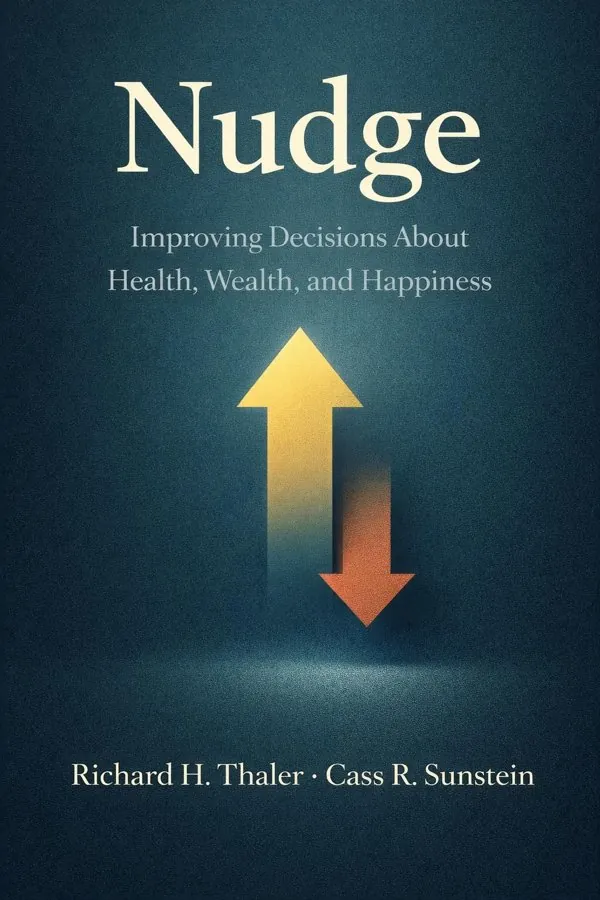
Nudge
Richard H. Thaler, Cass R. Sunstein
10 min
The Hitchhiker"s Guide to the Galaxy
Douglas Adams
10 minThe Muqaddimah
Ibn Khaldun
10 minThe Outsiders
William N. Thorndike
10 min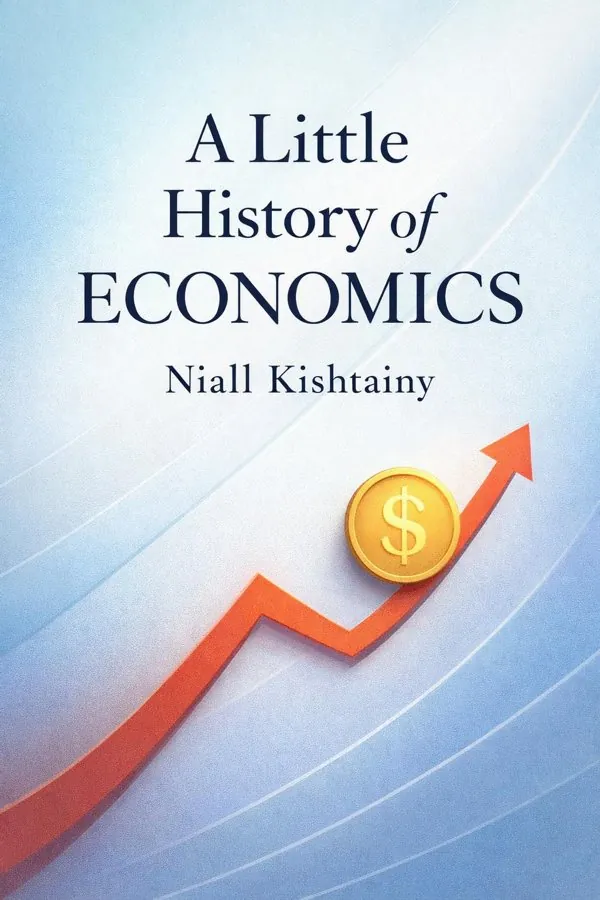
A Little History of Economics
Niall Kishtainy
10 minBrowse by Category
Ready to read The Economic Consequences of the Peace?
Get the full summary and 100K+ more books with Fizz Moment.