
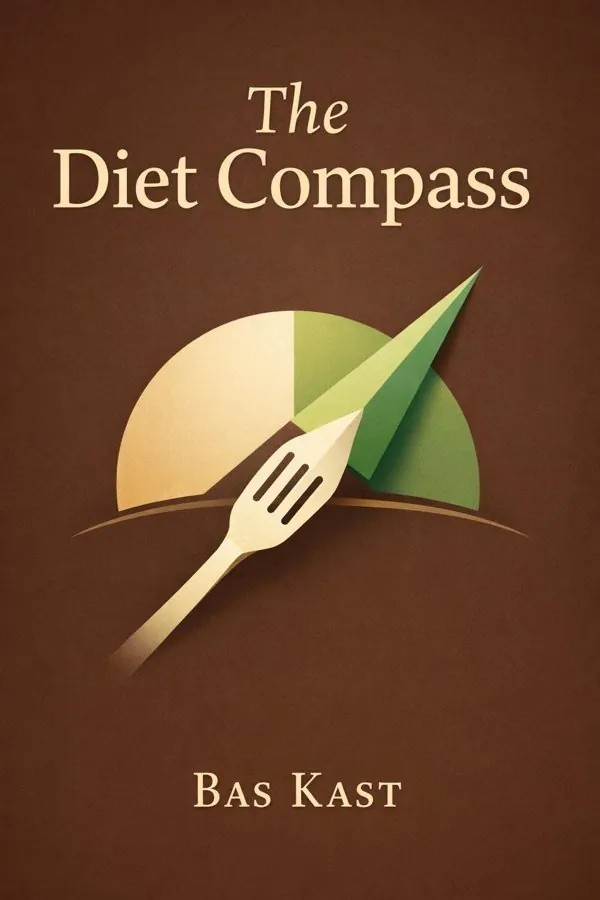
The Diet Compass: The Science of Eating for a Lifetime of Health: Summary & Key Insights
by Bas Kast
 10 min7 chaptersAudio available
What Is The Diet Compass: The Science of Eating for a Lifetime of Health About?
The Diet Compass: The Science of Eating for a Lifetime of Health by Bas Kast is a nutrition book spanning 7 pages. In The Diet Compass, science journalist Bas Kast explores decades of nutritional research to uncover what truly constitutes a healthy diet. After facing his own health challenges, Kast embarked on a journey through scientific literature to distill evidence-based insights into practical guidance for everyday eating. The book offers a clear, accessible synthesis of complex studies, helping readers make informed choices for long-term well-being.
This FizzRead summary covers all 7 key chapters of The Diet Compass: The Science of Eating for a Lifetime of Health in approximately 10 minutes, distilling the most important ideas, arguments, and takeaways from Bas Kast's work. Also available as an audio summary and Key Quotes Podcast.
The Diet Compass: The Science of Eating for a Lifetime of Health
In The Diet Compass, science journalist Bas Kast explores decades of nutritional research to uncover what truly constitutes a healthy diet. After facing his own health challenges, Kast embarked on a journey through scientific literature to distill evidence-based insights into practical guidance for everyday eating. The book offers a clear, accessible synthesis of complex studies, helping readers make informed choices for long-term well-being.
Who Should Read The Diet Compass: The Science of Eating for a Lifetime of Health?
This book is perfect for anyone interested in nutrition and looking to gain actionable insights in a short read. Whether you're a student, professional, or lifelong learner, the key ideas from The Diet Compass: The Science of Eating for a Lifetime of Health by Bas Kast will help you think differently.
- ✓Readers who enjoy nutrition and want practical takeaways
- ✓Professionals looking to apply new ideas to their work and life
- ✓Anyone who wants the core insights of The Diet Compass: The Science of Eating for a Lifetime of Health in just 10 minutes
Want the full summary?
Get instant access to this book summary and 100K+ more with Fizz Moment.
Get Free SummaryAvailable on App Store • Free to download
Key Chapters
When I first began examining the landscape of nutritional research, I was struck by a simple truth: almost no other field had produced such a sea of contradictions. One decade we were told to avoid fat. The next, fat was rehabilitated and carbohydrates became the new villain. Protein, once a byword for strength, suddenly stirred fears about cancer and premature aging. How did we get here?
The modern confusion arises from the twin forces of reductionism and industrialization. Scientists, in their quest for precision, often isolated nutrients—cholesterol, saturated fat, glucose—as independent variables, forgetting that humans never eat nutrients, we eat food. Industry, meanwhile, learned to manipulate these findings for commercial ends, marketing low-fat biscuits, high-protein bars, or sugar-free sodas as health products. Through the twentieth century, public dietary guidelines shifted under the influence of evolving but incomplete science.
In reviewing this history, I found that conflicting recommendations are often the result of partial truths taken out of context. Each macronutrient—carbs, fat, protein—has its place in the orchestra of metabolism. Trouble starts when we exaggerate one note and silence the rest. The Mediterranean diet, the Okinawan tradition, or the simple patterns seen in long-lived rural communities all demonstrate that harmony, not extremism, is the key. My mission became to find that harmony, guided by data rather than ideology.
To make sense of the chaos, I devised what I ultimately called my personal ‘diet compass’—a synthesis of recurring patterns that spanned cultures and scientific disciplines. Across these patterns, three messages echoed: limit sugar and refined grains, favor unprocessed plant foods and healthy fats, and let moderation, rather than restriction, rule your plate. The next sections reveal why these principles matter, and how they can reshape your health from the inside out.
Few discoveries shook me as deeply as the science surrounding sugar and refined carbohydrates. For decades, we believed fat was the primary dietary villain. Yet study after study began to paint a different culprit behind obesity, insulin resistance, and a growing epidemic of chronic disease. The true issue was not natural carbohydrates—whole grains, fruits, and vegetables—but the endless flood of refined starches and added sugars that quietly dominate modern diets.
When we consume these rapid-digesting carbs, our bloodstream is flooded with glucose. Insulin, the hormone designed to shuttle that glucose into cells, rises sharply. Over time, chronic overload dulls our cells’ sensitivity to insulin, forcing the pancreas to work harder. The result is the prelude to type 2 diabetes, inflammation, and even premature aging. In contrast, populations that thrive on complex carbohydrates—from beans to intact grains—maintain more stable metabolic profiles. Context, once again, is everything.
I explored laboratory studies showing how elevated insulin accelerates the storage of fat while suppressing fat burning, creating a vicious cycle. Even the brain, our hungriest organ, becomes trapped in cravings when exposed to refined sugar spikes. It’s no coincidence that the more processed our food, the hungrier we remain.
But this realization was not an invitation to cut out all carbs. Our bodies need them, especially those bound with fiber and phytonutrients. Instead, it was a call to distinguish between nourishment and sabotage. I learned to think of sugar not as a treat, but as a toxin in large doses—something evolution never prepared us for. Once I made that shift, energy returned, my cardiovascular health improved, and I grasped how modern nutrition should start with one simple principle: respect your insulin.
+ 5 more chapters — available in the FizzRead app
All Chapters in The Diet Compass: The Science of Eating for a Lifetime of Health
About the Author
Bas Kast is a German science journalist and author known for his accessible works on psychology, creativity, and nutrition. Born in 1973, he studied psychology and biology in Konstanz and Boston and worked as an editor for Der Tagesspiegel. His books have become bestsellers in Germany and abroad for their engaging presentation of scientific topics.
Get This Summary in Your Preferred Format
Read or listen to the The Diet Compass: The Science of Eating for a Lifetime of Health summary by Bas Kast anytime, anywhere. FizzRead offers multiple formats so you can learn on your terms — all free.
Available formats: App · Audio · PDF · EPUB — All included free with FizzRead
Download The Diet Compass: The Science of Eating for a Lifetime of Health PDF and EPUB Summary
Key Quotes from The Diet Compass: The Science of Eating for a Lifetime of Health
“When I first began examining the landscape of nutritional research, I was struck by a simple truth: almost no other field had produced such a sea of contradictions.”
“Few discoveries shook me as deeply as the science surrounding sugar and refined carbohydrates.”
Frequently Asked Questions about The Diet Compass: The Science of Eating for a Lifetime of Health
The Diet Compass: The Science of Eating for a Lifetime of Health by Bas Kast is a nutrition book that explores key ideas across 7 chapters. In The Diet Compass, science journalist Bas Kast explores decades of nutritional research to uncover what truly constitutes a healthy diet. After facing his own health challenges, Kast embarked on a journey through scientific literature to distill evidence-based insights into practical guidance for everyday eating. The book offers a clear, accessible synthesis of complex studies, helping readers make informed choices for long-term well-being.
You Might Also Like
Eating by the Seasons Cookbook: Seasonal Produce-Focused Recipes
Clare Foster
10 min
From Crook to Cook: Platinum Recipes from Tha Boss Dogg's Kitchen
Snoop Dogg with Ryan Ford
10 min
Juicing for Beginners: The Essential Guide to Juicing Recipes and Juicing for Weight Loss
Rockridge Press
10 min
The Food Therapist: Break Bad Habits, Eat with Intention, and Indulge Without Worry
Shira Lenchewski
10 min
The Mediterranean Diet Meal Plan: A 4-Week Meal Plan for Optimal Health and Weight Loss
Various Contributors
10 min
The Well Plated Cookbook: Simple, Wholesome Recipes for Everyday Meals
Erin Clarke
10 minBrowse by Category
Ready to read The Diet Compass: The Science of Eating for a Lifetime of Health?
Get the full summary and 100K+ more books with Fizz Moment.