
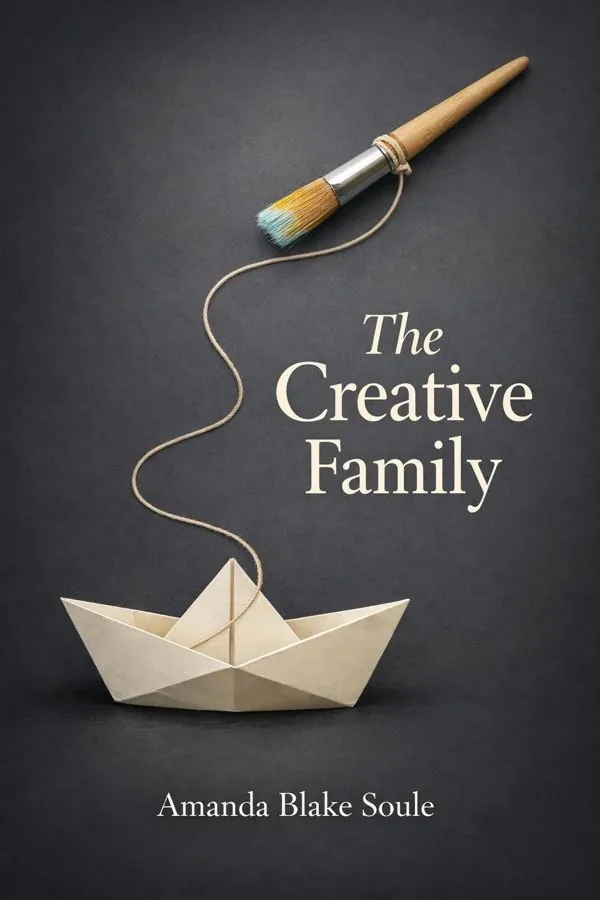
The Creative Family: How to Encourage Imagination and Nurture Family Connections: Summary & Key Insights
 10 min9 chaptersAudio available
Key Takeaways from The Creative Family: How to Encourage Imagination and Nurture Family Connections
Creativity rarely appears by accident; it grows where it is welcomed.
Children learn creativity less from instruction than from observation.
Freedom thrives best inside gentle structure.
More supplies do not always lead to better creativity; often they lead to distraction.
Imaginative play can look frivolous to adults, but Soule treats it as one of childhood’s most important forms of learning and connection.
What Is The Creative Family: How to Encourage Imagination and Nurture Family Connections About?
The Creative Family: How to Encourage Imagination and Nurture Family Connections by Amanda Blake Soule is a parenting book spanning 11 pages. The Creative Family is a warm, practical guide to building a home life shaped by imagination, making, and meaningful connection. In this book, Amanda Blake Soule argues that creativity is not an extracurricular luxury or a talent reserved for a gifted few. It is a way of living together: telling stories, making things by hand, noticing the seasons, welcoming play, and giving children the freedom to explore their own ideas. Rather than pushing parents toward perfection, Soule offers an inviting vision of family life that is slower, more intentional, and deeply rooted in everyday moments. The book matters because many families feel pulled toward overscheduling, screen distraction, and consumer habits that leave little room for wonder. Soule shows that a creative home does not require expensive supplies, special expertise, or endless time. It requires attention, rhythm, and a willingness to value process over polished results. As a writer, crafter, mother, and creator of the influential SouleMama blog, she writes from lived experience. Her authority comes not from rigid theory, but from a grounded understanding of what helps creativity flourish in real family life.
This FizzRead summary covers all 9 key chapters of The Creative Family: How to Encourage Imagination and Nurture Family Connections in approximately 10 minutes, distilling the most important ideas, arguments, and takeaways from Amanda Blake Soule's work. Also available as an audio summary and Key Quotes Podcast.
The Creative Family: How to Encourage Imagination and Nurture Family Connections
The Creative Family is a warm, practical guide to building a home life shaped by imagination, making, and meaningful connection. In this book, Amanda Blake Soule argues that creativity is not an extracurricular luxury or a talent reserved for a gifted few. It is a way of living together: telling stories, making things by hand, noticing the seasons, welcoming play, and giving children the freedom to explore their own ideas. Rather than pushing parents toward perfection, Soule offers an inviting vision of family life that is slower, more intentional, and deeply rooted in everyday moments.
The book matters because many families feel pulled toward overscheduling, screen distraction, and consumer habits that leave little room for wonder. Soule shows that a creative home does not require expensive supplies, special expertise, or endless time. It requires attention, rhythm, and a willingness to value process over polished results. As a writer, crafter, mother, and creator of the influential SouleMama blog, she writes from lived experience. Her authority comes not from rigid theory, but from a grounded understanding of what helps creativity flourish in real family life.
Who Should Read The Creative Family: How to Encourage Imagination and Nurture Family Connections?
This book is perfect for anyone interested in parenting and looking to gain actionable insights in a short read. Whether you're a student, professional, or lifelong learner, the key ideas from The Creative Family: How to Encourage Imagination and Nurture Family Connections by Amanda Blake Soule will help you think differently.
- ✓Readers who enjoy parenting and want practical takeaways
- ✓Professionals looking to apply new ideas to their work and life
- ✓Anyone who wants the core insights of The Creative Family: How to Encourage Imagination and Nurture Family Connections in just 10 minutes
Want the full summary?
Get instant access to this book summary and 100K+ more with Fizz Moment.
Get Free SummaryAvailable on App Store • Free to download
Key Chapters
Creativity rarely appears by accident; it grows where it is welcomed. One of Soule’s central insights is that children become more imaginative when their environment quietly tells them that making, experimenting, and wondering belong in everyday life. This does not mean every family needs a dedicated art studio or a beautifully curated playroom. It means creating intentional space, however small, where children know they can draw, stitch, build, paint, sort found objects, or invent worlds without feeling that creativity is an interruption.
A creative space can be as simple as a basket of crayons at the kitchen table, a shelf for paper and scissors, a corner with fabric scraps and blocks, or a nature table filled with stones, leaves, and feathers. The point is accessibility. If materials are hidden away, creativity becomes an event that requires permission and setup. If they are visible and within reach, creativity becomes part of the family’s natural rhythm.
Soule also emphasizes emotional space. Children need room to make messes, change their minds, and create without pressure to impress adults. A home that values process over perfection gives children confidence to explore. Parents can support this by resisting the urge to over-direct projects or correct every unconventional idea.
The practical lesson is simple: look at your home and ask whether it invites creativity or merely contains it. Create one small, accessible area this week where your child can begin making independently, and protect it as a place where imagination is expected and valued.
Children learn creativity less from instruction than from observation. Soule makes the powerful point that parents are the emotional weather of a home: when adults make things, repair things, read, garden, write, sing, bake, or tinker with curiosity, children absorb the message that creativity is a normal human activity, not a performance for experts. The goal is not to impress children with talent, but to let them see the joy of being engaged in making.
This matters because many adults quietly believe they are “not creative,” often because they compare themselves to trained artists or remember criticism from their own childhoods. Soule gently rejects that idea. Creativity includes knitting a scarf, arranging flowers from the yard, inventing bedtime stories, mending clothes, baking bread, or sketching badly but happily. When parents participate in creative work without apology, they free children from perfectionism too.
Modeling also means demonstrating patience with mistakes. A child who sees a parent rip out crooked stitches, start over on a drawing, or laugh when a recipe fails learns resilience. Creativity becomes linked with experimentation rather than fear. Families can build this into daily life by having regular quiet making time, working on seasonal projects together, or sharing what each person is currently creating.
The takeaway is to stop waiting until you feel talented enough to be creative in front of your children. Choose one modest hands-on activity you genuinely enjoy and let your child see you doing it regularly. Your example will teach more than any lecture about imagination ever could.
Freedom thrives best inside gentle structure. Soule highlights the importance of daily rhythms and family rituals because creativity often deepens when children know there is dependable time for it. A chaotic home can leave everyone overstimulated, rushed, and reactive. By contrast, simple routines create the safety and spaciousness that imaginative life needs.
Rhythms do not have to be rigid schedules. They might include morning drawing while breakfast is being prepared, an afternoon walk for collecting natural treasures, weekly baking on Saturdays, handwork in the evening, or storytelling before bed. Repeated rituals become anchors in family life. They tell children that creativity is not something squeezed in after all the “important” things are done; it is one of the important things.
Soule also connects rhythm with emotional connection. Rituals become memory-making devices. A child may forget a specific craft project, but remember for years the candle lit at winter dinner, the annual handmade birthday crown, or the rainy-day puppet shows in the living room. These repeated practices give family life texture and identity.
Parents can begin by noticing the natural openings in their existing routines rather than adding pressure. A ten-minute sketching habit after lunch is more sustainable than an ambitious craft plan that requires constant preparation. Seasonal rituals can help too, such as decorating a nature table each month or making handmade gifts during holidays.
A useful next step is to choose one repeatable creative ritual and commit to it for a month. Consistency matters more than complexity. When creativity becomes woven into family rhythm, children learn that imagination belongs not only to special occasions, but to ordinary life.
More supplies do not always lead to better creativity; often they lead to distraction. Soule encourages families to rethink the modern habit of overbuying craft kits, branded toys, and highly structured activities. Children’s imagination often grows stronger when materials are open-ended, tactile, and humble. A basket of wool, fabric scraps, paper, clay, cardboard, beeswax crayons, tape, sticks, shells, and buttons can do more for creative development than a room full of single-purpose entertainment.
The reason is that open-ended materials require interpretation. A cardboard box can become a ship, puppet theater, market stall, or animal home. Scraps of fabric can become costumes, doll blankets, flags, or imaginary landscapes. Natural materials gathered on walks invite sorting, arranging, collaging, and storytelling. When tools are simple, children provide the complexity.
Soule also values beauty and care in the materials families keep. This does not mean expensive objects; it means choosing tools that are pleasant to use and worthy of respect. A few good paintbrushes, sturdy scissors, or real kitchen tools can make children feel trusted and capable. Rotating supplies rather than displaying everything at once can also renew interest and reduce clutter.
Parents should notice when materials are doing too much of the imaginative work. If an activity comes with only one correct outcome, it may entertain but not truly expand creativity. Better to offer ingredients than instructions whenever possible.
Action step: simplify your family’s creative supplies. Set out a small collection of versatile, accessible materials and observe what your children invent from them before introducing more direction or more stuff.
Imaginative play can look frivolous to adults, but Soule treats it as one of childhood’s most important forms of learning and connection. Through pretend play, children test ideas, express emotions, rehearse social roles, solve problems, and build inner worlds that help them understand the outer one. A creative family does not rush children past this stage in favor of productivity. It protects play as essential.
Soule’s view challenges the pressure many parents feel to make every activity educational in an obvious way. Pretending to run a bakery, build a forest camp, or care for a family of toy animals may not look like formal learning, yet it develops language, empathy, planning, flexibility, and confidence. Play becomes even richer when parents provide loose props rather than scripted entertainment: blankets for forts, baskets for treasure hunts, homemade capes, wooden figures, puppets, and found natural objects.
Adults can support play without taking it over. Sometimes this means setting the stage by rearranging a room, offering materials, or asking a curiosity-sparking question. Other times it means stepping back entirely and allowing children to direct their own worlds. Soule suggests that family life improves when parents resist filling every quiet moment with instruction or media. Boredom, in moderation, can be the doorway to invention.
Shared imaginative play also strengthens relationships. Family storytelling games, backyard adventures, puppet shows, or made-up holiday traditions create a feeling of belonging. These moments say, “We make a world together.”
The practical takeaway is to protect regular unscheduled time and equip it with simple props. This week, remove one source of passive entertainment for an hour and replace it with open-ended play materials. See what stories your family begins to tell.
Every creative home is shaped not only by what it makes, but by what it says, reads, and remembers. Soule places strong value on storytelling and expression because stories help children organize experience, communicate feelings, and imagine possibilities beyond their immediate surroundings. Reading aloud, sharing family stories, keeping journals, writing letters, making up songs, and encouraging children to narrate their own ideas all deepen family connection.
Storytelling matters because it gives emotional form to daily life. A child who cannot yet explain a fear directly may act it out through puppets or invent a tale about a nervous fox. A family that tells stories about grandparents, moves, holidays, mishaps, and everyday adventures creates continuity and identity. Children begin to understand themselves as part of a larger narrative.
Soule’s approach is expansive. Expression does not have to look literary. A child might dictate a story while a parent writes it down, illustrate a homemade book, perform a dramatic retelling of the day, or create songs while cleaning up toys. Families can make storytelling more present by keeping books visible, reading aloud at predictable times, displaying children’s writing, and treating their words as worthy of attention.
This idea also applies to listening. A creative family is one where children feel heard, even when their stories are rambling, exaggerated, or half-formed. When adults listen patiently, children learn that their inner world matters.
An actionable step is to introduce one recurring storytelling practice: bedtime oral stories, a family journal, weekly letter-writing, or a homemade book project. The goal is not polished writing, but a home where expression is welcomed and shared.
Creativity becomes richer when it is rooted in the living world. Soule repeatedly connects family imagination to nature and the seasons, showing how outdoor life offers endless sensory material for making, noticing, and belonging. In a culture where many activities happen indoors and on screens, her reminder is both practical and restorative: the natural world is one of the best creative teachers available to families.
Seasonal living naturally generates ideas. Spring invites seed planting, flower pressing, rain songs, and nest observation. Summer brings dyeing fabric in sunlight, collecting shells, sketching insects, and twilight storytelling. Autumn offers leaf garlands, apple baking, lantern walks, and nature collages. Winter encourages candlelight rituals, knitting, paper snowflakes, soup-making, and quiet handwork. These activities do more than fill time; they help children mark the passage of the year and feel connected to something larger than themselves.
Soule also suggests that nature softens the pressure to produce. A walk can become a treasure hunt for colors or textures. A patch of mud can become a sensory laboratory. A basket of pinecones and stones can inspire sculpture or small-world play. Families do not need grand wilderness experiences. Even a porch, city park, garden bed, or bowl of found leaves can anchor creative life in seasonality.
This seasonal attention often strengthens family rituals too, giving shape to traditions that children anticipate year after year. Creativity becomes cyclical, embodied, and memorable.
Takeaway: choose one way to let the current season shape your family’s creative life. Go outside, gather simple natural materials, and turn them into a recurring activity that helps your children notice where they are and what time of year it is.
What families make together often matters more than what they buy together. Soule celebrates handmade traditions because they transform ordinary family life into something distinctive, personal, and deeply remembered. A birthday banner sewn once and used every year, homemade holiday ornaments, knitted gifts for new babies, garden bouquets on the table, or bread baked every Sunday can become emotional landmarks in a family’s shared history.
The deeper point is not nostalgia for its own sake. Handmade traditions slow people down and invite participation. They ask family members to contribute time, care, and attention rather than passive consumption. In a world where celebrations are easily outsourced, Soule argues for rituals that carry the imprint of the people who made them. That imprint is what makes them meaningful.
These traditions also teach values indirectly. Children learn resourcefulness when costumes are assembled from old fabric and cardboard. They learn generosity when gifts are made by hand. They learn continuity when beloved objects reappear each season, worn but cherished. Even imperfect traditions become beloved because of the memories attached to them.
Importantly, Soule does not present handmade living as a standard of performance. Families should not create traditions that exhaust them. The best traditions are sustainable, flexible, and rooted in genuine pleasure. One annual paper-star evening may mean more than an elaborate holiday plan no one enjoys.
Action step: identify one upcoming family occasion and replace one purchased element with something handmade. Keep it simple, repeatable, and meaningful enough that it could become a tradition your children someday remember as part of the emotional fabric of home.
Creativity flourishes in private, but it is strengthened by community. Soule expands the idea of the creative family beyond the walls of the home, showing that children and parents benefit when making is shared with others. Community can mean crafting with friends, exchanging handmade gifts, joining seasonal gatherings, attending story hours, participating in local art projects, or simply inviting neighbors into the family’s culture of making.
Sharing creativity teaches children that art and craft are not only personal outlets, but forms of connection. Baking bread for someone, displaying children’s drawings with pride, mailing handmade cards, or contributing to a school fair gives making a social purpose. It also helps children see that their efforts can bring delight and meaning to others.
Soule is equally attentive to the inner obstacles that can prevent this. Adults often struggle with creative blocks, comparison, mess fatigue, or the sense that they do not have enough time. Her response is compassionate and practical: lower the stakes. Start small. Choose process over product. Stop measuring your family’s creativity against idealized images. A fifteen-minute sewing session, a nature collage made from yesterday’s walk, or a simple family poem still counts. Creative life is sustained by rhythm and permission, not by grand achievement.
Celebration matters too. When families display children’s work, revisit old projects, or simply speak appreciatively about effort and originality, they reinforce creative confidence. Recognition should honor curiosity and persistence more than technical perfection.
The takeaway is twofold: share your family’s making in one small way with others, and create a habit of noticing effort at home. Community and celebration help creativity feel meaningful enough to continue.
All Chapters in The Creative Family: How to Encourage Imagination and Nurture Family Connections
About the Author
Amanda Blake Soule is an American author, crafter, and mother best known for her writing about creativity, handmade living, and family life. She is the creator of the influential blog SouleMama, where she built a loyal readership by sharing reflections on parenting, home rhythms, sewing, knitting, gardening, and raising children in a more intentional way. Her work blends practical guidance with a calm, personal voice that encourages families to value simplicity, imagination, and connection over perfection. Soule has written several books that explore similar themes, often drawing on her own experience of building a creative household. She is widely appreciated for making artful, nature-centered family living feel both inspiring and achievable for everyday parents.
Get This Summary in Your Preferred Format
Read or listen to the The Creative Family: How to Encourage Imagination and Nurture Family Connections summary by Amanda Blake Soule anytime, anywhere. FizzRead offers multiple formats so you can learn on your terms — all free.
Available formats: App · Audio · PDF · EPUB — All included free with FizzRead
Download The Creative Family: How to Encourage Imagination and Nurture Family Connections PDF and EPUB Summary
Key Quotes from The Creative Family: How to Encourage Imagination and Nurture Family Connections
“Creativity rarely appears by accident; it grows where it is welcomed.”
“Children learn creativity less from instruction than from observation.”
“Freedom thrives best inside gentle structure.”
“More supplies do not always lead to better creativity; often they lead to distraction.”
“Imaginative play can look frivolous to adults, but Soule treats it as one of childhood’s most important forms of learning and connection.”
Frequently Asked Questions about The Creative Family: How to Encourage Imagination and Nurture Family Connections
The Creative Family: How to Encourage Imagination and Nurture Family Connections by Amanda Blake Soule is a parenting book that explores key ideas across 9 chapters. The Creative Family is a warm, practical guide to building a home life shaped by imagination, making, and meaningful connection. In this book, Amanda Blake Soule argues that creativity is not an extracurricular luxury or a talent reserved for a gifted few. It is a way of living together: telling stories, making things by hand, noticing the seasons, welcoming play, and giving children the freedom to explore their own ideas. Rather than pushing parents toward perfection, Soule offers an inviting vision of family life that is slower, more intentional, and deeply rooted in everyday moments. The book matters because many families feel pulled toward overscheduling, screen distraction, and consumer habits that leave little room for wonder. Soule shows that a creative home does not require expensive supplies, special expertise, or endless time. It requires attention, rhythm, and a willingness to value process over polished results. As a writer, crafter, mother, and creator of the influential SouleMama blog, she writes from lived experience. Her authority comes not from rigid theory, but from a grounded understanding of what helps creativity flourish in real family life.
You Might Also Like
Never Enough
Jennifer Breheny Wallace
10 min
Bluey: Sleepytime
Joe Brumm
10 min
In My Heart: A Book of Feelings
Jo Witek
10 min
Love From The Crayons
Drew Daywalt, Oliver Jeffers
10 min
Pete The Cat: Big Easter Adventure
James Dean, Kimberly Dean
10 min
Smart Money Smart Kids: Raising the Next Generation to Win with Money
Dave Ramsey, Rachel Cruze
10 minBrowse by Category
Ready to read The Creative Family: How to Encourage Imagination and Nurture Family Connections?
Get the full summary and 100K+ more books with Fizz Moment.