
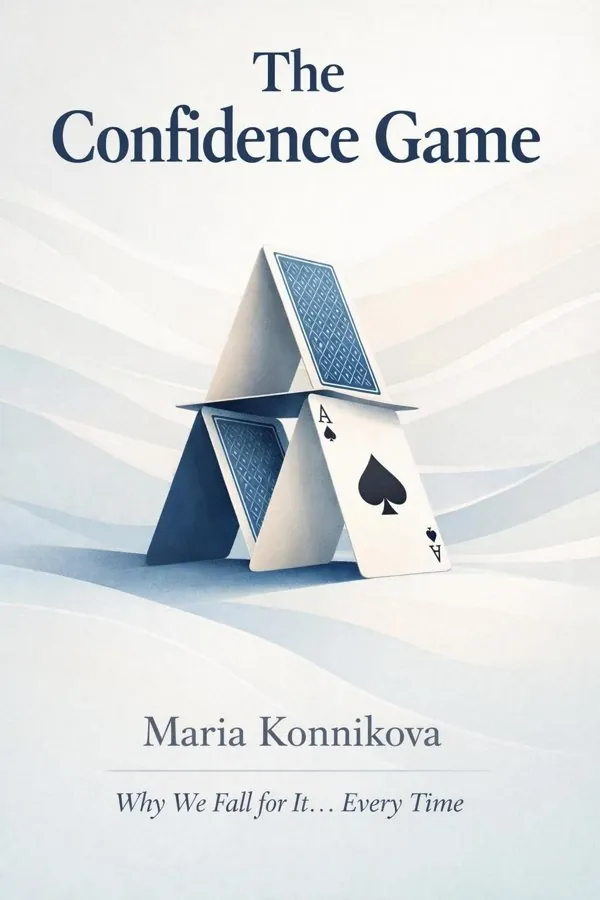
The Confidence Game: Why We Fall for It... Every Time: Summary & Key Insights
 10 min9 chaptersAudio available
What Is The Confidence Game: Why We Fall for It... Every Time About?
The Confidence Game: Why We Fall for It... Every Time by Maria Konnikova is a psychology book spanning 9 pages. In this book, Maria Konnikova explores the psychology of the con artist and the science behind why people fall for deception. Drawing on research in psychology, sociology, and neuroscience, she examines the traits that make individuals susceptible to scams and the manipulative tactics used by con artists. Through real-life case studies, Konnikova reveals how confidence, trust, and storytelling intertwine to create the perfect con.
This FizzRead summary covers all 9 key chapters of The Confidence Game: Why We Fall for It... Every Time in approximately 10 minutes, distilling the most important ideas, arguments, and takeaways from Maria Konnikova's work. Also available as an audio summary and Key Quotes Podcast.
The Confidence Game: Why We Fall for It... Every Time
In this book, Maria Konnikova explores the psychology of the con artist and the science behind why people fall for deception. Drawing on research in psychology, sociology, and neuroscience, she examines the traits that make individuals susceptible to scams and the manipulative tactics used by con artists. Through real-life case studies, Konnikova reveals how confidence, trust, and storytelling intertwine to create the perfect con.
Who Should Read The Confidence Game: Why We Fall for It... Every Time?
This book is perfect for anyone interested in psychology and looking to gain actionable insights in a short read. Whether you're a student, professional, or lifelong learner, the key ideas from The Confidence Game: Why We Fall for It... Every Time by Maria Konnikova will help you think differently.
- ✓Readers who enjoy psychology and want practical takeaways
- ✓Professionals looking to apply new ideas to their work and life
- ✓Anyone who wants the core insights of The Confidence Game: Why We Fall for It... Every Time in just 10 minutes
Want the full summary?
Get instant access to this book summary and 100K+ more with Fizz Moment.
Get Free SummaryAvailable on App Store • Free to download
Key Chapters
Before dissecting the mind of a con artist, it’s important to clarify a distinction: not all deception qualifies as a con. Lies are a common feature of social life, ranging from harmless white lies to systemic fraud. But true con artists—what I call 'confidence artists'—seek more than money; they seek your belief. Their craft lies in making you trust their story so deeply that you willingly participate in your own deception.
History is littered with such examples: nineteenth-century imposters posing as nobility, modern Ponzi schemes, romance scams, online investment traps. Each one follows the same psychological logic—building believability through status, emotion, and social proof, then manipulating hope and fear to gain psychological control.
The secret weapon of a con is not force but confidence itself. The word 'confidence' stems from the Latin 'fidere,' meaning 'to trust.’ They don’t pressure you—they inspire faith. The success of a con depends on the victim’s voluntary belief, not coercion.
After interviewing dozens of victims, I found a recurring pattern: people are rarely deceived by strangers but by those they choose to trust—someone who seems to understand, care for, or connect with them. A con is a performance art of trust; the con artist is the director, and we, the audience, willingly play our parts.
We often imagine con artists as heartless manipulators. In truth, they are gifted empathizers. To control someone, you must first understand them. The con artist’s talent lies in precisely reading emotions and psychological vulnerabilities. They listen carefully, respond intuitively, and create a sense of genuine understanding.
Psychological studies show that successful cons rely on what researchers call high social intelligence. Con artists can instantly discern what another person needs—validation, safety, hope—and tailor their approach accordingly. They read expressions, tones, and gestures like a therapist would, but with an entirely different goal: not healing, but control.
That empathic ability is sharpened by a powerful urge for dominance. They revel in persuasion, in the thrill of steering someone else’s decisions. Because they understand their targets so well, their manipulations become nearly invisible. Many con artists possess genuine charm—they don’t just lie; they make you want to believe their lies are acts of kindness.
One professional con artist once told me, 'I never feel like I’m lying. I just tell people the part of the truth they want to hear.' This perfectly captures the psychology behind the con: deception built on fragments of truth. Their skill lies in weaving those fragments into a seamless story so that the lie dissolves into everyday reality. That is the essence of the trust trap—we believe most deeply the narratives that align with our existing experience.
+ 7 more chapters — available in the FizzRead app
All Chapters in The Confidence Game: Why We Fall for It... Every Time
About the Author
Maria Konnikova is a Russian-American writer and psychologist known for her work on human behavior and decision-making. She holds a Ph.D. in psychology from Columbia University and has written for publications such as The New Yorker. Her books combine scientific research with narrative storytelling to explore the complexities of the human mind.
Get This Summary in Your Preferred Format
Read or listen to the The Confidence Game: Why We Fall for It... Every Time summary by Maria Konnikova anytime, anywhere. FizzRead offers multiple formats so you can learn on your terms — all free.
Available formats: App · Audio · PDF · EPUB — All included free with FizzRead
Download The Confidence Game: Why We Fall for It... Every Time PDF and EPUB Summary
Key Quotes from The Confidence Game: Why We Fall for It... Every Time
“Before dissecting the mind of a con artist, it’s important to clarify a distinction: not all deception qualifies as a con.”
“We often imagine con artists as heartless manipulators.”
Frequently Asked Questions about The Confidence Game: Why We Fall for It... Every Time
The Confidence Game: Why We Fall for It... Every Time by Maria Konnikova is a psychology book that explores key ideas across 9 chapters. In this book, Maria Konnikova explores the psychology of the con artist and the science behind why people fall for deception. Drawing on research in psychology, sociology, and neuroscience, she examines the traits that make individuals susceptible to scams and the manipulative tactics used by con artists. Through real-life case studies, Konnikova reveals how confidence, trust, and storytelling intertwine to create the perfect con.
More by Maria Konnikova


You Might Also Like

The Body Keeps the Score
Bessel van der Kolk
10 min
Surrounded by Idiots
Thomas Erikson
10 min
Emotional Intelligence
Daniel Goleman
10 min
Attached
Amir Levine
10 min
Why Does He Do That
Lundy Bancroft
10 min
Women Who Run with the Wolves
Clarissa Pinkola Estés
10 minBrowse by Category
Ready to read The Confidence Game: Why We Fall for It... Every Time?
Get the full summary and 100K+ more books with Fizz Moment.