
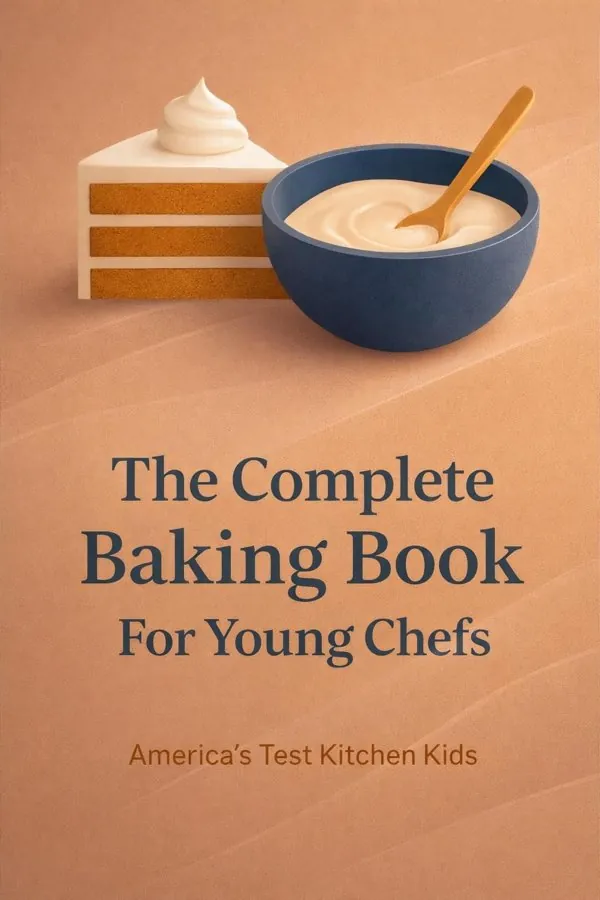
The Complete Baking Book For Young Chefs: Summary & Key Insights
by America's Test Kitchen Kids
 10 min10 chaptersAudio available
Key Takeaways from The Complete Baking Book For Young Chefs
Great baking begins long before the batter reaches the oven.
A baker’s tools do more than save time; they teach technique.
Cookies may look simple, but they are one of the best classrooms in baking.
A beautiful cake is not magic; it is structure built from method.
Few kitchen experiences are as satisfying as turning flour, water, yeast, and salt into a warm loaf or tray of rolls.
What Is The Complete Baking Book For Young Chefs About?
The Complete Baking Book For Young Chefs by America's Test Kitchen Kids is a education book spanning 10 pages. The Complete Baking Book For Young Chefs is more than a cookbook for kids. It is a practical, confidence-building guide that teaches young bakers how to understand the kitchen, follow recipes carefully, and create treats they are proud to share. Developed by America’s Test Kitchen Kids, the book brings together more than 100 thoroughly tested recipes covering cookies, cakes, breads, pies, pastries, and savory bakes. What makes it especially valuable is that it does not simply tell readers what to do; it explains why baking steps matter, from measuring flour correctly to chilling dough and preheating the oven. This matters because baking can feel mysterious to beginners. A cake rises, a crust flakes, a cookie spreads too much, and many young cooks are left guessing what went right or wrong. This book removes that mystery by combining clear instructions, safety guidance, and approachable food science. America’s Test Kitchen has built its reputation on rigorous recipe testing and dependable kitchen education, and this youth edition carries that authority into a format that feels fun, empowering, and accessible. For children, teens, families, and educators, it offers a reliable path from nervous beginner to capable home baker.
This FizzRead summary covers all 10 key chapters of The Complete Baking Book For Young Chefs in approximately 10 minutes, distilling the most important ideas, arguments, and takeaways from America's Test Kitchen Kids's work. Also available as an audio summary and Key Quotes Podcast.
The Complete Baking Book For Young Chefs
The Complete Baking Book For Young Chefs is more than a cookbook for kids. It is a practical, confidence-building guide that teaches young bakers how to understand the kitchen, follow recipes carefully, and create treats they are proud to share. Developed by America’s Test Kitchen Kids, the book brings together more than 100 thoroughly tested recipes covering cookies, cakes, breads, pies, pastries, and savory bakes. What makes it especially valuable is that it does not simply tell readers what to do; it explains why baking steps matter, from measuring flour correctly to chilling dough and preheating the oven.
This matters because baking can feel mysterious to beginners. A cake rises, a crust flakes, a cookie spreads too much, and many young cooks are left guessing what went right or wrong. This book removes that mystery by combining clear instructions, safety guidance, and approachable food science. America’s Test Kitchen has built its reputation on rigorous recipe testing and dependable kitchen education, and this youth edition carries that authority into a format that feels fun, empowering, and accessible. For children, teens, families, and educators, it offers a reliable path from nervous beginner to capable home baker.
Who Should Read The Complete Baking Book For Young Chefs?
This book is perfect for anyone interested in education and looking to gain actionable insights in a short read. Whether you're a student, professional, or lifelong learner, the key ideas from The Complete Baking Book For Young Chefs by America's Test Kitchen Kids will help you think differently.
- ✓Readers who enjoy education and want practical takeaways
- ✓Professionals looking to apply new ideas to their work and life
- ✓Anyone who wants the core insights of The Complete Baking Book For Young Chefs in just 10 minutes
Want the full summary?
Get instant access to this book summary and 100K+ more with Fizz Moment.
Get Free SummaryAvailable on App Store • Free to download
Key Chapters
Great baking begins long before the batter reaches the oven. One of the book’s most important lessons is that success comes from respecting the basics: safety, precision, preparation, and patience. Young bakers often imagine baking as a creative activity first, but this book shows that creativity works best when it rests on dependable habits. Measuring flour incorrectly, skipping a timer, or forgetting to grease a pan can change the entire result. In baking, small details are not small at all.
America’s Test Kitchen Kids introduces core kitchen practices in a way that feels empowering rather than intimidating. Readers learn how to wash hands, tie back long hair, handle hot pans safely, and keep a clean workspace. Just as importantly, they learn mise en place, the practice of gathering and preparing ingredients before starting. This reduces stress and helps bakers focus on the recipe. The book also teaches careful measuring, especially the difference between liquid and dry measuring tools, and why leveling ingredients matters.
These fundamentals create confidence. A child who understands how to read through a recipe first, preheat the oven, and organize ingredients is far more likely to enjoy the process and get a successful result. Instead of feeling chaotic, baking becomes structured and rewarding. The lesson extends beyond the kitchen too: careful preparation is often the difference between frustration and success in any skill.
Actionable takeaway: Before making any recipe, read it fully, gather every ingredient and tool, and set up your workspace so you can bake calmly and accurately.
A baker’s tools do more than save time; they teach technique. One of the strengths of this book is how it introduces essential equipment without suggesting that young chefs need a professional kitchen. Instead, it focuses on a practical toolkit and explains what each item does well. A whisk aerates and blends. A rubber spatula folds batter gently and scrapes bowls clean. Measuring cups and spoons provide accuracy. Parchment paper prevents sticking and encourages even baking. Cooling racks stop baked goods from becoming soggy underneath.
This matters because beginners often misuse tools or assume any kitchen item will do the same job. But a loaf pan, baking sheet, muffin tin, and pie plate each affect how heat moves through food. The book helps young bakers understand these differences, which reduces failed recipes and builds trust in the process. Even learning how to hold a knife safely, crack eggs cleanly, or use an electric mixer without overbeating can improve results dramatically.
The book also teaches that good bakers care for their equipment. Greasing pans properly, lining trays, checking oven racks, and letting pans cool before washing are all part of kitchen competence. These habits help children feel more independent because they are not just following a recipe; they are learning to manage a baking environment.
Actionable takeaway: Choose a few core tools to master first, such as measuring cups, a whisk, a spatula, a baking sheet, and a muffin tin, and learn exactly how each one improves your baking.
A beautiful cake is not magic; it is structure built from method. In the cakes and cupcakes section, the book shows young bakers that light, tender cakes depend on accurate measuring, proper mixing, and attention to doneness. Unlike cooking, where improvisation can often work, cake baking punishes carelessness. Too much flour creates dryness, overmixing can toughen the crumb, and opening the oven too early can interrupt rising.
America’s Test Kitchen Kids makes these lessons understandable by breaking down cake methods into manageable steps. Readers learn to cream butter and sugar for air, to add eggs gradually, and to alternate wet and dry ingredients without overworking the batter. Cupcakes become an accessible entry point because they bake faster and help children learn portioning. Frosting and decorating also become part of the educational experience, combining creativity with technique.
The deeper message is that patience is part of quality. Letting cakes cool before frosting prevents melted icing and torn crumbs. Testing doneness with a toothpick or gentle touch teaches observation. Even leveling a cake layer or spreading frosting evenly requires calm hands and a willingness to slow down.
These recipes also support celebration. Birthdays, school events, and family gatherings become opportunities for young bakers to contribute something meaningful. A homemade cake carries pride because it represents effort, care, and learning.
Actionable takeaway: When baking cakes or cupcakes, measure precisely, mix only as much as needed, and always let the baked layers cool fully before decorating.
Few kitchen experiences are as satisfying as turning flour, water, yeast, and salt into a warm loaf or tray of rolls. In this book, breads and rolls become a lesson in transformation. They teach young bakers that some of the most rewarding results do not happen quickly. Bread asks for attention, repetition, and trust in a process that unfolds over time.
The book explains yeast in approachable terms and helps readers understand proofing, kneading, rising, and shaping. A sticky dough can feel messy at first, but children learn that texture changes as gluten develops. Kneading strengthens the dough, while rising allows trapped gas to create lightness. These are not abstract ideas once a young baker watches dough double in size on the counter.
Bread is especially useful for teaching resilience. Not every loaf rises perfectly, and the book encourages young cooks to observe conditions such as water temperature, room warmth, and timing. Instead of seeing mistakes as failure, readers learn to troubleshoot. Was the yeast old? Was the dough under-kneaded? Was the loaf sliced before cooling? These questions build real kitchen judgment.
The recipes also reveal bread’s emotional value. Dinner rolls, pizza dough, biscuits, and sweet buns are often shared foods, made for meals and gatherings. Baking bread connects effort to generosity in a very tangible way.
Actionable takeaway: Treat bread as practice in patience by watching the dough at each stage, learning how it should feel, and using each batch to sharpen your understanding of yeast and texture.
Pies, tarts, and pastries often intimidate beginners because they seem delicate and advanced. This book makes them approachable by showing that pastry is less about mysterious talent and more about managing temperature, texture, and timing. The big insight is simple: cold ingredients and gentle handling often create the flakiest, most tender results.
Young bakers learn that pie dough works best when butter remains in small pieces that later melt in the oven, leaving flaky layers behind. Overworking the dough develops too much gluten and makes crust tough. Chilling dough helps it relax and become easier to roll. Blind baking, venting, and checking for golden color all become understandable tools rather than confusing jargon.
The same logic applies to tarts and simple pastries. Proper assembly, careful sealing, and attention to filling consistency help prevent leaks, sogginess, and collapse. Instead of fearing pastry, readers begin to see it as a series of manageable decisions. Keep ingredients cold. Roll evenly. Don’t rush. Let the recipe guide you.
These bakes also expand a young chef’s range beyond standard desserts. Fruit pies highlight seasonality. Savory tarts connect pastry technique to meals. Turnovers and hand pies make baking portable and fun. Through these recipes, children discover that advanced-looking food often comes from mastering a few core principles.
Actionable takeaway: When making pastry, keep ingredients and dough cold, handle as little as possible, and pause to chill the dough whenever it starts feeling soft or sticky.
Baking is often associated with sweets, but this book wisely broadens the picture by including savory recipes. This matters because it teaches young chefs that the oven is not only for cookies and cakes; it can also produce satisfying meals, snacks, and party foods. Savory baking introduces balance, variety, and a wider understanding of flavor.
Recipes such as cheesy breads, pizzas, biscuits, and other savory bakes help children see how doughs and batters can support herbs, vegetables, meats, and cheeses just as easily as sugar and chocolate. This makes baking feel more versatile and useful in everyday life. A child who can bake muffins and brownies gains confidence, but a child who can also make rolls, savory tarts, or pizza dough gains genuine kitchen independence.
This chapter also develops judgment about seasoning and structure. Moist fillings need to be balanced so they do not make crusts soggy. Cheese can add richness, but too much can affect texture. Herbs and spices can transform a simple base recipe into something distinctive. Young bakers begin to understand that flavor-building is not random; it is a thoughtful process.
Savory recipes are especially valuable for family participation. They can become lunch, dinner, or potluck contributions rather than just desserts. That gives children more opportunities to cook for others and feel useful in the household.
Actionable takeaway: Try one savory bake for every sweet bake you make, so you build a broader set of skills and learn how baking can contribute to everyday meals.
One of the book’s greatest gifts is that it teaches the science behind baking in language young readers can understand. This is important because many beginners think success depends on luck. In reality, baking follows clear physical and chemical principles. Once readers understand those principles, they stop guessing and start making informed choices.
The book explains how ingredients function: flour provides structure, eggs bind and enrich, sugar sweetens and affects moisture, butter adds flavor and tenderness, and leaveners such as baking powder, baking soda, and yeast create lift. Heat then transforms everything, setting proteins, evaporating moisture, melting fats, and browning surfaces through caramelization and other reactions. Suddenly, recipes make more sense.
This scientific understanding helps with troubleshooting. If muffins are dense, perhaps the batter was overmixed. If cookies spread too much, perhaps the butter was too warm or the flour was undermeasured. If bread fails to rise, the yeast or proofing conditions may be the issue. Instead of feeling defeated, a young baker learns to diagnose.
Science also encourages curiosity. Readers may wonder why room-temperature eggs blend more smoothly, why resting dough matters, or why some cakes call for oil while others use butter. These questions deepen engagement and turn baking into a form of discovery.
Actionable takeaway: When a recipe succeeds or fails, ask why by focusing on ingredients, temperature, and technique, then use that answer to improve your next bake.
Creativity in baking does not begin with ignoring rules. It begins with learning the rules well enough to adapt them intelligently. This book encourages personal expression, but it does so on a foundation of tested recipes and clear techniques. That balance is one of its most powerful lessons for young chefs. Freedom works best when it is supported by understanding.
Once readers know how a basic cookie, cake, muffin, or bread recipe behaves, they can begin to customize. They can swap chocolate chips for chopped nuts, add cinnamon or citrus zest, turn vanilla frosting into a fruit-flavored variation, or shape dough in different ways. These changes feel exciting because they let children put their own identity into the food.
At the same time, the book quietly teaches boundaries. Not every substitution works. Adding too much liquid can ruin texture. Changing the fat type can affect spread and tenderness. Creativity becomes more successful when bakers make one or two thoughtful changes at a time and observe the result. This is an excellent life lesson: experimentation is strongest when paired with reflection.
Decorating also plays a role here. Sprinkles, glazes, toppings, and presentation invite imagination. A batch of cupcakes can become a birthday centerpiece, and a tray of cookies can reflect a holiday theme. The kitchen becomes a place not just of nourishment, but of self-expression.
Actionable takeaway: Start with one reliable base recipe and personalize it with a small flavor, filling, or decoration change so you can build creative confidence without losing control of the outcome.
A baked good is never just a baked good when it is made for someone else. The book closes an important emotional loop by showing that baking is not only about technique or even enjoyment; it is also about generosity, connection, and pride. Young bakers learn that the final step is not simply eating what they made, but thinking about how to serve, store, present, and share it.
This shifts baking from a private accomplishment to a social one. Cookies packed for a friend, cupcakes brought to school, rolls served at dinner, or a pie shared with relatives all carry a message: I made this for you. That experience can be deeply empowering for children because it shows them they can contribute meaningfully to family and community life.
The book also reinforces practical aspects of serving. Cooling before slicing, storing in airtight containers, transporting baked goods carefully, and considering portion sizes all matter. These details teach responsibility and thoughtfulness. Presentation matters too. A neatly arranged tray or simply frosted cake shows care, even without professional-level decoration.
Most importantly, sharing creates motivation to keep learning. Praise from others is gratifying, but so is the feeling of bringing joy through effort and skill. Baking becomes more than a hobby; it becomes a way of participating in relationships.
Actionable takeaway: Choose one recipe each month to bake specifically for others, and pay attention not just to how it tastes, but to how you store, present, and serve it.
All Chapters in The Complete Baking Book For Young Chefs
About the Author
America’s Test Kitchen Kids is the children’s publishing and education division of America’s Test Kitchen, one of the most trusted names in home cooking. Built on the parent organization’s reputation for rigorous testing and practical instruction, the Kids team creates cookbooks and culinary content designed specifically for young learners. Their work focuses on making cooking and baking accessible, engaging, and educational, with an emphasis on hands-on learning, kitchen safety, and understanding the science behind recipes. Rather than simply entertaining children, they aim to help them become genuinely capable in the kitchen. The Complete Baking Book For Young Chefs reflects that mission by combining reliable recipes, age-appropriate explanations, and a teaching style that builds confidence through practice, curiosity, and real culinary skill.
Get This Summary in Your Preferred Format
Read or listen to the The Complete Baking Book For Young Chefs summary by America's Test Kitchen Kids anytime, anywhere. FizzRead offers multiple formats so you can learn on your terms — all free.
Available formats: App · Audio · PDF · EPUB — All included free with FizzRead
Download The Complete Baking Book For Young Chefs PDF and EPUB Summary
Key Quotes from The Complete Baking Book For Young Chefs
“Great baking begins long before the batter reaches the oven.”
“A baker’s tools do more than save time; they teach technique.”
“Cookies may look simple, but they are one of the best classrooms in baking.”
“A beautiful cake is not magic; it is structure built from method.”
“Few kitchen experiences are as satisfying as turning flour, water, yeast, and salt into a warm loaf or tray of rolls.”
Frequently Asked Questions about The Complete Baking Book For Young Chefs
The Complete Baking Book For Young Chefs by America's Test Kitchen Kids is a education book that explores key ideas across 10 chapters. The Complete Baking Book For Young Chefs is more than a cookbook for kids. It is a practical, confidence-building guide that teaches young bakers how to understand the kitchen, follow recipes carefully, and create treats they are proud to share. Developed by America’s Test Kitchen Kids, the book brings together more than 100 thoroughly tested recipes covering cookies, cakes, breads, pies, pastries, and savory bakes. What makes it especially valuable is that it does not simply tell readers what to do; it explains why baking steps matter, from measuring flour correctly to chilling dough and preheating the oven. This matters because baking can feel mysterious to beginners. A cake rises, a crust flakes, a cookie spreads too much, and many young cooks are left guessing what went right or wrong. This book removes that mystery by combining clear instructions, safety guidance, and approachable food science. America’s Test Kitchen has built its reputation on rigorous recipe testing and dependable kitchen education, and this youth edition carries that authority into a format that feels fun, empowering, and accessible. For children, teens, families, and educators, it offers a reliable path from nervous beginner to capable home baker.
More by America's Test Kitchen Kids
You Might Also Like

Bedtime Biography: Florence Nightingale
Isabel Thomas
10 min
Introduction To Museum Studies
Howard H. Hoyt
10 min
A Mind for Numbers: How to Excel at Math and Science (Even If You Flunked Algebra)
Barbara Oakley
10 min
AI for Educators: Learning Strategies, Teacher Empowerment, and the Future of Education
Matt Miller
10 min
Animation For Beginners
Morr Meroz
10 min
Artificial Intelligence for Learning
Donald Clark
10 minBrowse by Category
Ready to read The Complete Baking Book For Young Chefs?
Get the full summary and 100K+ more books with Fizz Moment.