
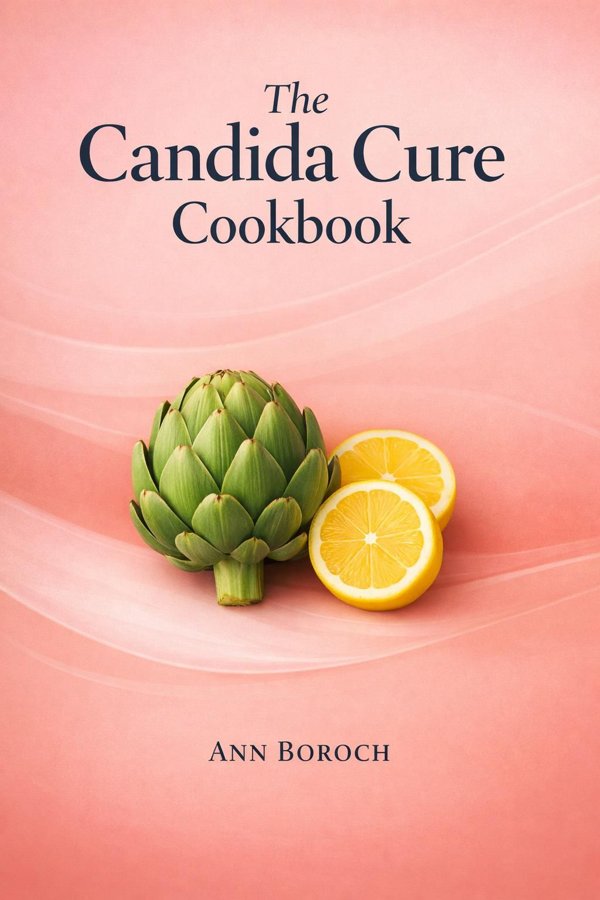
The Candida Cure Cookbook: Delicious Recipes to Reset Your Health and Restore Your Vitality: Summary & Key Insights
by Ann Boroch
 10 min9 chaptersAudio available
Key Takeaways from The Candida Cure Cookbook: Delicious Recipes to Reset Your Health and Restore Your Vitality
Many people normalize feeling unwell until symptoms become their baseline.
Your gut is not just where food is digested; it is where health is negotiated.
Recovery is harder when your environment constantly pulls you off track.
Not every body can change overnight, and Boroch recognizes that structure matters.
What you stop eating matters, but what you replace it with matters even more.
What Is The Candida Cure Cookbook: Delicious Recipes to Reset Your Health and Restore Your Vitality About?
The Candida Cure Cookbook: Delicious Recipes to Reset Your Health and Restore Your Vitality by Ann Boroch is a nutrition book spanning 11 pages. The Candida Cure Cookbook by Ann Boroch is more than a collection of recipes. It is a food-based healing guide built around the idea that many chronic symptoms—fatigue, bloating, brain fog, recurring infections, sugar cravings, and low resilience—may be linked to an imbalance in the body’s internal ecosystem, especially candida overgrowth. Boroch presents cooking not as a chore, but as a therapeutic practice: every ingredient, meal, and habit can either feed dysfunction or support recovery. What makes this cookbook matter is its combination of nutritional strategy and real-life usability. Rather than offering abstract rules alone, Boroch translates the anti-candida approach into breakfasts, soups, salads, mains, snacks, drinks, and cleaner treats that help readers stay consistent. The focus is on removing foods that may encourage yeast imbalance while emphasizing nutrient-dense, anti-inflammatory alternatives that support digestion, immunity, and energy. Boroch wrote from the perspective of a certified nutritional consultant and naturopath known for her work in natural healing. Her authority comes from years of helping people use diet and lifestyle changes to address stubborn health issues. This book speaks to readers who want practical structure, clearer food choices, and a restorative path toward feeling well again.
This FizzRead summary covers all 9 key chapters of The Candida Cure Cookbook: Delicious Recipes to Reset Your Health and Restore Your Vitality in approximately 10 minutes, distilling the most important ideas, arguments, and takeaways from Ann Boroch's work. Also available as an audio summary and Key Quotes Podcast.
The Candida Cure Cookbook: Delicious Recipes to Reset Your Health and Restore Your Vitality
The Candida Cure Cookbook by Ann Boroch is more than a collection of recipes. It is a food-based healing guide built around the idea that many chronic symptoms—fatigue, bloating, brain fog, recurring infections, sugar cravings, and low resilience—may be linked to an imbalance in the body’s internal ecosystem, especially candida overgrowth. Boroch presents cooking not as a chore, but as a therapeutic practice: every ingredient, meal, and habit can either feed dysfunction or support recovery.
What makes this cookbook matter is its combination of nutritional strategy and real-life usability. Rather than offering abstract rules alone, Boroch translates the anti-candida approach into breakfasts, soups, salads, mains, snacks, drinks, and cleaner treats that help readers stay consistent. The focus is on removing foods that may encourage yeast imbalance while emphasizing nutrient-dense, anti-inflammatory alternatives that support digestion, immunity, and energy.
Boroch wrote from the perspective of a certified nutritional consultant and naturopath known for her work in natural healing. Her authority comes from years of helping people use diet and lifestyle changes to address stubborn health issues. This book speaks to readers who want practical structure, clearer food choices, and a restorative path toward feeling well again.
Who Should Read The Candida Cure Cookbook: Delicious Recipes to Reset Your Health and Restore Your Vitality?
This book is perfect for anyone interested in nutrition and looking to gain actionable insights in a short read. Whether you're a student, professional, or lifelong learner, the key ideas from The Candida Cure Cookbook: Delicious Recipes to Reset Your Health and Restore Your Vitality by Ann Boroch will help you think differently.
- ✓Readers who enjoy nutrition and want practical takeaways
- ✓Professionals looking to apply new ideas to their work and life
- ✓Anyone who wants the core insights of The Candida Cure Cookbook: Delicious Recipes to Reset Your Health and Restore Your Vitality in just 10 minutes
Want the full summary?
Get instant access to this book summary and 100K+ more with Fizz Moment.
Get Free SummaryAvailable on App Store • Free to download
Key Chapters
Many people normalize feeling unwell until symptoms become their baseline. Boroch’s core insight is that recurring fatigue, digestive distress, skin flare-ups, sugar cravings, and fuzzy thinking may not be random problems, but signals of a deeper imbalance involving candida, a yeast that naturally exists in the body. In healthy conditions, candida remains under control. Trouble begins when antibiotics, high-sugar diets, chronic stress, poor sleep, weakened immunity, or digestive dysfunction create an environment where yeast can overgrow.
The book frames candida overgrowth not as a stand-alone enemy, but as a sign that the body’s terrain has shifted. This matters because it changes the goal. The objective is not merely to suppress symptoms, but to restore balance in the gut, reduce inflammatory burden, and remove the conditions that allow overgrowth to persist. That is why the cookbook focuses so heavily on food choices that stabilize blood sugar, improve digestion, and reduce irritation.
Boroch helps readers connect broad health complaints with daily habits. For example, a breakfast of juice and pastries may intensify blood sugar swings and cravings, while a meal built around protein, vegetables, and healthy fats creates steadier energy. Likewise, repeatedly relying on processed convenience foods can keep the body in a cycle of inflammation and imbalance.
The practical value of this idea is awareness. When readers understand candida as part of a larger ecological problem, they become less likely to chase quick fixes and more willing to build healing routines. Actionable takeaway: start by observing your own patterns—energy, digestion, cravings, skin, and mood—and use them as clues to identify whether your current diet may be feeding imbalance instead of recovery.
Your gut is not just where food is digested; it is where health is negotiated. Boroch emphasizes that the digestive tract plays a central role in immune resilience, nutrient absorption, inflammation control, and microbial balance. If the gut lining is irritated, if beneficial bacteria are depleted, or if digestion is impaired, candida has more opportunity to thrive and symptoms become harder to resolve.
This is why the cookbook repeatedly returns to simple, clean meals. The goal is to reduce the burden on digestion while flooding the body with nutrients that support repair. Non-starchy vegetables provide fiber and phytonutrients. Quality proteins help tissue maintenance and blood sugar control. Healthy fats contribute satiety and hormone stability. Herbs, spices, and low-sugar ingredients create flavor without feeding the cycle of yeast overgrowth.
Boroch also highlights the connection between gut dysfunction and immune stress. Since a large share of immune activity is associated with the gut, a disturbed digestive system can mean more than bloating or irregularity; it can affect how resilient the body feels overall. Practical application may include replacing processed snacks with vegetable-based options, eating more homemade soups that are easier on digestion, and choosing meals that reduce post-meal heaviness rather than create it.
The deeper lesson is that healing rarely starts with dramatic interventions. It often begins with making digestion more efficient and less inflamed, one meal at a time. Readers who adopt this perspective stop asking only, “What tastes good right now?” and begin asking, “What helps my body repair?” Actionable takeaway: build each meal around digestibility and nourishment first, using whole foods that calm the gut instead of overstimulating it.
Recovery is harder when your environment constantly pulls you off track. One of the book’s practical strengths is the idea that healing begins before you cook: it starts with what is in your pantry, refrigerator, freezer, and daily routine. If your kitchen is stocked with sugar, refined flour, sweet sauces, alcohol, and processed convenience foods, good intentions are forced to fight temptation at every meal.
Boroch treats the kitchen as a healing workspace. Preparing it means removing foods that may feed yeast overgrowth and replacing them with ingredients that make anti-candida cooking realistic. Staples might include fresh vegetables, clean proteins, garlic, onions, herbs, healthy oils, seeds, unsweetened non-dairy alternatives, and approved seasonings. This shift reduces friction. When the right ingredients are visible and accessible, better choices become easier and faster.
The same principle applies to tools and planning. A blender supports smoothies and soups. Glass containers make leftovers useful instead of forgotten. Pre-washed greens, chopped vegetables, and cooked proteins turn meal assembly into a ten-minute task rather than a stressful decision at the end of a busy day. Readers can also benefit from creating go-to combinations, such as a large salad with protein, a vegetable sauté with herbs, or a nourishing broth-based soup.
This chapter’s logic is behavioral as much as nutritional: consistency is built by design, not by willpower alone. A healing diet fails less often when the environment supports it. Actionable takeaway: do a kitchen reset—remove your biggest trigger foods, stock five to ten reliable anti-candida staples, and prep at least two ingredients in advance so your next healthy meal is the easiest option.
Not every body can change overnight, and Boroch recognizes that structure matters. A phased anti-candida approach helps readers transition safely and realistically, rather than jumping into a strict plan without understanding how the body might respond. The idea behind phases is simple: first reduce the foods that fuel imbalance, then build meals that nourish repair, and later maintain progress with thoughtful flexibility.
This matters because many people either do too little or too much. Some keep “cheating” with sugar and refined carbohydrates and then feel discouraged when symptoms persist. Others become so restrictive that the plan feels punishing, socially isolating, or nutritionally narrow. Boroch’s framework offers a middle path: strategic elimination paired with variety, recipes, and progressive adaptation.
In practice, the early phase may focus on removing obvious triggers such as sugar, alcohol, yeast-heavy foods, and certain refined starches. Later, readers learn how to sustain energy and satisfaction through creative meals like vegetable-rich breakfasts, protein-centered lunches, and flavorful dinners that do not rely on inflammatory ingredients. Maintenance then becomes less about fear and more about awareness. Readers pay attention to which foods bring back cravings, bloating, or fatigue and adjust accordingly.
The broader insight is that healing is a process of education. Phases teach the body and the reader at the same time. You learn what supports you, what sets you back, and how quickly symptoms can shift when food quality changes. Actionable takeaway: treat dietary phases as a guided experiment—commit fully for a defined period, track symptoms honestly, and use the results to build a sustainable long-term way of eating.
What you stop eating matters, but what you replace it with matters even more. Boroch’s food philosophy is not only about restriction; it is about choosing ingredients that help deprive candida of easy fuel while strengthening the body. That usually means reducing sugars and refined carbohydrates that can promote yeast growth and emphasizing foods that are nutrient-dense, low in inflammatory potential, and supportive of stable blood sugar.
The book guides readers through practical distinctions. Instead of sweet breakfasts, choose eggs, vegetables, or savory grain-free options. Instead of processed snacks, choose seeds, approved dips, or fresh, low-sugar ingredients that satisfy without feeding cravings. Instead of sauces loaded with hidden sugar, use herbs, lemon, garlic, olive oil, and clean homemade dressings. This approach makes healing tangible because it turns abstract dietary rules into visible plate-level choices.
Boroch also helps readers understand why cravings can be so powerful. Foods high in sugar and refined starch often create spikes and crashes that make more sugar feel urgently necessary. A balanced anti-candida meal works differently. Protein and healthy fats slow the energy roller coaster, while fiber-rich vegetables add volume and satiety. Over time, many people find that their taste buds recalibrate and their dependence on hyper-palatable foods begins to weaken.
The takeaway is empowering: there is no need to rely on bland deprivation. The body responds best to meals that are flavorful, satisfying, and metabolically steady. Actionable takeaway: identify your top three symptom-triggering foods and replace each one with a specific anti-candida alternative so your plan becomes concrete, not theoretical.
The first meal of the day often predicts the rhythm of the next twelve hours. Boroch treats breakfast as a strategic opportunity to stabilize blood sugar, reduce cravings, and create momentum for healing. This is especially important for people dealing with candida-related symptoms, because a morning built around sugar or refined carbohydrates can intensify hunger, irritability, and energy crashes that make it harder to stay on plan.
Rather than defaulting to cereal, toast, muffins, or sweet coffee drinks, the cookbook encourages savory, nutrient-dense breakfasts. Think eggs with vegetables, protein-rich scrambles, warming soups, seed-based dishes, or leftovers from dinner repurposed into a morning meal. These choices may feel unconventional at first, but they address a common problem: many “normal” breakfasts are dessert in disguise.
Boroch’s recipes help remove the monotony that often undermines healthy eating. Breakfast does not need to be joyless to be therapeutic. Flavor can come from herbs, cinnamon, coconut, lemon, garlic, and carefully chosen ingredients that support the anti-candida framework. The benefit is practical and psychological. A satisfying breakfast reduces the sense of deprivation, lowers the temptation to snack impulsively, and often improves mental clarity.
This section also reflects a broader principle: healing diets work best when they fit real life. If mornings are rushed, batch-cooked options or simple reheated meals may be more sustainable than elaborate recipes. Actionable takeaway: for one week, replace any sweet or refined-carb breakfast with a savory protein-and-vegetable option and notice changes in cravings, focus, and afternoon energy.
If a health plan cannot satisfy you at lunch and dinner, it will not last. Boroch understands that the middle and end of the day are where many people either reinforce healing or abandon it. That is why the cookbook puts strong emphasis on substantial soups, salads, entrées, side dishes, and comforting mains that make the anti-candida approach feel livable rather than restrictive.
The key concept here is abundance within boundaries. Readers are not asked to survive on tiny portions or repetitive diet food. Instead, Boroch builds meals around variety: colorful vegetables, clean animal or plant proteins, healthy fats, herbs, and sauces made without hidden sugar or inflammatory fillers. A good anti-candida lunch or dinner should leave you nourished, not still hunting for satisfaction an hour later.
These recipes also solve social and emotional problems. Many people relapse into old eating patterns when they are tired, feeding a family, or craving comfort. A flavorful soup, a hearty baked dish, or a protein-rich salad with texture and seasoning can meet those needs without undermining progress. Boroch’s recipes show that therapeutic food can still feel generous and enjoyable.
Another practical advantage is adaptability. Components from one meal can become the basis of the next: roasted vegetables can top salads, extra protein can fill lettuce wraps, broth can support a quick soup, and leftovers can become breakfast. This efficiency reduces dependence on takeout and convenience foods. Actionable takeaway: choose three repeatable lunch and dinner templates—such as soup, salad with protein, and sautéed vegetables with a main protein—and rotate them until consistency becomes automatic.
A healing diet is truly tested between meals and during moments of emotional vulnerability. Boroch acknowledges that cravings do not disappear just because someone decides to eat better. They are driven by habit, blood sugar instability, stress, convenience, and sometimes by the very imbalance the reader is trying to correct. That is why this cookbook includes supportive snacks, beverages, and cleaner alternatives to conventional sweets.
The point is not to recreate every indulgence perfectly, but to give readers workable options that prevent all-or-nothing thinking. A person who has an anti-candida snack available is less likely to reach for vending-machine food, sugary coffee drinks, or processed desserts. Herbal teas, seed-based bites, vegetable snacks, broths, and thoughtfully designed treats can ease the transition away from sugar-heavy eating.
Boroch also frames cravings as information. A strong afternoon urge for sweets may signal that breakfast lacked protein, lunch was too small, sleep was poor, or stress is high. In this sense, a craving is not merely a failure of discipline. It is feedback about what the body and routine may need. Readers who learn to decode that feedback gain more control and less shame.
Sweet renewal, as the book suggests, is possible when pleasure is separated from self-sabotage. You can enjoy flavor, comfort, and ritual without feeding the cycle that keeps symptoms alive. Actionable takeaway: create an emergency craving plan with three approved snacks and two calming beverages so that when temptation hits, you already know what to choose.
The difference between a short-lived cleanse and a true lifestyle shift is often planning. Boroch makes it clear that anti-candida eating becomes practical when readers simplify decisions, repeat successful patterns, and stop relying on last-minute motivation. Meal planning is not about rigid perfection; it is about reducing the number of moments where convenience beats intention.
A strong weekly plan can be surprisingly simple. Choose two breakfasts, two lunches, three dinners, and a few snack options. Shop with those meals in mind. Batch-cook proteins, wash produce, make one dressing or sauce, and store leftovers intentionally. Suddenly the plan stops feeling like a major project and starts feeling like a household rhythm. This is especially valuable for busy professionals, parents, and anyone whose symptoms worsen when stress rises.
Boroch also widens the frame beyond food alone. Lifestyle harmony matters. Sleep, stress management, movement, hydration, and mindful pacing all influence how well the body heals. A person may eat carefully but still struggle if they are exhausted, constantly overstimulated, or eating on the run every day. The cookbook therefore supports a more integrated vision of wellness in which food is central, but not isolated.
Maintenance is the final piece. Once symptoms improve, the challenge becomes preserving progress without slipping back into old habits. That requires self-awareness rather than rigid fear. Readers learn to recognize early warning signs and return to foundational meals when needed. Actionable takeaway: create a seven-day food routine with built-in repetition, and pair it with one non-food healing habit—such as earlier sleep or daily walking—to support balance from multiple angles.
All Chapters in The Candida Cure Cookbook: Delicious Recipes to Reset Your Health and Restore Your Vitality
About the Author
Ann Boroch was a certified nutritional consultant and naturopath who became widely known for her work in natural and integrative healing. Her writing focused on the relationship between chronic symptoms, digestive imbalance, candida overgrowth, and nutrition-based recovery. Boroch believed that many health issues could be improved by addressing root causes rather than suppressing symptoms alone, and she built her work around practical dietary strategies that readers could apply in everyday life. Through books, wellness education, and nutritional guidance, she helped popularize the idea that food can play a central role in restoring balance, energy, and resilience. The Candida Cure Cookbook reflects her signature approach: combining therapeutic principles with realistic recipes and lifestyle support.
Get This Summary in Your Preferred Format
Read or listen to the The Candida Cure Cookbook: Delicious Recipes to Reset Your Health and Restore Your Vitality summary by Ann Boroch anytime, anywhere. FizzRead offers multiple formats so you can learn on your terms — all free.
Available formats: App · Audio · PDF · EPUB — All included free with FizzRead
Download The Candida Cure Cookbook: Delicious Recipes to Reset Your Health and Restore Your Vitality PDF and EPUB Summary
Key Quotes from The Candida Cure Cookbook: Delicious Recipes to Reset Your Health and Restore Your Vitality
“Many people normalize feeling unwell until symptoms become their baseline.”
“Your gut is not just where food is digested; it is where health is negotiated.”
“Recovery is harder when your environment constantly pulls you off track.”
“Not every body can change overnight, and Boroch recognizes that structure matters.”
“What you stop eating matters, but what you replace it with matters even more.”
Frequently Asked Questions about The Candida Cure Cookbook: Delicious Recipes to Reset Your Health and Restore Your Vitality
The Candida Cure Cookbook: Delicious Recipes to Reset Your Health and Restore Your Vitality by Ann Boroch is a nutrition book that explores key ideas across 9 chapters. The Candida Cure Cookbook by Ann Boroch is more than a collection of recipes. It is a food-based healing guide built around the idea that many chronic symptoms—fatigue, bloating, brain fog, recurring infections, sugar cravings, and low resilience—may be linked to an imbalance in the body’s internal ecosystem, especially candida overgrowth. Boroch presents cooking not as a chore, but as a therapeutic practice: every ingredient, meal, and habit can either feed dysfunction or support recovery. What makes this cookbook matter is its combination of nutritional strategy and real-life usability. Rather than offering abstract rules alone, Boroch translates the anti-candida approach into breakfasts, soups, salads, mains, snacks, drinks, and cleaner treats that help readers stay consistent. The focus is on removing foods that may encourage yeast imbalance while emphasizing nutrient-dense, anti-inflammatory alternatives that support digestion, immunity, and energy. Boroch wrote from the perspective of a certified nutritional consultant and naturopath known for her work in natural healing. Her authority comes from years of helping people use diet and lifestyle changes to address stubborn health issues. This book speaks to readers who want practical structure, clearer food choices, and a restorative path toward feeling well again.
More by Ann Boroch

You Might Also Like
Eating by the Seasons Cookbook: Seasonal Produce-Focused Recipes
Clare Foster
10 min
From Crook to Cook: Platinum Recipes from Tha Boss Dogg's Kitchen
Snoop Dogg with Ryan Ford
10 min
Juicing for Beginners: The Essential Guide to Juicing Recipes and Juicing for Weight Loss
Rockridge Press
10 min
The Food Therapist: Break Bad Habits, Eat with Intention, and Indulge Without Worry
Shira Lenchewski
10 min
The Mediterranean Diet Meal Plan: A 4-Week Meal Plan for Optimal Health and Weight Loss
Various Contributors
10 min
The Well Plated Cookbook: Simple, Wholesome Recipes for Everyday Meals
Erin Clarke
10 minBrowse by Category
Ready to read The Candida Cure Cookbook: Delicious Recipes to Reset Your Health and Restore Your Vitality?
Get the full summary and 100K+ more books with Fizz Moment.