
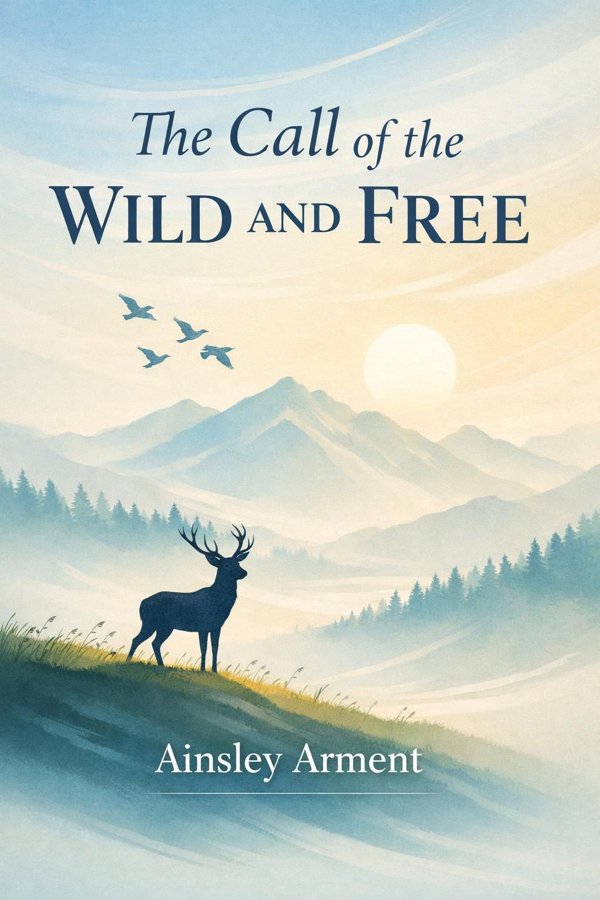
The Call of the Wild and Free: Reclaiming Wonder in Your Child’s Education: Summary & Key Insights
 10 min9 chaptersAudio available
Key Takeaways from The Call of the Wild and Free: Reclaiming Wonder in Your Child’s Education
What if the problem is not that children dislike learning, but that many learning environments slowly train wonder out of them?
Childhood is not a problem to be managed; it is a season to be protected.
Education changes when parents stop asking, “How do I control this process?
Children learn from environments long before they respond to lessons.
A child’s education is shaped as much by relationship as by content.
What Is The Call of the Wild and Free: Reclaiming Wonder in Your Child’s Education About?
The Call of the Wild and Free: Reclaiming Wonder in Your Child’s Education by Ainsley Arment is a education book spanning 12 pages. In The Call of the Wild and Free, Ainsley Arment invites parents to reconsider one of modern life’s deepest assumptions: that children learn best through rigid schedules, standardized milestones, and constant adult control. Instead, she makes a passionate case for an education rooted in wonder, freedom, nature, and relationship. Drawing on her own homeschooling journey and her work building the Wild + Free community, Arment shows that meaningful learning often begins when children are given room to explore the world with curiosity and trust. This book matters because it speaks to a growing unease many families feel about conventional schooling. Parents may sense that their children are overmanaged, overstimulated, and disconnected from the joy of discovery, yet they may not know what to build in its place. Arment offers both vision and reassurance. She does not argue for neglect or chaos, but for a more human model of education in which home, imagination, books, outdoor play, and family rhythms become the foundation of learning. The result is an inspiring guide for parents who want their children not just to perform well, but to live and learn fully.
This FizzRead summary covers all 9 key chapters of The Call of the Wild and Free: Reclaiming Wonder in Your Child’s Education in approximately 10 minutes, distilling the most important ideas, arguments, and takeaways from Ainsley Arment's work. Also available as an audio summary and Key Quotes Podcast.
The Call of the Wild and Free: Reclaiming Wonder in Your Child’s Education
In The Call of the Wild and Free, Ainsley Arment invites parents to reconsider one of modern life’s deepest assumptions: that children learn best through rigid schedules, standardized milestones, and constant adult control. Instead, she makes a passionate case for an education rooted in wonder, freedom, nature, and relationship. Drawing on her own homeschooling journey and her work building the Wild + Free community, Arment shows that meaningful learning often begins when children are given room to explore the world with curiosity and trust.
This book matters because it speaks to a growing unease many families feel about conventional schooling. Parents may sense that their children are overmanaged, overstimulated, and disconnected from the joy of discovery, yet they may not know what to build in its place. Arment offers both vision and reassurance. She does not argue for neglect or chaos, but for a more human model of education in which home, imagination, books, outdoor play, and family rhythms become the foundation of learning. The result is an inspiring guide for parents who want their children not just to perform well, but to live and learn fully.
Who Should Read The Call of the Wild and Free: Reclaiming Wonder in Your Child’s Education?
This book is perfect for anyone interested in education and looking to gain actionable insights in a short read. Whether you're a student, professional, or lifelong learner, the key ideas from The Call of the Wild and Free: Reclaiming Wonder in Your Child’s Education by Ainsley Arment will help you think differently.
- ✓Readers who enjoy education and want practical takeaways
- ✓Professionals looking to apply new ideas to their work and life
- ✓Anyone who wants the core insights of The Call of the Wild and Free: Reclaiming Wonder in Your Child’s Education in just 10 minutes
Want the full summary?
Get instant access to this book summary and 100K+ more with Fizz Moment.
Get Free SummaryAvailable on App Store • Free to download
Key Chapters
What if the problem is not that children dislike learning, but that many learning environments slowly train wonder out of them? Arment begins by challenging the cultural belief that education must be standardized, externally measured, and tightly managed in order to be legitimate. She argues that many families accept this model not because it is clearly best for children, but because it is familiar, socially approved, and difficult to question.
Her critique is not simply academic. She points to what many parents can see for themselves: children who are naturally curious in early childhood often become passive, anxious, or disengaged when their days are dominated by routine, testing, and pressure to keep pace with imposed benchmarks. In this framework, success can start to look like compliance rather than growth. Arment encourages parents to ask whether efficiency, order, and measurable outcomes have come at the expense of delight, depth, and individuality.
This idea does not require every family to reject school completely. It asks them to examine their assumptions. Are children being educated for a full life, or merely trained to satisfy a system? Parents can apply this insight by noticing when their child seems most alive and engaged, then comparing those moments to more forced forms of instruction. Even small changes, such as reducing over-scheduling or allowing more self-directed projects, can reveal a different learning dynamic.
Actionable takeaway: Write down three beliefs you hold about what “real education” must look like, then honestly ask whether those beliefs come from your child’s needs or from cultural expectations.
Childhood is not a problem to be managed; it is a season to be protected. One of Arment’s most powerful themes is that children are not unfinished adults rushing toward usefulness. They are whole people whose early years should include room for play, slowness, boredom, imagination, and sensory experience. In her view, education begins not by accelerating childhood, but by honoring it.
This matters because much of modern parenting is shaped by fear of falling behind. Children are often pushed into academics earlier, enrolled in endless activities, and evaluated against developmental timelines that leave little room for personality or natural variation. Arment resists this pressure. She suggests that unhurried childhood is not wasted time but fertile ground for intellectual, emotional, and spiritual growth. A child building forts, inventing games, listening to stories, or wandering outside is not avoiding education. That child is practicing attention, resilience, creativity, and independent thought.
Practical application starts with simplifying daily life. Parents can create margin by reducing unnecessary commitments, preserving blocks of free time, and allowing children to pursue their own interests without immediate correction or improvement. Reading aloud, keeping simple family rituals, and protecting outdoor play all reinforce the idea that growth cannot always be rushed or quantified.
Arment’s message is especially helpful for parents who feel guilty when learning does not look impressive from the outside. Childhood has its own wisdom, and many of its deepest lessons are absorbed indirectly.
Actionable takeaway: Protect one uninterrupted period each day for unstructured play or exploration, and resist the urge to fill, direct, or evaluate it.
Education changes when parents stop asking, “How do I control this process?” and start asking, “How do I cultivate life here?” Arment’s Wild + Free mindset is not a curriculum but a posture. It combines trust in children, attentiveness to beauty, and confidence that learning is more organic than industrial. “Wild” represents freedom, adventure, and contact with the natural world; “free” points to a release from fear, comparison, and institutional pressure.
This mindset does not mean permissiveness or lack of responsibility. Instead, it asks parents to become careful observers of their children’s natural bent. One child may learn best through movement and outdoor exploration, another through books and long conversations, another through making things with their hands. A Wild + Free home adapts to the child rather than forcing every child into one predetermined mold.
In practice, this can look like replacing a rigid hour-by-hour plan with dependable but flexible rhythms. A family might begin with breakfast, reading aloud, and a nature walk, then move into math at the kitchen table and leave the afternoon open for making, building, or helping with household life. The point is not disorder but responsiveness.
Arment also emphasizes atmosphere. Beauty, hospitality, and rest matter because children absorb not only information but a way of being in the world. A peaceful home, a basket of good books, art supplies on a shelf, and regular access to nature all reinforce the message that learning is woven into life.
Actionable takeaway: Instead of redesigning everything at once, choose one shift that makes your home feel more alive to curiosity, such as a daily read-aloud, a weekly nature outing, or a less rigid schedule.
Children learn from environments long before they respond to lessons. Arment stresses that a meaningful education is not built only through formal instruction; it is also formed by the spaces, rhythms, and materials that surround a child every day. A home that invites learning does not need to be expensive, Pinterest-perfect, or packed with resources. It needs to be intentional.
At the heart of this idea is accessibility. When books are within reach, paper and colored pencils are readily available, nature treasures have a place on the table, and music or meaningful conversation are part of daily life, children naturally engage. They begin to associate learning with warmth and freedom rather than pressure. Arment encourages parents to think in terms of invitation rather than enforcement. What in the home quietly calls the child to notice, create, read, question, or explore?
This also includes rhythm. Predictable anchors, such as morning chores, mealtimes, quiet reading, outdoor time, and evening family connection, give children security without making life feel mechanical. Such rhythms help balance freedom with steadiness. They reduce chaos while still preserving spontaneity.
Parents can apply this by making small adjustments: rotating quality books from the library, creating a simple art corner, displaying maps or nature journals, and reducing clutter that overwhelms attention. Even shared spaces can become educational when they support conversation and participation in daily life, such as cooking, gardening, repairing, and hosting others.
Arment reminds readers that atmosphere teaches. Children notice whether home feels hurried or restful, fragmented or connected.
Actionable takeaway: Choose one area of your home this week and turn it into a learning invitation by adding books, creative tools, or nature objects your child can explore independently.
A child’s education is shaped as much by relationship as by content. Arment reframes the role of the parent away from drill sergeant, administrator, or anxious manager and toward guide, mentor, and co-learner. This is a liberating shift, especially for homeschooling parents who feel pressured to imitate institutional teachers at home.
In Arment’s view, parents do not need to know everything in order to educate well. They need to know their children, model curiosity, and create conditions where learning can flourish. That may mean reading alongside a child, helping them find resources, asking better questions, and showing delight in discovery. When parents lead from relationship, children often feel safer to take risks, fail, and try again.
This approach also softens perfectionism. A parent-guide can acknowledge, “I don’t know; let’s find out together.” That simple phrase teaches humility, research skills, and confidence that knowledge is accessible. It transforms the home into a place of shared inquiry rather than performance.
Practically, this might look like following a child’s interest in birds into library books, field guides, sketching, and local walks. It may mean noticing that baking naturally includes fractions, chemistry, sequencing, and patience. It can also involve stepping back when a child is immersed in self-directed work instead of interrupting to make the learning more official.
Arment’s emphasis on parental presence is especially important. Children often remember the tone of learning more than the exact worksheet or lesson.
Actionable takeaway: During one learning moment this week, replace instruction with curiosity by asking your child open-ended questions and exploring the answer together instead of immediately providing it.
The natural world is not an extracurricular bonus; it is one of the richest teachers available to children. Arment repeatedly returns to nature as a source of wonder, attention, health, and integrated learning. Outdoors, children encounter complexity without artificial packaging. They observe patterns, weather, seasons, insects, animals, textures, risk, beauty, and change. In doing so, they develop scientific thinking, physical confidence, and emotional steadiness.
Nature also slows both children and adults down. Away from screens and constant noise, the senses awaken. A muddy trail can become a lesson in ecology, perseverance, and storytelling. A backyard can lead to sketching leaves, measuring rainfall, identifying birds, or simply lying in the grass and asking questions. Arment values these experiences not only because they support academic learning, but because they cultivate attentiveness and reverence.
Importantly, this does not require living in the wilderness. Families can work with what they have: city parks, apartment balconies with plants, neighborhood walks, or weekend hikes. The key is consistency and presence. Children do not need a lecture every time they go outside. They need repeated opportunities to notice, collect, climb, observe, and return to the same places over time.
Parents can deepen this naturally by keeping simple nature journals, reading poetry outdoors, or tying subjects to real experiences, such as studying constellations under the night sky or reading natural history after a walk.
Arment presents nature not as a curriculum add-on, but as a healing corrective to indoor, over-structured childhood.
Actionable takeaway: Establish a regular outdoor rhythm, even if brief, and let your child revisit the same natural space often enough to notice seasonal change and develop a personal relationship with it.
Wonder is not a sentimental extra in education; it is the engine of deep learning. Arment argues that when children are amazed, intrigued, or moved, they pay attention in a different way. Information gained through wonder tends to stick because it is connected to emotion, meaning, and personal discovery. By contrast, education centered only on performance often produces shallow compliance and fast forgetting.
Cultivating wonder requires a shift in priorities. Instead of constantly asking what a child can produce, parents ask what the child is noticing, loving, questioning, and imagining. This can happen through great books, beautiful art, music, time in nature, meaningful conversation, and exposure to real work in the world. Wonder often begins when children encounter something larger than themselves and are given space to respond.
In practical terms, a parent might read a rich story aloud without turning it into an interrogation. They might visit a museum and linger over one painting rather than rushing through every exhibit. They may invite a child to watch bread rise, caterpillars transform, or stars emerge in darkness. These moments train attention and affection, which eventually support more formal study.
Arment also warns that comparison and over-scheduling can suffocate wonder. A child whose day is always measured may stop exploring for the sake of exploration. To protect wonder, families need margin, silence, and the freedom to become absorbed.
This idea benefits academics too. A child fascinated by ancient Egypt or astronomy will often work harder and remember more than one merely completing an assignment.
Actionable takeaway: Each week, plan one “wonder moment” with no required output—such as a poem, a night sky walk, a piece of classical music, or a museum visit—and let your child simply encounter it.
Freedom in education works best when it is supported by rhythm rather than ruled by chaos. Arment is careful not to romanticize child-led learning into a total absence of structure. Children thrive when they have both liberty and dependable anchors. The challenge is to create a home life where academics are present and meaningful without becoming oppressive.
Her solution is natural integration. Instead of separating “real learning” from the rest of life, Arment encourages families to weave academic growth into daily rhythms and genuine interests. Reading can grow through shared stories, independent reading time, copywork, letters, recipes, or researching a fascination. Math can appear in cooking, budgeting, handicrafts, building projects, and short focused lessons. Writing can emerge from journaling, storytelling, and observations from nature walks. Formal lessons still have a place, but they are not the whole picture.
This balanced approach also lowers panic. Parents do not need to replicate a full classroom at home to cover essential skills. They can choose a few priority subjects, approach them consistently, and trust that much learning happens beyond the workbook. Rhythm helps here: perhaps mornings are for core academics, afternoons for reading, outdoor play, projects, and practical life.
Arment’s emphasis on balance is especially helpful for families who fear that freedom will lead to educational gaps. She suggests that structure should serve the child’s flourishing, not dominate it. Enough order to create momentum; enough freedom to preserve joy.
Actionable takeaway: Build a simple weekly rhythm with two or three academic anchors and generous space around them, then evaluate whether your child seems more engaged, peaceful, and consistent.
Many educational decisions are driven less by conviction than by fear. Arment addresses the emotional barriers that keep parents from embracing a more life-giving approach: fear that children will fall behind, fear of others’ opinions, fear of missing opportunities, and fear that a different path will somehow damage the future. Added to this is comparison, which can quietly rob parents of confidence and children of peace.
Arment’s response is not denial but perspective. Every family is making trade-offs, including those who follow conventional systems. There is no risk-free educational path. The better question is whether a family’s choices align with the kind of person they hope their child becomes. If parents want children who are curious, grounded, relational, and capable of self-direction, then those values should shape daily practice more than social pressure does.
She also highlights the importance of community. A family trying to live differently in complete isolation may quickly become discouraged. Supportive friendships, co-ops, local groups, and shared experiences can provide both practical help and emotional reassurance. Children also benefit from multigenerational and peer relationships that are not limited to age-segregated settings.
Practically, parents can reduce comparison by limiting exposure to performative versions of education online and by defining success more personally. Community can be built through nature groups, library meetups, church circles, neighborhood play, or collaborative learning gatherings.
Arment’s deeper point is that confidence grows when families live according to values rather than fear.
Actionable takeaway: Identify one comparison trigger that increases your anxiety, step back from it for a week, and replace it with one real-life connection to a like-minded family or local learning community.
All Chapters in The Call of the Wild and Free: Reclaiming Wonder in Your Child’s Education
About the Author
Ainsley Arment is a writer, homeschooling advocate, and the founder of Wild + Free, a well-known community that encourages families to pursue a more meaningful, wonder-centered approach to education. Through her work, she has inspired parents to rethink conventional assumptions about schooling and to embrace learning through nature, stories, creativity, and strong family relationships. Arment’s perspective grows out of her own experience as a mother and homeschooler, as well as years spent supporting other families seeking a slower, more human vision of childhood. She is especially known for championing child-led learning, unhurried development, and the importance of beauty and freedom in education. Her writing speaks to parents who want to nurture not only academic growth, but also curiosity, joy, and lifelong love of learning.
Get This Summary in Your Preferred Format
Read or listen to the The Call of the Wild and Free: Reclaiming Wonder in Your Child’s Education summary by Ainsley Arment anytime, anywhere. FizzRead offers multiple formats so you can learn on your terms — all free.
Available formats: App · Audio · PDF · EPUB — All included free with FizzRead
Download The Call of the Wild and Free: Reclaiming Wonder in Your Child’s Education PDF and EPUB Summary
Key Quotes from The Call of the Wild and Free: Reclaiming Wonder in Your Child’s Education
“What if the problem is not that children dislike learning, but that many learning environments slowly train wonder out of them?”
“Childhood is not a problem to be managed; it is a season to be protected.”
“Education changes when parents stop asking, “How do I control this process?”
“Children learn from environments long before they respond to lessons.”
“A child’s education is shaped as much by relationship as by content.”
Frequently Asked Questions about The Call of the Wild and Free: Reclaiming Wonder in Your Child’s Education
The Call of the Wild and Free: Reclaiming Wonder in Your Child’s Education by Ainsley Arment is a education book that explores key ideas across 9 chapters. In The Call of the Wild and Free, Ainsley Arment invites parents to reconsider one of modern life’s deepest assumptions: that children learn best through rigid schedules, standardized milestones, and constant adult control. Instead, she makes a passionate case for an education rooted in wonder, freedom, nature, and relationship. Drawing on her own homeschooling journey and her work building the Wild + Free community, Arment shows that meaningful learning often begins when children are given room to explore the world with curiosity and trust. This book matters because it speaks to a growing unease many families feel about conventional schooling. Parents may sense that their children are overmanaged, overstimulated, and disconnected from the joy of discovery, yet they may not know what to build in its place. Arment offers both vision and reassurance. She does not argue for neglect or chaos, but for a more human model of education in which home, imagination, books, outdoor play, and family rhythms become the foundation of learning. The result is an inspiring guide for parents who want their children not just to perform well, but to live and learn fully.
You Might Also Like
Bedtime Biography: Florence Nightingale
Isabel Thomas
10 min
Introduction To Museum Studies
Howard H. Hoyt
10 min
A Mind for Numbers: How to Excel at Math and Science (Even If You Flunked Algebra)
Barbara Oakley
10 min
AI for Educators: Learning Strategies, Teacher Empowerment, and the Future of Education
Matt Miller
10 min
Animation For Beginners
Morr Meroz
10 min
Artificial Intelligence for Learning
Donald Clark
10 minBrowse by Category
Ready to read The Call of the Wild and Free: Reclaiming Wonder in Your Child’s Education?
Get the full summary and 100K+ more books with Fizz Moment.