
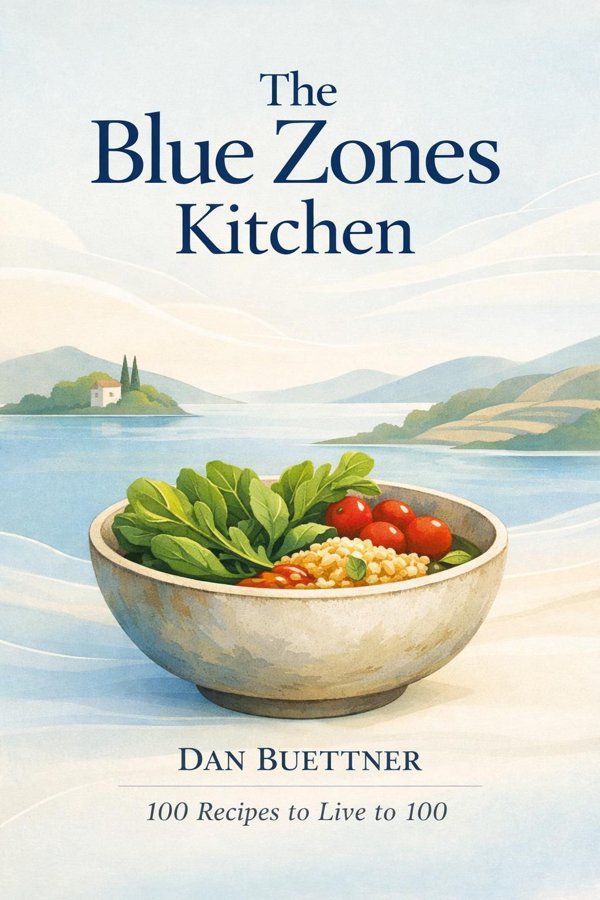
The Blue Zones Kitchen: 100 Recipes to Live to 100: Summary & Key Insights
by Dan Buettner
 10 min5 chaptersAudio available
What Is The Blue Zones Kitchen: 100 Recipes to Live to 100 About?
The Blue Zones Kitchen: 100 Recipes to Live to 100 by Dan Buettner is a nutrition book spanning 5 pages. The Blue Zones Kitchen es un libro de cocina que presenta recetas inspiradas en las zonas del mundo donde las personas viven más tiempo y con mejor salud. Dan Buettner combina investigación sobre longevidad con platos tradicionales de lugares como Okinawa, Cerdeña, Nicoya y la isla de Ikaria, ofreciendo una guía práctica para comer de manera saludable y disfrutar de la vida.
This FizzRead summary covers all 5 key chapters of The Blue Zones Kitchen: 100 Recipes to Live to 100 in approximately 10 minutes, distilling the most important ideas, arguments, and takeaways from Dan Buettner's work. Also available as an audio summary and Key Quotes Podcast.
The Blue Zones Kitchen: 100 Recipes to Live to 100
The Blue Zones Kitchen es un libro de cocina que presenta recetas inspiradas en las zonas del mundo donde las personas viven más tiempo y con mejor salud. Dan Buettner combina investigación sobre longevidad con platos tradicionales de lugares como Okinawa, Cerdeña, Nicoya y la isla de Ikaria, ofreciendo una guía práctica para comer de manera saludable y disfrutar de la vida.
Who Should Read The Blue Zones Kitchen: 100 Recipes to Live to 100?
This book is perfect for anyone interested in nutrition and looking to gain actionable insights in a short read. Whether you're a student, professional, or lifelong learner, the key ideas from The Blue Zones Kitchen: 100 Recipes to Live to 100 by Dan Buettner will help you think differently.
- ✓Readers who enjoy nutrition and want practical takeaways
- ✓Professionals looking to apply new ideas to their work and life
- ✓Anyone who wants the core insights of The Blue Zones Kitchen: 100 Recipes to Live to 100 in just 10 minutes
Want the full summary?
Get instant access to this book summary and 100K+ more with Fizz Moment.
Get Free SummaryAvailable on App Store • Free to download
Key Chapters
Each Blue Zone reveals an extraordinary but practical secret: longevity is a result of culture, not supplements or strict regimens. When I visited Okinawa, the elders taught me the phrase 'Hara hachi bu,' meaning 'eat until you are 80% full.' That small discipline embodies mindful eating that curbs overconsumption. Their diets brim with sweet potatoes, bitter melon, tofu, and small portions of fish—foods that balance nutrients naturally and keep inflammation at bay. More importantly, meals are often shared among friends and family, reinforcing daily expressions of connection and purpose.
In Sardinia, Italy, I found myself surrounded by families where bread baking is an intergenerational ritual. The locals use whole grain barley, beans, and garden vegetables, and drink red wine moderately with meals. Their staple minestrones are humble but nutritionally complete. What I saw in Sardinia wasn’t a diet; it was a lifestyle of togetherness. Elders live with their families, laughter fills the air, and physical activity—walking rugged hills or tending sheep—remains a natural part of life.
Moving to Nicoya, Costa Rica, the spirit of 'plan de vida,' or life purpose, unveils longevity. Here, corn reigns as a daily foundation of sustenance, ground fresh into tortillas and tamales. Nicoyans consume beans and squash, a trio known as the 'Mesoamerican trinity,' offering proteins and antioxidants that support metabolic health. Their social networks are powerful; intergenerational households affirm identity and emotional resilience.
Ikaria, the small Greek island, feels like a timeless secret of vitality. Meals revolve around olive oil, beans, lentils, wild greens, and herbal teas from the local mountains. Time moves differently there—slowly, meaningfully. People nap after lunch, walk to neighbors’ homes, and gather for weekly celebrations. Stress isn’t avoided; it simply dissolves in routine communion. This pace, coupled with a Mediterranean diet rich in polyphenols, creates a natural buffer against chronic disease.
Finally, in Loma Linda, California, I discovered the Seventh-day Adventist community, whose faith-guided vegetarianism echoes ancient wellness philosophies. Meals feature whole grains, legumes, nuts, and fruits—foods that foster vitality not only of the body but of the spirit. Their approach integrates Sabbath rest, volunteering, and purpose, weaving faith and health into a seamless practice.
Across these regions, I observed that longevity is both delicious and attainable. Every Blue Zone teaches us the same universal lesson: eat simply, move naturally, live with purpose, and love well. Their recipes are more than instructions; they are living expressions of balance and joy.
After immersing myself in these cultures, I realized that while geography changes, the underlying principles converge. Blue Zone diets share striking similarities—they center around whole, plant-based foods with minimal animal protein. Legumes, greens, grains, and nuts dominate. These foods are nutrient-dense and inexpensive, bridging sustainability with wellness. But their greatness lies not merely in the chemistry of nutrition; it lies in the humanity of food.
In every home I visited, food preparation was an act of love. Slow cooking replaced processed convenience. Meals sparked conversation, laughter, and storytelling. That pattern builds psychological health: when we eat with others, we slow down, savor the moment, and naturally eat less. Every bite carries the history of traditions where food connects generations.
Scientifically, this way of eating aligns with modern research showing that plant-forward diets reduce cardiovascular disease and inflammation. But the Blue Zones demonstrate what data alone cannot: the emotional and spiritual fulfillment that arises from mindful eating. By focusing on natural ingredients, people obtain the nutrition their bodies crave while engaging in rituals that enrich their social bonds.
In practical terms, bringing this into your kitchen means rediscovering simplicity—beans instead of meats, fresh herbs instead of sauces, olive oil instead of butter. It means trusting that your body thrives when fed what nature intended. Cooking is no longer a chore; it becomes a daily meditation where you practice patience and gratitude. The Blue Zone way restores the balance between nourishment and pleasure that industrialized living has eroded.
+ 3 more chapters — available in the FizzRead app
All Chapters in The Blue Zones Kitchen: 100 Recipes to Live to 100
About the Author
Dan Buettner es un explorador y escritor estadounidense, conocido por su trabajo con National Geographic sobre las 'Zonas Azules', regiones donde las personas alcanzan edades avanzadas con buena salud. Ha escrito varios libros sobre longevidad y bienestar.
Get This Summary in Your Preferred Format
Read or listen to the The Blue Zones Kitchen: 100 Recipes to Live to 100 summary by Dan Buettner anytime, anywhere. FizzRead offers multiple formats so you can learn on your terms — all free.
Available formats: App · Audio · PDF · EPUB — All included free with FizzRead
Download The Blue Zones Kitchen: 100 Recipes to Live to 100 PDF and EPUB Summary
Key Quotes from The Blue Zones Kitchen: 100 Recipes to Live to 100
“Each Blue Zone reveals an extraordinary but practical secret: longevity is a result of culture, not supplements or strict regimens.”
“After immersing myself in these cultures, I realized that while geography changes, the underlying principles converge.”
Frequently Asked Questions about The Blue Zones Kitchen: 100 Recipes to Live to 100
The Blue Zones Kitchen: 100 Recipes to Live to 100 by Dan Buettner is a nutrition book that explores key ideas across 5 chapters. The Blue Zones Kitchen es un libro de cocina que presenta recetas inspiradas en las zonas del mundo donde las personas viven más tiempo y con mejor salud. Dan Buettner combina investigación sobre longevidad con platos tradicionales de lugares como Okinawa, Cerdeña, Nicoya y la isla de Ikaria, ofreciendo una guía práctica para comer de manera saludable y disfrutar de la vida.
More by Dan Buettner
The Blue Zones Solution: Eating and Living Like the World's Healthiest People
Dan Buettner
10 min
The Blue Zones of Happiness: Lessons From the World's Happiest People
Dan Buettner
10 min
The Blue Zones: Lessons for Living Longer From the People Who've Lived the Longest
Dan Buettner
10 min
The Blue Zones Solution Cookbook: Eating and Living Like the World's Healthiest People
Dan Buettner
10 minYou Might Also Like
Eating by the Seasons Cookbook: Seasonal Produce-Focused Recipes
Clare Foster
10 min
From Crook to Cook: Platinum Recipes from Tha Boss Dogg's Kitchen
Snoop Dogg with Ryan Ford
10 min
Juicing for Beginners: The Essential Guide to Juicing Recipes and Juicing for Weight Loss
Rockridge Press
10 min
The Food Therapist: Break Bad Habits, Eat with Intention, and Indulge Without Worry
Shira Lenchewski
10 min
The Mediterranean Diet Meal Plan: A 4-Week Meal Plan for Optimal Health and Weight Loss
Various Contributors
10 min
The Well Plated Cookbook: Simple, Wholesome Recipes for Everyday Meals
Erin Clarke
10 minBrowse by Category
Ready to read The Blue Zones Kitchen: 100 Recipes to Live to 100?
Get the full summary and 100K+ more books with Fizz Moment.