
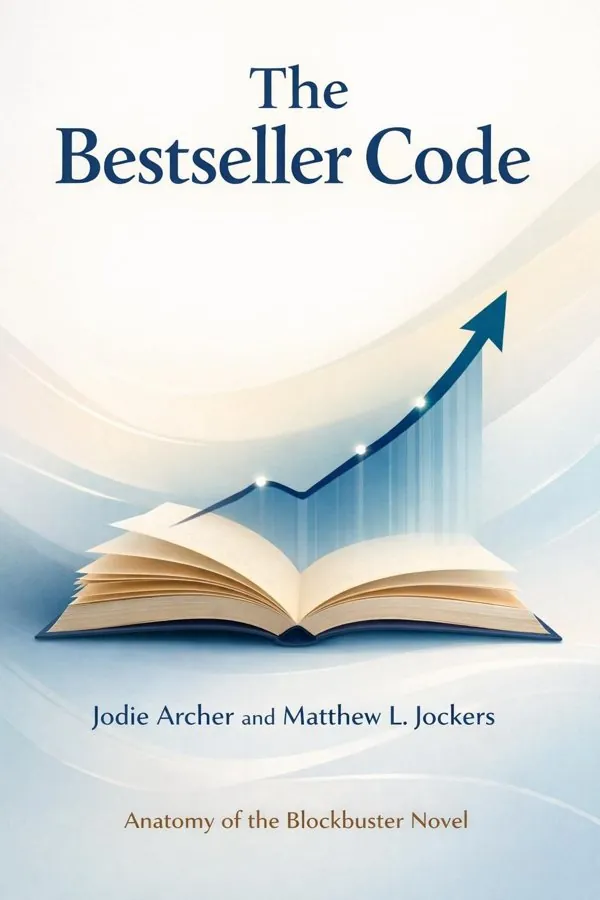
The Bestseller Code: Anatomy of the Blockbuster Novel: Summary & Key Insights
by Jodie Archer, Matthew L. Jockers
 10 min11 chaptersAudio available
What Is The Bestseller Code: Anatomy of the Blockbuster Novel About?
The Bestseller Code: Anatomy of the Blockbuster Novel by Jodie Archer and Matthew L. Jockers is a writing book spanning 11 pages. This book explores the science behind what makes a novel a bestseller. Using a computer algorithm trained on thousands of novels, the authors analyze linguistic, thematic, and emotional patterns that correlate with commercial success. They reveal how data-driven insights can decode the elements of storytelling that resonate most with readers.
This FizzRead summary covers all 11 key chapters of The Bestseller Code: Anatomy of the Blockbuster Novel in approximately 10 minutes, distilling the most important ideas, arguments, and takeaways from Jodie Archer and Matthew L. Jockers's work. Also available as an audio summary and Key Quotes Podcast.
The Bestseller Code: Anatomy of the Blockbuster Novel
This book explores the science behind what makes a novel a bestseller. Using a computer algorithm trained on thousands of novels, the authors analyze linguistic, thematic, and emotional patterns that correlate with commercial success. They reveal how data-driven insights can decode the elements of storytelling that resonate most with readers.
Who Should Read The Bestseller Code: Anatomy of the Blockbuster Novel?
This book is perfect for anyone interested in writing and looking to gain actionable insights in a short read. Whether you're a student, professional, or lifelong learner, the key ideas from The Bestseller Code: Anatomy of the Blockbuster Novel by Jodie Archer and Matthew L. Jockers will help you think differently.
- ✓Readers who enjoy writing and want practical takeaways
- ✓Professionals looking to apply new ideas to their work and life
- ✓Anyone who wants the core insights of The Bestseller Code: Anatomy of the Blockbuster Novel in just 10 minutes
Want the full summary?
Get instant access to this book summary and 100K+ more with Fizz Moment.
Get Free SummaryAvailable on App Store • Free to download
Key Chapters
Our collaboration began at Stanford University, where the idea of computational literary analysis was shifting from novelty to frontier. Jodie brought with her years in acquisitions at Penguin UK—a career spent spotting potential bestsellers by intuition, taste, and market savvy. Matthew, by contrast, was a pioneer in the emerging field of digital humanities, trained in turning literary analysis into data patterns. Together, we wanted to see if technology could meet intuition halfway, if we could teach a machine not only to read but to recognize what makes stories succeed.
We began by gathering an unprecedented dataset: thousands of novels, from obscure midlisters to chart-topping bestsellers across genres. Using natural language processing, we stripped away titles, metadata, and author names, feeding the raw text into what would become our “bestseller-ometer.” The computer didn’t care about brand names or marketing spend. It read words, sentences, arcs, emotions—every measurable feature that might reveal what readers respond to.
What followed was both exhilarating and humbling. The machine began to identify patterns invisible to the naked eye. It found that certain themes, emotional arcs, and tonal balances appeared again and again in bestselling fiction, regardless of author or genre. Far from dehumanizing literature, this approach showed us just how deeply human storytelling is, how much it depends on emotional universals that translate seamlessly into data.
Before we could decode bestseller DNA, we first had to define it. What, exactly, is a bestseller? For our study, we used data from *The New York Times* Bestseller List—a cultural barometer for commercial success. Yet even this measure has complexities. Some books make the list for a week and vanish; others achieve enduring sales without ever appearing there. We needed a definition that balanced sales data with market endurance.
We ultimately focused on novels that sustained strong performance across multiple weeks, representing household names in fiction. This operational definition allowed the algorithm to detect consistent linguistic and thematic traits rather than anomalies. We then compared those novels to a control group of hundreds of others—critically praised works, debut novels, and midlist titles.
The result was illuminating. Bestsellers were not simply the result of marketing or luck; they bore textual fingerprints that resurfaced with statistical regularity. The data told us that some stories inherently pull readers in and keep them there—and that their structures, pacing, and emotional rhythms can be measured.
+ 9 more chapters — available in the FizzRead app
All Chapters in The Bestseller Code: Anatomy of the Blockbuster Novel
About the Authors
Jodie Archer is a former acquisitions editor at Penguin UK with a PhD in English from Stanford University. Matthew L. Jockers is an associate dean and professor of English at Washington State University, known for his work in computational literary analysis.
Get This Summary in Your Preferred Format
Read or listen to the The Bestseller Code: Anatomy of the Blockbuster Novel summary by Jodie Archer and Matthew L. Jockers anytime, anywhere. FizzRead offers multiple formats so you can learn on your terms — all free.
Available formats: App · Audio · PDF · EPUB — All included free with FizzRead
Download The Bestseller Code: Anatomy of the Blockbuster Novel PDF and EPUB Summary
Key Quotes from The Bestseller Code: Anatomy of the Blockbuster Novel
“Our collaboration began at Stanford University, where the idea of computational literary analysis was shifting from novelty to frontier.”
“Before we could decode bestseller DNA, we first had to define it.”
Frequently Asked Questions about The Bestseller Code: Anatomy of the Blockbuster Novel
The Bestseller Code: Anatomy of the Blockbuster Novel by Jodie Archer and Matthew L. Jockers is a writing book that explores key ideas across 11 chapters. This book explores the science behind what makes a novel a bestseller. Using a computer algorithm trained on thousands of novels, the authors analyze linguistic, thematic, and emotional patterns that correlate with commercial success. They reveal how data-driven insights can decode the elements of storytelling that resonate most with readers.
You Might Also Like

The Art of Perspective
Christopher Castellani
10 min
Making a Point: The Persnickety Story of English Punctuation
David Crystal
10 min
The Elements Of Eloquence: How To Turn The Perfect English Phrase
Mark Forsyth
10 min
The Pocket Muse: Ideas and Inspirations for Writing
Monica Wood
10 min
A Little Book on Form: An Exploration into the Formal Imagination of Poetry
Robert Hass
10 min
Adventures In The Screen Trade: A Personal View Of Hollywood And Screenwriting
William Goldman
10 minBrowse by Category
Ready to read The Bestseller Code: Anatomy of the Blockbuster Novel?
Get the full summary and 100K+ more books with Fizz Moment.