
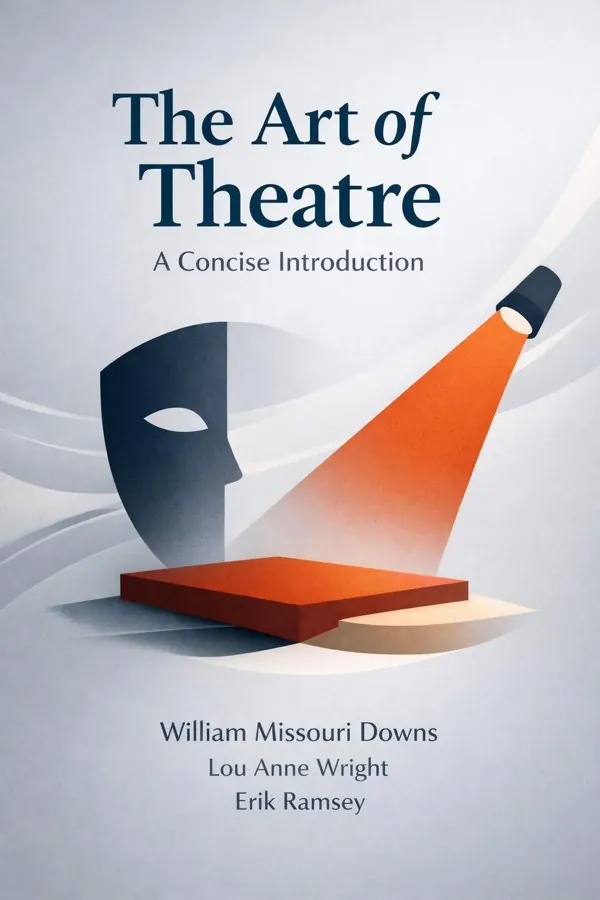
The Art of Theatre: A Concise Introduction: Summary & Key Insights
by William Missouri Downs, Lou Anne Wright, Erik Ramsey
 10 min14 chaptersAudio available
What Is The Art of Theatre: A Concise Introduction About?
The Art of Theatre: A Concise Introduction by William Missouri Downs, Lou Anne Wright, Erik Ramsey is a performing_arts book spanning 14 pages. The Art of Theatre: A Concise Introduction offers a comprehensive yet accessible overview of theatre as a living art form. It explores the collaborative nature of performance, the roles of playwrights, actors, directors, and designers, and the cultural and historical contexts that shape theatrical expression. The book emphasizes the experiential and creative aspects of theatre, encouraging readers to engage critically and imaginatively with live performance.
This FizzRead summary covers all 14 key chapters of The Art of Theatre: A Concise Introduction in approximately 10 minutes, distilling the most important ideas, arguments, and takeaways from William Missouri Downs, Lou Anne Wright, Erik Ramsey's work. Also available as an audio summary and Key Quotes Podcast.
The Art of Theatre: A Concise Introduction
The Art of Theatre: A Concise Introduction offers a comprehensive yet accessible overview of theatre as a living art form. It explores the collaborative nature of performance, the roles of playwrights, actors, directors, and designers, and the cultural and historical contexts that shape theatrical expression. The book emphasizes the experiential and creative aspects of theatre, encouraging readers to engage critically and imaginatively with live performance.
Who Should Read The Art of Theatre: A Concise Introduction?
This book is perfect for anyone interested in performing_arts and looking to gain actionable insights in a short read. Whether you're a student, professional, or lifelong learner, the key ideas from The Art of Theatre: A Concise Introduction by William Missouri Downs, Lou Anne Wright, Erik Ramsey will help you think differently.
- ✓Readers who enjoy performing_arts and want practical takeaways
- ✓Professionals looking to apply new ideas to their work and life
- ✓Anyone who wants the core insights of The Art of Theatre: A Concise Introduction in just 10 minutes
Want the full summary?
Get instant access to this book summary and 100K+ more with Fizz Moment.
Get Free SummaryAvailable on App Store • Free to download
Key Chapters
In the world of theatre, no one stands alone. Every performance you witness is the culmination of countless unseen collaborations. The playwright provides the blueprint—a world of words and possibility. But those words remain dormant until actors give them breath, directors give them vision, and designers shape their sensory atmosphere. Theatre is the collective heartbeat of creativity.
I often tell my students that theatre is the only art form that requires the simultaneous collaboration of almost every mode of human expression. It blends language, movement, sound, architecture, and visual design into one unified whole. This deep interdependence means that theatre constantly teaches us to listen and respond—to other people, to space, to silence, and to emotion.
Culturally, theatre mirrors and molds the societies that create it. From the Dionysian festivals in ancient Greece to spontaneous street performances in modern protest movements, drama reflects collective identity and struggle. Each play, each production, is both product and producer of social thought. When audiences gather, they do more than witness art; they enact community. Theatre becomes the rehearsal room for empathy, a place where we practice understanding others.
It is this collaborative and communal essence that makes theatre persist in an increasingly digitized world. Even as individualism grows, theatre reminds us of our interdependence. To be part of theatre—on stage, behind it, or in the audience—is to share presence, and in that shared presence lies the beating core of humanity.
To grasp the art of theatre, you must trace its lineage—not merely through Western tradition, but through the broader human impulse to dramatize life. Theatre began as ritual. In ancient cultures, people gathered to reenact myths, invoke gods, and mark transitions. These rituals were communal performances, bridging the sacred and the social. From these beginnings arose structured drama.
In Greece, drama transformed into civic celebration. Playwrights like Aeschylus and Sophocles built a foundation rooted in conflict and catharsis, where tragedy explored the tension between human will and divine law. Roman theatre expanded this legacy, emphasizing spectacle and accessibility, bringing drama to the masses. The Middle Ages reintroduced theatre as spiritual teaching through mystery plays and morality tales, which staged biblical narratives for common people.
Then came the Renaissance—a rebirth of intellectual and artistic exploration. Playwrights like Shakespeare and Molière revealed theatre’s psychological and linguistic power. The stage evolved from morality to metaphor, from didactic narrative to complex human insight. Each era reflects a unique worldview, yet all share theatre’s essence: the urge to embody story.
In modern history, this lineage continued to expand globally, influencing and interweaving with Japanese Noh, Indian Kathakali, and African oral traditions. The past teaches us that theatre never belongs to one culture alone—it belongs to the timeless act of making meaning through performance.
+ 12 more chapters — available in the FizzRead app
All Chapters in The Art of Theatre: A Concise Introduction
About the Authors
William Missouri Downs is an American playwright, screenwriter, and theatre professor known for his works in contemporary theatre education. Lou Anne Wright is an actor, dialect coach, and professor of theatre. Erik Ramsey is a playwright and educator specializing in dramatic writing and performance studies.
Get This Summary in Your Preferred Format
Read or listen to the The Art of Theatre: A Concise Introduction summary by William Missouri Downs, Lou Anne Wright, Erik Ramsey anytime, anywhere. FizzRead offers multiple formats so you can learn on your terms — all free.
Available formats: App · Audio · PDF · EPUB — All included free with FizzRead
Download The Art of Theatre: A Concise Introduction PDF and EPUB Summary
Key Quotes from The Art of Theatre: A Concise Introduction
“In the world of theatre, no one stands alone.”
“To grasp the art of theatre, you must trace its lineage—not merely through Western tradition, but through the broader human impulse to dramatize life.”
Frequently Asked Questions about The Art of Theatre: A Concise Introduction
The Art of Theatre: A Concise Introduction by William Missouri Downs, Lou Anne Wright, Erik Ramsey is a performing_arts book that explores key ideas across 14 chapters. The Art of Theatre: A Concise Introduction offers a comprehensive yet accessible overview of theatre as a living art form. It explores the collaborative nature of performance, the roles of playwrights, actors, directors, and designers, and the cultural and historical contexts that shape theatrical expression. The book emphasizes the experiential and creative aspects of theatre, encouraging readers to engage critically and imaginatively with live performance.
You Might Also Like

Harriet Tubman: Live in Concert
Bob the Drag Queen
10 min
The Art of Stagecraft
Robert Edmond Jones
10 min
The Art of Stop-Motion Animation
Ken A. Priebe
10 min
Thunderstorm
Cao Yu
10 min
Acting In Film: An Actor's Take on Movie Making
Michael Caine
10 min
Character Animation Crash Course!
Eric Goldberg
10 minBrowse by Category
Ready to read The Art of Theatre: A Concise Introduction?
Get the full summary and 100K+ more books with Fizz Moment.