
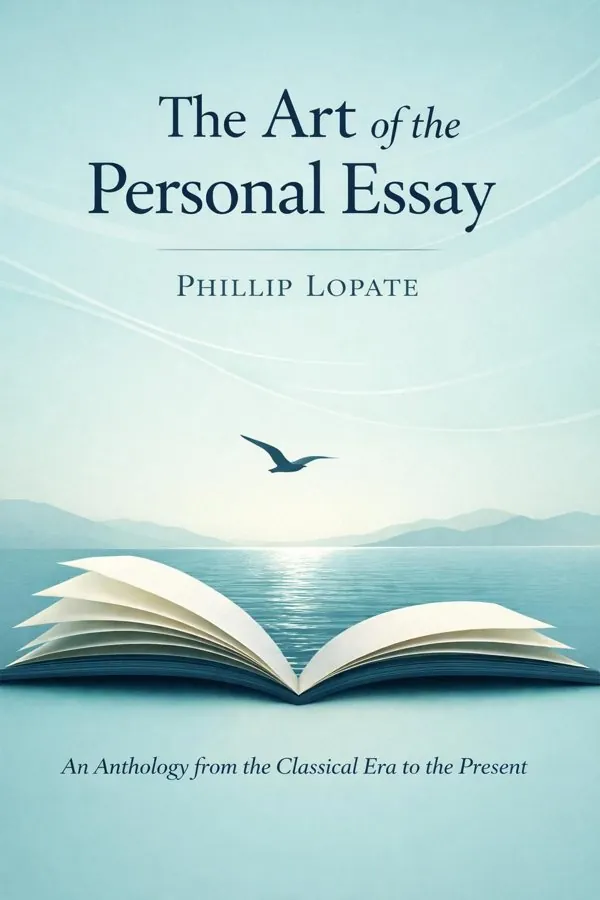
The Art of the Personal Essay: An Anthology from the Classical Era to the Present: Summary & Key Insights
 10 min7 chaptersAudio available
What Is The Art of the Personal Essay: An Anthology from the Classical Era to the Present About?
The Art of the Personal Essay: An Anthology from the Classical Era to the Present by Phillip Lopate is a writing book spanning 7 pages. A comprehensive anthology that traces the evolution of the personal essay form from its classical origins to modern times. Edited by Phillip Lopate, the collection includes works by Montaigne, Virginia Woolf, George Orwell, James Baldwin, and many others, offering readers a panoramic view of the essay as a vehicle for self-expression, reflection, and literary artistry.
This FizzRead summary covers all 7 key chapters of The Art of the Personal Essay: An Anthology from the Classical Era to the Present in approximately 10 minutes, distilling the most important ideas, arguments, and takeaways from Phillip Lopate's work. Also available as an audio summary and Key Quotes Podcast.
The Art of the Personal Essay: An Anthology from the Classical Era to the Present
A comprehensive anthology that traces the evolution of the personal essay form from its classical origins to modern times. Edited by Phillip Lopate, the collection includes works by Montaigne, Virginia Woolf, George Orwell, James Baldwin, and many others, offering readers a panoramic view of the essay as a vehicle for self-expression, reflection, and literary artistry.
Who Should Read The Art of the Personal Essay: An Anthology from the Classical Era to the Present?
This book is perfect for anyone interested in writing and looking to gain actionable insights in a short read. Whether you're a student, professional, or lifelong learner, the key ideas from The Art of the Personal Essay: An Anthology from the Classical Era to the Present by Phillip Lopate will help you think differently.
- ✓Readers who enjoy writing and want practical takeaways
- ✓Professionals looking to apply new ideas to their work and life
- ✓Anyone who wants the core insights of The Art of the Personal Essay: An Anthology from the Classical Era to the Present in just 10 minutes
Want the full summary?
Get instant access to this book summary and 100K+ more with Fizz Moment.
Get Free SummaryAvailable on App Store • Free to download
Key Chapters
The story of the personal essay begins with the ancients — thinkers such as Seneca, Plutarch, and Montaigne. What they shared was a commitment to the examined life. Seneca, writing in Rome, approached reflection as moral discipline. His essays embody the Stoic belief that writing helps one clarify the right way to live. Each meditation cultivates equanimity and virtue, reminding us that the essay was born as a practical tool for ethical growth.
Plutarch carried this impulse into the realm of philosophical biography. His reflections combine reasoning with anecdote, showing how moral ideas express themselves in actions, habits, and friendships. In reading Plutarch, one senses a conversational tone that anticipates the essayist’s familiar voice — reflective but not remote, personal yet not self-indulgent.
And then came Montaigne, who transformed the essay from moral treatise into self-exploration. His *Essais* declaimed no certainty; instead, they offered the texture of thought itself. Montaigne invented the essay’s defining attitude: to explore rather than conclude. I see his influence as foundational. In his hands, philosophy became domestic and humane. He shows how writing can be a mode of self-study, how ordinary experiences — digestion, friendship, aging — can become gateways to wisdom. His candor opened a space for vulnerability, setting the tone for every essayist who followed.
+ 5 more chapters — available in the FizzRead app
All Chapters in The Art of the Personal Essay: An Anthology from the Classical Era to the Present
About the Author
Phillip Lopate is an American essayist, film critic, and professor known for his contributions to the modern essay form. He has authored numerous collections of personal essays and has been a leading advocate for the essay as a literary genre.
Get This Summary in Your Preferred Format
Read or listen to the The Art of the Personal Essay: An Anthology from the Classical Era to the Present summary by Phillip Lopate anytime, anywhere. FizzRead offers multiple formats so you can learn on your terms — all free.
Available formats: App · Audio · PDF · EPUB — All included free with FizzRead
Download The Art of the Personal Essay: An Anthology from the Classical Era to the Present PDF and EPUB Summary
Key Quotes from The Art of the Personal Essay: An Anthology from the Classical Era to the Present
“The story of the personal essay begins with the ancients — thinkers such as Seneca, Plutarch, and Montaigne.”
“The essay evolved alongside the spread of printing and public discourse.”
Frequently Asked Questions about The Art of the Personal Essay: An Anthology from the Classical Era to the Present
The Art of the Personal Essay: An Anthology from the Classical Era to the Present by Phillip Lopate is a writing book that explores key ideas across 7 chapters. A comprehensive anthology that traces the evolution of the personal essay form from its classical origins to modern times. Edited by Phillip Lopate, the collection includes works by Montaigne, Virginia Woolf, George Orwell, James Baldwin, and many others, offering readers a panoramic view of the essay as a vehicle for self-expression, reflection, and literary artistry.
You Might Also Like
The Art of Perspective
Christopher Castellani
10 min
Making a Point: The Persnickety Story of English Punctuation
David Crystal
10 min
The Elements Of Eloquence: How To Turn The Perfect English Phrase
Mark Forsyth
10 min
The Pocket Muse: Ideas and Inspirations for Writing
Monica Wood
10 min
A Little Book on Form: An Exploration into the Formal Imagination of Poetry
Robert Hass
10 min
Adventures In The Screen Trade: A Personal View Of Hollywood And Screenwriting
William Goldman
10 minBrowse by Category
Ready to read The Art of the Personal Essay: An Anthology from the Classical Era to the Present?
Get the full summary and 100K+ more books with Fizz Moment.