
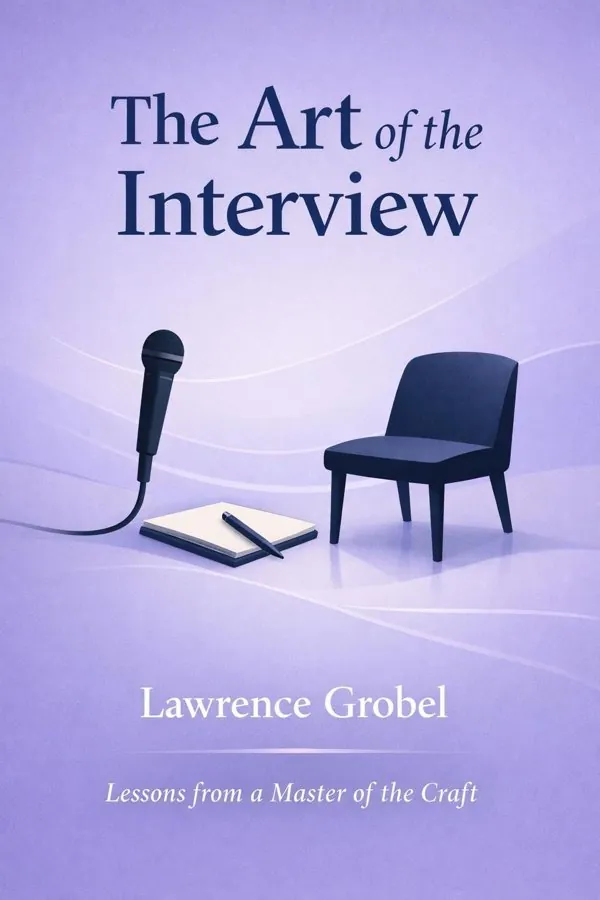
The Art of the Interview: Lessons from a Master of the Craft: Summary & Key Insights
 10 min11 chapters
What Is The Art of the Interview: Lessons from a Master of the Craft About?
The Art of the Interview: Lessons from a Master of the Craft by Lawrence Grobel is a writing book spanning 11 pages. A comprehensive guide to the art and technique of interviewing, written by acclaimed journalist Lawrence Grobel. Drawing on decades of experience interviewing celebrities, artists, and public figures, Grobel shares insights into preparation, listening, and the subtle dynamics that make for revealing and memorable conversations.
This FizzRead summary covers all 11 key chapters of The Art of the Interview: Lessons from a Master of the Craft in approximately 10 minutes, distilling the most important ideas, arguments, and takeaways from Lawrence Grobel's work.
The Art of the Interview: Lessons from a Master of the Craft
A comprehensive guide to the art and technique of interviewing, written by acclaimed journalist Lawrence Grobel. Drawing on decades of experience interviewing celebrities, artists, and public figures, Grobel shares insights into preparation, listening, and the subtle dynamics that make for revealing and memorable conversations.
Who Should Read The Art of the Interview: Lessons from a Master of the Craft?
This book is perfect for anyone interested in writing and looking to gain actionable insights in a short read. Whether you're a student, professional, or lifelong learner, the key ideas from The Art of the Interview: Lessons from a Master of the Craft by Lawrence Grobel will help you think differently.
- ✓Readers who enjoy writing and want practical takeaways
- ✓Professionals looking to apply new ideas to their work and life
- ✓Anyone who wants the core insights of The Art of the Interview: Lessons from a Master of the Craft in just 10 minutes
Want the full summary?
Get instant access to this book summary and 100K+ more with Fizz Moment.
Get Free SummaryAvailable on App Store • Free to download
Key Chapters
To be an interviewer is to accept both privilege and responsibility. You hold the power to shape how a person is seen by others, and with that comes the duty to be fair, clear, and honest. As I’ve learned across hundreds of interviews, your first loyalty is to truth—not to the subject, not to the publication, but to the conversation’s integrity.
Objectivity in interviewing doesn’t mean detachment. It means respect. You must respect your subject enough to let them speak for themselves—and respect your audience enough to represent what they say faithfully. I see the interviewer as a bridge: part artist, part detective, part psychologist. You navigate between curiosity and discretion, between control and spontaneity. The best interviews balance structure with flow, so that dialogue feels natural yet purposeful. Whether you talk to a movie star or a factory worker, your role is to illuminate who they are beneath the surface.
But that requires trust, and trust begins long before the first question is asked. It begins with preparation and with the awareness that each subject has a story they may not yet know how to tell. As interviewer, your role is to create the conditions where that story can emerge.
The more I have prepared, the luckier I’ve become. Preparation is the foundation of every successful interview. When I sat down with actors like Robert De Niro or writers like Truman Capote, I never came empty-handed. I read everything I could: their work, past interviews, biographies, obscure articles. Because knowing your subject deeply gives you the freedom to improvise when the moment comes.
Research is not about showing off your knowledge; it’s about showing your subject that you care enough to learn. It establishes respect. It also helps you anticipate how a conversation might unfold. Every person has patterns—themes they return to and doors they prefer to keep closed. When you know those boundaries, you can approach sensitive areas with tact, and sometimes persuade them to open those doors just a little.
The great paradox of preparation is that you must be ready to abandon it. An outline is a guide, not a script. The deeper your research, the freer you are to listen—to follow where the conversation wants to go. Because it’s often in those unplanned detours that truth reveals itself.
+ 9 more chapters — available in the FizzRead app
All Chapters in The Art of the Interview: Lessons from a Master of the Craft
About the Author
Lawrence Grobel is an American author and journalist known for his in-depth interviews with prominent figures in entertainment, literature, and politics. His work has appeared in major publications such as Playboy, Rolling Stone, and The New York Times. He has also taught writing and interviewing at UCLA and other institutions.
Get This Summary in Your Preferred Format
Read or listen to the The Art of the Interview: Lessons from a Master of the Craft summary by Lawrence Grobel anytime, anywhere. FizzRead offers multiple formats so you can learn on your terms — all free.
Available formats: App · Audio · PDF · EPUB — All included free with FizzRead
Download The Art of the Interview: Lessons from a Master of the Craft PDF and EPUB Summary
Key Quotes from The Art of the Interview: Lessons from a Master of the Craft
“To be an interviewer is to accept both privilege and responsibility.”
“The more I have prepared, the luckier I’ve become.”
Frequently Asked Questions about The Art of the Interview: Lessons from a Master of the Craft
The Art of the Interview: Lessons from a Master of the Craft by Lawrence Grobel is a writing book that explores key ideas across 11 chapters. A comprehensive guide to the art and technique of interviewing, written by acclaimed journalist Lawrence Grobel. Drawing on decades of experience interviewing celebrities, artists, and public figures, Grobel shares insights into preparation, listening, and the subtle dynamics that make for revealing and memorable conversations.
You Might Also Like
The Art of Perspective
Christopher Castellani
10 min
Making a Point: The Persnickety Story of English Punctuation
David Crystal
10 min
The Elements Of Eloquence: How To Turn The Perfect English Phrase
Mark Forsyth
10 min
The Pocket Muse: Ideas and Inspirations for Writing
Monica Wood
10 min
A Little Book on Form: An Exploration into the Formal Imagination of Poetry
Robert Hass
10 min
Adventures In The Screen Trade: A Personal View Of Hollywood And Screenwriting
William Goldman
10 minBrowse by Category
Ready to read The Art of the Interview: Lessons from a Master of the Craft?
Get the full summary and 100K+ more books with Fizz Moment.