
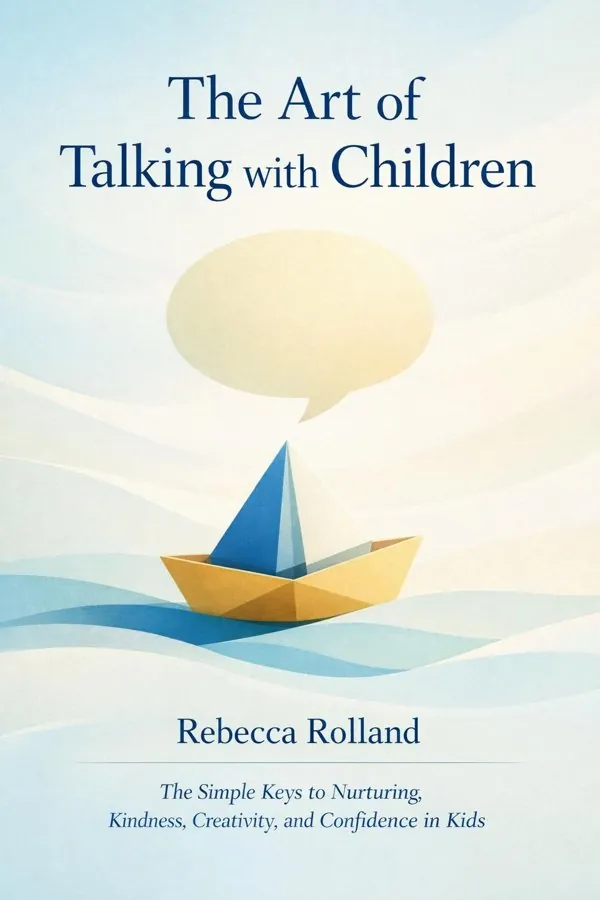
The Art of Talking with Children: The Simple Keys to Nurturing Kindness, Creativity, and Confidence in Kids: Summary & Key Insights
 10 min10 chaptersAudio available
What Is The Art of Talking with Children: The Simple Keys to Nurturing Kindness, Creativity, and Confidence in Kids About?
The Art of Talking with Children: The Simple Keys to Nurturing Kindness, Creativity, and Confidence in Kids by Rebecca Rolland is a parenting book spanning 10 pages. In this insightful guide, speech-language pathologist and Harvard lecturer Rebecca Rolland explores how meaningful conversation can strengthen relationships between adults and children. Drawing on research in psychology, linguistics, and education, she offers practical strategies for fostering empathy, creativity, and resilience through everyday talk. The book emphasizes the power of open-ended dialogue to help children develop emotional intelligence and confidence.
This FizzRead summary covers all 10 key chapters of The Art of Talking with Children: The Simple Keys to Nurturing Kindness, Creativity, and Confidence in Kids in approximately 10 minutes, distilling the most important ideas, arguments, and takeaways from Rebecca Rolland's work. Also available as an audio summary and Key Quotes Podcast.
The Art of Talking with Children: The Simple Keys to Nurturing Kindness, Creativity, and Confidence in Kids
In this insightful guide, speech-language pathologist and Harvard lecturer Rebecca Rolland explores how meaningful conversation can strengthen relationships between adults and children. Drawing on research in psychology, linguistics, and education, she offers practical strategies for fostering empathy, creativity, and resilience through everyday talk. The book emphasizes the power of open-ended dialogue to help children develop emotional intelligence and confidence.
Who Should Read The Art of Talking with Children: The Simple Keys to Nurturing Kindness, Creativity, and Confidence in Kids?
This book is perfect for anyone interested in parenting and looking to gain actionable insights in a short read. Whether you're a student, professional, or lifelong learner, the key ideas from The Art of Talking with Children: The Simple Keys to Nurturing Kindness, Creativity, and Confidence in Kids by Rebecca Rolland will help you think differently.
- ✓Readers who enjoy parenting and want practical takeaways
- ✓Professionals looking to apply new ideas to their work and life
- ✓Anyone who wants the core insights of The Art of Talking with Children: The Simple Keys to Nurturing Kindness, Creativity, and Confidence in Kids in just 10 minutes
Want the full summary?
Get instant access to this book summary and 100K+ more with Fizz Moment.
Get Free SummaryAvailable on App Store • Free to download
Key Chapters
From decades of research, we know that conversation shapes how children learn, love, and lead. Every ordinary chat about their day, every rambling story they share about a class project, is quietly wiring their brains for empathy and intellect. In this section, I explore how daily dialogue molds three essential capacities: kindness, creativity, and confidence.
The power of conversation begins with empathy. When children talk with us about emotions—whether theirs, ours, or those of fictional characters—they build neural pathways that help them understand others’ perspectives. Psychology tells us that this back-and-forth exchange, especially when adults reflect feelings rather than judge them, teaches attunement. Imagine a parent saying, “It sounds like you felt left out when your friend didn’t call.” That small act of naming an emotion signals safety and understanding, helping a child develop self-awareness and compassion.
Creativity blossoms through open-ended exchanges. Linguistics studies show that imaginative dialogue—those “what if” or “how might” questions—light up areas of the brain tied to divergent thinking. Children start to see problems as puzzles they can explore, not barriers to fear. A curious adult response such as “That’s an intriguing idea—how would you build it?” turns the conversation into a collaborative laboratory of thought.
Confidence, meanwhile, stems from being heard and respected as thinkers. When we genuinely consider a child’s viewpoint, we demonstrate that their contributions have value. This doesn’t mean we agree with everything they say, but that we take their ideas seriously enough to discuss and reflect. Over time, children internalize that sense of worth. They learn to speak up, to navigate disagreement, and to trust that their words can make a difference.
Conversation, then, is far more than chatter. It’s a developmental engine, guiding emotional growth and cognitive insight. When we talk *with* children rather than *at* them, we invite them to co-create meaning. As I’ll show in later chapters, this shift—from directing speech to dialogic engagement—is the foundation of all rich talk.
If conversation is so powerful, why do we so often fall short of making it meaningful? Modern life conspires against deep dialogue. Parents and teachers rush between tasks. Digital screens pull attention away. Sometimes, we assume we already know what children think or feel, and so we stop asking. Understanding these barriers is the first step toward overcoming them.
The pace of our lives is the most obvious obstacle. When communication happens in drive-by moments—“Did you finish your homework?”—children learn that words are merely functional, not relational. They may stop offering more than minimal responses. What gets lost is nuance, surprise, and emotional honesty. That’s why slowing down matters. Rich talk requires time for reflection, for incomplete sentences, and for real listening.
Technology is another major distraction. Phones and tablets fragment attention, often replacing eye contact with quick texts or entertainment. A distracted adult sends a silent message: your words are less important than my device. Over time, this erodes trust and discourages children from opening up. Digital balance isn’t about bans—it’s about intentional presence when conversation calls for it.
Then there are subtler barriers: adult assumptions and conversational scripts. Adults often predict what children will say or feel and respond before truly hearing them. I’ve seen countless instances where parents answer a child’s question before it’s fully expressed, simply to be efficient. But that efficiency costs engagement. Authentic dialogue requires curiosity—the willingness to encounter ideas we didn’t expect.
Sometimes we silence rich talk through fear of emotional messiness. Difficult feelings—anger, disappointment, embarrassment—can make adults uncomfortable. But when we avoid them, children learn avoidance too. When we lean in instead, naming emotions calmly and modeling empathy, we teach children how to process complexity.
Recognizing these barriers isn’t about blame. It’s an invitation to reflect: where do our habits limit connection? Once we notice these patterns, we can begin to shift them, creating space where meaningful conversation can breathe again.
+ 8 more chapters — available in the FizzRead app
All Chapters in The Art of Talking with Children: The Simple Keys to Nurturing Kindness, Creativity, and Confidence in Kids
About the Author
Rebecca Rolland is a lecturer at the Harvard Graduate School of Education and a speech-language pathologist at Boston Children’s Hospital. Her work focuses on communication, literacy, and child development. She writes and speaks widely on how conversation shapes learning and emotional growth.
Get This Summary in Your Preferred Format
Read or listen to the The Art of Talking with Children: The Simple Keys to Nurturing Kindness, Creativity, and Confidence in Kids summary by Rebecca Rolland anytime, anywhere. FizzRead offers multiple formats so you can learn on your terms — all free.
Available formats: App · Audio · PDF · EPUB — All included free with FizzRead
Download The Art of Talking with Children: The Simple Keys to Nurturing Kindness, Creativity, and Confidence in Kids PDF and EPUB Summary
Key Quotes from The Art of Talking with Children: The Simple Keys to Nurturing Kindness, Creativity, and Confidence in Kids
“From decades of research, we know that conversation shapes how children learn, love, and lead.”
“If conversation is so powerful, why do we so often fall short of making it meaningful?”
Frequently Asked Questions about The Art of Talking with Children: The Simple Keys to Nurturing Kindness, Creativity, and Confidence in Kids
The Art of Talking with Children: The Simple Keys to Nurturing Kindness, Creativity, and Confidence in Kids by Rebecca Rolland is a parenting book that explores key ideas across 10 chapters. In this insightful guide, speech-language pathologist and Harvard lecturer Rebecca Rolland explores how meaningful conversation can strengthen relationships between adults and children. Drawing on research in psychology, linguistics, and education, she offers practical strategies for fostering empathy, creativity, and resilience through everyday talk. The book emphasizes the power of open-ended dialogue to help children develop emotional intelligence and confidence.
You Might Also Like
Never Enough
Jennifer Breheny Wallace
10 min
Bluey: Sleepytime
Joe Brumm
10 min
In My Heart: A Book of Feelings
Jo Witek
10 min
Love From The Crayons
Drew Daywalt, Oliver Jeffers
10 min
Pete The Cat: Big Easter Adventure
James Dean, Kimberly Dean
10 min
Smart Money Smart Kids: Raising the Next Generation to Win with Money
Dave Ramsey, Rachel Cruze
10 minBrowse by Category
Ready to read The Art of Talking with Children: The Simple Keys to Nurturing Kindness, Creativity, and Confidence in Kids?
Get the full summary and 100K+ more books with Fizz Moment.