
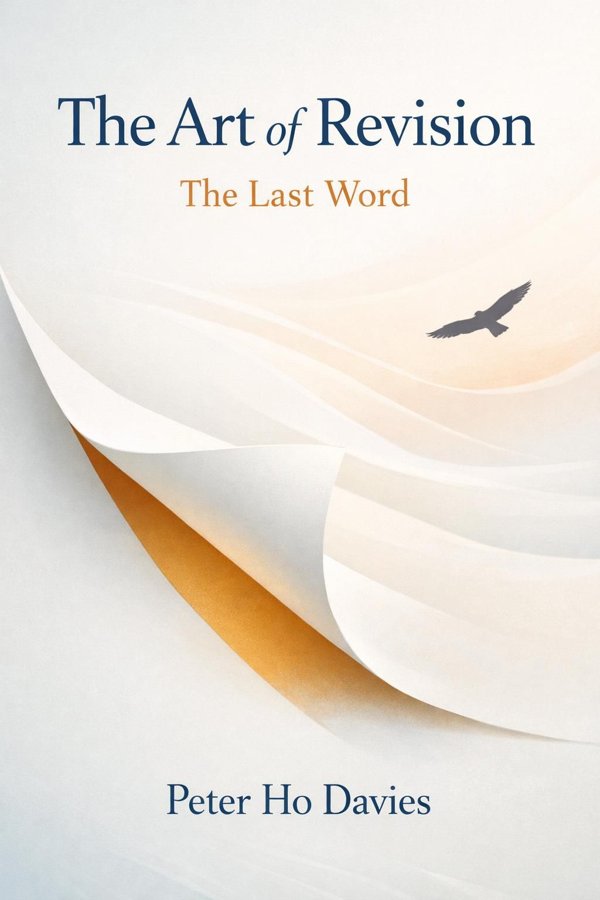
The Art of Revision: The Last Word: Summary & Key Insights
 10 min5 chaptersAudio available
What Is The Art of Revision: The Last Word About?
The Art of Revision: The Last Word by Peter Ho Davies is a writing book spanning 5 pages. In this insightful craft book, Peter Ho Davies explores the process of revision as a creative and transformative act rather than a mere stage of correction. Drawing on examples from his own work and other writers, Davies examines how rewriting can deepen meaning, refine voice, and reveal the emotional truth of a story. The book offers practical guidance and philosophical reflections for writers seeking to embrace revision as an essential part of the artistic journey.
This FizzRead summary covers all 5 key chapters of The Art of Revision: The Last Word in approximately 10 minutes, distilling the most important ideas, arguments, and takeaways from Peter Ho Davies's work. Also available as an audio summary and Key Quotes Podcast.
The Art of Revision: The Last Word
In this insightful craft book, Peter Ho Davies explores the process of revision as a creative and transformative act rather than a mere stage of correction. Drawing on examples from his own work and other writers, Davies examines how rewriting can deepen meaning, refine voice, and reveal the emotional truth of a story. The book offers practical guidance and philosophical reflections for writers seeking to embrace revision as an essential part of the artistic journey.
Who Should Read The Art of Revision: The Last Word?
This book is perfect for anyone interested in writing and looking to gain actionable insights in a short read. Whether you're a student, professional, or lifelong learner, the key ideas from The Art of Revision: The Last Word by Peter Ho Davies will help you think differently.
- ✓Readers who enjoy writing and want practical takeaways
- ✓Professionals looking to apply new ideas to their work and life
- ✓Anyone who wants the core insights of The Art of Revision: The Last Word in just 10 minutes
Want the full summary?
Get instant access to this book summary and 100K+ more with Fizz Moment.
Get Free SummaryAvailable on App Store • Free to download
Key Chapters
So many of us, whether seasoned or novice writers, cling to the seductive fantasy that someone — perhaps Hemingway, perhaps a version of ourselves — can pour out a perfect first draft. We imagine genius as effortless flow, as spontaneous perfection. Yet anyone who writes long enough realizes that first drafts mostly whisper what a story might want to be, not what it already is. A first draft, though vital, is not a finished thought — it is a discovery.
In my teaching and in my own experience, I have learned to reframe that first draft as an act of listening rather than proclaiming. When we write for the first time, we are not authors with authority; we are explorers marking unknown territory. Revision allows us to return to the map and notice where the compass might have faltered. It invites us to recognize the story we were truly trying to tell beneath all the improvisation and noise.
The writer’s relationship with revision changes dramatically when we release the fetish of “getting it right the first time.” Shakespeare’s language, Woolf’s rhythm, Baldwin’s clarity — none came from instantaneous perfection. They came through recurrence, doubt, deliberate reconsideration. To embrace revision is to acknowledge that not knowing is part of the art. It opens a space for humility and for surprise. When we revise, we are not merely repairing a flaw; we are uncovering what the draft itself didn’t yet know it contained.
Every time I return to my own drafts, I am reminded how revision reveals a story’s emotional center. In *The Welsh Girl*, for instance, it was not until the tenth or twelfth pass that I understood how the silence between two characters carried more truth than their words. My initial drafts were crowded with dialogue — an attempt to explain their feelings explicitly. Revision quieted those pages, allowing subtext to breathe and vulnerability to surface.
This discovery is not unique to me. Think of how Raymond Carver’s pared-down stories emerged through countless revisions with his editor, each change stripping away the unnecessary until what remained was raw and human. Meaning doesn’t lie on the surface; it hides in the layers of rewriting, in the questions we ask each time we return.
Revision is, therefore, less about judgment than curiosity. When we look again at our story, we should ask, “What is this really about?” and then realize that every answer births another question. That questioning process is not failure; it is the very heartbeat of art. A story revised honestly will always lead us closer to emotional truth, to empathy. Revision demands that we inhabit multiple selves — writer and reader, creator and witness — until our words resonate authentically across that bridge.
+ 3 more chapters — available in the FizzRead app
All Chapters in The Art of Revision: The Last Word
About the Author
Peter Ho Davies is a British-American novelist and short story writer, born in Coventry, England, to Welsh and Chinese parents. He is the author of acclaimed works such as 'The Welsh Girl' and 'The Fortunes'. Davies teaches creative writing at the University of Michigan and is known for his thoughtful explorations of identity, history, and the writing process.
Get This Summary in Your Preferred Format
Read or listen to the The Art of Revision: The Last Word summary by Peter Ho Davies anytime, anywhere. FizzRead offers multiple formats so you can learn on your terms — all free.
Available formats: App · Audio · PDF · EPUB — All included free with FizzRead
Download The Art of Revision: The Last Word PDF and EPUB Summary
Key Quotes from The Art of Revision: The Last Word
“So many of us, whether seasoned or novice writers, cling to the seductive fantasy that someone — perhaps Hemingway, perhaps a version of ourselves — can pour out a perfect first draft.”
“Every time I return to my own drafts, I am reminded how revision reveals a story’s emotional center.”
Frequently Asked Questions about The Art of Revision: The Last Word
The Art of Revision: The Last Word by Peter Ho Davies is a writing book that explores key ideas across 5 chapters. In this insightful craft book, Peter Ho Davies explores the process of revision as a creative and transformative act rather than a mere stage of correction. Drawing on examples from his own work and other writers, Davies examines how rewriting can deepen meaning, refine voice, and reveal the emotional truth of a story. The book offers practical guidance and philosophical reflections for writers seeking to embrace revision as an essential part of the artistic journey.
You Might Also Like
The Art of Perspective
Christopher Castellani
10 min
Making a Point: The Persnickety Story of English Punctuation
David Crystal
10 min
The Elements Of Eloquence: How To Turn The Perfect English Phrase
Mark Forsyth
10 min
The Pocket Muse: Ideas and Inspirations for Writing
Monica Wood
10 min
A Little Book on Form: An Exploration into the Formal Imagination of Poetry
Robert Hass
10 min
Adventures In The Screen Trade: A Personal View Of Hollywood And Screenwriting
William Goldman
10 minBrowse by Category
Ready to read The Art of Revision: The Last Word?
Get the full summary and 100K+ more books with Fizz Moment.