
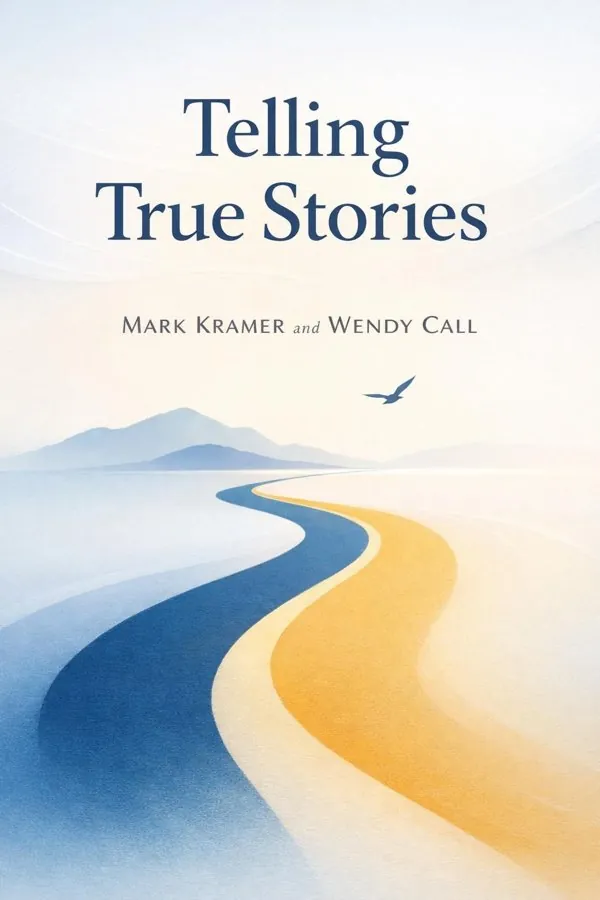
Telling True Stories: A Nonfiction Writers' Guide from the Nieman Foundation at Harvard University: Summary & Key Insights
 10 min10 chaptersAudio available
What Is Telling True Stories: A Nonfiction Writers' Guide from the Nieman Foundation at Harvard University About?
Telling True Stories: A Nonfiction Writers' Guide from the Nieman Foundation at Harvard University by Mark Kramer, Wendy Call is a writing book spanning 10 pages. Telling True Stories is a comprehensive guide for nonfiction writers, offering insights from some of the most respected journalists and authors in the field. Compiled by Mark Kramer and Wendy Call, the book gathers essays and advice from contributors such as Gay Talese, Susan Orlean, and Tom Wolfe. It covers every stage of the nonfiction writing process—from finding story ideas and conducting interviews to structuring narratives and refining prose—while emphasizing the ethical and emotional responsibilities of telling real stories.
This FizzRead summary covers all 10 key chapters of Telling True Stories: A Nonfiction Writers' Guide from the Nieman Foundation at Harvard University in approximately 10 minutes, distilling the most important ideas, arguments, and takeaways from Mark Kramer, Wendy Call's work. Also available as an audio summary and Key Quotes Podcast.
Telling True Stories: A Nonfiction Writers' Guide from the Nieman Foundation at Harvard University
Telling True Stories is a comprehensive guide for nonfiction writers, offering insights from some of the most respected journalists and authors in the field. Compiled by Mark Kramer and Wendy Call, the book gathers essays and advice from contributors such as Gay Talese, Susan Orlean, and Tom Wolfe. It covers every stage of the nonfiction writing process—from finding story ideas and conducting interviews to structuring narratives and refining prose—while emphasizing the ethical and emotional responsibilities of telling real stories.
Who Should Read Telling True Stories: A Nonfiction Writers' Guide from the Nieman Foundation at Harvard University?
This book is perfect for anyone interested in writing and looking to gain actionable insights in a short read. Whether you're a student, professional, or lifelong learner, the key ideas from Telling True Stories: A Nonfiction Writers' Guide from the Nieman Foundation at Harvard University by Mark Kramer, Wendy Call will help you think differently.
- ✓Readers who enjoy writing and want practical takeaways
- ✓Professionals looking to apply new ideas to their work and life
- ✓Anyone who wants the core insights of Telling True Stories: A Nonfiction Writers' Guide from the Nieman Foundation at Harvard University in just 10 minutes
Want the full summary?
Get instant access to this book summary and 100K+ more with Fizz Moment.
Get Free SummaryAvailable on App Store • Free to download
Key Chapters
Every good story begins with curiosity. The contributors to this first section insist that nonfiction writing lives or dies by the writer’s ability to see significance in ordinary life. Mark Kramer reminds us that stories are not merely found—they are recognized by writers who cultivate a habit of attention. Gay Talese describes how his most celebrated pieces emerged from simple acts of observation: noticing the quiet persistence of people overlooked by headlines.
The story, then, begins where the writer’s sense of wonder collides with the world’s complexity. One learns to listen for dissonance, to sense the tension that makes a narrative pulse with life. Narrative nonfiction is not about assembling data; it is about discovering meaning through immersion. Writers like Susan Orlean emphasize that the most compelling stories often grow from small seeds—a local incident, a peculiar individual, an intimate detail—and that the writer’s empathy and patience allow these to unfold into universal revelations.
Finding a story also means finding yourself within it—your questions, your astonishment, your doubts. The writers here advise that before you can convince readers a story matters, it must matter deeply to you. Only then can your words carry the emotional truth that compels attention.
In this section, journalism veterans share their methods for choosing subjects that resonate on multiple levels. Choosing a subject is not simply about relevance or novelty—it is a moral and artistic choice. Writers are urged to look for people and situations that illuminate broader truths about our shared existence.
Research in narrative nonfiction goes far beyond gathering facts. It is a journey into others’ lives that requires time, openness, and respect. Writers like Tracy Kidder and Katherine Boo stress immersion: occupying the world of your subjects until you not only understand what they do, but how they feel. Building trust becomes the cornerstone of meaningful reporting. Readers sense when subjects have confided something authentic; they also sense when a writer remains at a polite remove.
What emerges from this section is the conviction that research is an act of human empathy as much as intellectual rigor. The writer must earn the right to tell a story by proving worthy of trust—through honesty, patience, and an unwavering commitment to accuracy.
+ 8 more chapters — available in the FizzRead app
All Chapters in Telling True Stories: A Nonfiction Writers' Guide from the Nieman Foundation at Harvard University
About the Authors
Mark Kramer is a writer, teacher, and founding director of the Nieman Program on Narrative Journalism at Harvard University. Wendy Call is a writer, editor, and translator whose work focuses on social justice and environmental issues. Together, they compiled and edited this influential guide to narrative nonfiction.
Get This Summary in Your Preferred Format
Read or listen to the Telling True Stories: A Nonfiction Writers' Guide from the Nieman Foundation at Harvard University summary by Mark Kramer, Wendy Call anytime, anywhere. FizzRead offers multiple formats so you can learn on your terms — all free.
Available formats: App · Audio · PDF · EPUB — All included free with FizzRead
Download Telling True Stories: A Nonfiction Writers' Guide from the Nieman Foundation at Harvard University PDF and EPUB Summary
Key Quotes from Telling True Stories: A Nonfiction Writers' Guide from the Nieman Foundation at Harvard University
“The contributors to this first section insist that nonfiction writing lives or dies by the writer’s ability to see significance in ordinary life.”
“In this section, journalism veterans share their methods for choosing subjects that resonate on multiple levels.”
Frequently Asked Questions about Telling True Stories: A Nonfiction Writers' Guide from the Nieman Foundation at Harvard University
Telling True Stories: A Nonfiction Writers' Guide from the Nieman Foundation at Harvard University by Mark Kramer, Wendy Call is a writing book that explores key ideas across 10 chapters. Telling True Stories is a comprehensive guide for nonfiction writers, offering insights from some of the most respected journalists and authors in the field. Compiled by Mark Kramer and Wendy Call, the book gathers essays and advice from contributors such as Gay Talese, Susan Orlean, and Tom Wolfe. It covers every stage of the nonfiction writing process—from finding story ideas and conducting interviews to structuring narratives and refining prose—while emphasizing the ethical and emotional responsibilities of telling real stories.
You Might Also Like
The Art of Perspective
Christopher Castellani
10 min
Making a Point: The Persnickety Story of English Punctuation
David Crystal
10 min
The Elements Of Eloquence: How To Turn The Perfect English Phrase
Mark Forsyth
10 min
The Pocket Muse: Ideas and Inspirations for Writing
Monica Wood
10 min
A Little Book on Form: An Exploration into the Formal Imagination of Poetry
Robert Hass
10 min
Adventures In The Screen Trade: A Personal View Of Hollywood And Screenwriting
William Goldman
10 minBrowse by Category
Ready to read Telling True Stories: A Nonfiction Writers' Guide from the Nieman Foundation at Harvard University?
Get the full summary and 100K+ more books with Fizz Moment.