
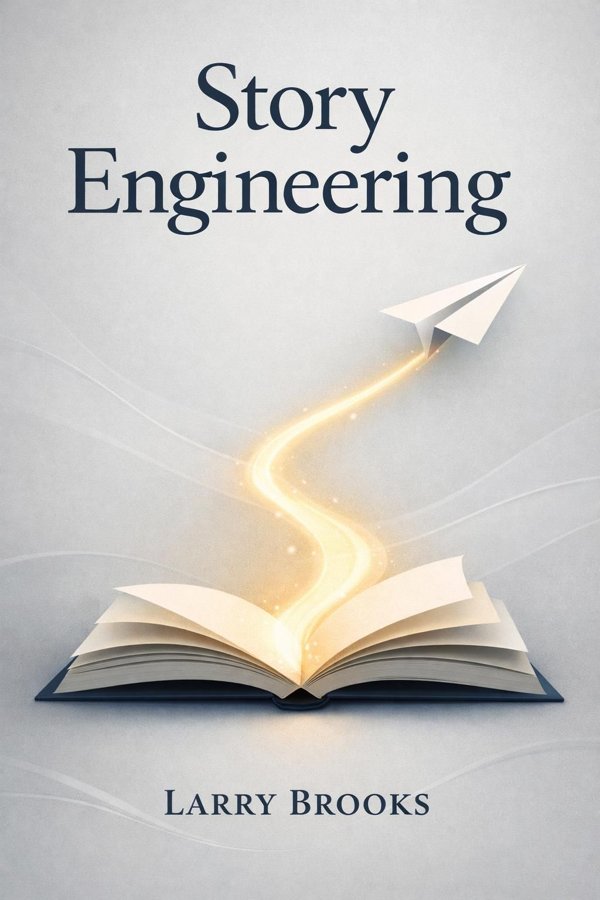
Story Engineering: Mastering the Six Core Competencies of Successful Writing: Summary & Key Insights
by Larry Brooks
 10 min10 chaptersAudio available
What Is Story Engineering: Mastering the Six Core Competencies of Successful Writing About?
Story Engineering: Mastering the Six Core Competencies of Successful Writing by Larry Brooks is a writing book spanning 10 pages. Story Engineering es un manual de escritura que desglosa la estructura narrativa en seis competencias esenciales: concepto, personaje, tema, estructura, escena y voz. Larry Brooks ofrece un enfoque sistemático para construir historias efectivas, combinando teoría literaria con técnicas prácticas para escritores de ficción y guionistas.
This FizzRead summary covers all 10 key chapters of Story Engineering: Mastering the Six Core Competencies of Successful Writing in approximately 10 minutes, distilling the most important ideas, arguments, and takeaways from Larry Brooks's work. Also available as an audio summary and Key Quotes Podcast.
Story Engineering: Mastering the Six Core Competencies of Successful Writing
Story Engineering es un manual de escritura que desglosa la estructura narrativa en seis competencias esenciales: concepto, personaje, tema, estructura, escena y voz. Larry Brooks ofrece un enfoque sistemático para construir historias efectivas, combinando teoría literaria con técnicas prácticas para escritores de ficción y guionistas.
Who Should Read Story Engineering: Mastering the Six Core Competencies of Successful Writing?
This book is perfect for anyone interested in writing and looking to gain actionable insights in a short read. Whether you're a student, professional, or lifelong learner, the key ideas from Story Engineering: Mastering the Six Core Competencies of Successful Writing by Larry Brooks will help you think differently.
- ✓Readers who enjoy writing and want practical takeaways
- ✓Professionals looking to apply new ideas to their work and life
- ✓Anyone who wants the core insights of Story Engineering: Mastering the Six Core Competencies of Successful Writing in just 10 minutes
Want the full summary?
Get instant access to this book summary and 100K+ more with Fizz Moment.
Get Free SummaryAvailable on App Store • Free to download
Key Chapters
Every story begins with an idea, but not every idea is a concept. A situation—a man stuck in an elevator, a woman losing her job—isn’t yet a story. A concept, however, possesses something a mere situation lacks: an inherent narrative potential. When I discuss concept, I’m talking about the seed of intrigue that compels readers to ask, 'What happens next?' It is the foundation upon which plot and character rest.
Think of your concept as a promise to your audience, a contract that guarantees that they are going to experience something fresh, meaningful, and emotionally resonant. The concept doesn’t dictate every beat of your story, but it defines the sandbox you play in. Without a strong concept, your beautiful prose may amount to nothing more than ornamentation on a hollow frame.
In my own workshops, I often challenge writers to look at successful stories. Take the concept behind *Jurassic Park*—the resurrection of dinosaurs through genetic engineering. Before we meet a single character or explore a moral theme, the concept itself already holds narrative electricity. The reader or viewer is hooked by the premise before the story even begins.
The challenge, then, is to recognize whether your idea has conceptual weight. This means asking: what is the 'what if' that drives curiosity? What distinguishes your concept from what has been done before? Writers succeed when they treat concept development as a bold, imaginative act of blueprinting. It’s not about cliché avoidance, but originality of lens.
Your concept can’t solve every problem, but it can anchor your story’s identity. When you nurture a powerful concept, everything else—character, theme, plot—has a stable foundation to grow from.
Characters are the human engines that drive your story forward. Readers don’t relate to structure; they relate to people. So the craft of character development is rooted in truth, contradiction, and transformation.
In story engineering terms, a character must be built around three dimensions. The first is the surface layer—their appearance, occupation, and mannerisms. The second is their backstory—the personal history and formative experiences that shape who they are today. The third, and most crucial, is their inner landscape—the fears, desires, and moral conflicts that determine how they’ll react under pressure.
I teach that a compelling character arc is not about change for its own sake but about progression from one emotional state or worldview to another. The protagonist begins in a state of incompletion—a false belief, a wound, a limitation. The plot confronts them with escalating obstacles that force self-realization, often breaking them before remaking them. That’s the heart of transformation, and it’s what makes readers care.
Consider Frodo in *The Lord of the Rings* or Elizabeth Bennet in *Pride and Prejudice*: their journeys are structured not only by external challenges but by the evolution of their own values. Stories like these work because character and structure move in tandem. You can design a gripping plot, but without an emotional trajectory, it won’t connect.
In the engineering metaphor, character is the emotional architecture—steel beams wrapped in skin. You design them, but they have to feel flesh-and-blood real. When you internalize character as a system of cause and effect—choices born from wounds, actions born from beliefs—you begin crafting characters who not only move through the story but embody it.
+ 8 more chapters — available in the FizzRead app
All Chapters in Story Engineering: Mastering the Six Core Competencies of Successful Writing
About the Author
Larry Brooks es un autor estadounidense y consultor de escritura conocido por sus libros sobre estructura narrativa y desarrollo de historias. Ha publicado varias novelas y obras de no ficción dedicadas a enseñar la ingeniería detrás de la escritura creativa.
Get This Summary in Your Preferred Format
Read or listen to the Story Engineering: Mastering the Six Core Competencies of Successful Writing summary by Larry Brooks anytime, anywhere. FizzRead offers multiple formats so you can learn on your terms — all free.
Available formats: App · Audio · PDF · EPUB — All included free with FizzRead
Download Story Engineering: Mastering the Six Core Competencies of Successful Writing PDF and EPUB Summary
Key Quotes from Story Engineering: Mastering the Six Core Competencies of Successful Writing
“Every story begins with an idea, but not every idea is a concept.”
“Characters are the human engines that drive your story forward.”
Frequently Asked Questions about Story Engineering: Mastering the Six Core Competencies of Successful Writing
Story Engineering: Mastering the Six Core Competencies of Successful Writing by Larry Brooks is a writing book that explores key ideas across 10 chapters. Story Engineering es un manual de escritura que desglosa la estructura narrativa en seis competencias esenciales: concepto, personaje, tema, estructura, escena y voz. Larry Brooks ofrece un enfoque sistemático para construir historias efectivas, combinando teoría literaria con técnicas prácticas para escritores de ficción y guionistas.
You Might Also Like
The Art of Perspective
Christopher Castellani
10 min
Making a Point: The Persnickety Story of English Punctuation
David Crystal
10 min
The Elements Of Eloquence: How To Turn The Perfect English Phrase
Mark Forsyth
10 min
The Pocket Muse: Ideas and Inspirations for Writing
Monica Wood
10 min
A Little Book on Form: An Exploration into the Formal Imagination of Poetry
Robert Hass
10 min
Adventures In The Screen Trade: A Personal View Of Hollywood And Screenwriting
William Goldman
10 minBrowse by Category
Ready to read Story Engineering: Mastering the Six Core Competencies of Successful Writing?
Get the full summary and 100K+ more books with Fizz Moment.