

Stolen Focus: Why You Can't Pay Attention – and How to Think Deeply Again: Summary & Key Insights
by Johann Hari
 10 min9 chaptersAudio available
What Is Stolen Focus: Why You Can't Pay Attention – and How to Think Deeply Again About?
Stolen Focus: Why You Can't Pay Attention – and How to Think Deeply Again by Johann Hari is a psychology book spanning 9 pages. In 'Stolen Focus', Johann Hari explores the global attention crisis, arguing that our ability to concentrate is being eroded by modern life — from social media and technology to stress and environmental factors. Drawing on scientific research and interviews with experts, Hari examines how society, rather than individual willpower, is largely responsible for our diminishing focus, and offers insights into how we can reclaim our attention and rediscover deep thinking.
This FizzRead summary covers all 9 key chapters of Stolen Focus: Why You Can't Pay Attention – and How to Think Deeply Again in approximately 10 minutes, distilling the most important ideas, arguments, and takeaways from Johann Hari's work. Also available as an audio summary and Key Quotes Podcast.
Stolen Focus: Why You Can't Pay Attention – and How to Think Deeply Again
In 'Stolen Focus', Johann Hari explores the global attention crisis, arguing that our ability to concentrate is being eroded by modern life — from social media and technology to stress and environmental factors. Drawing on scientific research and interviews with experts, Hari examines how society, rather than individual willpower, is largely responsible for our diminishing focus, and offers insights into how we can reclaim our attention and rediscover deep thinking.
Who Should Read Stolen Focus: Why You Can't Pay Attention – and How to Think Deeply Again?
This book is perfect for anyone interested in psychology and looking to gain actionable insights in a short read. Whether you're a student, professional, or lifelong learner, the key ideas from Stolen Focus: Why You Can't Pay Attention – and How to Think Deeply Again by Johann Hari will help you think differently.
- ✓Readers who enjoy psychology and want practical takeaways
- ✓Professionals looking to apply new ideas to their work and life
- ✓Anyone who wants the core insights of Stolen Focus: Why You Can't Pay Attention – and How to Think Deeply Again in just 10 minutes
Want the full summary?
Get instant access to this book summary and 100K+ more with Fizz Moment.
Get Free SummaryAvailable on App Store • Free to download
Key Chapters
For most of my life, I believed that attention was a matter of willpower. If I couldn’t concentrate, I assumed I lacked discipline. But during my research, I came to understand that this narrative of personal blame is profoundly misleading. When I flew to San Francisco to interview scientists who study attention, one of them, Professor Earl Miller at MIT, told me bluntly that our brains are not built to manage the constant switching forced upon us by modern technology. What feels like personal failure is often the predictable result of environmental overload.
This insight shifted everything. It’s not that we suddenly became weaker as individuals; it’s that our environment has changed in ways that exploit the fragility of our attention. From the relentless notifications designed to trigger dopamine rushes, to workplaces that glorify multitasking, we are immersed in systems that demand fragmentation. These systems make sustained concentration nearly impossible.
When you begin to understand attention loss as a social and structural problem, the shame starts to dissolve. You start to see the broader picture: your focus hasn’t been lost; it’s been stolen. And that realization opens the door to a different kind of conversation — one about redesigning our environment rather than fixing ourselves through guilt or self‑help hacks. That’s the foundation on which the rest of this book is built.
In interviews with former tech insiders such as Tristan Harris, I was taken behind the curtain of Silicon Valley and shown how social media platforms are intentionally engineered to capture and hold our attention. These companies are not selling products; they’re selling human focus. Their algorithms are optimized to keep us scrolling, refreshing, and consuming because our time equals their profit.
What shocked me most was learning that even the creators of these tools often fall victim to them. The founders of major platforms send their own children to schools that restrict screen time. When I visited those schools, I saw children exploring, building, learning through real human interaction — the very things that technology promised to enhance but instead has displaced. The crisis, then, is not technological addiction per se, but the economic model that weaponizes our psychology for monetization.
The deeper tragedy is that these tools have infiltrated the intimate corners of our lives — moments of solitude, of boredom, of connection — and monetized them. If you notice yourself refreshing your feed for no reason, it’s not because you lack willpower; it’s because thousands of engineers have made it almost impossible to stop. Recognizing this manipulation isn’t cynicism; it’s a step toward reclaiming agency and demanding platforms that serve our attention rather than exploit it.
+ 7 more chapters — available in the FizzRead app
All Chapters in Stolen Focus: Why You Can't Pay Attention – and How to Think Deeply Again
About the Author
Johann Hari is a British-Swiss writer and journalist known for his investigative works on social and psychological issues. He has written for major publications such as The Independent and The New York Times, and is the author of several bestselling books including 'Chasing the Scream' and 'Lost Connections'. His work often explores the intersection of mental health, society, and human behavior.
Get This Summary in Your Preferred Format
Read or listen to the Stolen Focus: Why You Can't Pay Attention – and How to Think Deeply Again summary by Johann Hari anytime, anywhere. FizzRead offers multiple formats so you can learn on your terms — all free.
Available formats: App · Audio · PDF · EPUB — All included free with FizzRead
Download Stolen Focus: Why You Can't Pay Attention – and How to Think Deeply Again PDF and EPUB Summary
Key Quotes from Stolen Focus: Why You Can't Pay Attention – and How to Think Deeply Again
“For most of my life, I believed that attention was a matter of willpower.”
“These companies are not selling products; they’re selling human focus.”
Frequently Asked Questions about Stolen Focus: Why You Can't Pay Attention – and How to Think Deeply Again
Stolen Focus: Why You Can't Pay Attention – and How to Think Deeply Again by Johann Hari is a psychology book that explores key ideas across 9 chapters. In 'Stolen Focus', Johann Hari explores the global attention crisis, arguing that our ability to concentrate is being eroded by modern life — from social media and technology to stress and environmental factors. Drawing on scientific research and interviews with experts, Hari examines how society, rather than individual willpower, is largely responsible for our diminishing focus, and offers insights into how we can reclaim our attention and rediscover deep thinking.
More by Johann Hari
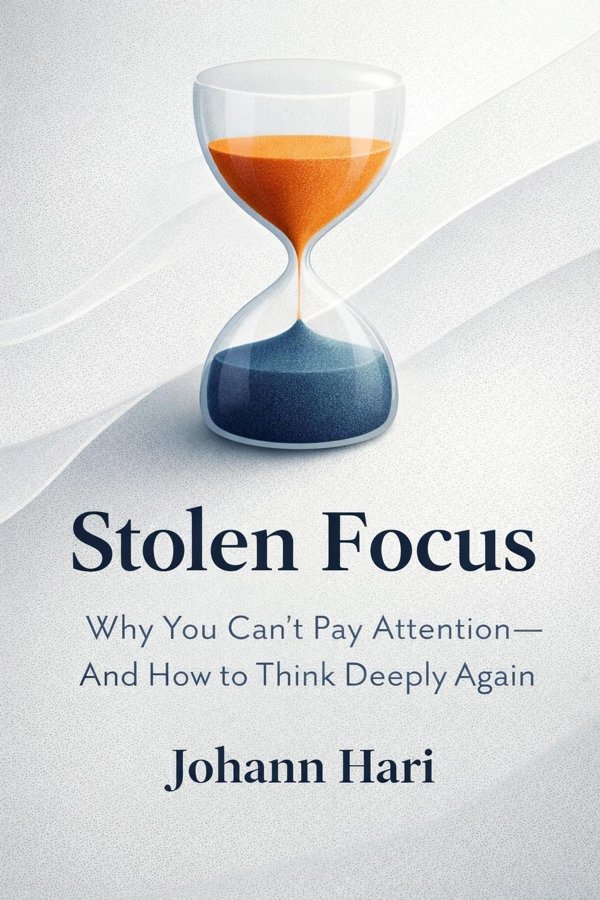
Stolen Focus
Johann Hari
10 min
Lost Connections: Why You're Depressed and How to Find Hope
Johann Hari
10 min
Lost Connections: Uncovering the Real Causes of Depression – and the Unexpected Solutions
Johann Hari
10 min
Chasing the Scream: The First and Last Days of the War on Drugs
Johann Hari
10 minYou Might Also Like

The Body Keeps the Score
Bessel van der Kolk
10 min
Surrounded by Idiots
Thomas Erikson
10 min
Emotional Intelligence
Daniel Goleman
10 min
Attached
Amir Levine
10 min
Why Does He Do That
Lundy Bancroft
10 min
Women Who Run with the Wolves
Clarissa Pinkola Estés
10 minBrowse by Category
Ready to read Stolen Focus: Why You Can't Pay Attention – and How to Think Deeply Again?
Get the full summary and 100K+ more books with Fizz Moment.