
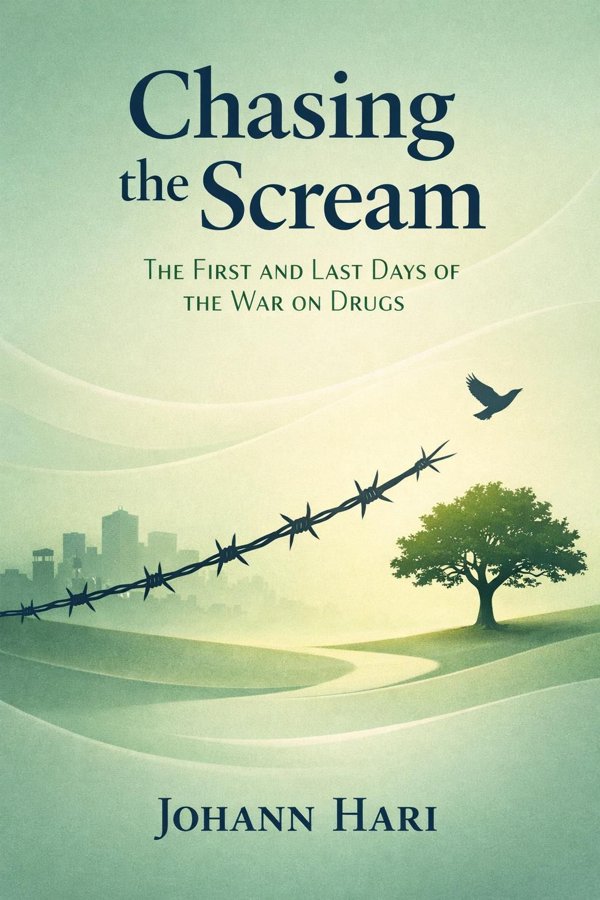
Chasing the Scream: The First and Last Days of the War on Drugs: Summary & Key Insights
by Johann Hari
 10 min6 chaptersAudio available
What Is Chasing the Scream: The First and Last Days of the War on Drugs About?
Chasing the Scream: The First and Last Days of the War on Drugs by Johann Hari is a politics book spanning 6 pages. Chasing the Scream explores the history and consequences of the global war on drugs, tracing its origins from early 20th-century prohibition efforts to modern-day policies. Johann Hari investigates the human stories behind addiction, law enforcement, and reform, traveling across continents to uncover how criminalization has shaped societies and individuals. The book challenges conventional narratives about addiction and advocates for compassion-based approaches to drug policy.
This FizzRead summary covers all 6 key chapters of Chasing the Scream: The First and Last Days of the War on Drugs in approximately 10 minutes, distilling the most important ideas, arguments, and takeaways from Johann Hari's work. Also available as an audio summary and Key Quotes Podcast.
Chasing the Scream: The First and Last Days of the War on Drugs
Chasing the Scream explores the history and consequences of the global war on drugs, tracing its origins from early 20th-century prohibition efforts to modern-day policies. Johann Hari investigates the human stories behind addiction, law enforcement, and reform, traveling across continents to uncover how criminalization has shaped societies and individuals. The book challenges conventional narratives about addiction and advocates for compassion-based approaches to drug policy.
Who Should Read Chasing the Scream: The First and Last Days of the War on Drugs?
This book is perfect for anyone interested in politics and looking to gain actionable insights in a short read. Whether you're a student, professional, or lifelong learner, the key ideas from Chasing the Scream: The First and Last Days of the War on Drugs by Johann Hari will help you think differently.
- ✓Readers who enjoy politics and want practical takeaways
- ✓Professionals looking to apply new ideas to their work and life
- ✓Anyone who wants the core insights of Chasing the Scream: The First and Last Days of the War on Drugs in just 10 minutes
Want the full summary?
Get instant access to this book summary and 100K+ more with Fizz Moment.
Get Free SummaryAvailable on App Store • Free to download
Key Chapters
To understand how we arrived here, we must start with one man: Harry Anslinger, the first commissioner of the U.S. Federal Bureau of Narcotics. In the early twentieth century, America was emerging from alcohol prohibition, and politicians needed a new enemy. Anslinger was a bureaucrat in search of a mission — and he found it in the crusade against drugs. He combined personal prejudice with political ambition, transforming a marginal issue into a national moral panic.
Anslinger waged his campaign with extraordinary zeal. He spoke of opiates and marijuana not as substances to be regulated but as existential threats to civilization itself, warning that they turned otherwise decent people into maniacs. His target was often racialized: African American jazz musicians, Mexican laborers, and immigrant communities were painted as vectors of moral contagion. In this crucible of fear and racism, the foundations of prohibition were laid. It was not science but mythology that shaped the laws criminalizing drugs — myths of corruption, of degeneracy, of the need for purity.
As I retraced these origins, I realized that the story of the drug war was born not from medical evidence but from the deep anxieties of a society fearing change. Anslinger built his empire by amplifying these fears, silencing dissenting scientists, and establishing one of the most punitive systems of control in modern history. The tone he set — moral absolutism, racialized enforcement, and bureaucratic expansion — would echo across a century.
Among Anslinger’s many victims, none better symbolized the human cost of this new war than Billie Holiday. She was one of the greatest jazz singers who ever lived, a woman whose voice carried the sorrow and resilience of her people. But to Anslinger, she was an enemy to be crushed. He ordered his agents to hunt her, even as she lay dying. Her real crime was not addiction; it was defiance. When she sang ‘Strange Fruit,’ exposing the horror of lynching, she exposed America’s conscience — and became a target of official wrath.
Billie’s persecution revealed something profound about the nature of this war: that it was never simply about controlling substances but about controlling people — especially those who broke the silence. As I traced her story through police records and contemporary accounts, I found that her addiction had roots in trauma, in poverty, in the pain of being Black and female in a country built on racial hierarchy. The state did not offer her help; it offered punishment, humiliation, and ultimately death.
Her story illuminated a terrible truth: that the war on drugs was, from its earliest days, a war on the marginalized. What we criminalized was not the chemistry of addiction but the expression of suffering. Billie died handcuffed to a hospital bed, guarded by the state that claimed to be protecting her. That image haunts me still.
+ 4 more chapters — available in the FizzRead app
All Chapters in Chasing the Scream: The First and Last Days of the War on Drugs
About the Author
Johann Hari is a British-Swiss journalist and author known for his work on social and political issues. He has written for major publications such as The Independent and The New York Times, and his books often explore themes of addiction, mental health, and societal reform.
Get This Summary in Your Preferred Format
Read or listen to the Chasing the Scream: The First and Last Days of the War on Drugs summary by Johann Hari anytime, anywhere. FizzRead offers multiple formats so you can learn on your terms — all free.
Available formats: App · Audio · PDF · EPUB — All included free with FizzRead
Download Chasing the Scream: The First and Last Days of the War on Drugs PDF and EPUB Summary
Key Quotes from Chasing the Scream: The First and Last Days of the War on Drugs
“To understand how we arrived here, we must start with one man: Harry Anslinger, the first commissioner of the U.”
“Among Anslinger’s many victims, none better symbolized the human cost of this new war than Billie Holiday.”
Frequently Asked Questions about Chasing the Scream: The First and Last Days of the War on Drugs
Chasing the Scream: The First and Last Days of the War on Drugs by Johann Hari is a politics book that explores key ideas across 6 chapters. Chasing the Scream explores the history and consequences of the global war on drugs, tracing its origins from early 20th-century prohibition efforts to modern-day policies. Johann Hari investigates the human stories behind addiction, law enforcement, and reform, traveling across continents to uncover how criminalization has shaped societies and individuals. The book challenges conventional narratives about addiction and advocates for compassion-based approaches to drug policy.
More by Johann Hari
Stolen Focus
Johann Hari
10 min
Lost Connections: Why You're Depressed and How to Find Hope
Johann Hari
10 min
Stolen Focus: Why You Can't Pay Attention – and How to Think Deeply Again
Johann Hari
10 min
Lost Connections: Uncovering the Real Causes of Depression – and the Unexpected Solutions
Johann Hari
10 minYou Might Also Like
Antifa: The Anti-Fascist Handbook
Mark Bray
10 min
Attack from Within: How Disinformation Is Sabotaging America
Barbara McQuade
10 min
Coercion, Capital, and European States, AD 990–1992
Charles Tilly
10 min
Digital Democracy: Concepts, Methodologies, Tools, and Applications
Various Authors
10 min
Fascism
Stanley G. Payne
10 min
Fire And Fury: Inside The Trump White House
Michael Wolff
10 minBrowse by Category
Ready to read Chasing the Scream: The First and Last Days of the War on Drugs?
Get the full summary and 100K+ more books with Fizz Moment.