
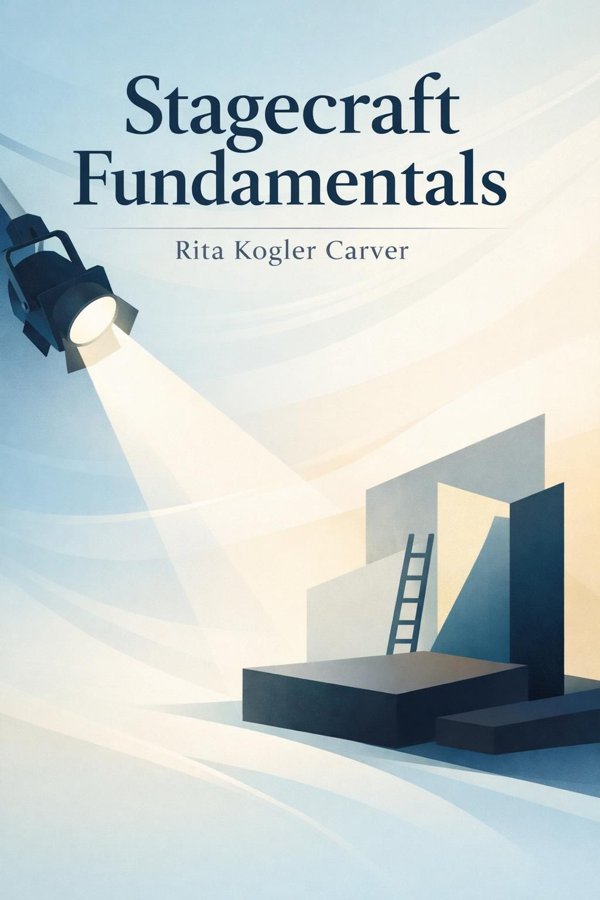
Stagecraft Fundamentals: A Guide and Reference for Theatrical Production: Summary & Key Insights
 10 min9 chaptersAudio available
What Is Stagecraft Fundamentals: A Guide and Reference for Theatrical Production About?
Stagecraft Fundamentals: A Guide and Reference for Theatrical Production by Rita Kogler Carver is a performing_arts book spanning 9 pages. Stagecraft Fundamentals provides a comprehensive introduction to the technical aspects of theatrical production. It covers lighting, sound, set design, stage management, and safety practices, offering practical guidance for students and professionals in the performing arts. The book emphasizes hands-on learning and includes illustrations and examples from real-world stagecraft applications.
This FizzRead summary covers all 9 key chapters of Stagecraft Fundamentals: A Guide and Reference for Theatrical Production in approximately 10 minutes, distilling the most important ideas, arguments, and takeaways from Rita Kogler Carver's work. Also available as an audio summary and Key Quotes Podcast.
Stagecraft Fundamentals: A Guide and Reference for Theatrical Production
Stagecraft Fundamentals provides a comprehensive introduction to the technical aspects of theatrical production. It covers lighting, sound, set design, stage management, and safety practices, offering practical guidance for students and professionals in the performing arts. The book emphasizes hands-on learning and includes illustrations and examples from real-world stagecraft applications.
Who Should Read Stagecraft Fundamentals: A Guide and Reference for Theatrical Production?
This book is perfect for anyone interested in performing_arts and looking to gain actionable insights in a short read. Whether you're a student, professional, or lifelong learner, the key ideas from Stagecraft Fundamentals: A Guide and Reference for Theatrical Production by Rita Kogler Carver will help you think differently.
- ✓Readers who enjoy performing_arts and want practical takeaways
- ✓Professionals looking to apply new ideas to their work and life
- ✓Anyone who wants the core insights of Stagecraft Fundamentals: A Guide and Reference for Theatrical Production in just 10 minutes
Want the full summary?
Get instant access to this book summary and 100K+ more with Fizz Moment.
Get Free SummaryAvailable on App Store • Free to download
Key Chapters
In theater, collaboration is not optional—it is the foundation upon which every show stands. When I discuss stagecraft, I emphasize its role as the intersection between art and engineering. A successful production requires the seamless cooperation of designers, technicians, directors, and performers. Stagecraft serves as the connective tissue that binds these creative and technical elements together.
Understanding how different departments interact begins with learning their languages and workflows. Lighting cannot exist independently from scenic design; sound must integrate with spatial and visual considerations; costume choices influence movement and lighting choices. Throughout *Stagecraft Fundamentals*, I encourage readers to think in terms of systems rather than isolated tasks. When you approach a production holistically, you begin to understand how decisions ripple across every aspect of the stage.
In this chapter, I use case studies drawn from both theatrical and televised productions to show how technical collaboration elevates artistic outcomes. In one example, a director’s vision for a minimalist stage design required meticulous cue coordination between automated lighting and sound transitions to evoke emotional peaks. This kind of synthesis reveals stagecraft’s true purpose: serving the narrative while maintaining reliability and safety.
At its core, stagecraft empowers storytelling. Once you grasp its collaborative nature, you no longer see technical work as background labor—it becomes an expressive act within the performance itself.
Before we touch a single tool or hang a light, we must understand where we are working: the stage itself. I dedicate substantial space in the book to describing different theater configurations—proscenium, thrust, arena, and black box—because each demands particular design and technical considerations. These forms affect sightlines, acoustics, and even emotional intimacy between actors and audience.
In a proscenium theater, that traditional picture-frame separation between stage and audience invites large-scale scenic illusions and controlled lighting environments. Contrast that with a thrust stage, where the audience surrounds the action on three sides, challenging designers to conceal backstage elements creatively. The arena or theater-in-the-round removes the concept of ‘backstage’ altogether, requiring designers to reconcile practicality with aesthetics from every angle.
Understanding spatial orientation—upstage, downstage, stage left and right—may seem simple, but it is foundational. In technical rehearsals, clear terminology prevents confusion and accidents. I recall many early productions where miscommunication during load-in led to misplaced set pieces or unsafe conditions simply because people used inconsistent directional language.
As you learn these basic spatial principles, you internalize the logic behind every stage plan and cue sheet. They allow you to visualize movement, lighting focus, and actor placement with precision. A well-oriented crew can work almost telepathically during a rehearsal, adjusting elements instinctively. Mastering stage geography, then, isn’t just academic—it is an act of respect for the collaborative process.
+ 7 more chapters — available in the FizzRead app
All Chapters in Stagecraft Fundamentals: A Guide and Reference for Theatrical Production
About the Author
Rita Kogler Carver is an American lighting designer, educator, and author. She has worked extensively in theater and television production and has taught stagecraft and lighting design at several institutions. Her professional experience informs her practical approach to teaching technical theater.
Get This Summary in Your Preferred Format
Read or listen to the Stagecraft Fundamentals: A Guide and Reference for Theatrical Production summary by Rita Kogler Carver anytime, anywhere. FizzRead offers multiple formats so you can learn on your terms — all free.
Available formats: App · Audio · PDF · EPUB — All included free with FizzRead
Download Stagecraft Fundamentals: A Guide and Reference for Theatrical Production PDF and EPUB Summary
Key Quotes from Stagecraft Fundamentals: A Guide and Reference for Theatrical Production
“In theater, collaboration is not optional—it is the foundation upon which every show stands.”
“Before we touch a single tool or hang a light, we must understand where we are working: the stage itself.”
Frequently Asked Questions about Stagecraft Fundamentals: A Guide and Reference for Theatrical Production
Stagecraft Fundamentals: A Guide and Reference for Theatrical Production by Rita Kogler Carver is a performing_arts book that explores key ideas across 9 chapters. Stagecraft Fundamentals provides a comprehensive introduction to the technical aspects of theatrical production. It covers lighting, sound, set design, stage management, and safety practices, offering practical guidance for students and professionals in the performing arts. The book emphasizes hands-on learning and includes illustrations and examples from real-world stagecraft applications.
You Might Also Like

Harriet Tubman: Live in Concert
Bob the Drag Queen
10 min
The Art of Stagecraft
Robert Edmond Jones
10 min
The Art of Stop-Motion Animation
Ken A. Priebe
10 min
Thunderstorm
Cao Yu
10 min
Acting In Film: An Actor's Take on Movie Making
Michael Caine
10 min
Character Animation Crash Course!
Eric Goldberg
10 minBrowse by Category
Ready to read Stagecraft Fundamentals: A Guide and Reference for Theatrical Production?
Get the full summary and 100K+ more books with Fizz Moment.