
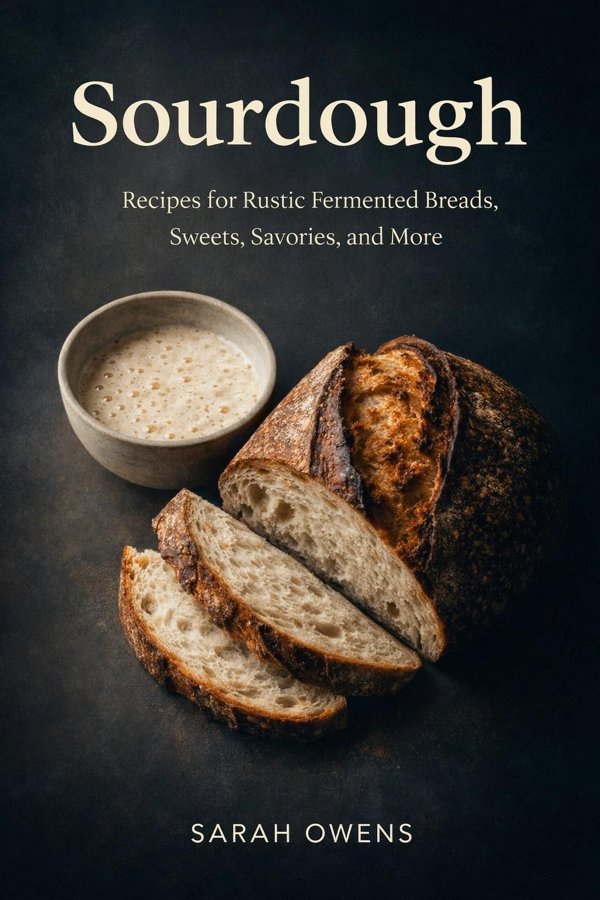
Sourdough: Recipes for Rustic Fermented Breads, Sweets, Savories, and More: Summary & Key Insights
by Sarah Owens
 10 min8 chaptersAudio available
What Is Sourdough: Recipes for Rustic Fermented Breads, Sweets, Savories, and More About?
Sourdough: Recipes for Rustic Fermented Breads, Sweets, Savories, and More by Sarah Owens is a nutrition book spanning 8 pages. Sourdough is a comprehensive guide to naturally leavened baking by Sarah Owens, a James Beard Award–winning baker. The book explores the art and science of sourdough fermentation, offering recipes for rustic breads, pastries, and savory dishes that celebrate whole grains and seasonal ingredients. Owens combines traditional techniques with creative flavor combinations, encouraging readers to cultivate their own starter and embrace the slow, mindful process of fermentation.
This FizzRead summary covers all 8 key chapters of Sourdough: Recipes for Rustic Fermented Breads, Sweets, Savories, and More in approximately 10 minutes, distilling the most important ideas, arguments, and takeaways from Sarah Owens's work. Also available as an audio summary and Key Quotes Podcast.
Sourdough: Recipes for Rustic Fermented Breads, Sweets, Savories, and More
Sourdough is a comprehensive guide to naturally leavened baking by Sarah Owens, a James Beard Award–winning baker. The book explores the art and science of sourdough fermentation, offering recipes for rustic breads, pastries, and savory dishes that celebrate whole grains and seasonal ingredients. Owens combines traditional techniques with creative flavor combinations, encouraging readers to cultivate their own starter and embrace the slow, mindful process of fermentation.
Who Should Read Sourdough: Recipes for Rustic Fermented Breads, Sweets, Savories, and More?
This book is perfect for anyone interested in nutrition and looking to gain actionable insights in a short read. Whether you're a student, professional, or lifelong learner, the key ideas from Sourdough: Recipes for Rustic Fermented Breads, Sweets, Savories, and More by Sarah Owens will help you think differently.
- ✓Readers who enjoy nutrition and want practical takeaways
- ✓Professionals looking to apply new ideas to their work and life
- ✓Anyone who wants the core insights of Sourdough: Recipes for Rustic Fermented Breads, Sweets, Savories, and More in just 10 minutes
Want the full summary?
Get instant access to this book summary and 100K+ more with Fizz Moment.
Get Free SummaryAvailable on App Store • Free to download
Key Chapters
Every baker begins here, with a small bowl of flour and water. But what happens inside that mixture is miraculous. A sourdough starter is not simply an ingredient—it’s a living ecosystem. Wild yeasts and lactic acid bacteria inhabit this environment, feeding off the carbohydrates in the flour, releasing gases that make dough rise and acids that shape its tang.
I view the starter as both teacher and partner. Its health reflects how well we listen. Temperature, hydration, flour choice—all influence its activity. When cultivating your own starter, patience is essential. In the first few days, you’re initiating a conversation between nature and nurture. You’ll see bubbles form, smell the shift from raw flour to fruity fermentation, and learn what it means to maintain equilibrium.
I describe how to feed and care for a starter, keeping it at room temperature or refrigerating between bakes, understanding its cycles of rest and vigor. The symbiosis within the jar reminds us of our relationship with the larger ecological world. The microorganisms are invisible but vital, and by stewarding them, we participate in a process millions of years old.
For me, the act of feeding my starter is grounding—it’s tending life. Once you grasp this principle, every loaf becomes a reflection of your environment and care. The starter, after all, is not a static recipe but a dynamic companion. It teaches you attention, forgiveness, and the beauty of constant transformation.
Sourdough baking, though ancient, draws strength from understanding modern craft. Flour is not just flour; its origin, milling, and protein content define the texture and taste of your bread. I emphasize whole grains—rye, spelt, einkorn, and hard wheat—because they cultivate depth of flavor and nutrition. Hydration, too, shapes dough’s character, revealing the dialogue between elasticity and openness.
Simple tools become extensions of your senses. A scraper, mixing bowl, and Dutch oven or baking stone are sufficient to create artisan loaves. What matters more than equipment is attention to rhythm—how long you mix, how gently you fold, how you let dough ferment at its own pace.
In this section, I discuss fermentation timing, the influence of ambient temperature, and the subtle cues that tell you when dough is ready. The process encourages trust in intuition rather than dependence on strict timing. Hands become instruments of perception; texture and aroma guide your decisions more than timers ever could.
The technique of autolyse, folding rather than kneading, and letting the dough build strength naturally through rest—these are cornerstones of my approach. They emphasize working with the grain, not against it. The tools you use are simple, but the technique you cultivate is profound. It is not mechanical but sensory, reminding you that great bread emerges from listening more than controlling.
+ 6 more chapters — available in the FizzRead app
All Chapters in Sourdough: Recipes for Rustic Fermented Breads, Sweets, Savories, and More
About the Author
Sarah Owens is an American baker, horticulturist, and author known for her expertise in sourdough fermentation and whole-grain baking. A former curator at the Brooklyn Botanic Garden, she turned her passion for fermentation into a career as a baker and educator. Her first book, Sourdough, won the James Beard Award for Baking and Dessert in 2016.
Get This Summary in Your Preferred Format
Read or listen to the Sourdough: Recipes for Rustic Fermented Breads, Sweets, Savories, and More summary by Sarah Owens anytime, anywhere. FizzRead offers multiple formats so you can learn on your terms — all free.
Available formats: App · Audio · PDF · EPUB — All included free with FizzRead
Download Sourdough: Recipes for Rustic Fermented Breads, Sweets, Savories, and More PDF and EPUB Summary
Key Quotes from Sourdough: Recipes for Rustic Fermented Breads, Sweets, Savories, and More
“Every baker begins here, with a small bowl of flour and water.”
“Sourdough baking, though ancient, draws strength from understanding modern craft.”
Frequently Asked Questions about Sourdough: Recipes for Rustic Fermented Breads, Sweets, Savories, and More
Sourdough: Recipes for Rustic Fermented Breads, Sweets, Savories, and More by Sarah Owens is a nutrition book that explores key ideas across 8 chapters. Sourdough is a comprehensive guide to naturally leavened baking by Sarah Owens, a James Beard Award–winning baker. The book explores the art and science of sourdough fermentation, offering recipes for rustic breads, pastries, and savory dishes that celebrate whole grains and seasonal ingredients. Owens combines traditional techniques with creative flavor combinations, encouraging readers to cultivate their own starter and embrace the slow, mindful process of fermentation.
You Might Also Like
Eating by the Seasons Cookbook: Seasonal Produce-Focused Recipes
Clare Foster
10 min
From Crook to Cook: Platinum Recipes from Tha Boss Dogg's Kitchen
Snoop Dogg with Ryan Ford
10 min
Juicing for Beginners: The Essential Guide to Juicing Recipes and Juicing for Weight Loss
Rockridge Press
10 min
The Food Therapist: Break Bad Habits, Eat with Intention, and Indulge Without Worry
Shira Lenchewski
10 min
The Mediterranean Diet Meal Plan: A 4-Week Meal Plan for Optimal Health and Weight Loss
Various Contributors
10 min
The Well Plated Cookbook: Simple, Wholesome Recipes for Everyday Meals
Erin Clarke
10 minBrowse by Category
Ready to read Sourdough: Recipes for Rustic Fermented Breads, Sweets, Savories, and More?
Get the full summary and 100K+ more books with Fizz Moment.