
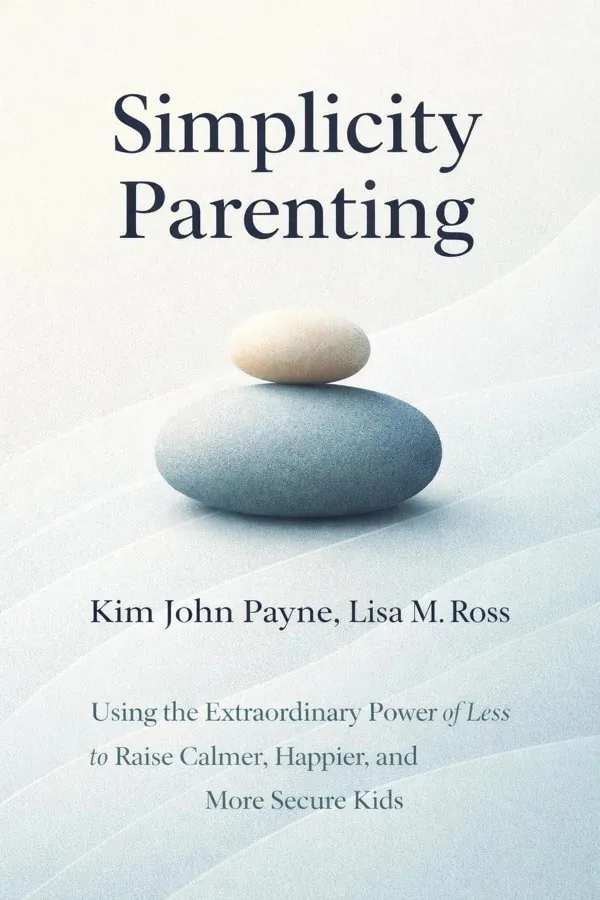
Simplicity Parenting: Using the Extraordinary Power of Less to Raise Calmer, Happier, and More Secure Kids: Summary & Key Insights
by Kim John Payne, Lisa M. Ross
 10 min11 chaptersAudio available
What Is Simplicity Parenting: Using the Extraordinary Power of Less to Raise Calmer, Happier, and More Secure Kids About?
Simplicity Parenting: Using the Extraordinary Power of Less to Raise Calmer, Happier, and More Secure Kids by Kim John Payne, Lisa M. Ross is a parenting book spanning 11 pages. Simplicity Parenting propone un enfoque para reducir el estrés y la sobreestimulación en la vida familiar moderna. Kim John Payne y Lisa M. Ross argumentan que simplificar el entorno, los horarios y las expectativas de los niños puede fomentar su creatividad, bienestar emocional y resiliencia. El libro ofrece estrategias prácticas para crear un hogar más tranquilo y equilibrado, ayudando a los padres a reconectarse con lo esencial en la crianza.
This FizzRead summary covers all 11 key chapters of Simplicity Parenting: Using the Extraordinary Power of Less to Raise Calmer, Happier, and More Secure Kids in approximately 10 minutes, distilling the most important ideas, arguments, and takeaways from Kim John Payne, Lisa M. Ross's work. Also available as an audio summary and Key Quotes Podcast.
Simplicity Parenting: Using the Extraordinary Power of Less to Raise Calmer, Happier, and More Secure Kids
Simplicity Parenting propone un enfoque para reducir el estrés y la sobreestimulación en la vida familiar moderna. Kim John Payne y Lisa M. Ross argumentan que simplificar el entorno, los horarios y las expectativas de los niños puede fomentar su creatividad, bienestar emocional y resiliencia. El libro ofrece estrategias prácticas para crear un hogar más tranquilo y equilibrado, ayudando a los padres a reconectarse con lo esencial en la crianza.
Who Should Read Simplicity Parenting: Using the Extraordinary Power of Less to Raise Calmer, Happier, and More Secure Kids?
This book is perfect for anyone interested in parenting and looking to gain actionable insights in a short read. Whether you're a student, professional, or lifelong learner, the key ideas from Simplicity Parenting: Using the Extraordinary Power of Less to Raise Calmer, Happier, and More Secure Kids by Kim John Payne, Lisa M. Ross will help you think differently.
- ✓Readers who enjoy parenting and want practical takeaways
- ✓Professionals looking to apply new ideas to their work and life
- ✓Anyone who wants the core insights of Simplicity Parenting: Using the Extraordinary Power of Less to Raise Calmer, Happier, and More Secure Kids in just 10 minutes
Want the full summary?
Get instant access to this book summary and 100K+ more with Fizz Moment.
Get Free SummaryAvailable on App Store • Free to download
Key Chapters
Overstimulation has become the invisible thief of childhood. The modern world moves fast, and children are swept along its currents, often without time to rest or wonder. In my counseling work, I’ve seen how overfilled schedules leave children tense and irritable. They are asked to absorb layers of adult concerns, commercial pressure, and digital noise long before they’re emotionally ready. The constant influx of choices and information overwhelms their developing minds.
Children today live in a culture that celebrates speed and accumulation. Parents, driven by love and fear of missing out, over-enrich — offering every possible opportunity. Yet, paradoxically, the result is not fulfillment but fragmentation. When every moment is programmed, children lose the rhythm that once anchored family life. They drift from one activity to another, rarely experiencing the quiet that allows emotion and memory to settle. Consumer culture amplifies this pressure, teaching kids that happiness lies in ownership, not imagination.
We found that overstimulation mimics stress. Children exposed to constant noise — be it through media, crowded rooms, or relentless activity — show signs similar to post-traumatic stress disorder: agitation, shallow sleep, difficulty focusing, and emotional reactivity. Too much, too soon, and too fast erodes their sense of security. The antidote is not to strip life of joy but to slow down enough to rediscover it.
When families reduce input — fewer toys, less media, calmer routines — children begin to relax into a natural rhythm. Their play becomes deeper, their conversations more thoughtful, their moods more stable. Simplicity restores their internal space, the fertile ground of emotional growth.
Simplification begins with a deep intention rather than a checklist. It’s not about minimalism for its own sake but about consciously shaping family life around what nourishes rather than depletes. When I speak of simplicity, I mean reducing the noise that distracts us from relationships. Imagine your home as a garden — clutter blocks sunlight, and over-scheduling crowds the roots. Simplification prunes gently, so that the essential can flourish.
One of the most profound shifts families experience is realizing that simplification isn’t one grand act — it’s a series of mindful decisions. It may begin with clearing shelves or setting fewer commitments each week, but it soon reaches deeper: we start simplifying our expectations, our conversations, even our aspirations for our children. The goal is balance — not doing less for the sake of doing less, but creating space for meaning.
Children respond immediately to the atmosphere of simplicity. When their environment becomes less chaotic, they sense that life is manageable. Their bodies quiet, their imaginations wake up. Families report that arguments decrease, laughter increases, and mealtime becomes more harmonious. Simplicity sets a foundation for empathy and attention — qualities easily drowned out by excess sensory input.
Simplification invites us to slow down and to see our children as they are, not as projects to perfect. It’s about reclaiming the steady, humane pace at which emotional growth occurs.
+ 9 more chapters — available in the FizzRead app
All Chapters in Simplicity Parenting: Using the Extraordinary Power of Less to Raise Calmer, Happier, and More Secure Kids
About the Authors
Kim John Payne es un educador y consejero familiar con experiencia en pedagogía Waldorf y desarrollo infantil. Ha trabajado con familias y escuelas en todo el mundo promoviendo la simplicidad y la conexión en la crianza. Lisa M. Ross es escritora y madre, colaboradora en temas de familia y educación.
Get This Summary in Your Preferred Format
Read or listen to the Simplicity Parenting: Using the Extraordinary Power of Less to Raise Calmer, Happier, and More Secure Kids summary by Kim John Payne, Lisa M. Ross anytime, anywhere. FizzRead offers multiple formats so you can learn on your terms — all free.
Available formats: App · Audio · PDF · EPUB — All included free with FizzRead
Download Simplicity Parenting: Using the Extraordinary Power of Less to Raise Calmer, Happier, and More Secure Kids PDF and EPUB Summary
Key Quotes from Simplicity Parenting: Using the Extraordinary Power of Less to Raise Calmer, Happier, and More Secure Kids
“Overstimulation has become the invisible thief of childhood.”
“Simplification begins with a deep intention rather than a checklist.”
Frequently Asked Questions about Simplicity Parenting: Using the Extraordinary Power of Less to Raise Calmer, Happier, and More Secure Kids
Simplicity Parenting: Using the Extraordinary Power of Less to Raise Calmer, Happier, and More Secure Kids by Kim John Payne, Lisa M. Ross is a parenting book that explores key ideas across 11 chapters. Simplicity Parenting propone un enfoque para reducir el estrés y la sobreestimulación en la vida familiar moderna. Kim John Payne y Lisa M. Ross argumentan que simplificar el entorno, los horarios y las expectativas de los niños puede fomentar su creatividad, bienestar emocional y resiliencia. El libro ofrece estrategias prácticas para crear un hogar más tranquilo y equilibrado, ayudando a los padres a reconectarse con lo esencial en la crianza.
You Might Also Like
Never Enough
Jennifer Breheny Wallace
10 min
Bluey: Sleepytime
Joe Brumm
10 min
In My Heart: A Book of Feelings
Jo Witek
10 min
Love From The Crayons
Drew Daywalt, Oliver Jeffers
10 min
Pete The Cat: Big Easter Adventure
James Dean, Kimberly Dean
10 min
Smart Money Smart Kids: Raising the Next Generation to Win with Money
Dave Ramsey, Rachel Cruze
10 minBrowse by Category
Ready to read Simplicity Parenting: Using the Extraordinary Power of Less to Raise Calmer, Happier, and More Secure Kids?
Get the full summary and 100K+ more books with Fizz Moment.