
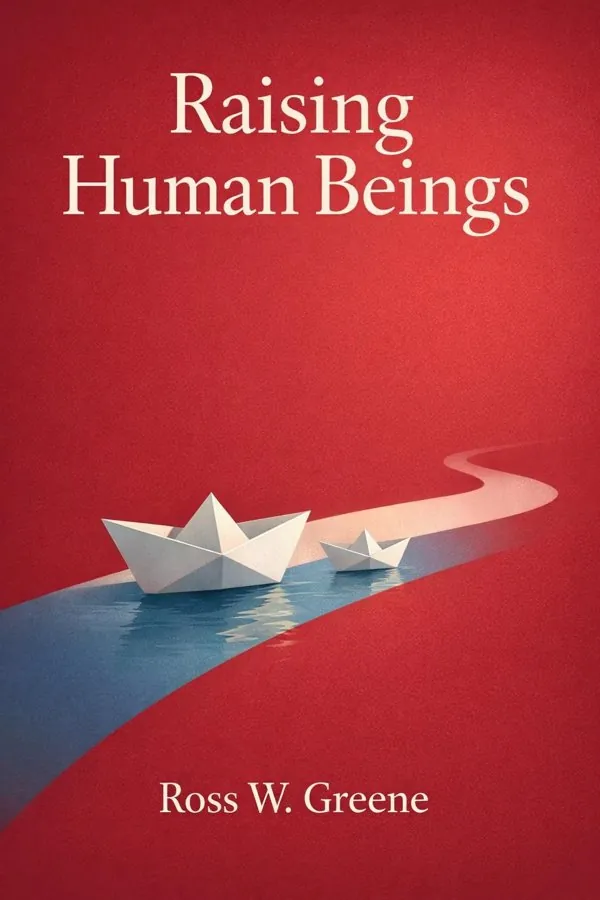
Raising Human Beings: Creating a Collaborative Partnership with Your Child: Summary & Key Insights
 10 min5 chaptersAudio available
What Is Raising Human Beings: Creating a Collaborative Partnership with Your Child About?
Raising Human Beings: Creating a Collaborative Partnership with Your Child by Ross W. Greene is a parenting book spanning 5 pages. In this groundbreaking parenting book, clinical psychologist Ross W. Greene presents a compassionate, collaborative approach to raising children. He explains how parents can move away from power struggles and instead work with their children to solve problems together, fostering empathy, responsibility, and resilience. The book offers practical strategies for understanding a child’s behavior and building a relationship based on mutual respect and trust.
This FizzRead summary covers all 5 key chapters of Raising Human Beings: Creating a Collaborative Partnership with Your Child in approximately 10 minutes, distilling the most important ideas, arguments, and takeaways from Ross W. Greene's work. Also available as an audio summary and Key Quotes Podcast.
Raising Human Beings: Creating a Collaborative Partnership with Your Child
In this groundbreaking parenting book, clinical psychologist Ross W. Greene presents a compassionate, collaborative approach to raising children. He explains how parents can move away from power struggles and instead work with their children to solve problems together, fostering empathy, responsibility, and resilience. The book offers practical strategies for understanding a child’s behavior and building a relationship based on mutual respect and trust.
Who Should Read Raising Human Beings: Creating a Collaborative Partnership with Your Child?
This book is perfect for anyone interested in parenting and looking to gain actionable insights in a short read. Whether you're a student, professional, or lifelong learner, the key ideas from Raising Human Beings: Creating a Collaborative Partnership with Your Child by Ross W. Greene will help you think differently.
- ✓Readers who enjoy parenting and want practical takeaways
- ✓Professionals looking to apply new ideas to their work and life
- ✓Anyone who wants the core insights of Raising Human Beings: Creating a Collaborative Partnership with Your Child in just 10 minutes
Want the full summary?
Get instant access to this book summary and 100K+ more with Fizz Moment.
Get Free SummaryAvailable on App Store • Free to download
Key Chapters
At its core, the CPS model is built on a single truth: kids do well if they can. This simple reframe shifts everything. When we assume that a child who misbehaves is doing so because they lack motivation, we respond with rewards and punishments—carrots and sticks designed to push them toward the behavior we want. But when we instead realize that children act out because they lack certain skills—skills like flexibility, frustration tolerance, problem-solving, or expressive communication—we open the door to helping them in meaningful ways.
The CPS model helps parents move from reacting to problems after they happen to proactively solving them before they escalate. The process starts by identifying two central elements: lagging skills and unsolved problems. Lagging skills are the abilities a child hasn’t yet mastered; unsolved problems are specific situations where those skill gaps show up. The model guides us to focus on these, not on episodes of defiance or meltdowns, which are merely symptoms.
Parents often ask me: doesn’t this mean I’m letting my child off the hook? Quite the opposite. Collaboration doesn’t mean permissiveness—it means inviting the child to be an active contributor to resolving the issues affecting their own life. When we engage their input, we’re still holding limits, but we’re doing it together, in a way that fosters responsibility and empathy rather than fear and resentment.
The CPS model replaces traditional discipline with conversation. Instead of reacting with punishments (what we call Plan A), parents learn to solve problems with their children using Plan B—a collaborative, structured dialogue that recognizes both perspectives. The third option, Plan C, involves temporarily setting aside low-priority problems to focus on what matters most. Each plan represents a different way to handle problems, but the goal of Plan B is the development of skills and trust, not short-term compliance.
Traditional approaches to discipline are reactive by nature. We wait for the meltdown, the disobedience, the snarky comment—and then we respond, usually with a consequence or lecture that does little to address the cause. I encourage parents to flip that sequence: identify the predictable problems and address them proactively. This single shift can transform family life.
When a child frequently resists homework or lashes out during transitions, those aren’t random acts; they’re predictable patterns that signal something deeper—perhaps difficulty with shifting attention, handling frustration, or understanding expectations. By recognizing those patterns, we can anticipate rather than react. That’s what makes the CPS model proactive: we don’t wait for conflict to teach; we prepare for it.
In a proactive conversation, you come alongside your child as a partner, not an enforcer. Together, you map out what’s getting in their way and what matters to both of you about the situation. These discussions take place when everyone is calm, never in the heat of the moment. The goal isn’t to extract compliance but to co-create solutions that are feasible and mutually satisfying. Over time, the child learns critical thinking, emotional regulation, and perspective-taking—skills essential for maturity.
It’s also vital to understand that proactive doesn’t mean perfect. Some conversations will go well; others will stumble. What matters is maintaining the stance of curiosity and respect. Parenting becomes not a series of battles but an ongoing dialogue between two people who are learning, experimenting, and evolving together.
+ 3 more chapters — available in the FizzRead app
All Chapters in Raising Human Beings: Creating a Collaborative Partnership with Your Child
About the Author
Ross W. Greene, Ph.D., is a clinical psychologist and the originator of the Collaborative & Proactive Solutions (CPS) model. He is the founding director of the nonprofit Lives in the Balance and the author of several influential books on child behavior and parenting, including 'The Explosive Child' and 'Lost at School.' His work has been widely recognized for transforming the way parents, educators, and clinicians understand and support children with behavioral challenges.
Get This Summary in Your Preferred Format
Read or listen to the Raising Human Beings: Creating a Collaborative Partnership with Your Child summary by Ross W. Greene anytime, anywhere. FizzRead offers multiple formats so you can learn on your terms — all free.
Available formats: App · Audio · PDF · EPUB — All included free with FizzRead
Download Raising Human Beings: Creating a Collaborative Partnership with Your Child PDF and EPUB Summary
Key Quotes from Raising Human Beings: Creating a Collaborative Partnership with Your Child
“At its core, the CPS model is built on a single truth: kids do well if they can.”
“Traditional approaches to discipline are reactive by nature.”
Frequently Asked Questions about Raising Human Beings: Creating a Collaborative Partnership with Your Child
Raising Human Beings: Creating a Collaborative Partnership with Your Child by Ross W. Greene is a parenting book that explores key ideas across 5 chapters. In this groundbreaking parenting book, clinical psychologist Ross W. Greene presents a compassionate, collaborative approach to raising children. He explains how parents can move away from power struggles and instead work with their children to solve problems together, fostering empathy, responsibility, and resilience. The book offers practical strategies for understanding a child’s behavior and building a relationship based on mutual respect and trust.
More by Ross W. Greene

You Might Also Like
Never Enough
Jennifer Breheny Wallace
10 min
Bluey: Sleepytime
Joe Brumm
10 min
In My Heart: A Book of Feelings
Jo Witek
10 min
Love From The Crayons
Drew Daywalt, Oliver Jeffers
10 min
Pete The Cat: Big Easter Adventure
James Dean, Kimberly Dean
10 min
Smart Money Smart Kids: Raising the Next Generation to Win with Money
Dave Ramsey, Rachel Cruze
10 minBrowse by Category
Ready to read Raising Human Beings: Creating a Collaborative Partnership with Your Child?
Get the full summary and 100K+ more books with Fizz Moment.