
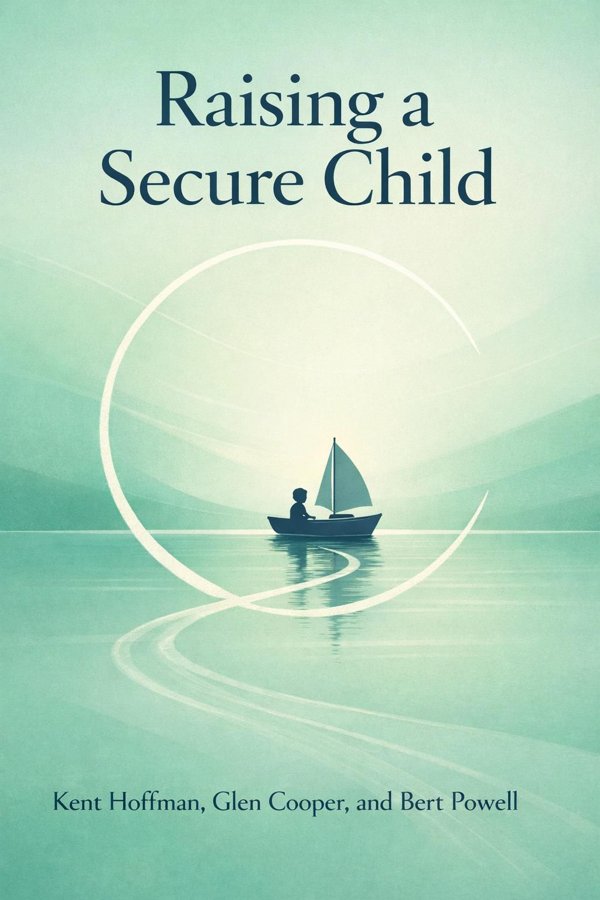
Raising a Secure Child: How Circle of Security Parenting Can Help You Nurture Your Child’s Attachment, Emotional Resilience, and Freedom to Explore: Summary & Key Insights
by Kent Hoffman, Glen Cooper, and Bert Powell
 10 min5 chaptersAudio available
What Is Raising a Secure Child: How Circle of Security Parenting Can Help You Nurture Your Child’s Attachment, Emotional Resilience, and Freedom to Explore About?
Raising a Secure Child: How Circle of Security Parenting Can Help You Nurture Your Child’s Attachment, Emotional Resilience, and Freedom to Explore by Kent Hoffman, Glen Cooper, and Bert Powell is a parenting book spanning 5 pages. This book introduces parents to the Circle of Security Parenting model, a practical approach grounded in attachment theory. It helps caregivers understand their child’s emotional needs, strengthen secure attachment, and foster resilience and independence. Through real-life examples and clear guidance, the authors show how to recognize and respond to children’s signals, manage stress, and build a nurturing relationship that supports healthy development.
This FizzRead summary covers all 5 key chapters of Raising a Secure Child: How Circle of Security Parenting Can Help You Nurture Your Child’s Attachment, Emotional Resilience, and Freedom to Explore in approximately 10 minutes, distilling the most important ideas, arguments, and takeaways from Kent Hoffman, Glen Cooper, and Bert Powell's work. Also available as an audio summary and Key Quotes Podcast.
Raising a Secure Child: How Circle of Security Parenting Can Help You Nurture Your Child’s Attachment, Emotional Resilience, and Freedom to Explore
This book introduces parents to the Circle of Security Parenting model, a practical approach grounded in attachment theory. It helps caregivers understand their child’s emotional needs, strengthen secure attachment, and foster resilience and independence. Through real-life examples and clear guidance, the authors show how to recognize and respond to children’s signals, manage stress, and build a nurturing relationship that supports healthy development.
Who Should Read Raising a Secure Child: How Circle of Security Parenting Can Help You Nurture Your Child’s Attachment, Emotional Resilience, and Freedom to Explore?
This book is perfect for anyone interested in parenting and looking to gain actionable insights in a short read. Whether you're a student, professional, or lifelong learner, the key ideas from Raising a Secure Child: How Circle of Security Parenting Can Help You Nurture Your Child’s Attachment, Emotional Resilience, and Freedom to Explore by Kent Hoffman, Glen Cooper, and Bert Powell will help you think differently.
- ✓Readers who enjoy parenting and want practical takeaways
- ✓Professionals looking to apply new ideas to their work and life
- ✓Anyone who wants the core insights of Raising a Secure Child: How Circle of Security Parenting Can Help You Nurture Your Child’s Attachment, Emotional Resilience, and Freedom to Explore in just 10 minutes
Want the full summary?
Get instant access to this book summary and 100K+ more with Fizz Moment.
Get Free SummaryAvailable on App Store • Free to download
Key Chapters
At the center of this book lies the Circle of Security diagram, a deceptively simple image that conveys the essential rhythm of human attachment. Imagine a circle anchored at its base by the caregiver. The child moves outward on the top half of the circle to explore, play, and test autonomy. Then the child returns along the lower half of the circle seeking comfort, safety, and emotional reassurance.
The caregiver’s task is to be what the authors call both a *secure base* and a *safe haven*. As a secure base, you stand as steady ground from which exploration feels safe. As a safe haven, you welcome your child’s return without judgment, offering comfort that restores emotional equilibrium.
In practice, this circle plays out a hundred times a day. When your toddler ventures to the edge of the playground but glances back, they are seeking your eyes—a signal that their exploration is still tethered to safety. When your older child comes home frustrated from school, the question beneath their anger is the same: “Will you be here for me when I’m upset?”
The authors emphasize that this circle is never about control. It is about trust. Healthy attachment gives children the confidence to leave and the assurance they can always come back. Insecure attachment—whether anxious, avoidant, or disorganized—emerges when children cannot count on that circle. They either cling too tightly or suppress their need altogether.
By visualizing these movements, parents can begin to see their child’s behaviors differently. Exploration signals, distress signals, and requests for help all become invitations to connection. The circle helps parents slow down, notice, and respond from a place of security rather than reaction.
The authors devote ample attention to understanding attachment patterns—secure, anxious, avoidant, and disorganized—not as labels, but as reflections of learned expectations about relationships. A securely attached child trusts that their caregiver will respond. An anxious child may seek closeness but remain uncertain it will last. An avoidant child may act independent but inside struggles with unmet needs. Disorganized attachment, often rooted in fear or trauma, reflects confusion about whether safety exists at all.
Through decades of clinical observation, Hoffman, Cooper, and Powell show how these patterns emerge not from a lack of love, but from mis-tuned responses. It is not that parents don’t care; it’s that they sometimes misread the signals. A child seeking comfort might be perceived as demanding. A child seeking space might be seen as rejecting. The Circle of Security helps parents decode these cycles, gently turning misunderstanding into understanding.
The authors stress that secure attachment is built through repeated moments of sensitivity: seeing the need, naming it, and meeting it appropriately. Each act of emotional attunement strengthens a child’s inner model of trust. Each missed moment is not fatal; repair is always possible. This concept of repair is central. Secure relationships do not depend on perfection but on the ability to reconnect after ruptures.
In their clinical examples, parents often discover that their own childhood patterns replay when they feel stressed. A parent raised with emotional distance may struggle to offer comfort. One raised in chaos may fear letting go. The book teaches that awareness is transformative. When we name our patterns, they begin to lose their grip. Through compassionate understanding, secure attachment becomes a living practice rather than an abstract goal.
+ 3 more chapters — available in the FizzRead app
All Chapters in Raising a Secure Child: How Circle of Security Parenting Can Help You Nurture Your Child’s Attachment, Emotional Resilience, and Freedom to Explore
About the Authors
Kent Hoffman, Glen Cooper, and Bert Powell are psychotherapists and co-founders of the Circle of Security International program. They have decades of experience in clinical practice and research focused on attachment theory and early childhood development. Their work has influenced parenting education and mental health practices worldwide.
Get This Summary in Your Preferred Format
Read or listen to the Raising a Secure Child: How Circle of Security Parenting Can Help You Nurture Your Child’s Attachment, Emotional Resilience, and Freedom to Explore summary by Kent Hoffman, Glen Cooper, and Bert Powell anytime, anywhere. FizzRead offers multiple formats so you can learn on your terms — all free.
Available formats: App · Audio · PDF · EPUB — All included free with FizzRead
Download Raising a Secure Child: How Circle of Security Parenting Can Help You Nurture Your Child’s Attachment, Emotional Resilience, and Freedom to Explore PDF and EPUB Summary
Key Quotes from Raising a Secure Child: How Circle of Security Parenting Can Help You Nurture Your Child’s Attachment, Emotional Resilience, and Freedom to Explore
“At the center of this book lies the Circle of Security diagram, a deceptively simple image that conveys the essential rhythm of human attachment.”
“The authors devote ample attention to understanding attachment patterns—secure, anxious, avoidant, and disorganized—not as labels, but as reflections of learned expectations about relationships.”
Frequently Asked Questions about Raising a Secure Child: How Circle of Security Parenting Can Help You Nurture Your Child’s Attachment, Emotional Resilience, and Freedom to Explore
Raising a Secure Child: How Circle of Security Parenting Can Help You Nurture Your Child’s Attachment, Emotional Resilience, and Freedom to Explore by Kent Hoffman, Glen Cooper, and Bert Powell is a parenting book that explores key ideas across 5 chapters. This book introduces parents to the Circle of Security Parenting model, a practical approach grounded in attachment theory. It helps caregivers understand their child’s emotional needs, strengthen secure attachment, and foster resilience and independence. Through real-life examples and clear guidance, the authors show how to recognize and respond to children’s signals, manage stress, and build a nurturing relationship that supports healthy development.
You Might Also Like

Never Enough
Jennifer Breheny Wallace
10 min
Bluey: Sleepytime
Joe Brumm
10 min
In My Heart: A Book of Feelings
Jo Witek
10 min
Love From The Crayons
Drew Daywalt, Oliver Jeffers
10 min
Pete The Cat: Big Easter Adventure
James Dean, Kimberly Dean
10 min
Smart Money Smart Kids: Raising the Next Generation to Win with Money
Dave Ramsey, Rachel Cruze
10 minBrowse by Category
Ready to read Raising a Secure Child: How Circle of Security Parenting Can Help You Nurture Your Child’s Attachment, Emotional Resilience, and Freedom to Explore?
Get the full summary and 100K+ more books with Fizz Moment.