
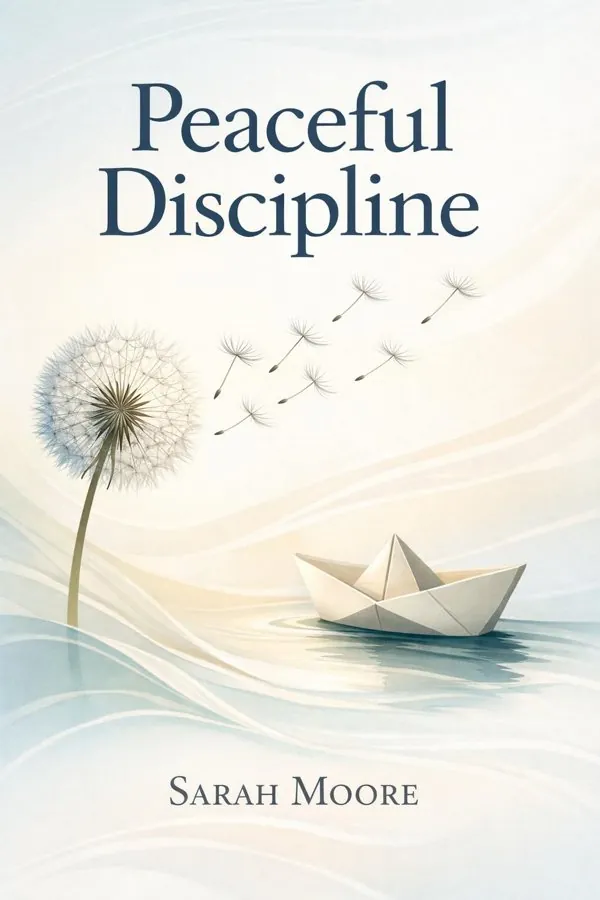
Peaceful Discipline: Story Teaching, Brain Science & Better Behavior: Summary & Key Insights
by Sarah Moore
 10 min5 chaptersAudio available
What Is Peaceful Discipline: Story Teaching, Brain Science & Better Behavior About?
Peaceful Discipline: Story Teaching, Brain Science & Better Behavior by Sarah Moore is a parenting book spanning 5 pages. Peaceful Discipline by Sarah Moore offers a compassionate approach to parenting that integrates storytelling, brain science, and emotional intelligence. Drawing from gentle parenting, trauma recovery, and even improv comedy, Moore provides practical tools to help parents replace yelling and power struggles with empathy, connection, and cooperation. The book emphasizes guiding children through stories and emotional understanding to foster long-term trust and respect within families.
This FizzRead summary covers all 5 key chapters of Peaceful Discipline: Story Teaching, Brain Science & Better Behavior in approximately 10 minutes, distilling the most important ideas, arguments, and takeaways from Sarah Moore's work. Also available as an audio summary and Key Quotes Podcast.
Peaceful Discipline: Story Teaching, Brain Science & Better Behavior
Peaceful Discipline by Sarah Moore offers a compassionate approach to parenting that integrates storytelling, brain science, and emotional intelligence. Drawing from gentle parenting, trauma recovery, and even improv comedy, Moore provides practical tools to help parents replace yelling and power struggles with empathy, connection, and cooperation. The book emphasizes guiding children through stories and emotional understanding to foster long-term trust and respect within families.
Who Should Read Peaceful Discipline: Story Teaching, Brain Science & Better Behavior?
This book is perfect for anyone interested in parenting and looking to gain actionable insights in a short read. Whether you're a student, professional, or lifelong learner, the key ideas from Peaceful Discipline: Story Teaching, Brain Science & Better Behavior by Sarah Moore will help you think differently.
- ✓Readers who enjoy parenting and want practical takeaways
- ✓Professionals looking to apply new ideas to their work and life
- ✓Anyone who wants the core insights of Peaceful Discipline: Story Teaching, Brain Science & Better Behavior in just 10 minutes
Want the full summary?
Get instant access to this book summary and 100K+ more with Fizz Moment.
Get Free SummaryAvailable on App Store • Free to download
Key Chapters
When we dive into the neuroscience of child development, a striking truth emerges: behavior is communication. What we often label as defiance or disrespect is usually a signal from a child whose brain is overwhelmed or dysregulated. The human brain develops from the bottom up—meaning the parts responsible for emotional regulation, reasoning, and impulse control mature much later than the emotional centers. Expecting a child to demonstrate adult-like self-control is biologically unrealistic.
In my work with families, I’ve seen that when parents understand this, compassion naturally replaces judgment. A tantrum or a meltdown isn’t a power struggle; it’s a request for help. When a parent stays calm and connected during these storms, they lend their child a regulated nervous system to borrow until the child develops their own. This is co-regulation—a cornerstone of peaceful discipline.
In practical terms, this means that the moments we’re most tempted to punish are often the exact moments when our children most need our empathy. A gentle tone, an open posture, and physical closeness can do more for behavior correction than any lecture. Children don’t learn through fear; they learn through felt safety. And when the brain feels safe, the prefrontal cortex can engage—supporting insight, empathy, and problem-solving.
So peaceful discipline starts not with what we do to our children, but how we understand them. It asks us to listen beneath the surface of behavior and to remember that emotional safety is the foundation of both learning and respect.
Stories have shaped human understanding long before there were classrooms or textbooks. They activate multiple parts of the brain simultaneously, allowing us to learn not only through logic but through emotion and imagination. In parenting, storytelling becomes a bridge between discipline and connection—a way of guiding behavior without triggering shame.
When I tell a story to my child—perhaps about a curious creature who forgot to clean up its toys and what it learned along the way—I’m inviting empathy rather than issuing a command. The story allows the child to step outside themselves and observe patterns safely. It engages curiosity rather than defensiveness. This is the essence of story teaching: it transforms correction into collaboration.
Beyond behavior guidance, stories also heal. Many of us carry emotional wounds from childhood—times we felt unseen or powerless. Sharing stories of resilience or forgiveness models emotional recovery. It tells our children that mistakes are part of learning, not proof of unworthiness. Neuroscience supports this: narrative activates the brain’s integration processes, linking emotion and reasoning to create lasting change.
Storytelling can be as simple as reflecting together at bedtime, weaving life lessons into shared imagination, or using metaphors to explore emotions. What matters most is our tone—the same story told with warmth builds trust, while one told with threat breeds fear. As parents, when we choose stories of kindness, courage, and accountability, we’re shaping not only our children’s behavior but their worldview.
+ 3 more chapters — available in the FizzRead app
All Chapters in Peaceful Discipline: Story Teaching, Brain Science & Better Behavior
About the Author
Sarah Moore is a certified Master Trainer in conscious parenting and the founder of Dandelion Seeds Positive Parenting. She combines her background in psychology, improv, and trauma-informed education to help families build stronger, more joyful relationships through empathy and connection.
Get This Summary in Your Preferred Format
Read or listen to the Peaceful Discipline: Story Teaching, Brain Science & Better Behavior summary by Sarah Moore anytime, anywhere. FizzRead offers multiple formats so you can learn on your terms — all free.
Available formats: App · Audio · PDF · EPUB — All included free with FizzRead
Download Peaceful Discipline: Story Teaching, Brain Science & Better Behavior PDF and EPUB Summary
Key Quotes from Peaceful Discipline: Story Teaching, Brain Science & Better Behavior
“When we dive into the neuroscience of child development, a striking truth emerges: behavior is communication.”
“Stories have shaped human understanding long before there were classrooms or textbooks.”
Frequently Asked Questions about Peaceful Discipline: Story Teaching, Brain Science & Better Behavior
Peaceful Discipline: Story Teaching, Brain Science & Better Behavior by Sarah Moore is a parenting book that explores key ideas across 5 chapters. Peaceful Discipline by Sarah Moore offers a compassionate approach to parenting that integrates storytelling, brain science, and emotional intelligence. Drawing from gentle parenting, trauma recovery, and even improv comedy, Moore provides practical tools to help parents replace yelling and power struggles with empathy, connection, and cooperation. The book emphasizes guiding children through stories and emotional understanding to foster long-term trust and respect within families.
You Might Also Like
Never Enough
Jennifer Breheny Wallace
10 min
Bluey: Sleepytime
Joe Brumm
10 min
In My Heart: A Book of Feelings
Jo Witek
10 min
Love From The Crayons
Drew Daywalt, Oliver Jeffers
10 min
Pete The Cat: Big Easter Adventure
James Dean, Kimberly Dean
10 min
Smart Money Smart Kids: Raising the Next Generation to Win with Money
Dave Ramsey, Rachel Cruze
10 minBrowse by Category
Ready to read Peaceful Discipline: Story Teaching, Brain Science & Better Behavior?
Get the full summary and 100K+ more books with Fizz Moment.