
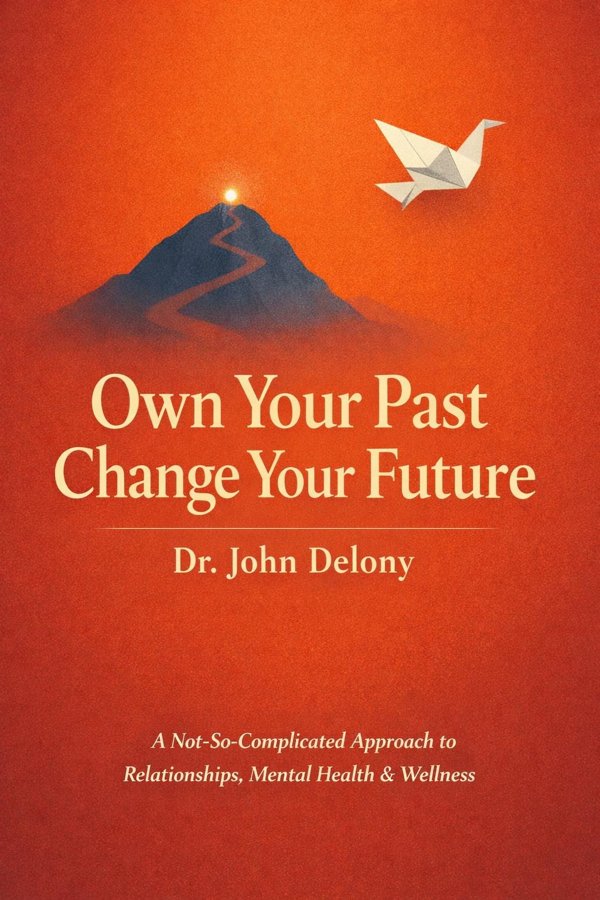
Own Your Past Change Your Future: A Not-So-Complicated Approach to Relationships, Mental Health & Wellness: Summary & Key Insights
 10 min11 chaptersAudio available
What Is Own Your Past Change Your Future: A Not-So-Complicated Approach to Relationships, Mental Health & Wellness About?
Own Your Past Change Your Future: A Not-So-Complicated Approach to Relationships, Mental Health & Wellness by Dr. John Delony is a mental_health book spanning 11 pages. In this book, Dr. John Delony offers a practical guide to understanding and healing from past trauma. Through a five-step process, he helps readers redefine what trauma means, grieve and heal from past hurts, and make intentional choices that lead to emotional wellness and stronger relationships. The book emphasizes daily habits and mindset shifts that foster peace, joy, and resilience.
This FizzRead summary covers all 11 key chapters of Own Your Past Change Your Future: A Not-So-Complicated Approach to Relationships, Mental Health & Wellness in approximately 10 minutes, distilling the most important ideas, arguments, and takeaways from Dr. John Delony's work. Also available as an audio summary and Key Quotes Podcast.
Own Your Past Change Your Future: A Not-So-Complicated Approach to Relationships, Mental Health & Wellness
In this book, Dr. John Delony offers a practical guide to understanding and healing from past trauma. Through a five-step process, he helps readers redefine what trauma means, grieve and heal from past hurts, and make intentional choices that lead to emotional wellness and stronger relationships. The book emphasizes daily habits and mindset shifts that foster peace, joy, and resilience.
Who Should Read Own Your Past Change Your Future: A Not-So-Complicated Approach to Relationships, Mental Health & Wellness?
This book is perfect for anyone interested in mental_health and looking to gain actionable insights in a short read. Whether you're a student, professional, or lifelong learner, the key ideas from Own Your Past Change Your Future: A Not-So-Complicated Approach to Relationships, Mental Health & Wellness by Dr. John Delony will help you think differently.
- ✓Readers who enjoy mental_health and want practical takeaways
- ✓Professionals looking to apply new ideas to their work and life
- ✓Anyone who wants the core insights of Own Your Past Change Your Future: A Not-So-Complicated Approach to Relationships, Mental Health & Wellness in just 10 minutes
Want the full summary?
Get instant access to this book summary and 100K+ more with Fizz Moment.
Get Free SummaryAvailable on App Store • Free to download
Key Chapters
People often think trauma means surviving war, abuse, or catastrophe. But in my years of counseling, I’ve seen trauma wear many faces. It can be relentless pressure, loneliness, or the feeling that you were never enough in your own home. Trauma is anything that disconnects you from safety, love, and belonging—anything that overwhelms your capacity to cope.
When I broaden the definition, I’m not making light of severe experiences. I’m recognizing that many people minimize their own pain because they’ve been told they should “just get over it.” Yet the nervous system doesn’t reason; it remembers. Chronic stress changes your biology just like visible wounds do. A child who felt ignored might grow into an adult who fears intimacy. A hardworking professional might function flawlessly but carry silent exhaustion from years of being in constant fight-or-flight.
Understanding trauma helps us remove judgment. It’s not weakness—it’s a signal. Your body and mind are telling you something went wrong and needs attention. You can’t heal what you refuse to see. When you own that truth, you reclaim the power to respond instead of react, to nurture yourself instead of numb out.
The brain doesn’t simply process thoughts; it tracks safety. When trauma happens, the body learns strategies to survive—hypervigilance, withdrawal, appeasement—and locks them in. Even long after danger has passed, the nervous system can stay stuck in survival mode. You may find yourself snapping at loved ones or shutting down emotionally without fully understanding why.
In this section, I explain how stress hormones flood the system, how chronic cortisol keeps your heart racing, and how anxiety or depression can become biological patterns rather than moral failings. Healing therefore involves bodywork as much as mental insight. Deep breathing, exercise, sleep, and healthy routines are not luxuries—they’re acts of restoration for a system that’s been working overtime.
Once you recognize this connection, shame starts to lift. You realize you’re not broken; you’re wired for protection. And that wiring can be retrained through safety, practice, and compassion. The more we honor our physical needs—nutrition, rest, laughter—the more our minds learn to trust the world again.
+ 9 more chapters — available in the FizzRead app
All Chapters in Own Your Past Change Your Future: A Not-So-Complicated Approach to Relationships, Mental Health & Wellness
About the Author
Dr. John Delony is a mental health expert, author, and host of The Dr. John Delony Show. He holds two PhDs and has spent decades working in counseling, crisis response, and higher education. His work focuses on helping people build healthier relationships and live more connected, meaningful lives.
Get This Summary in Your Preferred Format
Read or listen to the Own Your Past Change Your Future: A Not-So-Complicated Approach to Relationships, Mental Health & Wellness summary by Dr. John Delony anytime, anywhere. FizzRead offers multiple formats so you can learn on your terms — all free.
Available formats: App · Audio · PDF · EPUB — All included free with FizzRead
Download Own Your Past Change Your Future: A Not-So-Complicated Approach to Relationships, Mental Health & Wellness PDF and EPUB Summary
Key Quotes from Own Your Past Change Your Future: A Not-So-Complicated Approach to Relationships, Mental Health & Wellness
“People often think trauma means surviving war, abuse, or catastrophe.”
“The brain doesn’t simply process thoughts; it tracks safety.”
Frequently Asked Questions about Own Your Past Change Your Future: A Not-So-Complicated Approach to Relationships, Mental Health & Wellness
Own Your Past Change Your Future: A Not-So-Complicated Approach to Relationships, Mental Health & Wellness by Dr. John Delony is a mental_health book that explores key ideas across 11 chapters. In this book, Dr. John Delony offers a practical guide to understanding and healing from past trauma. Through a five-step process, he helps readers redefine what trauma means, grieve and heal from past hurts, and make intentional choices that lead to emotional wellness and stronger relationships. The book emphasizes daily habits and mindset shifts that foster peace, joy, and resilience.
You Might Also Like

Big Feelings: How to Be Okay When Things Are Not Okay
Liz Fosslien, Mollie West Duffy
10 min
Creative Arts Therapies Handbook: Art, Music and Dance Therapy Practices for Wellbeing
Susan I. Buchalter
10 min
Emotional First Aid: Healing Rejection, Guilt, Failure, and Other Everyday Hurts
Guy Winch
10 min
Lost Connections: Why You're Depressed and How to Find Hope
Johann Hari
10 min
No Time to Panic: How to Stop Worrying and Embrace Life
Matt Gutman
10 min
Overcoming Mobbing: A Recovery Guide for Workplace Aggression and Bullying
Maureen Duffy, Len Sperry
10 minBrowse by Category
Ready to read Own Your Past Change Your Future: A Not-So-Complicated Approach to Relationships, Mental Health & Wellness?
Get the full summary and 100K+ more books with Fizz Moment.