
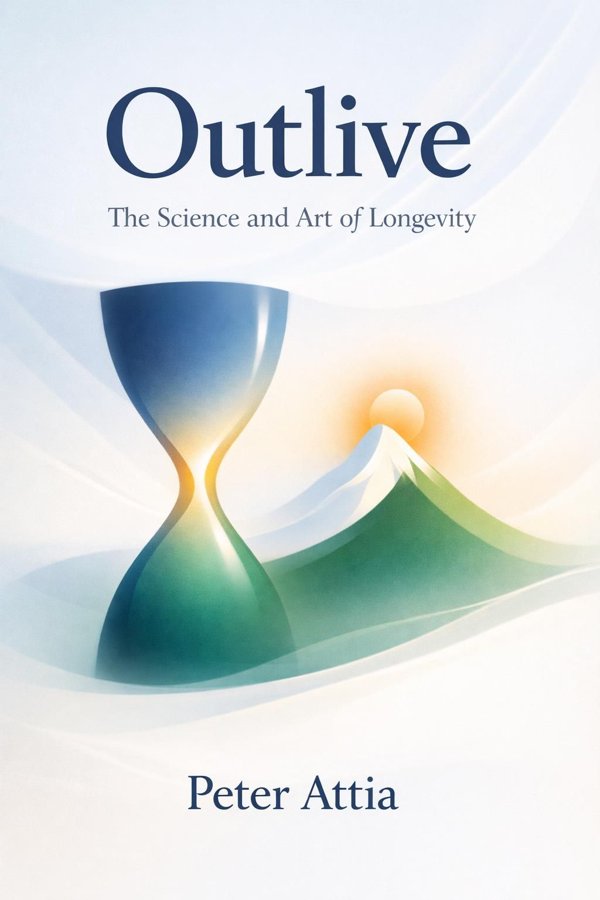
Outlive: Summary & Key Insights
by Peter Attia
 10 min9 chaptersAudio available
Key Takeaways from Outlive
A long life is not usually stolen by one sudden event; it is gradually narrowed by a few predictable chronic diseases.
The biggest flaw in modern healthcare is not that it lacks technology; it is that it often waits too long to use it.
Many people think metabolic illness begins with diabetes, but Attia argues it starts much earlier and affects far more than blood sugar.
Attia argues that exercise is exactly that intervention.
People often search for the perfect diet as if one universal eating plan can solve every health problem.
What Is Outlive About?
Outlive by Peter Attia is a health book published in 2023 spanning 8 pages. Outlive by Peter Attia is a bold, practical rethink of what it means to age well. Rather than accepting decline as an inevitable part of getting older, Attia argues that many of the diseases and limitations we associate with aging can be delayed, prevented, or meaningfully reduced through earlier, more personalized action. The book focuses not just on lifespan—how long you live—but on healthspan: how long you remain physically capable, mentally sharp, emotionally grounded, and free from chronic disease. Attia’s central insight is that modern medicine often intervenes too late, after damage has already accumulated. In response, he proposes a more proactive model built around prevention, data, and long-term strategy. He explores the major threats to longevity, including heart disease, cancer, neurodegenerative conditions, and metabolic dysfunction, while offering clear guidance on exercise, nutrition, sleep, emotional health, and behavior change. What makes Outlive especially compelling is Attia’s authority and honesty. A physician trained at Stanford and Johns Hopkins, he combines scientific rigor with lessons from his own professional and personal transformation. The result is an unusually useful guide for anyone who wants to live longer—and much better.
This FizzRead summary covers all 9 key chapters of Outlive in approximately 10 minutes, distilling the most important ideas, arguments, and takeaways from Peter Attia's work. Also available as an audio summary and Key Quotes Podcast.
Outlive
Outlive by Peter Attia is a bold, practical rethink of what it means to age well. Rather than accepting decline as an inevitable part of getting older, Attia argues that many of the diseases and limitations we associate with aging can be delayed, prevented, or meaningfully reduced through earlier, more personalized action. The book focuses not just on lifespan—how long you live—but on healthspan: how long you remain physically capable, mentally sharp, emotionally grounded, and free from chronic disease.
Attia’s central insight is that modern medicine often intervenes too late, after damage has already accumulated. In response, he proposes a more proactive model built around prevention, data, and long-term strategy. He explores the major threats to longevity, including heart disease, cancer, neurodegenerative conditions, and metabolic dysfunction, while offering clear guidance on exercise, nutrition, sleep, emotional health, and behavior change.
What makes Outlive especially compelling is Attia’s authority and honesty. A physician trained at Stanford and Johns Hopkins, he combines scientific rigor with lessons from his own professional and personal transformation. The result is an unusually useful guide for anyone who wants to live longer—and much better.
Who Should Read Outlive?
This book is perfect for anyone interested in health and looking to gain actionable insights in a short read. Whether you're a student, professional, or lifelong learner, the key ideas from Outlive by Peter Attia will help you think differently.
- ✓Readers who enjoy health and want practical takeaways
- ✓Professionals looking to apply new ideas to their work and life
- ✓Anyone who wants the core insights of Outlive in just 10 minutes
Want the full summary?
Get instant access to this book summary and 100K+ more with Fizz Moment.
Get Free SummaryAvailable on App Store • Free to download
Key Chapters
A long life is not usually stolen by one sudden event; it is gradually narrowed by a few predictable chronic diseases. Peter Attia uses the image of the “Four Horsemen” to describe the major threats that shape modern aging: atherosclerotic cardiovascular disease, cancer, neurodegenerative disease, and metabolic dysfunction. His point is not merely that these conditions are common, but that they are deeply interconnected and often develop silently over decades before becoming obvious.
This framing matters because it shifts attention away from superficial anti-aging fixes and toward the real causes of decline. Heart disease may begin years before a heart attack. Metabolic dysfunction can exist long before diabetes is diagnosed. Neurodegeneration can start quietly while memory still seems normal. Cancer risk often reflects long-term exposures, habits, and biology rather than bad luck alone. By the time symptoms appear, prevention has often become damage control.
Attia argues that longevity requires identifying these threats earlier and managing the drivers that feed them. For example, improving insulin sensitivity may lower risk for diabetes and also influence cardiovascular and cognitive health. Exercise can reduce the risk of more than one Horseman at once. Better sleep and stress management may help regulate inflammation, appetite, and recovery.
A practical way to use this idea is to stop thinking in isolated categories. Instead of asking, “Do I have heart disease?” ask, “What processes are moving me toward disease?” Review family history, metabolic markers, body composition, blood pressure, fitness, and lifestyle patterns. The earlier you measure risk, the more choices you have.
Actionable takeaway: Build your health strategy around preventing the Four Horsemen before symptoms appear, and focus on upstream risk factors rather than waiting for a diagnosis.
The biggest flaw in modern healthcare is not that it lacks technology; it is that it often waits too long to use it. Attia contrasts what he calls Medicine 2.0 with Medicine 3.0. Medicine 2.0 is the dominant system: diagnose disease after it crosses a clinical threshold, then treat it with drugs, procedures, or crisis intervention. It has been extraordinarily successful in acute care, trauma, and infectious disease. But it performs poorly against slow-moving chronic illnesses that unfold over decades.
Medicine 3.0 is Attia’s proposed alternative. It is proactive, personalized, and focused on risk reduction long before disease is obvious. Instead of asking whether someone has diabetes, it asks whether they are metabolically drifting toward it. Instead of waiting for a cardiovascular event, it tries to detect elevated lifetime risk earlier. Instead of treating “normal” lab values as reassuring, it considers whether average ranges are truly optimal for long-term outcomes.
This approach does not reject conventional medicine; it expands it. A person with a strong family history of heart disease, for example, might benefit from more aggressive screening and prevention than standard guidelines suggest. Someone with poor sleep, rising fasting insulin, increasing visceral fat, and low fitness may be headed toward serious disease even if routine checkups say everything is fine.
Attia also emphasizes that Medicine 3.0 requires active participation from patients. You cannot outsource longevity to annual appointments. You need data, curiosity, and willingness to change behavior over time.
Actionable takeaway: Treat your health like a long-term investment portfolio—monitor risk early, act before problems become visible, and aim for personalized prevention rather than average-based care.
Many people think metabolic illness begins with diabetes, but Attia argues it starts much earlier and affects far more than blood sugar. Metabolic dysfunction exists on a spectrum that can include insulin resistance, excess visceral fat, fatty liver, elevated triglycerides, reduced energy flexibility, and chronic inflammation. Even before formal disease appears, this state can increase risk across the Four Horsemen, making it one of the most important areas to address for long-term health.
One reason metabolic health is so dangerous is that it can hide behind apparently acceptable numbers. A person may not be diabetic yet still be metabolically unhealthy. They may have normal weight but poor body composition, carrying too little muscle and too much internal fat. They may experience energy crashes, constant hunger, poor recovery, or brain fog while standard medical markers fail to trigger concern.
Attia encourages looking beyond simplistic ideas like “eat less” or “avoid one bad nutrient.” Metabolic health depends on how the body processes energy over time. Diet quality matters, but so do exercise, sleep, stress, muscle mass, and overall activity. Some people do well with lower-carbohydrate eating, while others can tolerate more carbohydrates if they are lean, active, and insulin sensitive. The point is not ideology; it is metabolic control.
In practice, someone improving metabolic health might prioritize protein, reduce ultra-processed foods, increase walking after meals, lift weights, and track markers like fasting insulin, triglycerides, waist circumference, and body composition. These changes often improve appetite regulation and energy as well as disease risk.
Actionable takeaway: Make metabolic health a core priority by building muscle, reducing visceral fat, improving insulin sensitivity, and using objective markers—not just body weight—to track progress.
If there were a single intervention that lowered risk for multiple chronic diseases, improved mood, protected cognition, strengthened bones, enhanced sleep, and extended independence, it would be treated like a miracle. Attia argues that exercise is exactly that intervention. In Outlive, exercise is not presented as a cosmetic tool or a short-term fitness hobby, but as the foundation of a long healthspan.
He places special emphasis on what he calls the “Centenarian Decathlon,” a useful mental model for training for the life you want in old age. Instead of exercising only for appearance or near-term performance, imagine the physical tasks you may want to do at 80, 90, or 100: carrying groceries, climbing stairs, getting up off the floor, lifting a suitcase, hiking with family, or playing with grandchildren. Then train now to preserve those capacities.
Attia highlights several major domains of fitness: aerobic efficiency, maximal aerobic capacity, strength, stability, and muscle mass. Zone 2 cardio helps improve mitochondrial function and endurance. High-intensity work can raise VO2 max, a strong predictor of longevity. Strength training preserves muscle and bone while reducing frailty risk. Stability and balance help prevent falls, one of the most serious threats in later life.
A practical weekly routine might include several Zone 2 sessions, one or two high-intensity workouts, two to four strength sessions, and regular mobility or balance work. The ideal plan is less important than consistency over years.
Actionable takeaway: Train for the decades ahead, not just the next season, and build a routine that develops endurance, strength, stability, and VO2 max as lifelong assets.
People often search for the perfect diet as if one universal eating plan can solve every health problem. Attia rejects that mindset. He argues that nutrition should be approached as a tool for achieving specific outcomes—better metabolic health, improved body composition, stable energy, or disease risk reduction—rather than as an identity or ideology. In other words, the best diet is the one that works for your biology, goals, and ability to sustain it.
He is skeptical of rigid nutrition dogma because people respond differently to food. Someone with insulin resistance may benefit from restricting carbohydrates more aggressively, while an endurance athlete with excellent metabolic health may tolerate them well. Protein intake, caloric balance, food quality, meal timing, and adherence all matter, but their relative importance can vary by individual.
Attia emphasizes a few broad principles. Protein is crucial, especially with aging, because it supports muscle mass, satiety, and recovery. Highly processed foods tend to undermine appetite regulation and metabolic control. Total energy intake still matters, but it is easier to manage when food choices reduce cravings and improve fullness. Nutritional strategies should also be practical enough to live with over time.
A useful application is to treat diet as an experiment. Track how you feel, how your weight and waist change, what your lab markers show, and whether your eating pattern supports training and sleep. If a plan is theoretically sound but impossible to maintain, it is not the right plan for you.
Actionable takeaway: Use nutrition strategically—prioritize protein, limit ultra-processed foods, match carbohydrate intake to your metabolic health, and choose an eating pattern you can sustain for years.
Many people treat sleep as negotiable, but Attia presents it as a biological necessity with profound effects on longevity. Sleep is not just rest; it is active maintenance. During sleep, the brain clears waste, memory consolidates, hormones rebalance, tissues recover, and the immune system recalibrates. Chronic sleep deprivation raises the risk of metabolic dysfunction, cardiovascular disease, poor emotional regulation, cognitive decline, and impaired performance.
What makes poor sleep especially dangerous is that its costs accumulate quietly. You may adapt to feeling tired and mistake reduced sharpness for normal life. But insufficient sleep can worsen insulin sensitivity, increase hunger, elevate stress hormones, reduce training recovery, and impair judgment. Over time, it amplifies many of the same processes Attia is trying to prevent.
Recovery extends beyond time in bed. It includes how well your body handles physical training, mental stress, travel, alcohol, overstimulation, and inconsistent routines. Someone who exercises intensely but sleeps poorly may undermine many of the benefits they seek. Likewise, a person who constantly pushes through fatigue may normalize burnout instead of building resilience.
Practical sleep improvement often begins with basics: consistent sleep and wake times, a cool and dark room, reduced evening alcohol, less late caffeine, and limited bright light before bed. Some people also need screening for sleep apnea or other disorders, especially if they snore, wake unrefreshed, or struggle with daytime sleepiness.
Actionable takeaway: Protect sleep as seriously as exercise and nutrition by building consistent routines, reducing common disruptors, and treating poor sleep as a health issue—not a badge of productivity.
A person can optimize blood markers and fitness metrics while still living in a way that slowly destroys well-being. One of the most striking aspects of Outlive is Attia’s insistence that emotional and mental health belong at the center of longevity, not at the margins. He acknowledges that achievement, discipline, and knowledge are not enough if they are built on anxiety, compulsion, unresolved trauma, or emotional disconnection.
This insight is partly personal. Attia describes his own struggles and the realization that outward success can hide inner instability. His message is that longevity is not simply about extending biological function. It is about being someone who can enjoy the life they are working so hard to preserve. Without emotional health, optimization can become another form of self-harm.
Stress, anger, isolation, perfectionism, and suppressed emotion can affect sleep, relationships, behavior, and even physical health habits. People often know what to do but cannot do it consistently because deeper psychological patterns interfere. Emotional health therefore influences adherence just as much as motivation does.
Practical applications may include therapy, trauma work, mindfulness, journaling, honest conversations, or learning to identify patterns of avoidance and overcontrol. For some readers, the most life-changing intervention in the book may not be a training zone or biomarker but the willingness to seek help.
Attia’s broader point is that health should expand your capacity for connection, purpose, and presence. If your strategy makes you physically fitter but emotionally less available, it is incomplete.
Actionable takeaway: Invest in emotional health with the same seriousness you bring to diet and exercise, and address the inner patterns that keep you from living well now.
Knowing what is healthy is common; turning that knowledge into a life system is rare. Attia makes clear that longevity is not built from occasional bursts of motivation but from structures that make good choices repeatable. This is where many health efforts fail. People chase new data, subscribe to ideal routines, and then collapse under complexity, inconsistency, or unrealistic expectations.
The book encourages readers to think strategically. Instead of trying to overhaul everything at once, identify the highest-leverage changes. If poor sleep drives overeating and weak workouts, solve sleep first. If chronic back pain prevents exercise, address movement quality and strength. If work chaos ruins meal choices, create defaults such as preplanned breakfasts, walking meetings, or scheduled training sessions.
Attia also favors measurement where useful. Biomarkers, body composition, fitness assessments, and sleep data can reveal trends that feelings alone may miss. But measurement should serve action, not obsession. The goal is feedback, not perfectionism. A simple system that you actually follow beats an ideal one that exists only on paper.
Habit design is crucial. Put exercise on the calendar. Keep protein-rich foods available. Create friction for bad choices and convenience for good ones. Revisit goals regularly, especially as life stages change. Longevity practices should evolve with age, injury, family demands, and shifting priorities.
What ultimately matters is durability. The most effective plan is the one you can sustain through ordinary weeks, not just highly motivated ones.
Actionable takeaway: Build a repeatable health system with clear priorities, practical defaults, and measurable feedback so that consistency—not willpower—drives your longevity habits.
Living longer is only meaningful if there is something and someone to live for. Attia emphasizes that healthspan is not just a medical outcome but a human one. Purpose, belonging, and close relationships influence how people age, how resilient they are under stress, and whether they actually enjoy the years they work to gain. Longevity without meaning can become an empty project.
Social connection shapes behavior in obvious and subtle ways. People with strong relationships often move more, eat better, recover from setbacks faster, and have emotional buffers during difficult periods. Isolation, by contrast, can intensify stress, depression, poor sleep, and unhealthy coping habits. A life organized only around work, metrics, and self-optimization can quietly erode the relational fabric that makes health worthwhile.
Purpose matters as well. People who feel useful and connected to values larger than themselves often maintain stronger engagement with life. This may show up as family roles, mentoring, creative work, community involvement, spiritual practice, or simply being needed by others. Purpose does not need to be grand; it needs to be real.
In practical terms, this idea invites readers to treat relationships as part of preventive health. Schedule time with friends. Repair avoidable conflicts. Participate in communities. Make room for play, service, and presence. Even exercise can become more sustainable when done with others.
Attia’s larger message is that a good life cannot be reduced to lab numbers. The quality of your relationships may matter as much as many of the interventions designed to protect your body.
Actionable takeaway: Pursue longevity in a way that strengthens connection and meaning, and actively invest in the people, communities, and purposes that make a longer life worth having.
All Chapters in Outlive
About the Author
Peter Attia, M.D., is a physician, researcher, and public educator focused on the science of longevity and the prevention of chronic disease. He studied medicine at Stanford University School of Medicine and completed his residency training at Johns Hopkins Hospital. Over the course of his career, he developed a strong interest in how nutrition, exercise, sleep, metabolic health, and behavior influence long-term outcomes. Attia is widely known for translating complex medical and scientific topics into practical frameworks for everyday life. He is also the host of The Drive, a popular podcast featuring deep conversations with experts in health, performance, and aging. Through his writing, speaking, and clinical work, Attia has become one of the most recognized voices in the growing field of healthspan and proactive medicine.
Get This Summary in Your Preferred Format
Read or listen to the Outlive summary by Peter Attia anytime, anywhere. FizzRead offers multiple formats so you can learn on your terms — all free.
Available formats: App · Audio · PDF · EPUB — All included free with FizzRead
Download Outlive PDF and EPUB Summary
Key Quotes from Outlive
“A long life is not usually stolen by one sudden event; it is gradually narrowed by a few predictable chronic diseases.”
“The biggest flaw in modern healthcare is not that it lacks technology; it is that it often waits too long to use it.”
“Many people think metabolic illness begins with diabetes, but Attia argues it starts much earlier and affects far more than blood sugar.”
“Attia argues that exercise is exactly that intervention.”
“People often search for the perfect diet as if one universal eating plan can solve every health problem.”
Frequently Asked Questions about Outlive
Outlive by Peter Attia is a health book that explores key ideas across 9 chapters. Outlive by Peter Attia is a bold, practical rethink of what it means to age well. Rather than accepting decline as an inevitable part of getting older, Attia argues that many of the diseases and limitations we associate with aging can be delayed, prevented, or meaningfully reduced through earlier, more personalized action. The book focuses not just on lifespan—how long you live—but on healthspan: how long you remain physically capable, mentally sharp, emotionally grounded, and free from chronic disease. Attia’s central insight is that modern medicine often intervenes too late, after damage has already accumulated. In response, he proposes a more proactive model built around prevention, data, and long-term strategy. He explores the major threats to longevity, including heart disease, cancer, neurodegenerative conditions, and metabolic dysfunction, while offering clear guidance on exercise, nutrition, sleep, emotional health, and behavior change. What makes Outlive especially compelling is Attia’s authority and honesty. A physician trained at Stanford and Johns Hopkins, he combines scientific rigor with lessons from his own professional and personal transformation. The result is an unusually useful guide for anyone who wants to live longer—and much better.
More by Peter Attia
You Might Also Like


Browse by Category
Ready to read Outlive?
Get the full summary and 100K+ more books with Fizz Moment.