
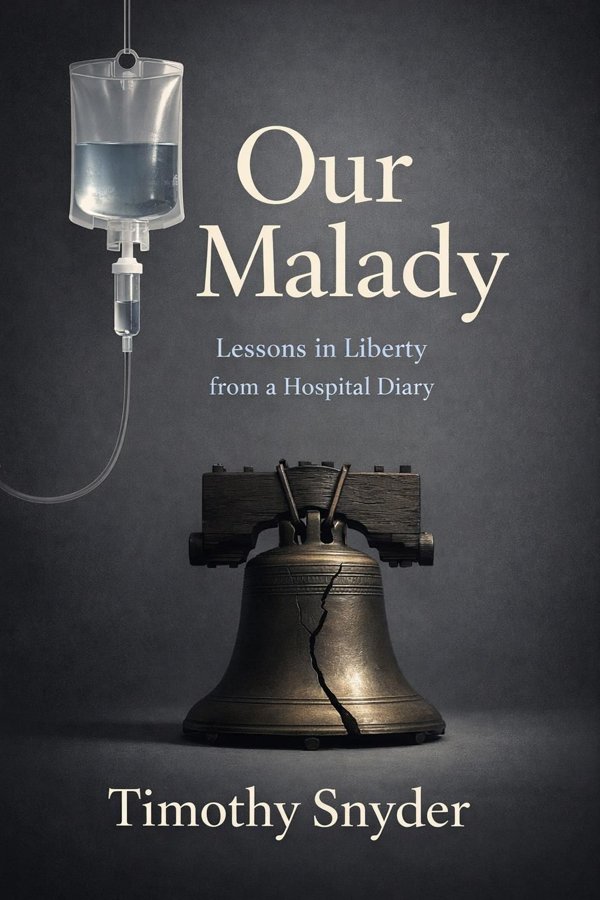
Our Malady: Lessons in Liberty from a Hospital Diary: Summary & Key Insights
 10 min8 chaptersAudio available
What Is Our Malady: Lessons in Liberty from a Hospital Diary About?
Our Malady: Lessons in Liberty from a Hospital Diary by Timothy Snyder is a politics book spanning 8 pages. In this reflective and urgent work, historian Timothy Snyder recounts his personal experience of sudden illness and hospitalization, using it as a lens to examine the fragility of freedom and the failures of the American healthcare system. Written in the wake of his near-death experience, Snyder connects personal vulnerability to civic responsibility, arguing that a society that neglects care undermines its own liberty.
This FizzRead summary covers all 8 key chapters of Our Malady: Lessons in Liberty from a Hospital Diary in approximately 10 minutes, distilling the most important ideas, arguments, and takeaways from Timothy Snyder's work. Also available as an audio summary and Key Quotes Podcast.
Our Malady: Lessons in Liberty from a Hospital Diary
In this reflective and urgent work, historian Timothy Snyder recounts his personal experience of sudden illness and hospitalization, using it as a lens to examine the fragility of freedom and the failures of the American healthcare system. Written in the wake of his near-death experience, Snyder connects personal vulnerability to civic responsibility, arguing that a society that neglects care undermines its own liberty.
Who Should Read Our Malady: Lessons in Liberty from a Hospital Diary?
This book is perfect for anyone interested in politics and looking to gain actionable insights in a short read. Whether you're a student, professional, or lifelong learner, the key ideas from Our Malady: Lessons in Liberty from a Hospital Diary by Timothy Snyder will help you think differently.
- ✓Readers who enjoy politics and want practical takeaways
- ✓Professionals looking to apply new ideas to their work and life
- ✓Anyone who wants the core insights of Our Malady: Lessons in Liberty from a Hospital Diary in just 10 minutes
Want the full summary?
Get instant access to this book summary and 100K+ more with Fizz Moment.
Get Free SummaryAvailable on App Store • Free to download
Key Chapters
It began unexpectedly, as most calamities do. One morning, I found myself sicker than I had ever been before, unable to stand, unable to speak coherently. I was rushed to the hospital, and from that moment, my professional distance from history’s traumas disappeared. I was living fragility rather than studying it. The initial confusion surrounding my condition mirrored the chaos of a system built more for billing than for healing. I was misdiagnosed, left unattended, and my body began to fail from neglect more than from disease. This was not an unfortunate fluke—it was a revealing symptom of how our health institutions operate under pressure.
In those disoriented hours, I understood something elemental. When one’s autonomy is stripped away, liberty becomes not an abstract moral concept but a physiological reality. My intellect, my capacity to reason and write, meant little when I was at the mercy of systemic indifference. I realized that the creed of independence, so cherished in our political tradition, collapses in the face of illness. Dependence, rather than autonomy, defines the human condition. To ignore that truth in our public order is to build a society of lonely, vulnerable people, unable to sustain themselves or one another.
The hospital became my laboratory for understanding the failure of American systems. What should have been a space for healing revealed itself as a maze of miscommunication and corporate priorities. The staff were often competent and compassionate—but constrained. They worked within a structure that rewarded efficiency over attention, profit over presence. No one took full responsibility; everyone operated in fragments. I personally experienced how one bureaucracy hands off to another, how a patient becomes a line on a chart.
Each mistake in my treatment had cascading effects. I was denied timely diagnosis, then delayed basic interventions, nearly dying from preventable complications. The ordeal taught me that systemic failure in healthcare originates not in individual cruelty but in collective disorganization fueled by economic logic. When care is commodified, communication among caregivers fractures, and trust evaporates. The hospital, in this light, was not an aberration—it was America itself: a republic where the citizens are clients, and institutions forget their moral mission.
This revelation was the beginning of my conviction that liberty, in practice, must be rooted in community and care. A free society cannot endure if its people must fear that illness means abandonment.
+ 6 more chapters — available in the FizzRead app
All Chapters in Our Malady: Lessons in Liberty from a Hospital Diary
About the Author
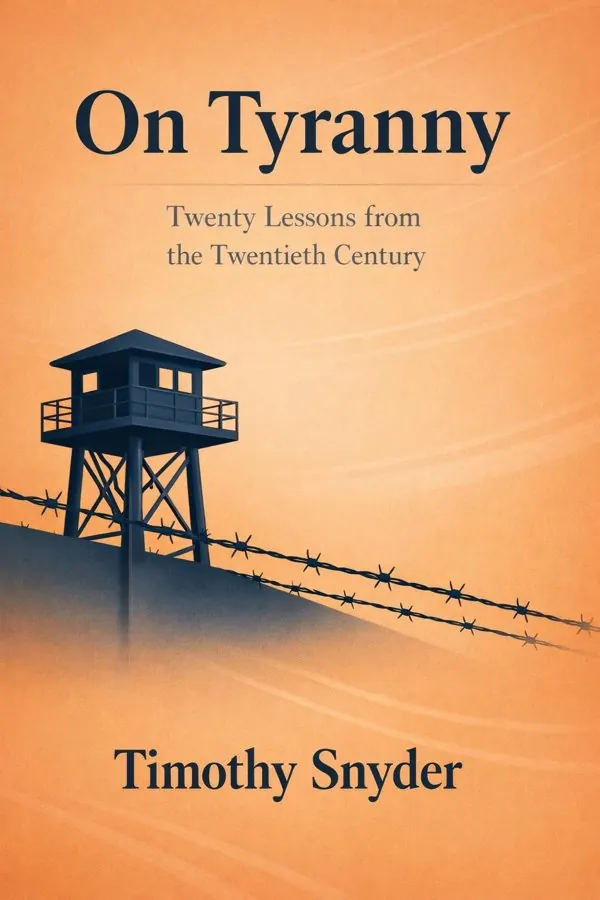
Timothy Snyder is an American historian and professor at Yale University, known for his works on European history, totalitarianism, and political thought. His notable books include 'Bloodlands' and 'On Tyranny'.
Get This Summary in Your Preferred Format
Read or listen to the Our Malady: Lessons in Liberty from a Hospital Diary summary by Timothy Snyder anytime, anywhere. FizzRead offers multiple formats so you can learn on your terms — all free.
Available formats: App · Audio · PDF · EPUB — All included free with FizzRead
Download Our Malady: Lessons in Liberty from a Hospital Diary PDF and EPUB Summary
Key Quotes from Our Malady: Lessons in Liberty from a Hospital Diary
“It began unexpectedly, as most calamities do.”
“The hospital became my laboratory for understanding the failure of American systems.”
Frequently Asked Questions about Our Malady: Lessons in Liberty from a Hospital Diary
Our Malady: Lessons in Liberty from a Hospital Diary by Timothy Snyder is a politics book that explores key ideas across 8 chapters. In this reflective and urgent work, historian Timothy Snyder recounts his personal experience of sudden illness and hospitalization, using it as a lens to examine the fragility of freedom and the failures of the American healthcare system. Written in the wake of his near-death experience, Snyder connects personal vulnerability to civic responsibility, arguing that a society that neglects care undermines its own liberty.
More by Timothy Snyder

You Might Also Like
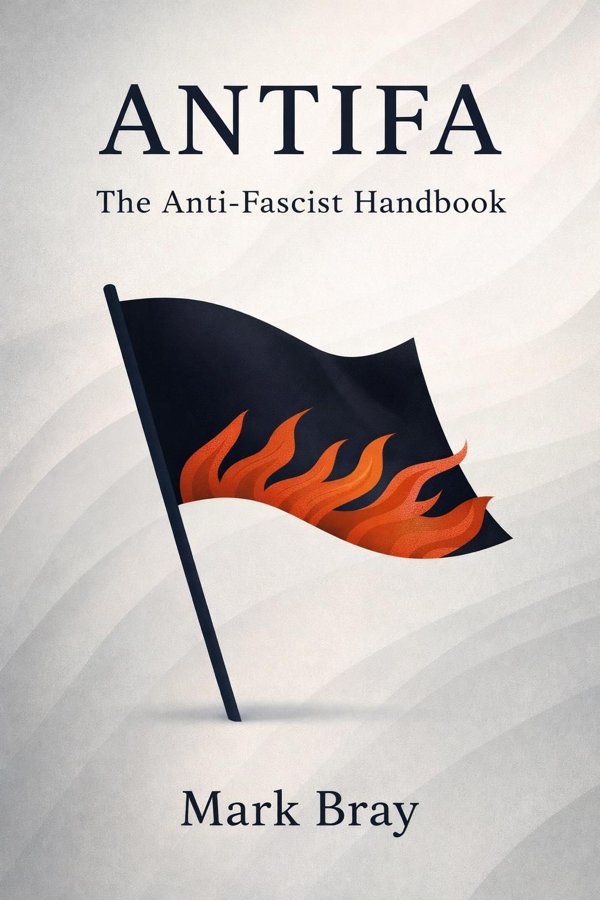
Antifa: The Anti-Fascist Handbook
Mark Bray
10 min
Attack from Within: How Disinformation Is Sabotaging America
Barbara McQuade
10 min
Coercion, Capital, and European States, AD 990–1992
Charles Tilly
10 min
Digital Democracy: Concepts, Methodologies, Tools, and Applications
Various Authors
10 min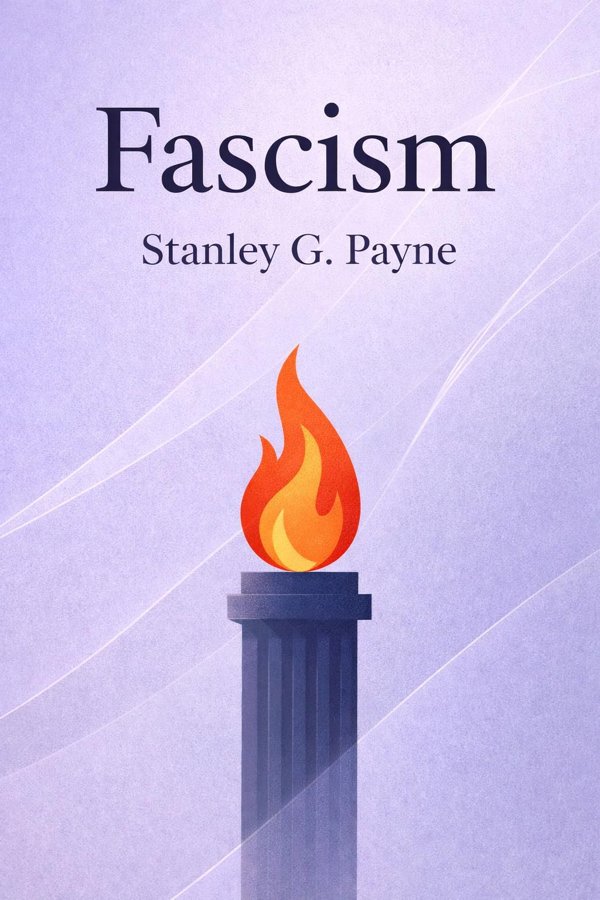
Fascism
Stanley G. Payne
10 min
Fire And Fury: Inside The Trump White House
Michael Wolff
10 minBrowse by Category
Ready to read Our Malady: Lessons in Liberty from a Hospital Diary?
Get the full summary and 100K+ more books with Fizz Moment.