
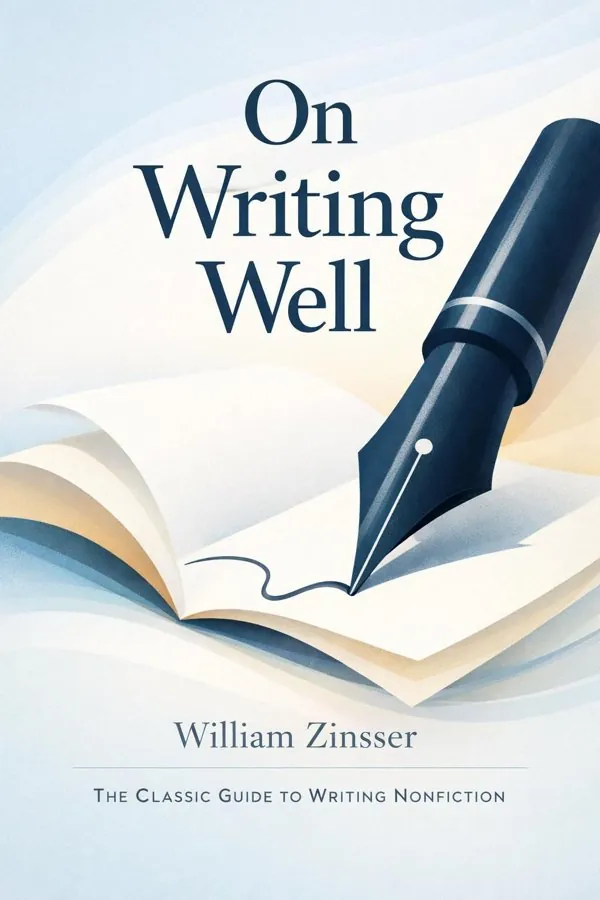
On Writing Well: The Classic Guide to Writing Nonfiction: Summary & Key Insights
 10 min10 chaptersAudio available
What Is On Writing Well: The Classic Guide to Writing Nonfiction About?
On Writing Well: The Classic Guide to Writing Nonfiction by William Zinsser is a writing book spanning 10 pages. On Writing Well es un manual clásico sobre cómo escribir con claridad, simplicidad y humanidad. William Zinsser ofrece consejos prácticos para mejorar la escritura de no ficción, abarcando temas como estilo, estructura, tono y la importancia de la voz personal. El libro se ha convertido en una referencia esencial para periodistas, escritores y estudiantes que buscan comunicar ideas de manera efectiva.
This FizzRead summary covers all 10 key chapters of On Writing Well: The Classic Guide to Writing Nonfiction in approximately 10 minutes, distilling the most important ideas, arguments, and takeaways from William Zinsser's work. Also available as an audio summary and Key Quotes Podcast.
On Writing Well: The Classic Guide to Writing Nonfiction
On Writing Well es un manual clásico sobre cómo escribir con claridad, simplicidad y humanidad. William Zinsser ofrece consejos prácticos para mejorar la escritura de no ficción, abarcando temas como estilo, estructura, tono y la importancia de la voz personal. El libro se ha convertido en una referencia esencial para periodistas, escritores y estudiantes que buscan comunicar ideas de manera efectiva.
Who Should Read On Writing Well: The Classic Guide to Writing Nonfiction?
This book is perfect for anyone interested in writing and looking to gain actionable insights in a short read. Whether you're a student, professional, or lifelong learner, the key ideas from On Writing Well: The Classic Guide to Writing Nonfiction by William Zinsser will help you think differently.
- ✓Readers who enjoy writing and want practical takeaways
- ✓Professionals looking to apply new ideas to their work and life
- ✓Anyone who wants the core insights of On Writing Well: The Classic Guide to Writing Nonfiction in just 10 minutes
Want the full summary?
Get instant access to this book summary and 100K+ more with Fizz Moment.
Get Free SummaryAvailable on App Store • Free to download
Key Chapters
Clarity begins with stripping away clutter. Most writers, especially beginners, write too much — they crowd their sentences with excess adjectives, bureaucratic expressions, and phrases that serve no purpose. I encourage writers to see every piece of writing as a transaction of respect: if you value your reader’s time, you will not waste it. The reader should never have to fight his way through your words to grasp your meaning.
Clutter is the disease of American writing, I once said, and I still believe it. Think of the corporate memorandum, the government report, the academic paper — so much ink, so little thought. The cure is honesty and courage: honesty to see that you have said too much, and courage to cut what doesn’t belong. The simplest sentences are often the most powerful because they let ideas breathe. Writing clearly is not a matter of knowing big words, but of choosing the right ones.
Simplicity also means precision. Each word should carry its weight; each sentence should serve the reader’s understanding. To achieve this, you must constantly ask: what am I trying to say? Have I said it as simply as possible? The discipline of rewriting is the way to reach this simplicity. It is not something you do after writing; it is writing itself. Over time, as you hear your prose tighten, you will realize that clarity is less about mechanics and more about self-awareness — the ability to see your words not as ornaments, but as tools.
At the heart of every good piece of nonfiction is the writer’s attitude toward the craft. You cannot write well if you do not care — about your subject, about your reader, and about the language you use. I tell students that good writing comes from a combination of warmth and confidence. The warmth is what connects you to the reader; the confidence is what allows the reader to trust you. Without both, even the most technically perfect writing can fall flat.
To write well, you must also enjoy the process. Writing is hard work, yes, but it can be intensely satisfying when you learn to see it as a form of discovery. Many writers approach their work with fear — fear of being judged, fear of inadequacy. Yet the truth is, the reader wants you to succeed. When you relax into your own curiosity and write with genuine interest, the prose brightens. I remind myself constantly that writing is an act of sharing: you are offering your way of seeing the world. The more honestly and directly you do it, the more it will resonate.
This is why arrogance and self-consciousness are enemies of good writing. The best writing often comes from humility — from acknowledging the limits of what we know and being willing to explore them publicly. You are not performing knowledge; you are conversing through your craft. This shift in attitude transforms writing from a chore into a privilege.
+ 8 more chapters — available in the FizzRead app
All Chapters in On Writing Well: The Classic Guide to Writing Nonfiction
About the Author
William Zinsser (1922–2015) fue un escritor, editor y profesor estadounidense. Trabajó en The New York Herald Tribune y enseñó escritura en Yale University. Es reconocido por su enfoque claro y humano sobre la escritura y por su influencia duradera en la enseñanza del estilo y la comunicación escrita.
Get This Summary in Your Preferred Format
Read or listen to the On Writing Well: The Classic Guide to Writing Nonfiction summary by William Zinsser anytime, anywhere. FizzRead offers multiple formats so you can learn on your terms — all free.
Available formats: App · Audio · PDF · EPUB — All included free with FizzRead
Download On Writing Well: The Classic Guide to Writing Nonfiction PDF and EPUB Summary
Key Quotes from On Writing Well: The Classic Guide to Writing Nonfiction
“Clarity begins with stripping away clutter.”
“At the heart of every good piece of nonfiction is the writer’s attitude toward the craft.”
Frequently Asked Questions about On Writing Well: The Classic Guide to Writing Nonfiction
On Writing Well: The Classic Guide to Writing Nonfiction by William Zinsser is a writing book that explores key ideas across 10 chapters. On Writing Well es un manual clásico sobre cómo escribir con claridad, simplicidad y humanidad. William Zinsser ofrece consejos prácticos para mejorar la escritura de no ficción, abarcando temas como estilo, estructura, tono y la importancia de la voz personal. El libro se ha convertido en una referencia esencial para periodistas, escritores y estudiantes que buscan comunicar ideas de manera efectiva.
You Might Also Like
The Art of Perspective
Christopher Castellani
10 min
Making a Point: The Persnickety Story of English Punctuation
David Crystal
10 min
The Elements Of Eloquence: How To Turn The Perfect English Phrase
Mark Forsyth
10 min
The Pocket Muse: Ideas and Inspirations for Writing
Monica Wood
10 min
A Little Book on Form: An Exploration into the Formal Imagination of Poetry
Robert Hass
10 min
Adventures In The Screen Trade: A Personal View Of Hollywood And Screenwriting
William Goldman
10 minBrowse by Category
Ready to read On Writing Well: The Classic Guide to Writing Nonfiction?
Get the full summary and 100K+ more books with Fizz Moment.