
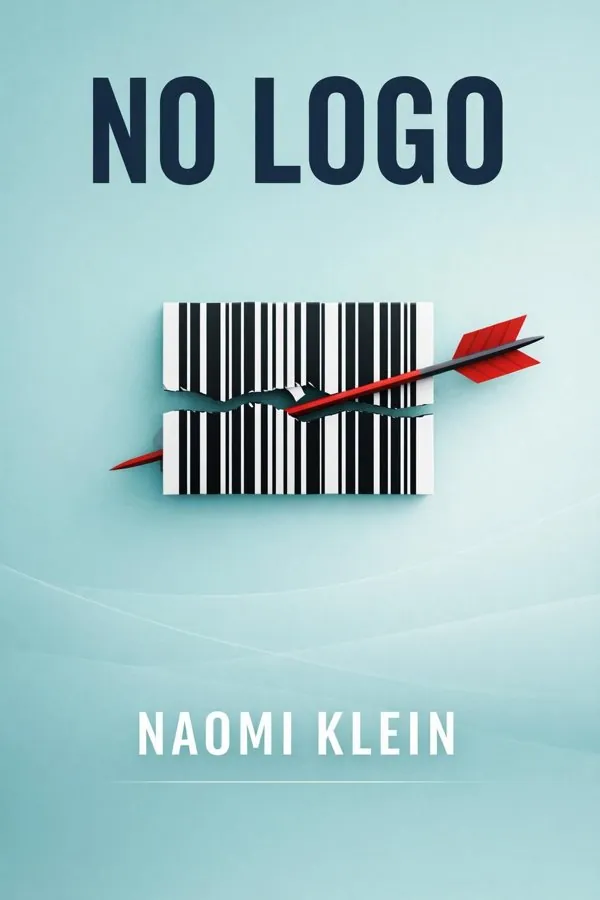
No Logo: Taking Aim at the Brand Bullies: Summary & Key Insights
by Naomi Klein
 10 min9 chaptersAudio available
What Is No Logo: Taking Aim at the Brand Bullies About?
No Logo: Taking Aim at the Brand Bullies by Naomi Klein is a politics book spanning 9 pages. No Logo is a groundbreaking critique of corporate globalization and the power of brands in shaping culture, politics, and identity. Naomi Klein explores how multinational corporations have extended their influence beyond products to dominate public spaces, labor practices, and even personal expression. The book dissects the rise of brand-driven marketing, the exploitation of workers in developing countries, and the growing resistance movements that challenge corporate dominance.
This FizzRead summary covers all 9 key chapters of No Logo: Taking Aim at the Brand Bullies in approximately 10 minutes, distilling the most important ideas, arguments, and takeaways from Naomi Klein's work. Also available as an audio summary and Key Quotes Podcast.
No Logo: Taking Aim at the Brand Bullies
No Logo is a groundbreaking critique of corporate globalization and the power of brands in shaping culture, politics, and identity. Naomi Klein explores how multinational corporations have extended their influence beyond products to dominate public spaces, labor practices, and even personal expression. The book dissects the rise of brand-driven marketing, the exploitation of workers in developing countries, and the growing resistance movements that challenge corporate dominance.
Who Should Read No Logo: Taking Aim at the Brand Bullies?
This book is perfect for anyone interested in politics and looking to gain actionable insights in a short read. Whether you're a student, professional, or lifelong learner, the key ideas from No Logo: Taking Aim at the Brand Bullies by Naomi Klein will help you think differently.
- ✓Readers who enjoy politics and want practical takeaways
- ✓Professionals looking to apply new ideas to their work and life
- ✓Anyone who wants the core insights of No Logo: Taking Aim at the Brand Bullies in just 10 minutes
Want the full summary?
Get instant access to this book summary and 100K+ more with Fizz Moment.
Get Free SummaryAvailable on App Store • Free to download
Key Chapters
In tracing the genealogy of branding, I wanted to understand how a set of simple marketing practices evolved into a cultural force. In the early twentieth century, advertising’s role was clear-cut: to distinguish one manufacturer’s product from another. But by the 1980s and 1990s, corporations like Nike and Apple began to sell meaning rather than merchandise. Nike’s swoosh became synonymous with personal triumph, Apple’s bitten apple with creative rebellion. These were not mere marketing gimmicks — they were ideological statements, and consumers began to adopt them as extensions of identity.
The shift was not accidental. It was the result of decades of corporate reorientation. Instead of competing through quality or price, corporations invested in building emotional universes around their logos. The brand became a living narrative, a vessel through which people articulated their aspirations. Yet this narrative demanded something in return: loyalty. Once branding became central, the boundaries between consumer and believer blurred. The brand promised not just utility but belonging.
However, this evolution carried social consequences. The more the brand became abstracted from the product, the less responsibility the corporation held for the realities of production. In other words, the more ethereal the corporate image became, the more obscured the factory floor grew. Advertising, once a bridge between producer and buyer, now served as a veil, hiding the sweat and struggle behind the glossy promise. This chapter sets the stage for understanding why to study the brand is, in truth, to examine power — cultural, economic, and moral.
As branding reached its zenith, the product itself began to vanish from corporate consciousness. I watched as major brands systematically withdrew from the act of making things. They didn’t stop selling — they stopped producing. Manufacturing was outsourced to a complex web of subcontractors scattered across the developing world, turning tangible labor into invisible work. This shift enabled corporations to focus entirely on image cultivation while transferring costs and accountability to distant suppliers.
Nike was a pioneer of this model. Its corporate headquarters thrived on design, sponsorship, and marketing, while its shoes were stitched together in factories across Indonesia and Vietnam. When journalists exposed the poor conditions in those factories, Nike’s response was telling: it claimed it didn’t own them. The brand was not a factory — it was an idea. This logic spread like wildfire. Companies discovered that the less they produced, the more nimble their profits seemed.
This disappearance of the product also transformed consumers. We no longer buy goods based on craftsmanship but on symbolism. The sweater, the phone, the burger — each becomes a carrier of meaning. Yet this abstraction has a cost. When products lose their substance, people lose their connection to reality. In a world ruled by brands, citizenship risks being replaced by consumption. Through this chapter, I wanted readers to see how this pattern not only disconnects us from the workers who make our goods but also from the material world itself.
+ 7 more chapters — available in the FizzRead app
All Chapters in No Logo: Taking Aim at the Brand Bullies
About the Author
Naomi Klein is a Canadian author, journalist, and activist known for her incisive critiques of corporate power and neoliberal globalization. Her works, including No Logo, The Shock Doctrine, and This Changes Everything, have made her one of the most influential voices in contemporary political and economic discourse.
Get This Summary in Your Preferred Format
Read or listen to the No Logo: Taking Aim at the Brand Bullies summary by Naomi Klein anytime, anywhere. FizzRead offers multiple formats so you can learn on your terms — all free.
Available formats: App · Audio · PDF · EPUB — All included free with FizzRead
Download No Logo: Taking Aim at the Brand Bullies PDF and EPUB Summary
Key Quotes from No Logo: Taking Aim at the Brand Bullies
“In tracing the genealogy of branding, I wanted to understand how a set of simple marketing practices evolved into a cultural force.”
“As branding reached its zenith, the product itself began to vanish from corporate consciousness.”
Frequently Asked Questions about No Logo: Taking Aim at the Brand Bullies
No Logo: Taking Aim at the Brand Bullies by Naomi Klein is a politics book that explores key ideas across 9 chapters. No Logo is a groundbreaking critique of corporate globalization and the power of brands in shaping culture, politics, and identity. Naomi Klein explores how multinational corporations have extended their influence beyond products to dominate public spaces, labor practices, and even personal expression. The book dissects the rise of brand-driven marketing, the exploitation of workers in developing countries, and the growing resistance movements that challenge corporate dominance.
More by Naomi Klein

The Shock Doctrine: The Rise of Disaster Capitalism
Naomi Klein
10 min
No Is Not Enough: Resisting Trump's Shock Politics and Winning the World We Need
Naomi Klein
10 min
Doppelganger: A Trip Into the Mirror World
Naomi Klein
10 min
The Battle for Paradise: Puerto Rico Takes on the Disaster Capitalists
Naomi Klein
10 minYou Might Also Like

Antifa: The Anti-Fascist Handbook
Mark Bray
10 min
Attack from Within: How Disinformation Is Sabotaging America
Barbara McQuade
10 min
Coercion, Capital, and European States, AD 990–1992
Charles Tilly
10 min
Digital Democracy: Concepts, Methodologies, Tools, and Applications
Various Authors
10 min
Fascism
Stanley G. Payne
10 min
Fire And Fury: Inside The Trump White House
Michael Wolff
10 minBrowse by Category
Ready to read No Logo: Taking Aim at the Brand Bullies?
Get the full summary and 100K+ more books with Fizz Moment.