
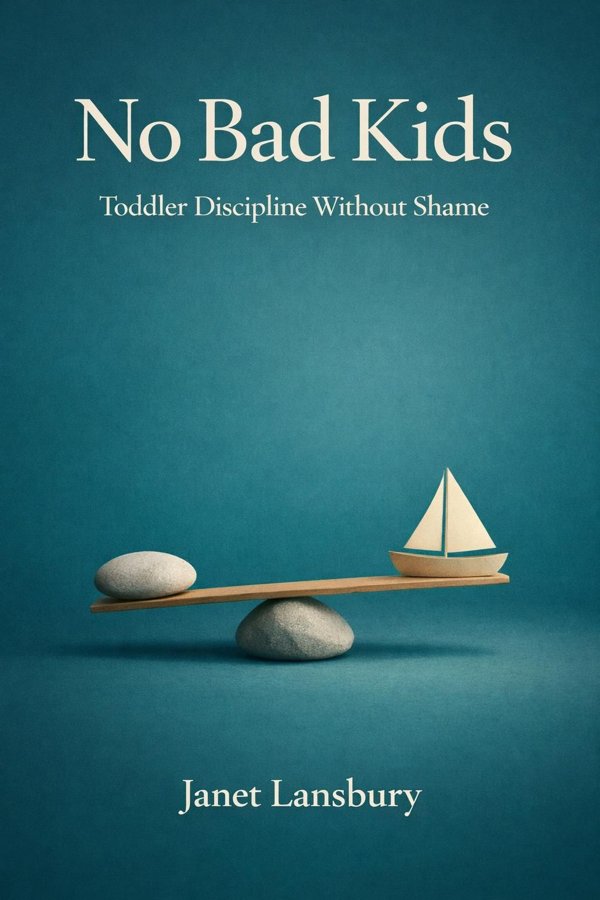
No Bad Kids: Toddler Discipline Without Shame: Summary & Key Insights
 10 min4 chaptersAudio available
What Is No Bad Kids: Toddler Discipline Without Shame About?
No Bad Kids: Toddler Discipline Without Shame by Janet Lansbury is a parenting book spanning 4 pages. This book by parenting expert Janet Lansbury offers practical guidance on disciplining toddlers with respect and empathy. Drawing from the principles of RIE (Resources for Infant Educarers), Lansbury emphasizes understanding children’s emotions, setting clear boundaries, and maintaining calm authority without resorting to shame or punishment. The book provides real-life examples and actionable advice for parents seeking to foster cooperation and emotional growth in their young children.
This FizzRead summary covers all 4 key chapters of No Bad Kids: Toddler Discipline Without Shame in approximately 10 minutes, distilling the most important ideas, arguments, and takeaways from Janet Lansbury's work. Also available as an audio summary and Key Quotes Podcast.
No Bad Kids: Toddler Discipline Without Shame
This book by parenting expert Janet Lansbury offers practical guidance on disciplining toddlers with respect and empathy. Drawing from the principles of RIE (Resources for Infant Educarers), Lansbury emphasizes understanding children’s emotions, setting clear boundaries, and maintaining calm authority without resorting to shame or punishment. The book provides real-life examples and actionable advice for parents seeking to foster cooperation and emotional growth in their young children.
Who Should Read No Bad Kids: Toddler Discipline Without Shame?
This book is perfect for anyone interested in parenting and looking to gain actionable insights in a short read. Whether you're a student, professional, or lifelong learner, the key ideas from No Bad Kids: Toddler Discipline Without Shame by Janet Lansbury will help you think differently.
- ✓Readers who enjoy parenting and want practical takeaways
- ✓Professionals looking to apply new ideas to their work and life
- ✓Anyone who wants the core insights of No Bad Kids: Toddler Discipline Without Shame in just 10 minutes
Want the full summary?
Get instant access to this book summary and 100K+ more with Fizz Moment.
Get Free SummaryAvailable on App Store • Free to download
Key Chapters
Every toddler, no matter how loving their environment or structured their routine, will inevitably test limits. From pulling hair to defying bedtime, these are not signs of defiance or disrespect; they are acts of exploration. I often tell parents to see this testing not as misbehavior but as a search for information. A toddler’s job is to figure out their world. When they test, they are asking: ‘Are you the leader I can trust? Are the boundaries real? Am I safe within them?’
Through RIE, I learned that setting boundaries is not about control, but about providing the security children need to blossom. Imagine a toddler who pushes against a fence. If the fence holds firm, they relax; they know where the edges lie. If it wobbles or disappears, they panic, unsure of what’s safe. Discipline works the same way. A consistent boundary is a silent message: “You are secure enough for me to be firm.”
When toddlers resist, they’re also experiencing the natural emergence of autonomy. They are learning to say “no” for the first time—a crucial developmental milestone. If we can meet that “no” with calm presence instead of anger or shame, we teach them that their emotions are acceptable even when their behavior is not. The parent’s role is to be the steady hand, the calm center. Our authority derives not from dominance but from our ability to remain anchored when our child cannot.
This approach demands self-awareness. When we find ourselves triggered, it’s often because our own fear or need for control is being tested. The moment we reframe our child’s behavior as a signal rather than an offense, we find compassion—both for them and for ourselves. In doing so, we begin to guide from understanding rather than from reaction.
+ 2 more chapters — available in the FizzRead app
All Chapters in No Bad Kids: Toddler Discipline Without Shame
About the Author
Janet Lansbury is an American parenting educator and author known for her work inspired by Magda Gerber’s RIE philosophy. She hosts the popular podcast 'Unruffled' and writes extensively on respectful parenting, focusing on nurturing children’s independence and emotional intelligence.
Get This Summary in Your Preferred Format
Read or listen to the No Bad Kids: Toddler Discipline Without Shame summary by Janet Lansbury anytime, anywhere. FizzRead offers multiple formats so you can learn on your terms — all free.
Available formats: App · Audio · PDF · EPUB — All included free with FizzRead
Download No Bad Kids: Toddler Discipline Without Shame PDF and EPUB Summary
Key Quotes from No Bad Kids: Toddler Discipline Without Shame
“Every toddler, no matter how loving their environment or structured their routine, will inevitably test limits.”
“Many parents hesitate to assert authority because they confuse firmness with harshness.”
Frequently Asked Questions about No Bad Kids: Toddler Discipline Without Shame
No Bad Kids: Toddler Discipline Without Shame by Janet Lansbury is a parenting book that explores key ideas across 4 chapters. This book by parenting expert Janet Lansbury offers practical guidance on disciplining toddlers with respect and empathy. Drawing from the principles of RIE (Resources for Infant Educarers), Lansbury emphasizes understanding children’s emotions, setting clear boundaries, and maintaining calm authority without resorting to shame or punishment. The book provides real-life examples and actionable advice for parents seeking to foster cooperation and emotional growth in their young children.
You Might Also Like
Never Enough
Jennifer Breheny Wallace
10 min
Bluey: Sleepytime
Joe Brumm
10 min
In My Heart: A Book of Feelings
Jo Witek
10 min
Love From The Crayons
Drew Daywalt, Oliver Jeffers
10 min
Pete The Cat: Big Easter Adventure
James Dean, Kimberly Dean
10 min
Smart Money Smart Kids: Raising the Next Generation to Win with Money
Dave Ramsey, Rachel Cruze
10 minBrowse by Category
Ready to read No Bad Kids: Toddler Discipline Without Shame?
Get the full summary and 100K+ more books with Fizz Moment.