
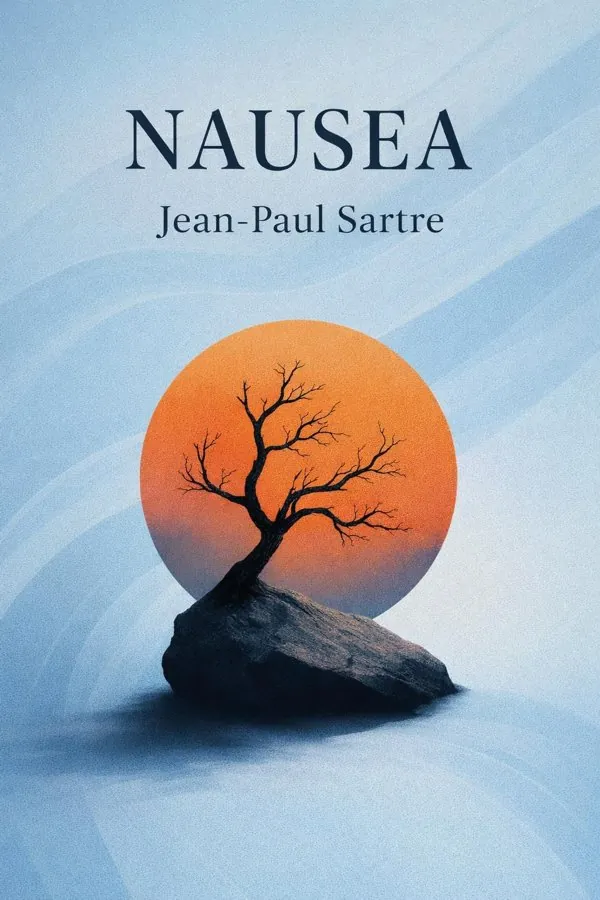
Nausea: Summary & Key Insights
 10 min9 chaptersAudio available
Key Takeaways from Nausea
The most unsettling moments in life are often not dramatic crises but quiet instants when the familiar suddenly becomes strange.
Sometimes meaning does not disappear because life is empty, but because existence is too full.
One of Sartre’s boldest claims is that nothing in human life carries built-in necessity—not our identities, histories, or social arrangements.
We often look to love and memory to rescue life from absurdity, yet Sartre shows how fragile those refuges can be.
Good intentions do not guarantee a true understanding of humanity.
What Is Nausea About?
Nausea by Jean-Paul Sartre is a western_phil book spanning 4 pages. Originally published in 1938, Nausea is Jean-Paul Sartre’s groundbreaking philosophical novel about what happens when the ordinary world loses its comforting familiarity. Through the diary of Antoine Roquentin, a solitary historian living in the provincial town of Bouville, Sartre dramatizes a disturbing realization: things do not possess neat, necessary meanings simply because we want them to. Objects, routines, relationships, and even personal identity begin to appear radically contingent—present for no ultimate reason. This confrontation produces the feeling Roquentin calls “nausea,” a visceral awareness of existence stripped of illusion. More than a story of private breakdown, the novel is one of the earliest and most powerful literary expressions of existentialism. It asks questions that remain urgent today: What gives life meaning when inherited certainties collapse? How do we live when the world no longer feels ordered? Can art, love, or action redeem our condition? Sartre, one of the twentieth century’s defining philosophers, turns abstract ideas into lived experience, making Nausea both intellectually challenging and emotionally unforgettable.
This FizzRead summary covers all 9 key chapters of Nausea in approximately 10 minutes, distilling the most important ideas, arguments, and takeaways from Jean-Paul Sartre's work. Also available as an audio summary and Key Quotes Podcast.
Nausea
Originally published in 1938, Nausea is Jean-Paul Sartre’s groundbreaking philosophical novel about what happens when the ordinary world loses its comforting familiarity. Through the diary of Antoine Roquentin, a solitary historian living in the provincial town of Bouville, Sartre dramatizes a disturbing realization: things do not possess neat, necessary meanings simply because we want them to. Objects, routines, relationships, and even personal identity begin to appear radically contingent—present for no ultimate reason. This confrontation produces the feeling Roquentin calls “nausea,” a visceral awareness of existence stripped of illusion. More than a story of private breakdown, the novel is one of the earliest and most powerful literary expressions of existentialism. It asks questions that remain urgent today: What gives life meaning when inherited certainties collapse? How do we live when the world no longer feels ordered? Can art, love, or action redeem our condition? Sartre, one of the twentieth century’s defining philosophers, turns abstract ideas into lived experience, making Nausea both intellectually challenging and emotionally unforgettable.
Who Should Read Nausea?
This book is perfect for anyone interested in western_phil and looking to gain actionable insights in a short read. Whether you're a student, professional, or lifelong learner, the key ideas from Nausea by Jean-Paul Sartre will help you think differently.
- ✓Readers who enjoy western_phil and want practical takeaways
- ✓Professionals looking to apply new ideas to their work and life
- ✓Anyone who wants the core insights of Nausea in just 10 minutes
Want the full summary?
Get instant access to this book summary and 100K+ more with Fizz Moment.
Get Free SummaryAvailable on App Store • Free to download
Key Chapters
The most unsettling moments in life are often not dramatic crises but quiet instants when the familiar suddenly becomes strange. Antoine Roquentin begins as a man who believes he is anchored by routine and scholarship. Living alone in Bouville, he spends his days researching the Marquis de Rollebon, expecting that facts, archives, and historical method will provide stability. Instead, his daily life slowly loses its ordinary texture. A glass of beer, a pebble, a hand, a tree root—common things begin to appear excessive, dense, and oddly intrusive. They no longer fit into the tidy categories that usually make the world manageable.
This shift is not mere moodiness. Sartre shows alienation as the breaking of familiarity itself. Roquentin can no longer rely on social habits or language to keep reality at a safe distance. He sees that people usually live by skimming over existence, treating objects as useful and identities as settled. But once that veil slips, the world appears raw and unassimilable. He is not simply lonely; he is estranged from the very structures that organize experience.
This idea has practical resonance. Many people encounter smaller versions of Roquentin’s crisis when a career loses meaning, a city starts to feel unreal, or a long-held identity no longer fits. Moments of burnout, grief, or transition can expose how much of normal life depends on unexamined assumptions. What once seemed natural may suddenly feel constructed.
Sartre does not offer easy comfort. Instead, he invites us to notice how much of our sense of order rests on habit. The discomfort of estrangement can become a philosophical awakening. Actionable takeaway: when life feels strangely unfamiliar, resist the urge to numb it immediately; instead, ask which routines or labels you have mistaken for solid truth.
Sometimes meaning does not disappear because life is empty, but because existence is too full. Roquentin’s nausea is not ordinary disgust, illness, or anxiety. It is the bodily and mental shock of encountering being itself—things existing without justification, essence, or necessity. Sartre turns a philosophical claim into a physical sensation: the world is not arranged according to human expectations, and when we perceive that fact directly, it can feel intolerable.
Roquentin realizes that objects are not securely contained by the names we give them. A bench is not simply “a bench”; a stone is not simply “a stone.” These words usually domesticate reality, making it seem stable and understandable. But beneath language lies brute existence: things simply are. Their presence exceeds every concept. This is why he experiences reality as sticky, excessive, and superfluous. Existence is contingent—it might not have been, and yet here it is.
In modern life, we often protect ourselves from this insight through constant activity, productivity, and screens. We reduce the world to functions: coffee as fuel, people as roles, time as tasks. But occasionally a pause opens—during insomnia, travel, illness, or solitude—and the sheer fact of existence presses in. We may not call it nausea, but we recognize the vertigo.
Sartre’s insight helps explain why existential unease cannot always be solved by better planning or more success. The problem is deeper than circumstance. It concerns our relation to being itself. Yet naming the experience can make it less opaque. Roquentin shows that dread may arise not from failure, but from seeing too clearly.
Actionable takeaway: when confronted by existential discomfort, try describing precisely what feels excessive or groundless; giving shape to the experience can turn vague panic into conscious reflection.
One of Sartre’s boldest claims is that nothing in human life carries built-in necessity—not our identities, histories, or social arrangements. Roquentin’s discovery of contingency means that existence is not governed by a hidden script. Things happen, endure, and vanish without ultimate reason. This realization strips away the comforting belief that the world is naturally ordered around purpose.
Roquentin’s historical research becomes central here. He initially treats the life of Rollebon as if the past could reveal coherent meaning. History promises causality, sequence, and significance. But the more he investigates, the more he senses that narrative order is imposed after the fact. Facts do not speak for themselves. Human beings select, arrange, and interpret them to create the illusion of necessity. What appears meaningful in retrospect may have been accidental, incoherent, or arbitrary while it was being lived.
This matters far beyond literature. We often narrate our own lives as if every setback “had to happen” or every success proves destiny. Organizations tell stories about mission and culture that conceal randomness and power. Nations convert contingency into fate through myths of progress or identity. Sartre pushes us to see how often coherence is retrospective storytelling.
Yet contingency is not only frightening. If nothing is guaranteed by essence or destiny, then change is possible. A failed career path is not your nature. A social role is not your permanent truth. A painful past does not dictate a fixed future. Contingency undermines excuses as much as it destroys certainties.
Sartre’s point is demanding: we cannot rely on necessity to justify ourselves. But that same absence of prewritten meaning opens a field of freedom. Actionable takeaway: examine one personal story you tell as inevitable, and rewrite it as one contingent path among many possible lives.
We often look to love and memory to rescue life from absurdity, yet Sartre shows how fragile those refuges can be. Roquentin’s memories of Anny, a woman he once loved, carry emotional weight because she represents a different way of inhabiting the world. In his recollection, Anny devoted herself to creating “perfect moments,” experiences shaped by timing, atmosphere, gesture, and emotional rhythm. She tried to impose style and significance on passing life, as though beauty could justify existence.
For Roquentin, Anny becomes associated with order, intimacy, and human meaning. Memory transforms her into a counterforce to contingency. If existence feels formless, perhaps love once gave it form. If the present feels absurd, perhaps the past contained genuine necessity. But when they meet again, this hope collapses. Anny is no magical answer. She too is marked by disappointment, fatigue, and the erosion of ideals. Their reunion exposes the gap between remembered meaning and lived reality.
Sartre’s treatment of memory is psychologically acute. We often curate the past to protect ourselves from the uncertainty of the present. A former relationship, a vanished city, a youthful ambition—these become containers for imagined coherence. But memory is not neutral; it selects, edits, and beautifies. We do not just remember meaning—we manufacture it.
That does not make love or memory worthless. It means they cannot permanently solve the problem of existence. No person can bear the burden of justifying the world for us. No past experience can freeze meaning in place. Human connections matter, but they remain vulnerable, contingent, and unfinished.
Actionable takeaway: when nostalgia feels overwhelming, ask whether you miss the actual person or period—or the sense of order you once projected onto it.
Good intentions do not guarantee a true understanding of humanity. One of the novel’s most revealing figures is the Self-Taught Man, a cheerful autodidact who spends his days reading through the library in alphabetical order. He presents himself as a defender of universal humanism, praising culture, progress, and love of mankind. At first, he seems like Roquentin’s opposite: sociable where Roquentin is withdrawn, optimistic where Roquentin is skeptical. Yet Sartre uses him to expose the weakness of abstract humanism when it is detached from genuine self-knowledge.
The Self-Taught Man loves “humanity” in general, but his relation to actual people is awkward, sentimental, and evasive. His ideals function as a shield against reality. He clings to uplifting formulas because he cannot face ambiguity, desire, and bad faith in himself or others. His eventual humiliation reveals how fragile this polished moral identity really is.
Sartre’s critique still feels contemporary. Many people embrace large, flattering ideas—humanity, community, inclusion, civilization—without confronting the complexities of their own motives. Institutions do the same, using moral language to conceal vanity, conformity, or repression. It is easier to love mankind in theory than to face the discomfort of concrete relationships and difficult truths.
This does not mean Sartre rejects concern for others. Rather, he rejects prefabricated humanism that treats “the human” as a comforting abstraction. Real ethical life begins when we stop hiding behind noble slogans and examine how we actually relate to freedom, responsibility, and other people.
The Self-Taught Man warns against using ideals as psychological décor. Actionable takeaway: whenever you describe yourself with a moral label—open-minded, compassionate, humane—test it against a specific recent action rather than a general self-image.
We often turn to the past hoping it will explain who we are, but Sartre suggests that historical knowledge can become a refuge from living. Roquentin begins Nausea immersed in a biographical study of the Marquis de Rollebon. The project appears respectable and purposeful: by reconstructing a life from documents, letters, and evidence, he believes he can inhabit a realm of objective meaning. The past seems safer than the unstable present because it can be arranged into narrative.
As his existential crisis deepens, however, Roquentin loses confidence in the entire enterprise. The figure of Rollebon starts to look less like a discoverable truth and more like a projection assembled from fragments. Historical method may produce plausible accounts, but it cannot deliver necessity. Roquentin realizes that his research has also served as avoidance. By interpreting another man’s life, he has postponed the harder task of confronting his own existence.
This tension remains highly relevant. People bury themselves in data, ancestry, theory, or biography to escape immediate decisions. Scholars, professionals, and even casual learners can become collectors of explanation while remaining passive in their own lives. Understanding context matters, but it can turn into a defense against freedom. Knowing why things happened is not the same as knowing how to live now.
Sartre does not dismiss history altogether. He shows its limits. The past can illuminate, but it cannot provide a final ground for the self. No archive can tell us what our life must mean. At some point, interpretation ends and choice begins.
Roquentin’s abandonment of his historical project marks a painful but necessary shift from analysis to existence. Actionable takeaway: notice whether one intellectual project in your life is clarifying reality—or helping you postpone a choice you already know you must make.
Most of the time, words protect us from reality by making it seem already understood. Sartre shows that language and social categories are practical necessities, but they also tempt us into what existentialism later calls bad faith: treating fluid, contingent existence as if it were fixed and fully defined. Roquentin notices this when everyday labels stop working. Once names loosen, he sees how much we rely on them to keep the world orderly.
A waiter, a scholar, a lover, a respectable citizen—these identities are useful shorthand, yet people often mistake them for essence. We say, “That’s just who I am,” as if a role could settle the matter of existence. Institutions encourage the same reduction because stable labels are easier to manage than freedom. Bouville itself embodies this tendency: bourgeois society prefers classifications, routines, and polished appearances over ambiguity.
Roquentin’s crisis reveals the cost of this arrangement. When categories crack, many people feel panic because they discover they are not identical with any function they perform. The office title disappears, the relationship ends, the reputation falters, and the self becomes uncertain again. Sartre does not see this uncertainty as a defect. It is evidence that existence exceeds the boxes we put around it.
In practical terms, this insight can help with major transitions—retirement, job loss, migration, parenthood, divorce, or reinvention. The suffering in such moments often comes not only from change itself but from the collapse of a label that once organized reality. Recognizing that labels are tools, not essences, creates room to act more honestly.
Actionable takeaway: choose one role you strongly identify with and complete the sentence “I am more than…” to loosen the grip of that category on your sense of self.
When life refuses to provide inherent meaning, can creation still make something worth affirming? Near the end of Nausea, Sartre offers his most delicate and qualified answer through art. Roquentin is moved by a jazz recording, and this experience suggests that while existence may be contingent, human beings can still create forms that confer order, necessity, and beauty within time. Art does not abolish absurdity, but it can shape it.
This matters because Roquentin has discovered that neither history, memory, nor abstract humanism can rescue him. Yet the song he hears possesses a kind of internal necessity. It does not justify the universe, but it shows that arrangement is possible. Someone composed it, performed it, and gave contour to passing experience. In that sense, art becomes an answer not because it reveals eternal truth, but because it demonstrates an act of making.
Sartre’s idea applies broadly. Writing a poem, designing a room, cooking a meal with care, composing music, building a thoughtful business, or crafting a meaningful ritual—these are all ways of imposing form on contingency. Creation is not denial of absurdity; it is a response to it. The point is not perfection or fame, but the transformation of passive existence into intentional expression.
Importantly, Sartre does not romanticize art as escape. It cannot erase death, loneliness, or contingency. But it can offer a mode of transcendence within immanence: a humanly made order that is neither guaranteed by God nor handed down by tradition. This makes artistic practice existentially serious.
Actionable takeaway: make one small thing this week—a paragraph, playlist, sketch, meal, or ritual—not for productivity, but to experience the freedom of giving form to the formless.
The cruel gift of Nausea is that once false meanings fall away, freedom becomes impossible to ignore. Roquentin’s journey is often read only as descent into despair, but Sartre is doing something more demanding. He strips away borrowed meanings so that a different possibility can emerge: if life has no fixed essence, then meaning must be made rather than discovered ready-made. This is not comforting freedom. It is burdened, exposed, and inescapable.
Throughout the novel, Roquentin searches for something that will relieve him of this burden—history, memory, romantic reunion, social belonging, humanist ideals. Each fails because each promises a prefabricated significance. By the end, he begins to suspect that the task is not to uncover necessity but to assume authorship. Freedom appears only after illusions collapse, because as long as we believe meaning is guaranteed from outside, we can avoid responsibility.
This insight reaches beyond philosophy into everyday life. People often wait for certainty before acting: the perfect vocation, the unmistakable calling, the relationship that proves itself, the identity that feels complete. Sartre suggests that such certainty may never come. We choose under conditions of ambiguity, and our choices help create the meanings we later inhabit.
That does not make every choice arbitrary. It makes commitment essential. Freedom is not the ability to float above life; it is the necessity of taking ownership within contingency. Roquentin’s final turn toward artistic creation signals precisely this shift from passive diagnosis to possible action.
Actionable takeaway: stop asking what your life is “meant” to be in the abstract, and instead choose one project, relationship, or discipline through which you will actively give it shape.
All Chapters in Nausea
About the Author
Jean-Paul Sartre (1905–1980) was a French philosopher, novelist, playwright, literary critic, and political thinker whose work shaped modern existentialism. Educated at the École Normale Supérieure, he became famous for exploring freedom, responsibility, consciousness, and the problem of living without fixed moral or metaphysical foundations. His major works include Nausea, Being and Nothingness, No Exit, and Existentialism Is a Humanism. Sartre wrote not only philosophy but also fiction and drama, believing that ideas should be tested in lived experience. He was also a major public intellectual, deeply engaged in political debates of his era. In 1964, he was awarded the Nobel Prize in Literature, which he declined, insisting that a writer should not become an institution.
Get This Summary in Your Preferred Format
Read or listen to the Nausea summary by Jean-Paul Sartre anytime, anywhere. FizzRead offers multiple formats so you can learn on your terms — all free.
Available formats: App · Audio · PDF · EPUB — All included free with FizzRead
Download Nausea PDF and EPUB Summary
Key Quotes from Nausea
“The most unsettling moments in life are often not dramatic crises but quiet instants when the familiar suddenly becomes strange.”
“Sometimes meaning does not disappear because life is empty, but because existence is too full.”
“One of Sartre’s boldest claims is that nothing in human life carries built-in necessity—not our identities, histories, or social arrangements.”
“We often look to love and memory to rescue life from absurdity, yet Sartre shows how fragile those refuges can be.”
“Good intentions do not guarantee a true understanding of humanity.”
Frequently Asked Questions about Nausea
Nausea by Jean-Paul Sartre is a western_phil book that explores key ideas across 9 chapters. Originally published in 1938, Nausea is Jean-Paul Sartre’s groundbreaking philosophical novel about what happens when the ordinary world loses its comforting familiarity. Through the diary of Antoine Roquentin, a solitary historian living in the provincial town of Bouville, Sartre dramatizes a disturbing realization: things do not possess neat, necessary meanings simply because we want them to. Objects, routines, relationships, and even personal identity begin to appear radically contingent—present for no ultimate reason. This confrontation produces the feeling Roquentin calls “nausea,” a visceral awareness of existence stripped of illusion. More than a story of private breakdown, the novel is one of the earliest and most powerful literary expressions of existentialism. It asks questions that remain urgent today: What gives life meaning when inherited certainties collapse? How do we live when the world no longer feels ordered? Can art, love, or action redeem our condition? Sartre, one of the twentieth century’s defining philosophers, turns abstract ideas into lived experience, making Nausea both intellectually challenging and emotionally unforgettable.
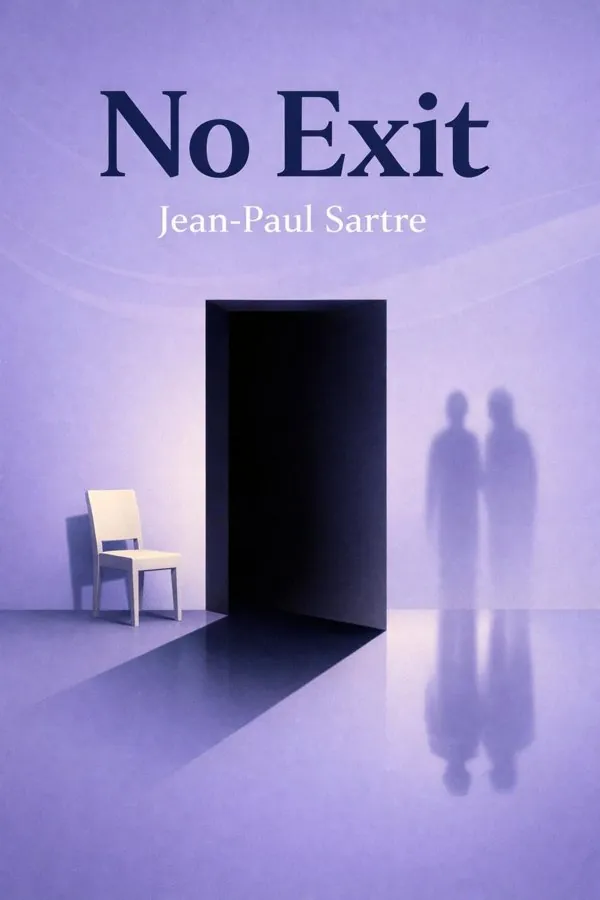
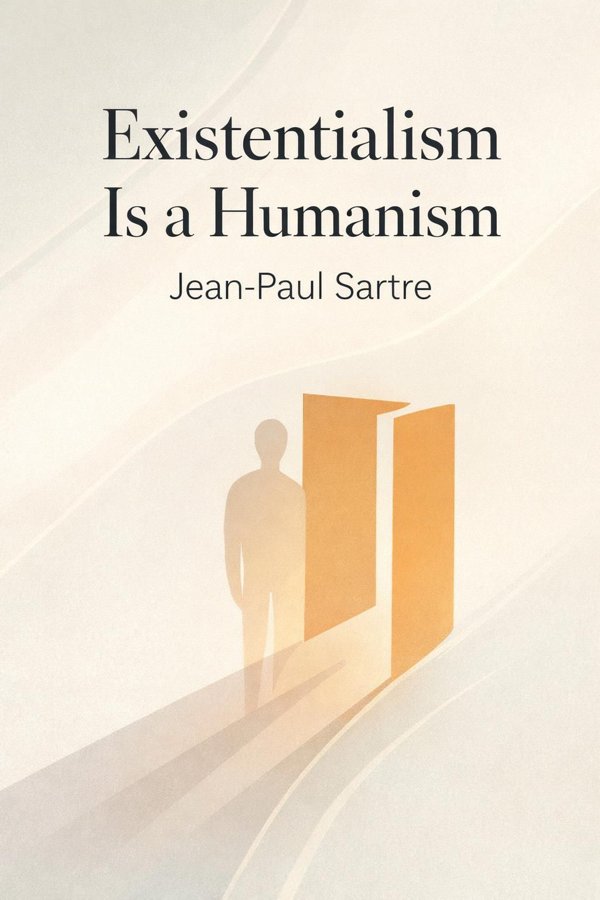
More by Jean-Paul Sartre

You Might Also Like
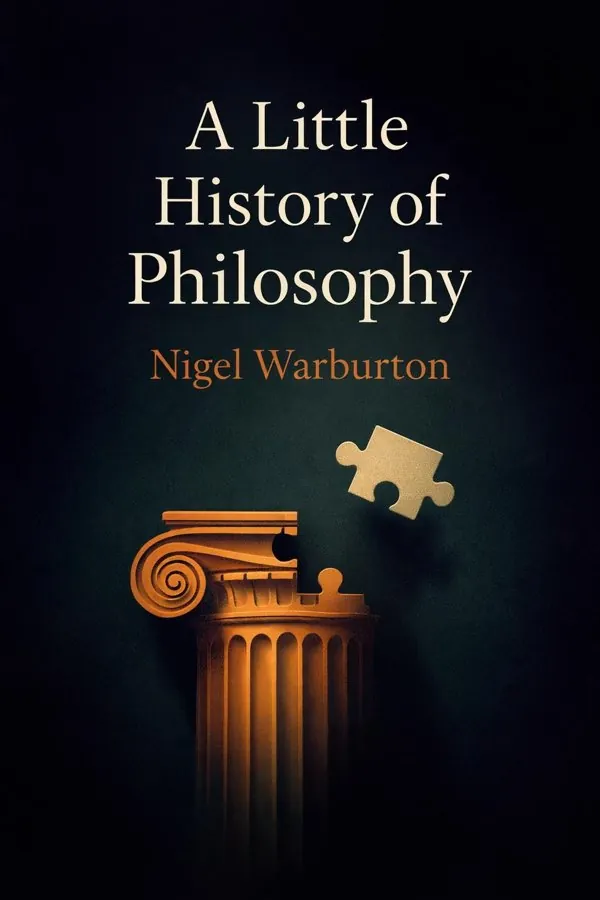
A Little History of Philosophy
Nigel Warburton
10 min
Areopagitica
John Milton
10 min
How To Think Like A Philosopher: Essential Principles For Clear Thinking
Peter Cave
10 min
Language, Truth and Logic
A. J. Ayer
10 min
The Age of Reason
Thomas Paine
10 min
The Essays
Michel De Montaigne
10 minBrowse by Category
Ready to read Nausea?
Get the full summary and 100K+ more books with Fizz Moment.