
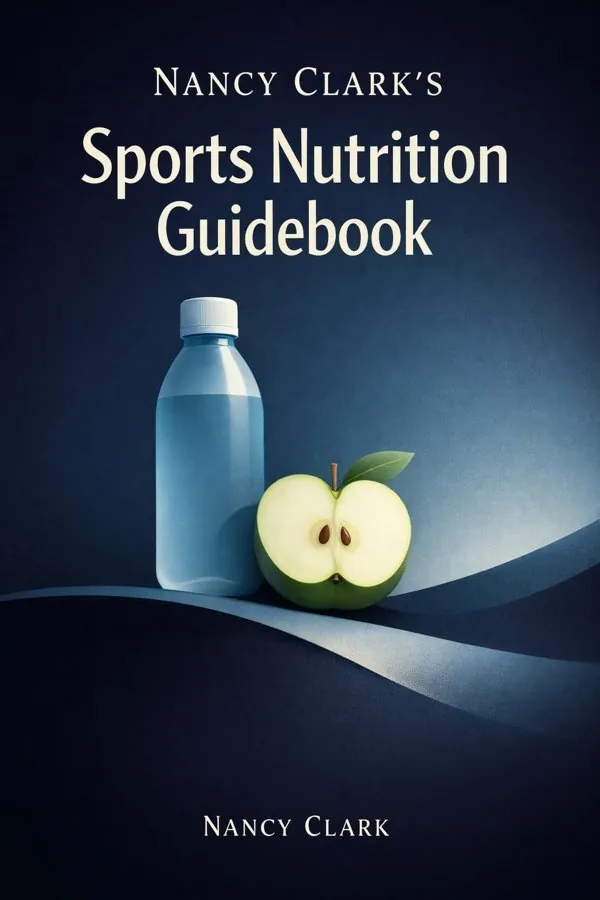
Nancy Clark's Sports Nutrition Guidebook: Summary & Key Insights
by Nancy Clark
 10 min9 chaptersAudio available
Key Takeaways from Nancy Clark's Sports Nutrition Guidebook
One of the most damaging nutrition mistakes athletes make is assuming that eating less will somehow help them perform more.
In sports nutrition, few nutrients have been as misunderstood as carbohydrates.
Many athletes obsess over protein shakes while overlooking the larger truth: protein matters most when it is consumed consistently as part of a balanced eating pattern.
Athletes often hear simple advice like "stay hydrated," but Clark shows that hydration is more nuanced than carrying a bottle and hoping for the best.
What you eat matters, but when you eat can be just as important.
What Is Nancy Clark's Sports Nutrition Guidebook About?
Nancy Clark's Sports Nutrition Guidebook by Nancy Clark is a nutrition book spanning 7 pages. Nancy Clark's Sports Nutrition Guidebook is a practical, evidence-based manual for athletes, exercisers, and anyone who wants to use food to support performance, recovery, and long-term health. Rather than promoting rigid diet rules or trendy eating plans, Nancy Clark explains how real people can fuel real training with balanced meals, smart timing, and realistic habits. The book covers the essentials of sports nutrition—calories, carbohydrates, protein, fats, hydration, weight management, supplements, and competition-day eating—while also addressing the emotional side of food and body image. What makes this guide especially valuable is its common-sense approach. Clark does not write only for elite competitors; she speaks to runners, cyclists, team-sport athletes, gym-goers, and active individuals who want reliable guidance they can actually follow. Her advice is grounded in decades of counseling athletes and interpreting nutrition science for everyday use. As a respected sports dietitian with experience working with Olympians, students, and recreational exercisers, Clark brings both credibility and compassion. The result is a guidebook that helps readers stop guessing about nutrition and start eating in ways that make them stronger, healthier, and more confident.
This FizzRead summary covers all 9 key chapters of Nancy Clark's Sports Nutrition Guidebook in approximately 10 minutes, distilling the most important ideas, arguments, and takeaways from Nancy Clark's work. Also available as an audio summary and Key Quotes Podcast.
Nancy Clark's Sports Nutrition Guidebook
Nancy Clark's Sports Nutrition Guidebook is a practical, evidence-based manual for athletes, exercisers, and anyone who wants to use food to support performance, recovery, and long-term health. Rather than promoting rigid diet rules or trendy eating plans, Nancy Clark explains how real people can fuel real training with balanced meals, smart timing, and realistic habits. The book covers the essentials of sports nutrition—calories, carbohydrates, protein, fats, hydration, weight management, supplements, and competition-day eating—while also addressing the emotional side of food and body image.
What makes this guide especially valuable is its common-sense approach. Clark does not write only for elite competitors; she speaks to runners, cyclists, team-sport athletes, gym-goers, and active individuals who want reliable guidance they can actually follow. Her advice is grounded in decades of counseling athletes and interpreting nutrition science for everyday use. As a respected sports dietitian with experience working with Olympians, students, and recreational exercisers, Clark brings both credibility and compassion. The result is a guidebook that helps readers stop guessing about nutrition and start eating in ways that make them stronger, healthier, and more confident.
Who Should Read Nancy Clark's Sports Nutrition Guidebook?
This book is perfect for anyone interested in nutrition and looking to gain actionable insights in a short read. Whether you're a student, professional, or lifelong learner, the key ideas from Nancy Clark's Sports Nutrition Guidebook by Nancy Clark will help you think differently.
- ✓Readers who enjoy nutrition and want practical takeaways
- ✓Professionals looking to apply new ideas to their work and life
- ✓Anyone who wants the core insights of Nancy Clark's Sports Nutrition Guidebook in just 10 minutes
Want the full summary?
Get instant access to this book summary and 100K+ more with Fizz Moment.
Get Free SummaryAvailable on App Store • Free to download
Key Chapters
One of the most damaging nutrition mistakes athletes make is assuming that eating less will somehow help them perform more. Nancy Clark challenges this mindset by showing that energy balance—not chronic restriction—is the true foundation of fitness, recovery, and long-term health. The body is not a machine that can be pushed harder while being underfueled indefinitely. When calorie intake falls short of training demands, athletes often experience fatigue, poor recovery, mood changes, increased injury risk, disrupted hormones, and stalled performance.
Clark emphasizes that calories are not the enemy. They are usable energy that powers movement, supports immune function, repairs tissue, and keeps basic physiology working properly. This is especially important for active people who train regularly yet underestimate how much fuel they need. A runner doing double sessions, a teenager in team sports, or a recreational cyclist training for a long event may all need substantially more food than they assume. Undereating can also happen unintentionally when busy schedules, appetite suppression after exercise, or weight concerns interfere with normal eating.
The book encourages readers to think in terms of fueling adequately across the day, not merely counting calories in isolation. A balanced breakfast, lunch, dinner, and snacks can prevent the energy crashes and overeating cycles that come from long gaps without food. For example, an athlete who skips breakfast and tries to "be good" all day often ends up ravenous at night. Eating more consistently leads to steadier energy, better workouts, and better food choices.
The practical lesson is simple: match food intake to training demands instead of treating hunger as a weakness. Start by asking whether your current eating pattern supports your workload, and aim to fuel your body before it falls into an energy deficit.
In sports nutrition, few nutrients have been as misunderstood as carbohydrates. Clark makes a clear and persuasive case that carbs are not a nutritional villain but the body’s preferred fuel for moderate- to high-intensity activity. Whether you are running intervals, playing soccer, swimming laps, lifting hard, or racing long distances, your muscles rely heavily on stored carbohydrate in the form of glycogen. When those stores are depleted, performance usually drops before motivation does.
The book pushes back against low-carb trends that may appeal to athletes trying to lose weight or "eat clean" but often leave them flat, sluggish, and unable to train at their best. Clark explains that the amount of carbohydrate a person needs depends on training volume, intensity, body size, and sport. A casual walker does not need to eat like a marathoner, but a serious endurance athlete should not fear rice, pasta, potatoes, fruit, or bread. These foods are practical tools for fueling work.
Clark also shows how timing matters. Carbohydrates before exercise can top off fuel stores, during long sessions they can maintain energy, and after training they help replenish glycogen for the next workout. Everyday examples make this easy to understand: oatmeal and banana before a morning ride, a sports drink during a long run, or a turkey sandwich and fruit after practice.
Importantly, the message is not to eat sugar recklessly. It is to choose carbohydrates strategically and appropriately. Whole grains, dairy, beans, fruits, and starchy vegetables all have a place, while quick-digesting carbs are sometimes useful around exercise.
The takeaway is practical and liberating: if you want to train hard, recover well, and avoid unnecessary fatigue, stop fearing carbohydrates and start using them intentionally as performance fuel.
Many athletes obsess over protein shakes while overlooking the larger truth: protein matters most when it is consumed consistently as part of a balanced eating pattern. Clark explains that protein is essential for rebuilding muscle tissue, supporting adaptation to training, maintaining immune function, and helping the body recover from exercise stress. But more is not always better, and huge single servings do not compensate for poor habits across the rest of the day.
A central insight in the book is that active people benefit from distributing protein intake throughout the day rather than saving most of it for dinner. Muscles repair more effectively when they receive repeated opportunities for recovery. That means breakfast, lunch, snacks, and post-exercise meals all count. Yogurt at breakfast, beans in a grain bowl, milk after training, eggs, tofu, fish, chicken, or a sandwich can all contribute meaningfully.
Clark also clarifies that most athletes can meet their needs through ordinary food. Protein powders and bars may be convenient, but they are not mandatory. A smoothie made with milk, a peanut butter sandwich, cottage cheese with fruit, or leftover chicken and rice can work just as well in many situations. She encourages readers to stop seeing protein as a magic nutrient and instead understand its role alongside carbohydrate and total energy intake.
For strength athletes, endurance athletes, and recreational exercisers alike, the point is not to chase extremes. It is to eat enough protein to support adaptation without letting protein displace needed carbohydrates or lead to rigid food rules. A hard-training athlete who eats ample protein but skimps on overall calories or carbs may still struggle to recover.
The actionable takeaway: include a solid protein source in each meal and recovery snack, but remember that protein works best as part of an overall fueling strategy—not as a standalone fix.
Athletes often hear simple advice like "stay hydrated," but Clark shows that hydration is more nuanced than carrying a bottle and hoping for the best. Proper fluid balance affects endurance, temperature regulation, concentration, and perceived effort. Too little fluid can impair performance, but overdrinking can also create problems, especially during long events. Good hydration is about matching fluid and electrolyte intake to the situation.
Clark explains that sweat losses vary dramatically between individuals. Two athletes training side by side in similar conditions may lose very different amounts of fluid and sodium. Climate, workout intensity, body size, fitness level, and clothing all influence hydration needs. That is why one-size-fits-all rules often fail. Instead of forcing everyone to drink as much as possible, she encourages a personalized approach based on thirst, body-weight changes, urine color trends, and experience.
The book is especially helpful in explaining when water is enough and when sports drinks make sense. For shorter or lower-intensity sessions, water may be perfectly adequate. But during prolonged exercise, especially in heat, drinks containing carbohydrate and sodium can help replace losses and sustain performance. Salty sweaters, endurance racers, and athletes competing for several hours may need to pay closer attention to electrolyte replacement.
Clark also addresses common mistakes: starting exercise dehydrated, ignoring fluids because of a busy day, or consuming excessive plain water during long races. Practical habits such as drinking regularly with meals, carrying fluids during training, and testing hydration plans before competition can make a big difference.
The takeaway is to create a hydration routine that fits your body and sport. Pay attention to your sweat patterns, practice during training, and treat hydration as a skill—not an afterthought.
What you eat matters, but when you eat can be just as important. Clark highlights meal timing as one of the most practical ways athletes can improve both performance and recovery without dramatically changing what they already eat. Training on empty, waiting too long after exercise to refuel, or eating unfamiliar foods right before competition can all undermine otherwise solid nutrition.
The book breaks the day into useful nutrition windows. Before exercise, the goal is to arrive fueled but comfortable. That might mean a full meal three to four hours before an event, or a lighter snack one hour before training. Foods should be familiar, digestible, and rich in carbohydrate, with enough protein to support satiety if time allows. Examples include toast with peanut butter, cereal and milk, pasta with chicken, or a banana and yogurt.
During exercise, timing depends on duration and intensity. A short gym session may need nothing more than water, while a two-hour ride or marathon training run may require planned carbohydrate intake along the way. After training, the body is primed to replenish glycogen, repair muscle, and rehydrate. Clark encourages athletes to stop postponing recovery meals, especially after hard sessions. A smoothie, chocolate milk, rice bowl, sandwich, or balanced dinner soon after exercise can reduce excessive fatigue later in the day.
She also reinforces that meal timing should support real life. Students with early practice, workers squeezing in lunchtime workouts, and parents training around family schedules all need flexible strategies. Planning snacks in advance often matters more than designing the perfect diet.
The actionable takeaway: build your eating pattern around your training schedule. Fuel before, support during when needed, and recover promptly after—because well-timed nutrition turns hard work into actual adaptation.
A powerful theme in Clark’s guidebook is that body weight and body composition should be approached with caution, realism, and respect for health. In many sports, athletes feel intense pressure to become lighter, leaner, or more "disciplined," often believing that weight loss automatically leads to better results. Clark counters this oversimplified thinking by showing that aggressive dieting frequently damages the very performance athletes are trying to improve.
When people cut calories too hard, eliminate major food groups, or chase an unrealistic body ideal, they often lose energy, strength, concentration, and enjoyment. Hormonal disruption, menstrual dysfunction, stress fractures, lowered immunity, and burnout can follow. The body needs energy to train, recover, and adapt. A leaner physique is not helpful if it comes with chronic fatigue and reduced power output.
Clark also reviews the appeal and limitations of popular diet styles, from low-carb plans to intermittent fasting and other restrictive approaches. While some individuals may prefer certain eating patterns, athletes must evaluate whether a diet supports their training demands, appetite, schedule, and psychological well-being. The key question is not whether a plan is trendy, but whether it is sustainable and performance-enhancing.
Supplements are addressed with similar caution. Many products are marketed with bold claims and little proof. Clark reminds readers that no pill or powder can replace a strong foundation of adequate calories, carbohydrates, protein, hydration, and rest. Some supplements may help in specific circumstances, but they should be chosen carefully and not used as shortcuts.
The practical takeaway: pursue body composition goals only in ways that preserve energy, health, and training quality. Before changing your weight, make sure your current eating pattern already supports strong performance and recovery.
One of the wisest contributions of this book is its recognition that sports nutrition is not only physical but psychological. Athletes can know all the right facts about carbohydrates, protein, and hydration yet still struggle if they approach food with fear, guilt, or obsessive control. Clark repeatedly emphasizes that a positive relationship with food is not a luxury; it is part of sustainable performance.
Many active people divide foods into moral categories such as "clean" and "bad," then feel ashamed when they eat something outside their self-imposed rules. This mindset can create anxiety, secretive eating, binge-restrict cycles, and constant mental exhaustion. It can also disconnect athletes from hunger, fullness, and enjoyment—important cues that support consistent fueling. Clark encourages a more flexible model in which all foods can fit, depending on context, needs, and portions.
This perspective is especially important in environments where body comparison is common: running teams, dance, gymnastics, cycling, wrestling, and even everyday gym culture. Athletes may believe that strictness signals commitment, when in reality it often leads to underfueling and emotional distress. Clark normalizes eating enough, eating regularly, and enjoying food without apology.
Practical examples make the idea approachable. A post-game pizza meal can be part of recovery. Dessert does not erase a healthy day. Convenience foods can be useful when life is busy. Family meals, restaurant meals, and social eating all belong in a sustainable sports nutrition plan.
The actionable takeaway is to replace perfectionism with consistency. If your eating style leaves you anxious, rigid, or chronically guilty, it is probably not supporting peak performance. Build a way of eating that fuels your body and protects your peace of mind.
Athletes often search for a perfect pre-race breakfast, an ideal recovery formula, or a secret supplement, but Clark reminds readers that performance is built mainly through ordinary daily habits. What you eat on most days matters far more than what you eat on one special occasion. Consistency beats intensity in sports nutrition just as it does in training.
This means the basics deserve serious attention: eating breakfast instead of skipping it, including fruits and vegetables regularly, drinking fluids with meals, planning snacks for long days, and making sure the kitchen or gym bag contains practical fuel. An athlete who eats reasonably well day after day will usually outperform someone who follows erratic extremes—overeating one day, undereating the next, and trying to fix it with supplements.
Clark’s approach is refreshingly realistic. She understands that people travel, work late, study, parent, and train around imperfect schedules. Therefore, successful nutrition habits must be portable and repeatable. A bagel with peanut butter before practice, trail mix in a backpack, yogurt in the office fridge, a sandwich packed for tournaments, or leftovers ready after evening workouts can all support better nutrition without requiring elaborate meal prep.
This chapter-sized message also reduces anxiety. You do not need to eat perfectly to eat effectively. Missing one snack or having one indulgent meal does not ruin a training cycle. The real risk comes from repeated patterns of underfueling, poor planning, and unnecessary restriction.
The practical takeaway: stop chasing nutrition perfection and focus on routines you can actually maintain. Build a few dependable habits—regular meals, planned snacks, smart recovery foods, and everyday hydration—and let those habits carry your performance forward.
Perhaps the most useful lesson in Nancy Clark’s guidebook is that there is no single sports diet that works for everyone. Athletes differ in age, sport, body size, training load, culture, budget, digestive tolerance, goals, and life schedule. Clark consistently resists one-size-fits-all prescriptions and instead teaches readers how to adapt core nutrition principles to their own circumstances.
A teenage soccer player juggling school and practice has different needs than a masters cyclist training before work. A vegetarian strength athlete needs a different planning strategy than a college swimmer eating in a campus dining hall. Someone preparing for a marathon in summer heat must think differently about hydration than a recreational lifter exercising indoors. The principles remain stable—adequate energy, enough carbohydrate, regular protein, smart hydration, flexible habits—but the application changes.
This individualized approach is what makes the book durable. Rather than handing readers a rigid meal plan, Clark equips them to ask better questions: Am I hungry all the time? Am I recovering between sessions? Do I fade late in workouts? Am I afraid to eat enough? Is my competition nutrition tested in advance? These questions help athletes troubleshoot their own routines.
Clark also encourages experimentation. Practice your race breakfast before race day. Test fluids during long sessions. Adjust snack size based on training duration. Notice how different foods affect energy and digestion. Sports nutrition is partly science and partly self-awareness.
The takeaway is empowering: use the book’s guidance as a framework, not a cage. The best sports nutrition plan is not the strictest or trendiest one; it is the one that consistently helps your unique body train, recover, and perform well.
All Chapters in Nancy Clark's Sports Nutrition Guidebook
About the Author
Nancy Clark, MS, RD, CSSD, is an internationally recognized sports nutrition expert, registered dietitian, and author who has spent decades helping athletes eat for performance and health. She is known for translating complex nutrition science into practical, realistic advice for people at every level, from Olympians and collegiate teams to recreational exercisers and fitness enthusiasts. Clark’s work emphasizes balanced fueling, smart recovery, sustainable habits, and a healthy relationship with food rather than restrictive dieting. Through her counseling, writing, and speaking, she has become one of the most trusted voices in sports dietetics. Her long-standing influence comes from a rare combination of scientific credibility, clinical experience, and common-sense communication that makes her guidance both reliable and highly usable.
Get This Summary in Your Preferred Format
Read or listen to the Nancy Clark's Sports Nutrition Guidebook summary by Nancy Clark anytime, anywhere. FizzRead offers multiple formats so you can learn on your terms — all free.
Available formats: App · Audio · PDF · EPUB — All included free with FizzRead
Download Nancy Clark's Sports Nutrition Guidebook PDF and EPUB Summary
Key Quotes from Nancy Clark's Sports Nutrition Guidebook
“One of the most damaging nutrition mistakes athletes make is assuming that eating less will somehow help them perform more.”
“In sports nutrition, few nutrients have been as misunderstood as carbohydrates.”
“Many athletes obsess over protein shakes while overlooking the larger truth: protein matters most when it is consumed consistently as part of a balanced eating pattern.”
“Athletes often hear simple advice like "stay hydrated," but Clark shows that hydration is more nuanced than carrying a bottle and hoping for the best.”
“What you eat matters, but when you eat can be just as important.”
Frequently Asked Questions about Nancy Clark's Sports Nutrition Guidebook
Nancy Clark's Sports Nutrition Guidebook by Nancy Clark is a nutrition book that explores key ideas across 9 chapters. Nancy Clark's Sports Nutrition Guidebook is a practical, evidence-based manual for athletes, exercisers, and anyone who wants to use food to support performance, recovery, and long-term health. Rather than promoting rigid diet rules or trendy eating plans, Nancy Clark explains how real people can fuel real training with balanced meals, smart timing, and realistic habits. The book covers the essentials of sports nutrition—calories, carbohydrates, protein, fats, hydration, weight management, supplements, and competition-day eating—while also addressing the emotional side of food and body image. What makes this guide especially valuable is its common-sense approach. Clark does not write only for elite competitors; she speaks to runners, cyclists, team-sport athletes, gym-goers, and active individuals who want reliable guidance they can actually follow. Her advice is grounded in decades of counseling athletes and interpreting nutrition science for everyday use. As a respected sports dietitian with experience working with Olympians, students, and recreational exercisers, Clark brings both credibility and compassion. The result is a guidebook that helps readers stop guessing about nutrition and start eating in ways that make them stronger, healthier, and more confident.
You Might Also Like
Eating by the Seasons Cookbook: Seasonal Produce-Focused Recipes
Clare Foster
10 min
From Crook to Cook: Platinum Recipes from Tha Boss Dogg's Kitchen
Snoop Dogg with Ryan Ford
10 min
Juicing for Beginners: The Essential Guide to Juicing Recipes and Juicing for Weight Loss
Rockridge Press
10 min
The Food Therapist: Break Bad Habits, Eat with Intention, and Indulge Without Worry
Shira Lenchewski
10 min
The Mediterranean Diet Meal Plan: A 4-Week Meal Plan for Optimal Health and Weight Loss
Various Contributors
10 min
The Well Plated Cookbook: Simple, Wholesome Recipes for Everyday Meals
Erin Clarke
10 minBrowse by Category
Ready to read Nancy Clark's Sports Nutrition Guidebook?
Get the full summary and 100K+ more books with Fizz Moment.