
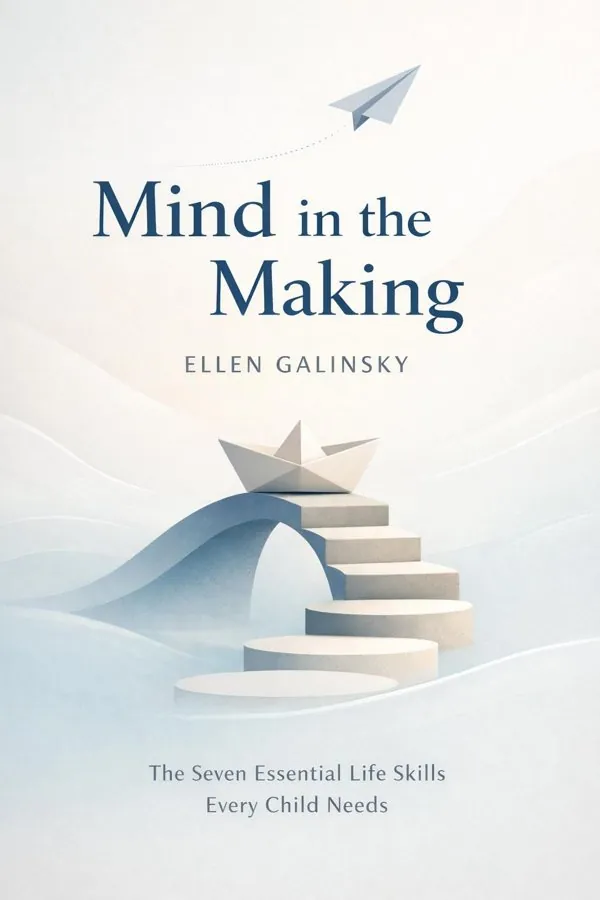
Mind in the Making: The Seven Essential Life Skills Every Child Needs: Summary & Key Insights
 10 min10 chaptersAudio available
What Is Mind in the Making: The Seven Essential Life Skills Every Child Needs About?
Mind in the Making: The Seven Essential Life Skills Every Child Needs by Ellen Galinsky is a education book spanning 10 pages. Mind in the Making es un libro de Ellen Galinsky que explora las siete habilidades esenciales que los niños necesitan para prosperar en la vida: enfoque y autocontrol, perspectiva, comunicación, hacer conexiones, pensamiento crítico, tomar desafíos y aprendizaje autodirigido. Basado en investigaciones de desarrollo infantil y psicología cognitiva, el libro ofrece estrategias prácticas para padres y educadores que buscan fomentar estas competencias desde la primera infancia.
This FizzRead summary covers all 10 key chapters of Mind in the Making: The Seven Essential Life Skills Every Child Needs in approximately 10 minutes, distilling the most important ideas, arguments, and takeaways from Ellen Galinsky's work. Also available as an audio summary and Key Quotes Podcast.
Mind in the Making: The Seven Essential Life Skills Every Child Needs
Mind in the Making es un libro de Ellen Galinsky que explora las siete habilidades esenciales que los niños necesitan para prosperar en la vida: enfoque y autocontrol, perspectiva, comunicación, hacer conexiones, pensamiento crítico, tomar desafíos y aprendizaje autodirigido. Basado en investigaciones de desarrollo infantil y psicología cognitiva, el libro ofrece estrategias prácticas para padres y educadores que buscan fomentar estas competencias desde la primera infancia.
Who Should Read Mind in the Making: The Seven Essential Life Skills Every Child Needs?
This book is perfect for anyone interested in education and looking to gain actionable insights in a short read. Whether you're a student, professional, or lifelong learner, the key ideas from Mind in the Making: The Seven Essential Life Skills Every Child Needs by Ellen Galinsky will help you think differently.
- ✓Readers who enjoy education and want practical takeaways
- ✓Professionals looking to apply new ideas to their work and life
- ✓Anyone who wants the core insights of Mind in the Making: The Seven Essential Life Skills Every Child Needs in just 10 minutes
Want the full summary?
Get instant access to this book summary and 100K+ more with Fizz Moment.
Get Free SummaryAvailable on App Store • Free to download
Key Chapters
Before we can understand how to nurture the seven essential life skills, we must first understand how children learn. In my years studying families and observing children, I’ve seen how learning happens not through instruction alone, but through experience. Whether a toddler stacking blocks or a teenager tackling a science project, learning is rooted in engagement—with the world, with others, and within oneself.
At the center of this process is something scientists call executive function—a set of mental skills that allow us to manage attention, control impulses, remember information, and adapt flexibly. Executive function is what enables children to focus amidst distractions, resist reacting impulsively, and persist toward a goal. It is, in many ways, the foundation upon which all learning rests.
Children develop these abilities through play, conversation, and observation. When they pretend, they plan; when they collaborate, they negotiate; when they encounter obstacles, they problem-solve. Every authentic learning experience involves active participation and reflection. As parents and educators, our role isn’t to deliver information but to create conditions that allow children to engage deeply.
The science of learning reveals a key truth: emotional engagement drives cognitive growth. Children learn best when they feel secure, curious, and respected. This means environment matters—how we speak to them, how we respond to their mistakes, how we model handling frustration. By fostering trust and curiosity, we activate their natural drive to learn, and in doing so, we lay the foundation for all seven skills to flourish.
Focus is the cornerstone of learning. Without attention, thought simply scatters; without self-control, energy dissipates. Yet modern life constantly competes for a child’s attention. Screens blink, schedules overflow, and distractions abound. What I’ve found through research is that focus and self-control are not innate traits—they are learned capacities that can be strengthened like muscles.
For young children, learning to manage impulses may mean waiting their turn during a game or resisting the urge to grab a toy. For older children, it might involve staying on task through difficult homework or managing emotional reactions in friendship conflicts. In all cases, mastery comes through practice—and through the support of adults who model calm, intentional behavior.
The key is helping children understand what it feels like to pause and think before acting. This pause activates executive function, allowing them to choose rather than react. Activities that require patience—such as building structures, playing strategic games, or even cooking—teach focus naturally. When we praise persistence instead of speed, we reinforce the value of concentration and thoughtful effort.
As adults, we can model these behaviors ourselves. When we resist the urge to multitask, when we show how we manage frustration in front of our children, we teach through example. Focus is less about shutting out the world and more about mastering how we attend to it. In cultivating this skill, we are not only helping children perform better in school—we are teaching them how to navigate life with awareness and intention.
+ 8 more chapters — available in the FizzRead app
All Chapters in Mind in the Making: The Seven Essential Life Skills Every Child Needs
About the Author
Ellen Galinsky es cofundadora y presidenta del Families and Work Institute. Es una reconocida experta en desarrollo infantil y autora de varios libros sobre la relación entre trabajo y familia, incluyendo Ask the Children y The Six Stages of Parenthood.
Get This Summary in Your Preferred Format
Read or listen to the Mind in the Making: The Seven Essential Life Skills Every Child Needs summary by Ellen Galinsky anytime, anywhere. FizzRead offers multiple formats so you can learn on your terms — all free.
Available formats: App · Audio · PDF · EPUB — All included free with FizzRead
Download Mind in the Making: The Seven Essential Life Skills Every Child Needs PDF and EPUB Summary
Key Quotes from Mind in the Making: The Seven Essential Life Skills Every Child Needs
“Before we can understand how to nurture the seven essential life skills, we must first understand how children learn.”
“Without attention, thought simply scatters; without self-control, energy dissipates.”
Frequently Asked Questions about Mind in the Making: The Seven Essential Life Skills Every Child Needs
Mind in the Making: The Seven Essential Life Skills Every Child Needs by Ellen Galinsky is a education book that explores key ideas across 10 chapters. Mind in the Making es un libro de Ellen Galinsky que explora las siete habilidades esenciales que los niños necesitan para prosperar en la vida: enfoque y autocontrol, perspectiva, comunicación, hacer conexiones, pensamiento crítico, tomar desafíos y aprendizaje autodirigido. Basado en investigaciones de desarrollo infantil y psicología cognitiva, el libro ofrece estrategias prácticas para padres y educadores que buscan fomentar estas competencias desde la primera infancia.
You Might Also Like

Bedtime Biography: Florence Nightingale
Isabel Thomas
10 min
Introduction To Museum Studies
Howard H. Hoyt
10 min
A Mind for Numbers: How to Excel at Math and Science (Even If You Flunked Algebra)
Barbara Oakley
10 min
AI for Educators: Learning Strategies, Teacher Empowerment, and the Future of Education
Matt Miller
10 min
Animation For Beginners
Morr Meroz
10 min
Artificial Intelligence for Learning
Donald Clark
10 minBrowse by Category
Ready to read Mind in the Making: The Seven Essential Life Skills Every Child Needs?
Get the full summary and 100K+ more books with Fizz Moment.