
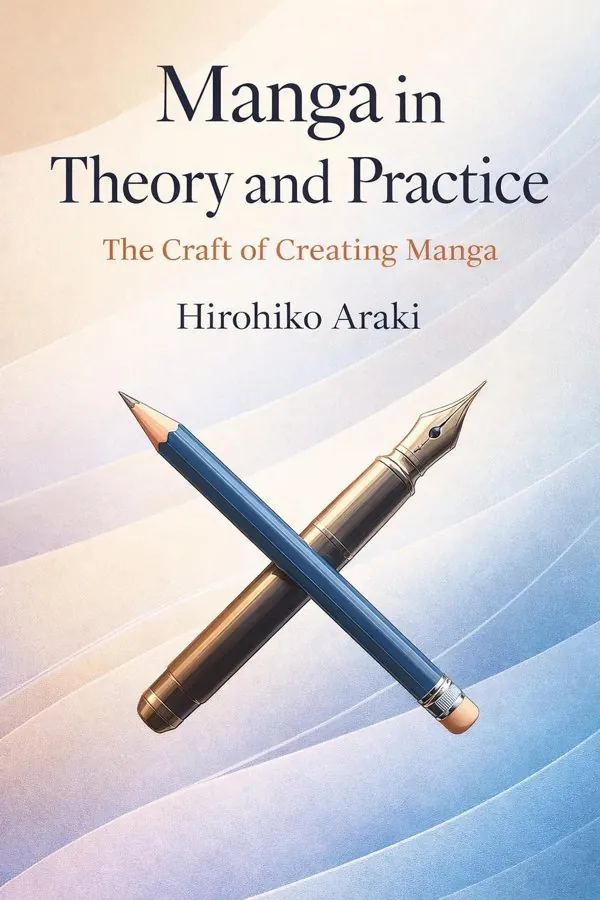
Manga in Theory and Practice: The Craft of Creating Manga: Summary & Key Insights
 10 min10 chaptersAudio available
What Is Manga in Theory and Practice: The Craft of Creating Manga About?
Manga in Theory and Practice: The Craft of Creating Manga by Hirohiko Araki is a writing book spanning 10 pages. Written by celebrated manga artist Hirohiko Araki, this book offers a comprehensive guide to the art and theory of manga creation. It explores storytelling structure, character design, thematic development, and drawing techniques, drawing on Araki’s experience creating the acclaimed series JoJo’s Bizarre Adventure. The book serves as both a practical manual and a philosophical reflection on manga as an art form.
This FizzRead summary covers all 10 key chapters of Manga in Theory and Practice: The Craft of Creating Manga in approximately 10 minutes, distilling the most important ideas, arguments, and takeaways from Hirohiko Araki's work. Also available as an audio summary and Key Quotes Podcast.
Manga in Theory and Practice: The Craft of Creating Manga
Written by celebrated manga artist Hirohiko Araki, this book offers a comprehensive guide to the art and theory of manga creation. It explores storytelling structure, character design, thematic development, and drawing techniques, drawing on Araki’s experience creating the acclaimed series JoJo’s Bizarre Adventure. The book serves as both a practical manual and a philosophical reflection on manga as an art form.
Who Should Read Manga in Theory and Practice: The Craft of Creating Manga?
This book is perfect for anyone interested in writing and looking to gain actionable insights in a short read. Whether you're a student, professional, or lifelong learner, the key ideas from Manga in Theory and Practice: The Craft of Creating Manga by Hirohiko Araki will help you think differently.
- ✓Readers who enjoy writing and want practical takeaways
- ✓Professionals looking to apply new ideas to their work and life
- ✓Anyone who wants the core insights of Manga in Theory and Practice: The Craft of Creating Manga in just 10 minutes
Want the full summary?
Get instant access to this book summary and 100K+ more with Fizz Moment.
Get Free SummaryAvailable on App Store • Free to download
Key Chapters
I learned early on that the greatest manga are never accidents. They are deliberate compositions of four interwoven forces: story, characters, setting, and theme. Story defines the rhythm; it is the spine upon which everything else hangs. Characters are the flesh—the human expression that animates that structure. Setting provides context, the stage that allows our characters’ struggles to mean something. And theme infuses the entire work with purpose—the invisible heartbeat that connects reader and author. Without theme, a story may thrill, but it rarely lingers.
When I created JoJo’s Bizarre Adventure, I thought deeply about these four pillars. The evolving generations of the Joestar family gave me a structure of continuity and change; their conflicts became expressions of the theme of human perseverance, or what I call *ketsudan*, the power of will. The settings—from Victorian England to contemporary Japan, from ancient Rome to Western deserts—were never chosen for superficial variety but to challenge my characters and illuminate their inner worlds. Through this interplay, the story became more than a sequence of battles; it became a meditation on courage itself.
Any aspiring manga artist should internalize this interdependence. If you can see how these four elements converse, you begin to compose manga instinctively. You start to feel how story rhythm affects panel layout, how character design mirrors emotional tone, and how a single theme can unify a hundred small creative choices. That, to me, is when your art begins to breathe.
Everything in manga begins with narrative shape. Japanese storytelling has long relied on the structure called *ki-shō-ten-ketsu*: introduction, development, twist, and conclusion. To me, that rhythm feels like breathing. You begin by introducing the world and the premise (*ki*), then deepen conflict and relevance (*shō*), upend expectation with a twist (*ten*), and resolve it in a way that feels both inevitable and surprising (*ketsu*). Understanding this pattern doesn’t limit creativity—it liberates it. Once you know how the story’s spine bends, you can play with tension, silence, and revelation with confidence.
In my own work, I obsess over pacing. When readers turn a page, the story must move forward both visually and narratively. The composition of panels, the rhythm of dialogue, even the placement of sound effects all serve the architecture of *ki-shō-ten-ketsu*. In the most dramatic moments, silence can shout louder than words; in a comedic beat, timing is everything. If the reader feels the story’s motion without noticing the techniques guiding them, then I’ve done my job. The best structure is invisible—it’s the skeleton that lets emotion move freely without collapsing.
+ 8 more chapters — available in the FizzRead app
All Chapters in Manga in Theory and Practice: The Craft of Creating Manga
About the Author
Hirohiko Araki is a Japanese manga artist best known for his long-running series JoJo’s Bizarre Adventure. Born in 1960, Araki is recognized for his distinctive art style, dynamic compositions, and innovative approach to storytelling, which have earned him international acclaim.
Get This Summary in Your Preferred Format
Read or listen to the Manga in Theory and Practice: The Craft of Creating Manga summary by Hirohiko Araki anytime, anywhere. FizzRead offers multiple formats so you can learn on your terms — all free.
Available formats: App · Audio · PDF · EPUB — All included free with FizzRead
Download Manga in Theory and Practice: The Craft of Creating Manga PDF and EPUB Summary
Key Quotes from Manga in Theory and Practice: The Craft of Creating Manga
“I learned early on that the greatest manga are never accidents.”
“Everything in manga begins with narrative shape.”
Frequently Asked Questions about Manga in Theory and Practice: The Craft of Creating Manga
Manga in Theory and Practice: The Craft of Creating Manga by Hirohiko Araki is a writing book that explores key ideas across 10 chapters. Written by celebrated manga artist Hirohiko Araki, this book offers a comprehensive guide to the art and theory of manga creation. It explores storytelling structure, character design, thematic development, and drawing techniques, drawing on Araki’s experience creating the acclaimed series JoJo’s Bizarre Adventure. The book serves as both a practical manual and a philosophical reflection on manga as an art form.
More by Hirohiko Araki
You Might Also Like
The Art of Perspective
Christopher Castellani
10 min
Making a Point: The Persnickety Story of English Punctuation
David Crystal
10 min
The Elements Of Eloquence: How To Turn The Perfect English Phrase
Mark Forsyth
10 min
The Pocket Muse: Ideas and Inspirations for Writing
Monica Wood
10 min
A Little Book on Form: An Exploration into the Formal Imagination of Poetry
Robert Hass
10 min
Adventures In The Screen Trade: A Personal View Of Hollywood And Screenwriting
William Goldman
10 minBrowse by Category
Ready to read Manga in Theory and Practice: The Craft of Creating Manga?
Get the full summary and 100K+ more books with Fizz Moment.