
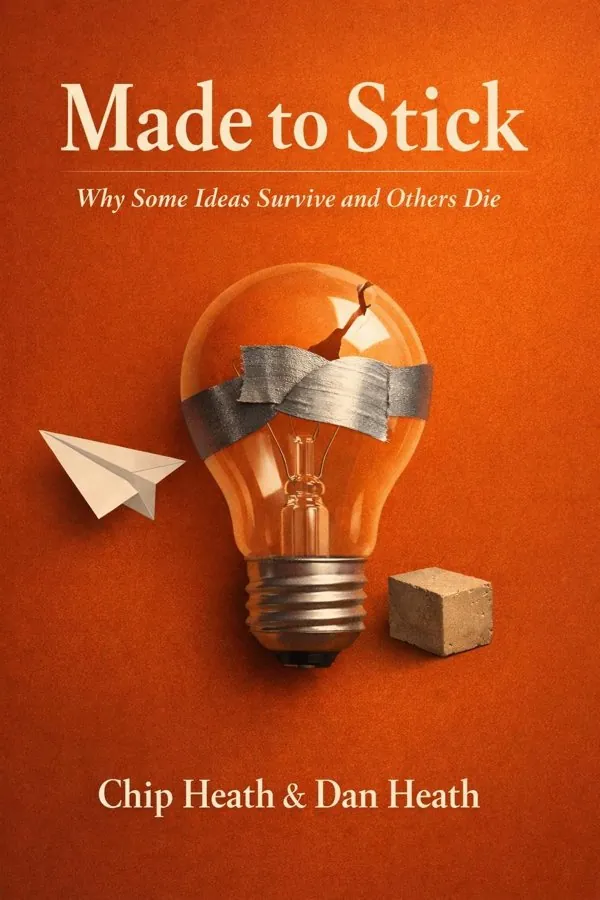
Made to Stick: Why Some Ideas Survive and Others Die: Summary & Key Insights
by Chip Heath, Dan Heath
 10 min8 chaptersAudio available
What Is Made to Stick: Why Some Ideas Survive and Others Die About?
Made to Stick: Why Some Ideas Survive and Others Die by Chip Heath, Dan Heath is a communication book spanning 8 pages. Made to Stick explores why some ideas thrive while others fade away. Chip and Dan Heath reveal the six key principles—simplicity, unexpectedness, concreteness, credibility, emotions, and stories—that make ideas memorable and effective. Drawing from examples in business, education, and everyday life, the authors provide practical strategies for crafting messages that resonate and endure.
This FizzRead summary covers all 8 key chapters of Made to Stick: Why Some Ideas Survive and Others Die in approximately 10 minutes, distilling the most important ideas, arguments, and takeaways from Chip Heath, Dan Heath's work. Also available as an audio summary and Key Quotes Podcast.
Made to Stick: Why Some Ideas Survive and Others Die
Made to Stick explores why some ideas thrive while others fade away. Chip and Dan Heath reveal the six key principles—simplicity, unexpectedness, concreteness, credibility, emotions, and stories—that make ideas memorable and effective. Drawing from examples in business, education, and everyday life, the authors provide practical strategies for crafting messages that resonate and endure.
Who Should Read Made to Stick: Why Some Ideas Survive and Others Die?
This book is perfect for anyone interested in communication and looking to gain actionable insights in a short read. Whether you're a student, professional, or lifelong learner, the key ideas from Made to Stick: Why Some Ideas Survive and Others Die by Chip Heath, Dan Heath will help you think differently.
- ✓Readers who enjoy communication and want practical takeaways
- ✓Professionals looking to apply new ideas to their work and life
- ✓Anyone who wants the core insights of Made to Stick: Why Some Ideas Survive and Others Die in just 10 minutes
Want the full summary?
Get instant access to this book summary and 100K+ more with Fizz Moment.
Get Free SummaryAvailable on App Store • Free to download
Key Chapters
One of the greatest ironies of communication is that expertise can blind us. The more we know, the harder it becomes to imagine what it’s like not to know. That’s what we call the Curse of Knowledge. Imagine tapping out a well-known song on a table; you hear the melody clearly in your head, but to others, your taps sound random. You’re trapped by your knowledge — unable to hear the silence where their understanding lives.
Experts often assume shared understanding. A teacher might explain a scientific concept with technical precision but lose students within seconds. A CEO might think a strategic vision is obvious while employees wonder what it means for Monday morning. Our challenge as communicators is not to display what we know, but to invite others in. Breaking the Curse requires empathy and discipline — the ability to strip away unnecessary detail until only the essence remains. When we fail to do this, our ideas, however brilliant, evaporate.
We learned that people who communicate well are not simply articulate; they’re translators of insight into human experience. They know how to make others see what they see without assuming the same starting point. Every practical technique in this book flows from that realization. The Curse of Knowledge isn’t a flaw of intelligence — it’s a default of perspective. Once we recognize it, we can escape it.
Simplicity, at its core, means finding the soul of an idea. It’s not reduction for its own sake; it’s prioritization that preserves meaning. To make an idea stick, you must identify the most critical element and express it in a way that’s both compact and profound. Think of journalists writing headlines, or commanders delivering orders under pressure — their words are stripped down, yet fully charged with purpose.
We’ve observed that sticky ideas always revolve around what we call a “core message.” That message is the anchor — everything else must serve it or be discarded. Simplicity is powerful because it clarifies intention. When Southwest Airlines defines itself with the message “THE low-fare airline,” it isn’t a tagline; it’s a compass. Every decision, from routes to snacks, aligns with that principle.
But simplicity isn’t just conceptual. It demands expression that feels true and sharp. Analogies, metaphors, and compact language can carry complexity inside simplicity. When John F. Kennedy proposed “putting a man on the moon and returning him safely to Earth,” that sentence contained vast engineering detail inside a vision everyone could grasp. As communicator, your task is to find that moon — the one simple phrasing that transforms abstraction into clarity.
+ 6 more chapters — available in the FizzRead app
All Chapters in Made to Stick: Why Some Ideas Survive and Others Die
About the Authors
Chip Heath is a professor at Stanford Graduate School of Business, specializing in organizational behavior and communication. Dan Heath is a senior fellow at Duke University’s CASE Center, focusing on social innovation. Together, they have coauthored several bestselling books on communication and decision-making.
Get This Summary in Your Preferred Format
Read or listen to the Made to Stick: Why Some Ideas Survive and Others Die summary by Chip Heath, Dan Heath anytime, anywhere. FizzRead offers multiple formats so you can learn on your terms — all free.
Available formats: App · Audio · PDF · EPUB — All included free with FizzRead
Download Made to Stick: Why Some Ideas Survive and Others Die PDF and EPUB Summary
Key Quotes from Made to Stick: Why Some Ideas Survive and Others Die
“One of the greatest ironies of communication is that expertise can blind us.”
“Simplicity, at its core, means finding the soul of an idea.”
Frequently Asked Questions about Made to Stick: Why Some Ideas Survive and Others Die
Made to Stick: Why Some Ideas Survive and Others Die by Chip Heath, Dan Heath is a communication book that explores key ideas across 8 chapters. Made to Stick explores why some ideas thrive while others fade away. Chip and Dan Heath reveal the six key principles—simplicity, unexpectedness, concreteness, credibility, emotions, and stories—that make ideas memorable and effective. Drawing from examples in business, education, and everyday life, the authors provide practical strategies for crafting messages that resonate and endure.
More by Chip Heath, Dan Heath


You Might Also Like

Magic Words: The Science and Secrets Behind Seven Words That Motivate, Engage, and Influence
Tim David
10 min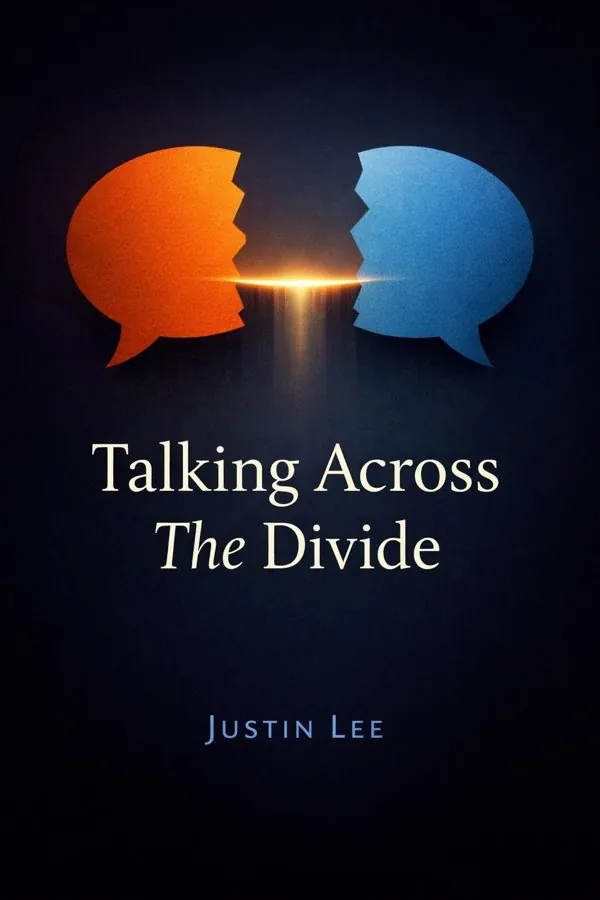
Talking Across The Divide: How to Communicate with People You Disagree with and Maybe Even Change the World
Justin Lee
10 min
The Exceptional Presenter: A Proven Formula to Open Up! and Own the Room
Timothy J. Koegel
10 min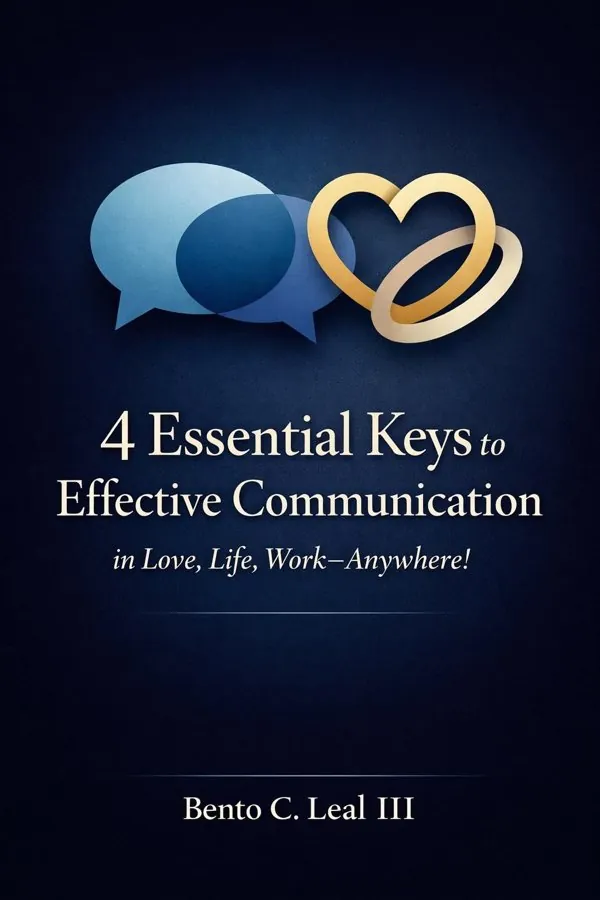
4 Essential Keys to Effective Communication in Love, Life, Work--Anywhere!: Including the 12-Day Communication Challenge!
Bento C. Leal III
10 min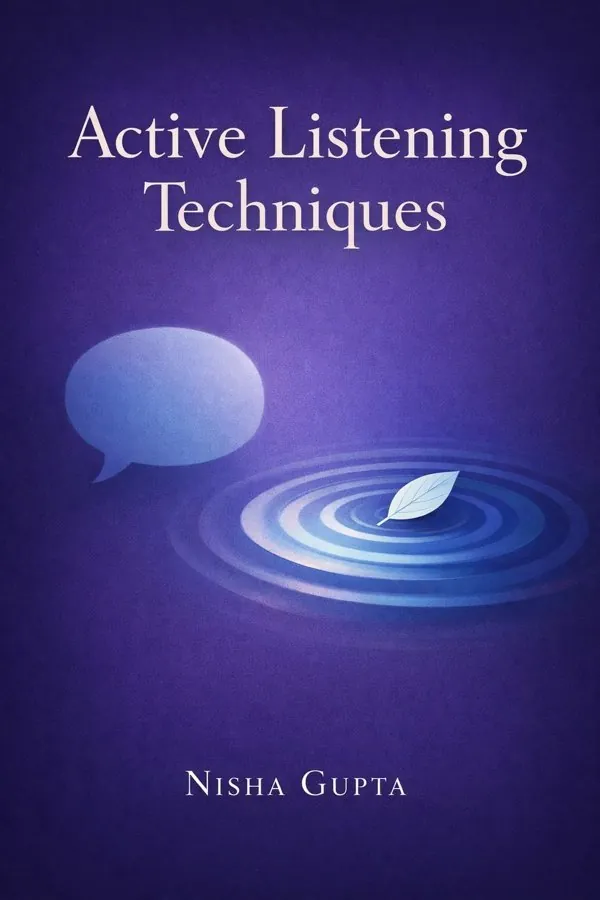
Active Listening Techniques: 30 Practical Tools to Hone Your Communication Skills
Nisha Gupta
10 min
Bargaining for Advantage: Negotiation Strategies for Reasonable People
G. Richard Shell
10 minBrowse by Category
Ready to read Made to Stick: Why Some Ideas Survive and Others Die?
Get the full summary and 100K+ more books with Fizz Moment.