
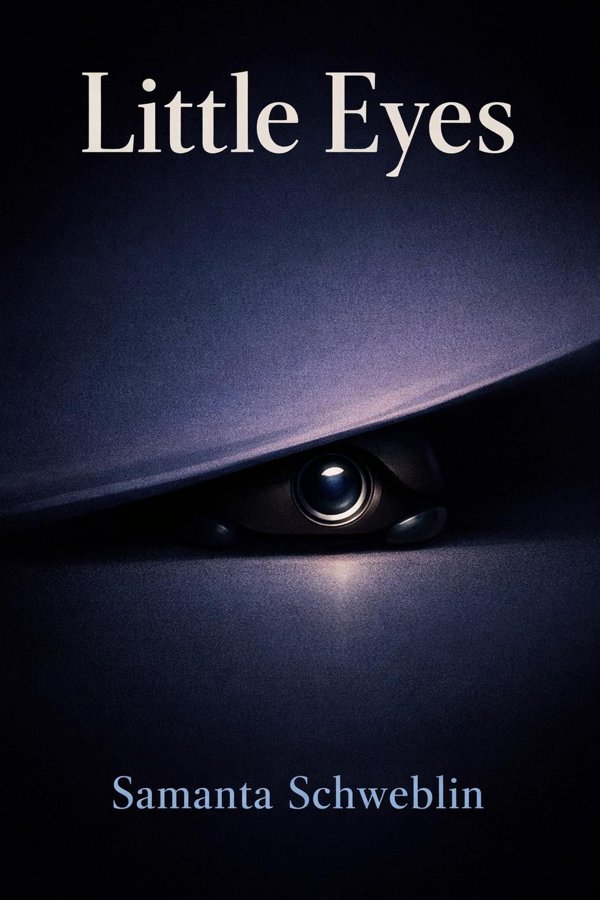
Little Eyes: Summary & Key Insights
 10 min9 chaptersAudio available
Key Takeaways from Little Eyes
One of the most unsettling truths in Little Eyes is that the desire to be seen often collides with the fear of being watched.
When people believe they cannot be fully known, they often behave as if they cannot be fully judged.
The most disturbing element in Little Eyes is not the machines themselves but the emotional needs they awaken and amplify.
Little Eyes spans multiple countries and perspectives, creating the feeling of a world newly connected yet still fundamentally estranged.
Real intimacy depends on reciprocity, but Little Eyes presents relationships built on imbalance.
What Is Little Eyes About?
Little Eyes by Samanta Schweblin is a bestsellers book. What if the devices designed to bring people closer became the perfect tools for obsession, loneliness, and control? In Little Eyes, Samanta Schweblin turns a simple technological premise into a deeply unsettling portrait of modern life. The novel imagines a world captivated by “kentukis,” small robotic pets controlled remotely by strangers. One person buys the machine and lives with it in their home; another logs in from somewhere else in the world and sees through its eyes, moving through private spaces with eerie intimacy. From that premise, Schweblin builds a fragmented, global story about surveillance, desire, dependency, and the strange bargains people make in exchange for connection. What makes the book so powerful is how familiar its fears feel. Schweblin is not writing distant science fiction; she is sharpening the realities of social media, smart devices, online anonymity, and emotional isolation. An internationally acclaimed Argentine writer known for psychologically intense fiction, she brings precision, suspense, and moral ambiguity to every page. Little Eyes matters because it asks a question that feels urgent now: when we invite technology into our lives, what exactly are we allowing in with it?
This FizzRead summary covers all 9 key chapters of Little Eyes in approximately 10 minutes, distilling the most important ideas, arguments, and takeaways from Samanta Schweblin's work. Also available as an audio summary and Key Quotes Podcast.
Little Eyes
What if the devices designed to bring people closer became the perfect tools for obsession, loneliness, and control? In Little Eyes, Samanta Schweblin turns a simple technological premise into a deeply unsettling portrait of modern life. The novel imagines a world captivated by “kentukis,” small robotic pets controlled remotely by strangers. One person buys the machine and lives with it in their home; another logs in from somewhere else in the world and sees through its eyes, moving through private spaces with eerie intimacy. From that premise, Schweblin builds a fragmented, global story about surveillance, desire, dependency, and the strange bargains people make in exchange for connection.
What makes the book so powerful is how familiar its fears feel. Schweblin is not writing distant science fiction; she is sharpening the realities of social media, smart devices, online anonymity, and emotional isolation. An internationally acclaimed Argentine writer known for psychologically intense fiction, she brings precision, suspense, and moral ambiguity to every page. Little Eyes matters because it asks a question that feels urgent now: when we invite technology into our lives, what exactly are we allowing in with it?
Who Should Read Little Eyes?
This book is perfect for anyone interested in bestsellers and looking to gain actionable insights in a short read. Whether you're a student, professional, or lifelong learner, the key ideas from Little Eyes by Samanta Schweblin will help you think differently.
- ✓Readers who enjoy bestsellers and want practical takeaways
- ✓Professionals looking to apply new ideas to their work and life
- ✓Anyone who wants the core insights of Little Eyes in just 10 minutes
Want the full summary?
Get instant access to this book summary and 100K+ more with Fizz Moment.
Get Free SummaryAvailable on App Store • Free to download
Key Chapters
One of the most unsettling truths in Little Eyes is that the desire to be seen often collides with the fear of being watched. Schweblin builds the novel around kentukis, devices that promise companionship but function through radical asymmetry: one person hosts the machine in their home, while another, usually a stranger, controls it remotely. That setup captures a central paradox of digital life. We reach for connection, but in doing so we expose routines, vulnerabilities, and intimate spaces to people we do not truly know.
The brilliance of the novel lies in how ordinary this arrangement feels. The kentuki is not marketed as a weapon or a surveillance device. It is sold as entertainment, novelty, and company. That is exactly why it works as a metaphor for contemporary technology. Many people willingly bring connected devices into bedrooms, kitchens, and living rooms because convenience and companionship seem to outweigh risk. Yet the line between sharing and surrendering privacy is thin.
Schweblin shows that exposure is not always dramatic. Often it unfolds through small acts: allowing a device to witness a private conversation, leaving it in the room during moments of grief, or forgetting that someone else may be observing habits that reveal far more than intended. The host may imagine a limited relationship, but the remote user can construct emotional meaning from fragments, often without consent or context.
In everyday life, this dynamic resembles social media oversharing, smart home data collection, or the casual acceptance of always-on cameras and microphones. The practical lesson is not to reject technology outright but to understand the hidden trade involved. Every tool that promises intimacy may also create access.
Actionable takeaway: Before adopting any connected technology, ask a simple question: what parts of my life become visible through this device, and to whom?
When people believe they cannot be fully known, they often behave as if they cannot be fully judged. In Little Eyes, the relationship between kentuki keepers and kentuki users is built on near-total anonymity. The person inside the machine may live on another continent, speak another language, and remain permanently unidentified. This distance transforms the moral atmosphere of the story. Curiosity becomes intrusion, attachment becomes fixation, and manipulation becomes easier because accountability is weak.
Schweblin uses this structure to explore a reality that extends far beyond the novel. Online spaces often reward concealment. Hidden behind usernames, avatars, or temporary accounts, people feel freer to trespass on emotional and ethical boundaries. They monitor others, project fantasies onto strangers, and test forms of control they would never attempt face to face. The novel shows that anonymity does not simply hide identity; it alters behavior by reducing friction between impulse and action.
At the same time, Schweblin avoids simplistic moralizing. Anonymity can also provide safety, experimentation, and relief for people who feel trapped in their offline lives. Some kentuki users are lonely, curious, or emotionally displaced rather than malicious. That complexity matters. The problem is not anonymity by itself but anonymity without responsibility or clear boundaries.
This theme has practical relevance in digital life. Anonymous commenting, hidden tracking, burner profiles, and distant interactions can create emotional consequences that feel surprisingly real to the people on the receiving end. The absence of visible identity does not remove impact.
Actionable takeaway: In any anonymous or semi-anonymous digital space, judge actions by their effects rather than by the invisibility of the actor, and set boundaries as if the relationship were fully real—because emotionally, it often is.
The most disturbing element in Little Eyes is not the machines themselves but the emotional needs they awaken and amplify. Schweblin suggests that technology rarely invents human desire from nothing. Instead, it intensifies needs already present: loneliness, voyeurism, the wish for power, the craving for companionship, the hope of being chosen, and the fantasy of controlling how one is seen.
This insight gives the novel its psychological depth. Kentukis are novel gadgets, but what they trigger is ancient. Some characters treat them like pets, some like portals, some like toys, and some like substitutes for relationships they cannot build elsewhere. A remote user may become obsessed with the life on the other side not because the device is magical, but because ordinary life feels empty. A host may rely on the machine not because it is trustworthy, but because any witness seems better than solitude.
Schweblin is especially sharp in showing how technology can legitimize impulses people might otherwise resist. Watching, following, and lingering near another person’s private life become normalized when wrapped in a commercial product. The device makes questionable behavior feel permissible because it is structured into the system.
This applies powerfully to modern habits. Scrolling through strangers’ lives, checking online status indicators, tracking movement, refreshing feeds, and monitoring responses can all be framed as normal platform use while still feeding insecurity or control. The tool may be new, but the emotion is recognizable.
The practical application is self-observation. Rather than asking only whether a technology is useful, we should also ask what part of ourselves it rewards. Does it deepen empathy, or does it exploit insecurity? Does it support real connection, or prolong dependence?
Actionable takeaway: The next time a digital habit feels hard to stop, identify the emotional hunger underneath it; addressing the need is often more effective than simply blaming the tool.
Little Eyes spans multiple countries and perspectives, creating the feeling of a world newly connected yet still fundamentally estranged. Schweblin’s global structure is essential to the novel’s meaning. Kentukis create access across borders, time zones, and cultures, but access is not the same as understanding. The machine can move through a room, witness daily rituals, and observe vulnerability, yet still fail to grasp the emotional, social, or cultural meaning of what it sees.
That tension mirrors the internet’s great illusion: proximity can masquerade as comprehension. We can instantly view another person’s life from afar, but fragments do not automatically become knowledge. In the novel, distance allows projection. Remote users imagine stories about the people they watch. Hosts, in turn, imagine motives and personalities behind the machines in their homes. The less each side knows, the more fantasy fills the gap.
Schweblin highlights a difficult truth about digital globalization. We are often connected at the level of image, information, and exposure, but not at the level of mutual context. Without shared language, trust, or sustained conversation, observation can become a form of misunderstanding rather than empathy.
This has obvious applications in modern life. People consume news clips, travel content, personal updates, and social posts from around the world, often building strong opinions from thin slices of reality. Workplace communication across cultures can also falter when visibility replaces dialogue. Seeing more does not always mean interpreting better.
The novel therefore challenges a common technological optimism: that contact alone creates closeness. It does not. Closeness requires interpretation, patience, and humility.
Actionable takeaway: When technology gives you a window into someone else’s world, treat what you see as incomplete evidence, and ask what context you are missing before assuming understanding.
Real intimacy depends on reciprocity, but Little Eyes presents relationships built on imbalance. The kentuki arrangement creates a bond that may feel emotionally intense while remaining structurally one-sided. One party sees more than the other. One can become attached without being acknowledged. One may depend on the relationship while the other treats it casually. Schweblin uses this imbalance to explore how distorted intimacy can become when mutual recognition is absent.
This is one of the novel’s most haunting ideas. People can feel profoundly connected to someone who does not know them, does not understand them, or cannot respond in kind. The result is not harmless fantasy. It can produce possessiveness, resentment, idealization, and emotional confusion. A user controlling a kentuki may begin to feel entitled to access because they have invested time and attention. A host may assign loyalty or personality to the device and forget that a stranger is behind it with their own motives.
Schweblin’s insight extends to many familiar digital experiences: parasocial relationships with influencers, emotional dependence on inconsistent messaging, one-sided surveillance of ex-partners, or online interactions in which one person believes the bond is deeper than the other does. Intimacy cues can be mimicked by technology, but mutuality cannot be faked for long without cost.
The practical lesson is that emotional intensity is not proof of relational health. A relationship should not be judged only by how much it makes someone feel, but by whether both sides have comparable knowledge, freedom, and consent. Without that balance, attachment can become unstable and even predatory.
Actionable takeaway: Whenever a digital relationship begins to feel unusually significant, pause and ask whether the connection is mutual, transparent, and freely chosen by both sides.
Many of the most powerful technologies in Little Eyes spread not because they are ethically sound, but because they are easy, fun, and socially contagious. Schweblin understands a central truth about technological adoption: people rarely embrace tools after deep moral reflection. They adopt them because the tools are available, fashionable, emotionally appealing, or presented as harmless entertainment. Only later do consequences become visible.
The kentuki is convenient in several senses. It offers companionship without ordinary commitment, access without travel, observation without explanation, and novelty without obvious danger. Those features make it commercially irresistible. But what appears efficient or playful may also remove the very barriers that protect dignity and privacy. By lowering the effort required to enter another person’s space, the technology lowers moral resistance as well.
This theme resonates strongly beyond the novel. Smart devices simplify tasks but often collect intimate data. Social platforms make sharing effortless but blur ownership and consent. Location services help coordination but can normalize constant monitoring. Frictionless design is usually celebrated, yet friction sometimes serves an ethical purpose. It slows impulsive behavior, creates moments for consent, and reminds people that access should not always be immediate.
Schweblin’s warning is subtle but clear: convenience is not neutral. Every reduction in effort changes behavior, and some changes expose vulnerabilities we would otherwise protect. The easier it becomes to watch, enter, record, or follow, the more tempting these actions become.
A practical application is to pay attention not only to what a device enables, but to what protective obstacles it removes. Good judgment often depends on pauses, limits, and visible boundaries.
Actionable takeaway: Before embracing a new technology because it feels easy or enjoyable, identify which forms of effort or permission it eliminates, and decide whether those missing barriers once served a valuable ethical function.
Surveillance in Little Eyes is frightening precisely because it does not always look hostile. Schweblin presents watching as something that can resemble affection, curiosity, care, boredom, jealousy, or longing. This emotional ambiguity makes surveillance harder to detect and easier to excuse. When observation comes wrapped in companionship or concern, people are more likely to tolerate what they would otherwise reject.
That insight is crucial to understanding both the novel and contemporary digital culture. Surveillance is often imagined as obviously coercive: governments, corporations, or criminals gathering information. But Schweblin reminds us that intimate surveillance can emerge in personal relationships and consumer technologies. A person may watch because they are lonely. A partner may monitor because they are insecure. A platform may track because it claims to improve experience. The language is soft, but the power remains real.
In the novel, this ambiguity destabilizes trust. Is the observer caring or controlling? Is the presence comforting or invasive? Are boundaries being respected or quietly dissolved? The uncertainty itself becomes corrosive. People cannot feel secure when they do not know the meaning of the gaze directed at them.
This dynamic appears in everyday forms: reading receipts, last-seen indicators, location sharing, silent profile visits, notification habits, and algorithmic recommendations built from behavioral tracking. Because the watching does not always feel violent, it can seem normal. Yet normality does not eliminate ethical risk.
The practical lesson is to examine motives and effects together. A behavior may come from understandable emotion and still cross a line. Care is not consent, and interest is not entitlement.
Actionable takeaway: If a form of digital watching must be hidden, justified repeatedly, or defended as harmless, treat that discomfort as a sign to renegotiate boundaries before surveillance becomes normalized.
Little Eyes shows that technology is never just a neutral object sitting in the corner of a room. Once introduced, the kentuki changes how people behave toward one another, how they manage space, and how they interpret privacy. Schweblin demonstrates a key social truth: objects with communicative power alter relationships even when they remain silent. Their presence changes conduct.
This theme makes the novel especially perceptive. A kentuki is not merely used; it reorganizes the atmosphere around it. People speak differently when it is nearby. They decide what to reveal, what to hide, what to perform, and what to protect. Rooms once considered private become semi-public. Everyday actions gain an audience. The object therefore becomes a social actor, shaping interactions among family members, partners, and strangers.
This idea applies widely to contemporary life. A smartphone on the table changes the tone of a conversation. A home assistant influences what people say indoors. A camera at the door alters neighborly relations. Group chats affect friendship dynamics even when no one is typing. Technologies do not need to act aggressively to transform human behavior; their mere availability changes expectations.
Schweblin’s novel encourages a more sophisticated view of devices. Instead of asking only what a technology does, we should ask what social roles it creates. Does it invite performance? Does it encourage suspicion? Does it reduce spontaneous intimacy? Does it make private life feel staged?
The practical value of this insight lies in intentional design of personal environments. Where a device is placed, who can access it, and when it is turned off matter as much as the device itself.
Actionable takeaway: Audit the objects in your most intimate spaces and ask how each one changes the way you speak, relax, and relate; then remove or limit the devices that make genuine presence harder.
For all its technological novelty, Little Eyes is ultimately a book about fragile human beings trying to manage fear, longing, shame, and desire. Schweblin never lets the reader forget that behind every interface is a person who can be hurt. The remote controller is not just a user; the host is not just a consumer; the kentuki is not just a gadget. Each arrangement contains emotional stakes that technology cannot neutralize.
This is the novel’s deepest achievement. It strips away the common fantasy that mediated interaction is somehow less real than physical life. The feelings generated through screens, devices, and systems still attach to bodies and minds. Obsession disturbs sleep. Exposure creates anxiety. Rejection wounds. Misunderstanding isolates. The digital layer changes the form of these experiences, but not their human weight.
Schweblin’s message is especially relevant in an era that often treats technological harm as abstract. Data breaches are discussed in percentages, surveillance in policies, and online behavior in metrics. Little Eyes returns the conversation to vulnerability. A person may be legally visible but emotionally violated. A connection may be technically voluntary but psychologically coercive. The novel insists that ethical evaluation must include lived experience, not just formal consent or product design.
In practice, this means building digital habits around emotional realism. People need boundaries not because they are irrational, but because they are permeable. They absorb attention, expectation, and exposure. Any technology that enters intimate life should be assessed in those terms.
Actionable takeaway: Treat digital interactions as fully human interactions—worthy of the same care, consent, and respect you would expect in person—because the emotions involved are real even when the medium is not physical.
All Chapters in Little Eyes
About the Author
Samanta Schweblin is an Argentine writer widely admired for her innovative, unsettling fiction. Born in Buenos Aires in 1978, she has become one of the most prominent contemporary voices in Spanish-language literature. Her work includes novels and short story collections such as Fever Dream, Little Eyes, and Mouthful of Birds, all known for blending everyday realism with psychological tension, ambiguity, and elements of the uncanny. Schweblin has received numerous literary awards and international recognition for her precise, atmospheric style and her ability to turn ordinary situations into profound studies of fear, intimacy, and power. Her fiction has been translated into many languages, earning a global readership and establishing her as a major figure in contemporary literary fiction.
Get This Summary in Your Preferred Format
Read or listen to the Little Eyes summary by Samanta Schweblin anytime, anywhere. FizzRead offers multiple formats so you can learn on your terms — all free.
Available formats: App · Audio · PDF · EPUB — All included free with FizzRead
Download Little Eyes PDF and EPUB Summary
Key Quotes from Little Eyes
“One of the most unsettling truths in Little Eyes is that the desire to be seen often collides with the fear of being watched.”
“When people believe they cannot be fully known, they often behave as if they cannot be fully judged.”
“The most disturbing element in Little Eyes is not the machines themselves but the emotional needs they awaken and amplify.”
“Little Eyes spans multiple countries and perspectives, creating the feeling of a world newly connected yet still fundamentally estranged.”
“Real intimacy depends on reciprocity, but Little Eyes presents relationships built on imbalance.”
Frequently Asked Questions about Little Eyes
Little Eyes by Samanta Schweblin is a bestsellers book that explores key ideas across 9 chapters. What if the devices designed to bring people closer became the perfect tools for obsession, loneliness, and control? In Little Eyes, Samanta Schweblin turns a simple technological premise into a deeply unsettling portrait of modern life. The novel imagines a world captivated by “kentukis,” small robotic pets controlled remotely by strangers. One person buys the machine and lives with it in their home; another logs in from somewhere else in the world and sees through its eyes, moving through private spaces with eerie intimacy. From that premise, Schweblin builds a fragmented, global story about surveillance, desire, dependency, and the strange bargains people make in exchange for connection. What makes the book so powerful is how familiar its fears feel. Schweblin is not writing distant science fiction; she is sharpening the realities of social media, smart devices, online anonymity, and emotional isolation. An internationally acclaimed Argentine writer known for psychologically intense fiction, she brings precision, suspense, and moral ambiguity to every page. Little Eyes matters because it asks a question that feels urgent now: when we invite technology into our lives, what exactly are we allowing in with it?
More by Samanta Schweblin


You Might Also Like
The Godfather
Mario Puzo
10 min
The Handmaid's Tale
Margaret Atwood
10 min
The Hunger Games
Suzanne Collins
10 min
The Nightingale
Kristin Hannah
10 min
The Seven Husbands of Evelyn Hugo
Taylor Jenkins Reid
10 min
Backwater Justice
Fern Michaels
10 minBrowse by Category
Ready to read Little Eyes?
Get the full summary and 100K+ more books with Fizz Moment.