
Tim Ferriss's Toolkit: Books for Peak Performance
Tim Ferriss has interviewed hundreds of world-class performers on his podcast, and these are the books that come up again and again. From Stoic philosophy to power dynamics, this list is a toolkit for optimizing your life.

 10 min read
Meditations
by Marcus Aurelius
What does it mean to stay calm, just, and fully human in a world full of pressure, conflict, ego, and loss? That is the enduring question at the heart of Meditations, the private journal of Roman emperor Marcus Aurelius. Written in Greek and never intended for publication, these reflections are not polished philosophy lectures. They are personal reminders from one of the most powerful men in the world trying to govern not only an empire, but also his own mind. That tension is exactly why this book still matters. Meditations remains one of the clearest guides to Stoic philosophy because it speaks directly to everyday struggles: dealing with difficult people, accepting change, resisting vanity, and acting with integrity when no one is watching. Marcus Aurelius is remembered as both a Roman emperor and a Stoic philosopher, a rare figure often described as a philosopher-king. His reflections on virtue, discipline, mortality, and inner peace have influenced readers for centuries. If you want practical wisdom rather than abstract theory, Meditations offers a deeply human blueprint for living with clarity, resilience, and moral purpose.
Key Takeaways
- 1Book I: Lessons from Those Who Shaped Me — The opening book of Meditations is an extraordinary act of gratitude. Instead of launching into abstract arguments, Marc…
- 2Book II: Accepting Fate and Living Rationally — Book II opens with one of the most quoted passages in Stoic philosophy: a morning reminder that we will meet interfering…
- 3Book III: Integrity Beyond Fame — In Book III, Marcus Aurelius turns his attention to time, mortality, and the danger of living for approval. He reminds h…
 10 min read
48 Laws of Power
by Robert Greene
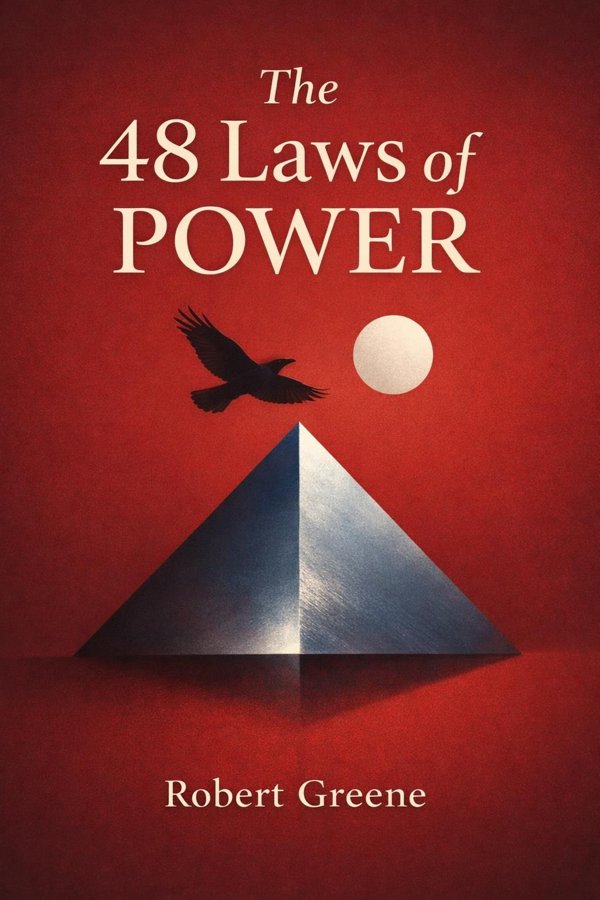
The 48 Laws of Power is a provocative guide to understanding how influence really works beneath the surface of everyday life. Rather than offering idealistic advice about fairness or good intentions, Robert Greene studies how power has been gained, protected, lost, and manipulated across centuries of history. Drawing on examples from rulers, generals, courtiers, artists, and strategists such as Machiavelli, Sun Tzu, Louis XIV, and Napoleon, he distills recurring patterns into 48 memorable laws. What makes this book endure is not just its boldness, but its honesty. Greene argues that power dynamics exist in offices, friendships, leadership roles, negotiations, politics, and creative fields whether we acknowledge them or not. To ignore them is to remain vulnerable; to understand them is to move more carefully and effectively. Greene writes with the eye of a historian and the precision of a strategist. His gift lies in turning complex human behavior into practical principles readers can observe immediately in the real world. Whether you see the book as a manual, a warning, or both, it offers a sharp framework for navigating ambition, status, reputation, and influence.
Key Takeaways
- 1Foundations of Power: Perception and Restraint — Power often begins long before action; it begins in perception. One of Greene’s central insights is that people do not r…
- 2Capturing Attention and Building Reputation — Obscurity is rarely neutral; in competitive environments, it is often a form of powerlessness. Greene argues that reputa…
- 3Relationships, Independence, and Strategic Absence — Dependence is one of the hidden currencies of power. Greene repeatedly shows that those who become indispensable gain le…
 10 min read
Tao Te Ching
by Lao Tzu
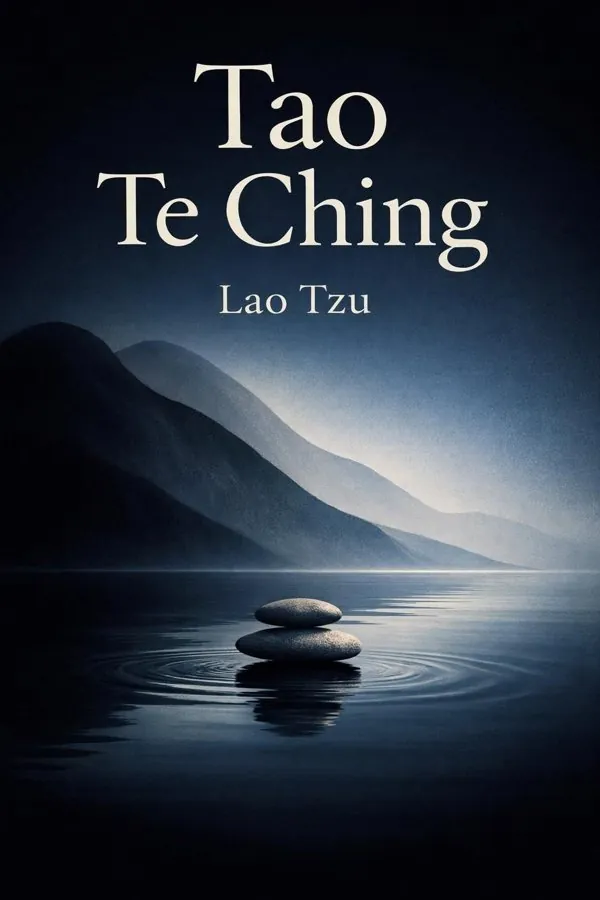
Few books have shaped spiritual thought, leadership, and personal reflection as deeply as the Tao Te Ching. Though brief in length, this ancient classic opens a surprisingly vast way of seeing life: one that values stillness over strain, humility over ego, and alignment over force. At a time when modern life often rewards speed, control, and constant self-assertion, the Tao Te Ching offers a radically different path. It suggests that the most effective way to live is not by pushing harder, but by moving in harmony with the deeper patterns of existence. Attributed to Lao Tzu, the revered sage traditionally associated with the founding of Daoism, this text has endured for more than two millennia because it speaks to timeless human struggles: how to lead without dominating, act without exhausting yourself, and find peace in a world of change. Divided into reflections on the Tao, or the Way, and Te, often translated as virtue or inner power, the book blends poetic paradox with practical wisdom. Its teachings on non-action, simplicity, and natural balance continue to influence philosophy, politics, spirituality, and self-development around the world.
Key Takeaways
- 1Introduction to the Tao — The Tao is the starting point of the entire book, yet Lao Tzu immediately tells us it cannot be fully captured in langua…
- 2The Nature of the Tao — Lao Tzu describes the Tao through paradox because ordinary logic cannot contain it. It is empty, yet never used up. It i…
- 3Wu Wei (Non-Action) — Wu wei is one of the most misunderstood ideas in the Tao Te Ching. It does not mean laziness, passivity, or refusing to …
 10 min read
Man's Search for Meaning
by Viktor Frankl
What keeps a person going when everything familiar has been taken away—comfort, identity, loved ones, freedom, and even the expectation of tomorrow? That is the unbearable and essential question at the heart of *Man's Search for Meaning*. Viktor E. Frankl’s landmark book is far more than a Holocaust memoir. It is a profound study of human endurance, an examination of suffering, and a practical philosophy for anyone trying to live with purpose in hard times. Drawing on his experiences in Nazi concentration camps, Frankl explores how people respond when life is reduced to its barest terms and why some still manage to preserve dignity, hope, and inner freedom. What makes this book endure is that Frankl does not offer empty inspiration. He writes as an Austrian neurologist, psychiatrist, and Holocaust survivor who later developed logotherapy, a school of psychotherapy centered on meaning as the primary human motivation. His insight is simple but life-changing: even when we cannot change our circumstances, we can still choose our response. That idea has made this book one of the most influential works in psychology and self-help, especially for readers facing grief, burnout, uncertainty, or the quiet fear that life has lost direction.
Key Takeaways
- 1The Shock of Arrival and the Dehumanization of Camp Life — When Frankl first arrived at Auschwitz, the destruction of the self began immediately. The process was systematic: priso…
- 2Emotional Detachment and the Apathy that Defines Survival — After the first shock came a second psychological stage: apathy. Frankl shows that this numbness was not indifference in…
- 3Moral Choice and Inner Freedom in the Midst of Suffering — One of the book’s most powerful claims is that even under extreme oppression, a human being retains a final freedom: the…
 10 min read
Sapiens
by Yuval Noah Harari
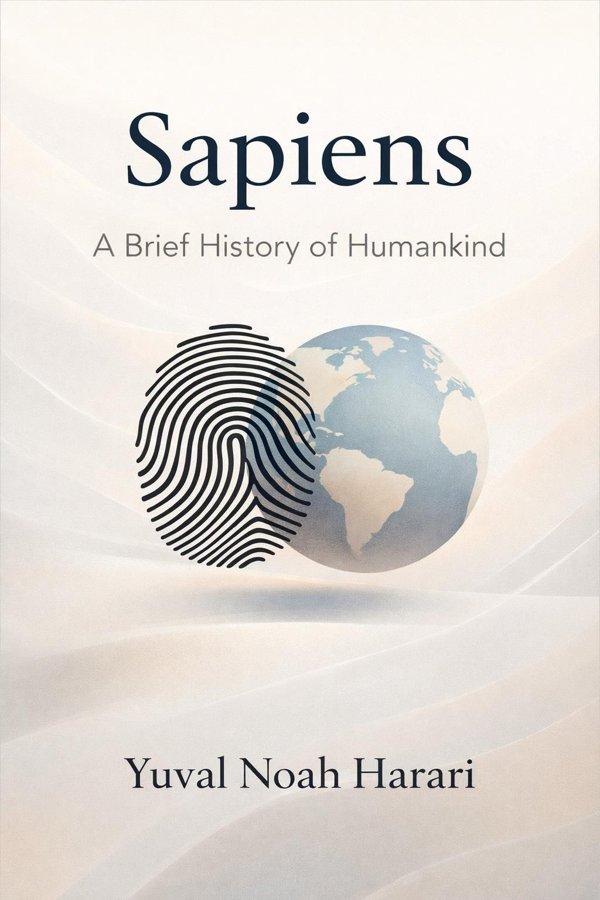
Sapiens: A Brief History of Humankind is an ambitious, big-picture history of our species, tracing how Homo sapiens rose from an unremarkable African ape to the dominant force on Earth. Yuval Noah Harari combines history, biology, anthropology, economics, and philosophy to explain the turning points that transformed human life: the Cognitive Revolution, the Agricultural Revolution, and the Scientific Revolution. Rather than offering a narrow chronological account, he asks a deeper question: what made humans uniquely capable of building empires, religions, markets, and nations? Harari’s answer is both provocative and memorable: our greatest power lies in our ability to create and believe shared stories. These collective fictions—such as money, laws, gods, and states—allow strangers to cooperate on a massive scale. The book matters because it challenges comforting assumptions about progress, happiness, and civilization. It invites readers to see modern society not as inevitable, but as the result of historical choices, accidents, and myths. As a historian and public intellectual, Harari brings scholarly range and narrative clarity to one of the most compelling questions in human history: how did we become who we are?
Key Takeaways
- 1The Cognitive Revolution and Shared Imagination — Human dominance did not begin with stronger bodies, sharper teeth, or faster legs; it began with a new kind of mind. Aro…
- 2The Agricultural Revolution: Progress or Trap? — What if one of history’s greatest achievements was also one of its greatest mistakes? Harari provocatively argues that t…
- 3Myths Make Large Societies Possible — Civilization runs not only on roads, crops, and armies, but on ideas that exist because people collectively agree they d…
 10 min read
Influence
by Robert Cialdini
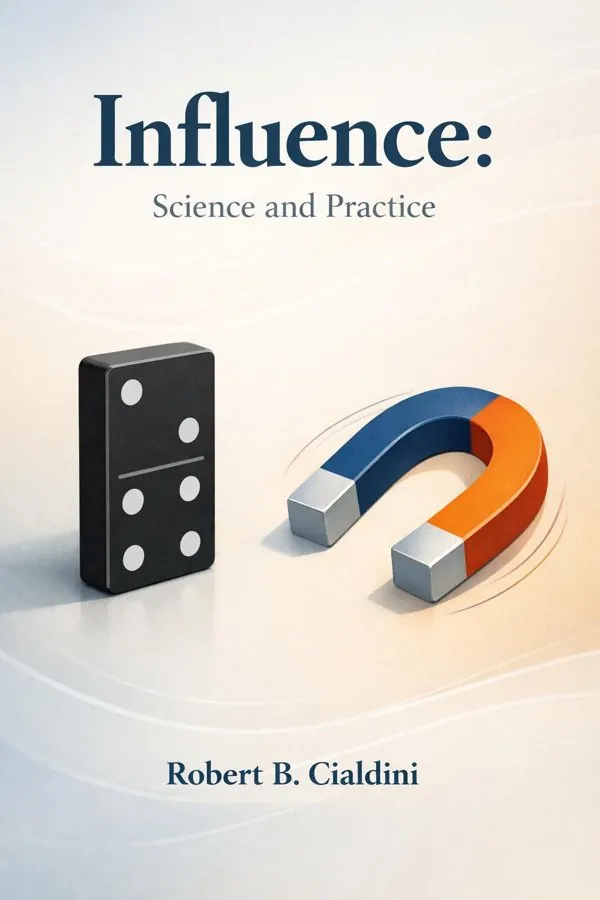
Why do people say yes when they would prefer to say no? Why do intelligent, careful individuals still fall for pressure, urgency, and persuasive framing? In Influence, Robert B. Cialdini answers these questions by uncovering the hidden psychological patterns that shape everyday decisions. Drawing on decades of research in social psychology, as well as undercover fieldwork in sales, fundraising, advertising, and compliance professions, Cialdini explains how persuasion often works not through logic alone, but through reliable mental shortcuts. He identifies six core principles of influence—reciprocity, commitment and consistency, social proof, liking, authority, and scarcity—and shows how they operate in business, relationships, politics, and consumer behavior. What makes the book so enduring is its balance of scientific rigor and practical usefulness. It helps readers become both more persuasive and more resistant to manipulation. Whether you work in marketing, negotiation, leadership, or simply want to make better decisions in a world full of influence attempts, this book offers a framework that remains remarkably relevant. Influence is not just about persuasion; it is about understanding human behavior under pressure.
Key Takeaways
- 1Weapons of Influence and Automaticity — Much of persuasion succeeds not because people are foolish, but because people are busy. Cialdini begins with a crucial …
- 2Reciprocity Creates Powerful Obligation — A small favor can create a surprisingly large sense of debt. That is the essence of reciprocity, one of the oldest and m…
- 3Commitment Shapes Future Behavior — People do not just want to make decisions; they want to appear consistent with them. Cialdini explains that once individ…
 10 min read
Poor Charlie"s Almanack
by Charles T. Munger
Poor Charlie’s Almanack is far more than a book about investing. It is a practical guide to thinking clearly, judging wisely, and living rationally in a world full of noise, ego, incentives, and error. Compiled by Peter D. Kaufman from Charles T. Munger’s speeches, essays, and public remarks, the book captures the intellectual operating system behind one of the most respected minds in business. Munger, best known as Warren Buffett’s longtime partner at Berkshire Hathaway, argues that success does not come from flashy predictions or complicated formulas. It comes from disciplined reasoning, moral clarity, patience, and a broad understanding of how the world actually works. What makes this book matter is its reach. Munger draws lessons not only from finance, but also from psychology, biology, history, economics, engineering, law, and human behavior. His famous idea of using a “latticework of mental models” offers readers a way to make better decisions in investing, business, and everyday life. Sharp, witty, and often brutally honest, Poor Charlie’s Almanack remains essential reading for anyone who wants to avoid foolish mistakes and build sound judgment over a lifetime.
Key Takeaways
- 1The Psychology of Human Misjudgment — The most dangerous enemy in decision-making is often not the market, the competition, or bad luck, but the mind itself. …
- 2The Importance of Mental Models — A single big idea is rarely enough to understand a complex world. Munger’s concept of mental models is his answer to sha…
- 3Worldly Wisdom Through Broad Learning — Real wisdom does not come from knowing more facts than everyone else; it comes from understanding the enduring patterns …
 10 min read
The 4-Hour Workweek
by Tim Ferriss
What if the real goal of work were not to fill your calendar, but to fund your freedom? In The 4-Hour Workweek, Tim Ferriss challenges one of modern life’s most persistent assumptions: that success must come from long hours, delayed gratification, and a steady climb toward retirement. Instead, he argues for “lifestyle design,” a way of structuring income, time, and mobility so you can enjoy life now rather than someday. The book blends productivity strategy, entrepreneurship advice, negotiation tactics, and unconventional career thinking into a blueprint for escaping the 9-to-5 treadmill. Ferriss explores how to eliminate low-value tasks, automate income through lean businesses, outsource routine work, and create the freedom to travel or pursue meaningful projects. Whether or not readers literally work four hours a week, the book matters because it reframes the purpose of work itself. Ferriss writes with the authority of someone who tested these ideas in his own business, transforming burnout into a highly mobile, efficient lifestyle. The result is a provocative guide for anyone who wants more results, more control, and far more life outside work.
Key Takeaways
- 1Redefine Success Through Lifestyle Design — Most people never question the script they have inherited: work hard for decades, save aggressively, retire late, and on…
- 2Fear-Setting Beats Goal-Setting — People are often less trapped by reality than by vague anxiety. Ferriss introduces one of the book’s most memorable tool…
- 3Eliminate Before You Try to Optimize — Being busy is often a form of avoidance disguised as virtue. Ferriss argues that most productivity advice starts too lat…
 10 min read
Siddhartha
by Hermann Hesse
Siddhartha is Hermann Hesse’s luminous 1922 novel about a young man’s search for enlightenment in ancient India, during the era of the Buddha. What begins as the story of a gifted Brahmin’s son quickly becomes a universal exploration of dissatisfaction, desire, suffering, love, loss, and inner awakening. Siddhartha is not content to inherit wisdom secondhand. He wants truth that is lived, not merely taught, and that longing drives him through extreme asceticism, sensual pleasure, wealth, despair, and finally a quiet, profound reconciliation with life itself. The novel matters because it speaks to a question that remains urgent today: how do we find meaning in a world full of advice, ideologies, and distractions? Hesse’s answer is subtle and enduring. Real understanding cannot be borrowed from doctrines alone; it must be discovered through experience, reflection, and attention. Drawing on Indian spiritual traditions while writing for a modern Western audience, Hesse created a work that bridges cultures without losing psychological depth. A Nobel Prize-winning author celebrated for his insight into self-realization, Hesse makes Siddhartha both a spiritual parable and a deeply human coming-of-age story.
Key Takeaways
- 1The Dissatisfied Brahmin — A privileged life can still feel empty when the soul remains unanswered. At the beginning of Siddhartha, we meet a brill…
- 2Learning Through Self-Denial’s Limits — Escaping the world is not the same as understanding it. After leaving home, Siddhartha joins the Samanas, wandering asce…
- 3The Buddha Cannot Be Imitated — Even perfect teaching cannot spare us from having to live our own path. One of the most memorable moments in Siddhartha …
Want the full summary?
Get instant access to this book summary and 100K+ more with Fizz Moment.
Get Free SummaryAvailable on App Store • Free to download
About This List
Tim Ferriss has interviewed hundreds of world-class performers on his podcast, and these are the books that come up again and again. From Stoic philosophy to power dynamics, this list is a toolkit for optimizing your life.
This list features 9 carefully selected books. With FizzRead, you can read AI-powered summaries of each book in just 15 minutes. Get the key takeaways and start applying the insights immediately.
Ready to start reading?
Get instant access to all 9 book summaries and 100K+ more with FizzRead.