
Seth Godin's Marketing Bookshelf
The books that shaped marketing legend Seth Godin's thinking on business, creativity, and making a difference.
 10 min read
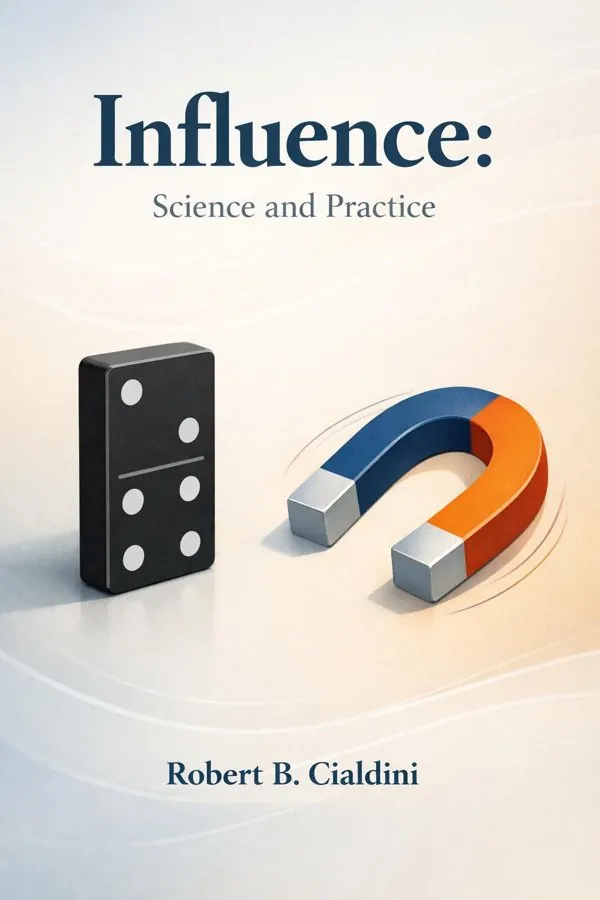
Influence
by Robert Cialdini
Why do people say yes when they would prefer to say no? Why do intelligent, careful individuals still fall for pressure, urgency, and persuasive framing? In Influence, Robert B. Cialdini answers these questions by uncovering the hidden psychological patterns that shape everyday decisions. Drawing on decades of research in social psychology, as well as undercover fieldwork in sales, fundraising, advertising, and compliance professions, Cialdini explains how persuasion often works not through logic alone, but through reliable mental shortcuts. He identifies six core principles of influence—reciprocity, commitment and consistency, social proof, liking, authority, and scarcity—and shows how they operate in business, relationships, politics, and consumer behavior. What makes the book so enduring is its balance of scientific rigor and practical usefulness. It helps readers become both more persuasive and more resistant to manipulation. Whether you work in marketing, negotiation, leadership, or simply want to make better decisions in a world full of influence attempts, this book offers a framework that remains remarkably relevant. Influence is not just about persuasion; it is about understanding human behavior under pressure.
Key Takeaways
- 1Weapons of Influence and Automaticity — Much of persuasion succeeds not because people are foolish, but because people are busy. Cialdini begins with a crucial …
- 2Reciprocity Creates Powerful Obligation — A small favor can create a surprisingly large sense of debt. That is the essence of reciprocity, one of the oldest and m…
- 3Commitment Shapes Future Behavior — People do not just want to make decisions; they want to appear consistent with them. Cialdini explains that once individ…
 10 min read
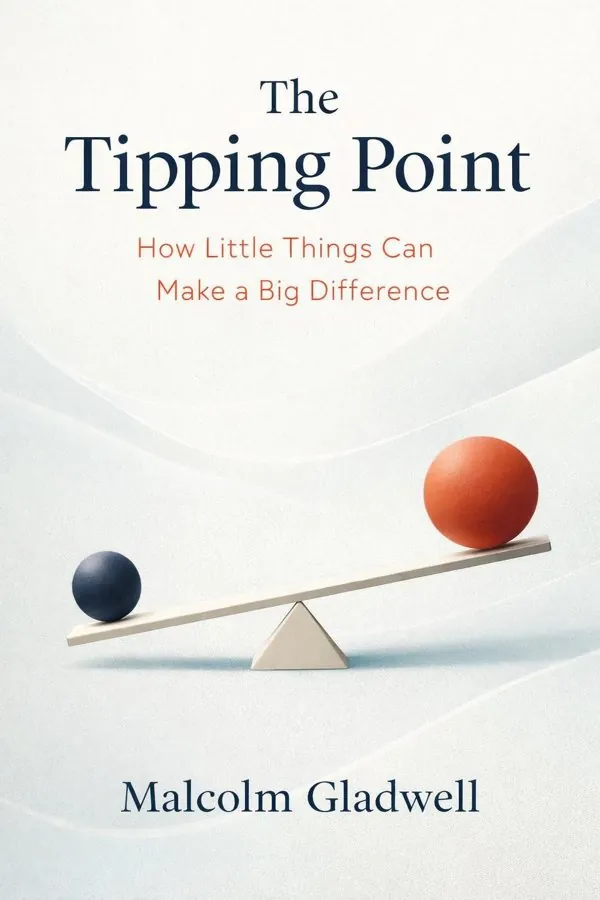
The Tipping Point
by Malcolm Gladwell
Why do some ideas explode into popularity while others disappear unnoticed? Why does one product become a craze, one message transform behavior, or one neighborhood suddenly change? In The Tipping Point, Malcolm Gladwell argues that social change often behaves like an epidemic: it starts small, spreads through specific channels, and then, at a certain moment, tips into rapid, widespread adoption. Rather than seeing trends as mysterious or random, Gladwell shows that they can often be traced to recognizable forces. Drawing on stories from public health, marketing, crime reduction, and everyday life, he introduces three core principles: the Law of the Few, the Stickiness Factor, and the Power of Context. Together, these explain why the right people, the right message, and the right environment can trigger outsized results. Gladwell writes with the instincts of a journalist and the curiosity of a social scientist. As a longtime New Yorker writer known for translating research into memorable narratives, he brings both authority and accessibility to the subject. The result is a book that changes how you think about influence, momentum, and the hidden mechanics of social change.
Key Takeaways
- 1The Law of the Few — Big social shifts often begin with surprisingly few people. One of Gladwell’s central claims is that influence is not ev…
- 2Connectors Bridge Worlds and Audiences — A message spreads faster when it can jump from one social world to another. Connectors matter because they occupy the sp…
- 3Mavens Turn Information into Momentum — People rarely act on information alone, but trusted information often starts the process. Gladwell’s Mavens are the data…
 10 min read
Rework
by Jason Fried
What if most of what you’ve been taught about business is not just outdated, but actively unhelpful? In Rework, Jason Fried and David Heinemeier Hansson argue that many of the so-called rules of entrepreneurship—writing elaborate business plans, raising outside capital, obsessing over competitors, hiring early, and working around the clock—create more friction than progress. Instead, they offer a radically simpler approach: start now, build something useful, keep costs low, communicate clearly, and grow only as much as necessary. The book matters because it replaces abstract business theory with sharp, experience-tested lessons from the founders of Basecamp, a company that built a profitable software business by ignoring much conventional wisdom. Fried writes with unusual clarity and conviction, cutting through the noise of startup culture and reminding readers that a business is not a performance—it is a product, a process, and a promise to customers. For entrepreneurs, freelancers, managers, and anyone tired of business clichés, Rework is a practical manifesto for doing less, better. It does not romanticize complexity. It shows that simplicity, focus, and action can be a real competitive advantage.
Key Takeaways
- 1Question the Planning Obsession — One of the most dangerous myths in business is that you need a complete map before taking the first step. Rework challen…
- 2Progress Comes From Starting Now — Most people are not stuck because they lack ideas; they are stuck because they keep waiting for ideal conditions. Rework…
- 3Productivity Means Less, Not More — Busyness is easy to confuse with usefulness. Rework argues that modern workplaces reward activity—meetings, emails, urge…
 10 min read
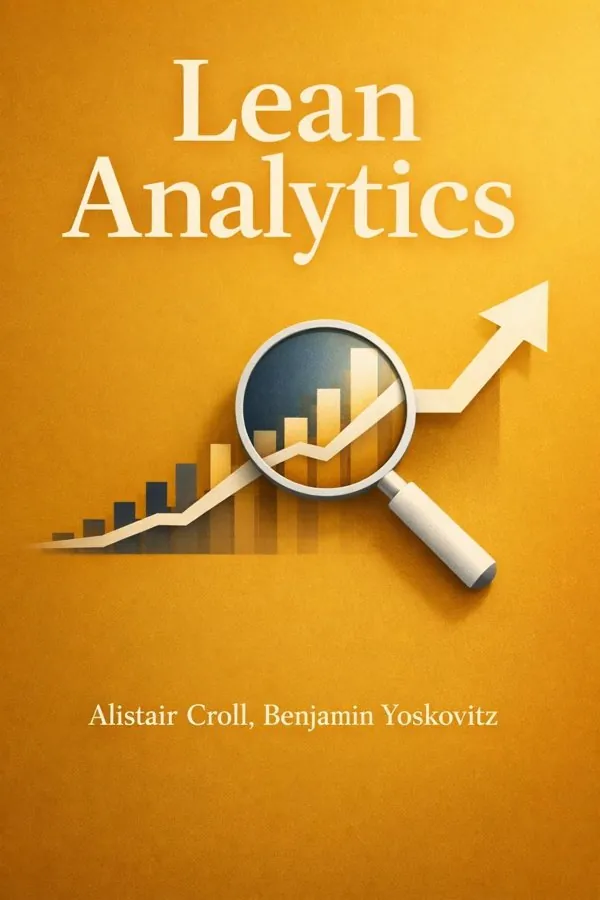
Lean Analytics
by Alistair Croll, Benjamin Yoskovitz
Most startups do not fail because founders lack passion. They fail because they mistake motion for progress and opinions for evidence. Lean Analytics shows entrepreneurs how to replace guesswork with disciplined measurement, using data not as a reporting tool but as a way to discover what really drives growth. Building on the ideas of Lean Startup, Alistair Croll and Benjamin Yoskovitz argue that every business must identify the one metric that matters most at a given moment, then use it to guide product decisions, experiments, and strategy. The book matters because modern companies can track almost everything, yet that abundance often creates confusion rather than clarity. Instead of collecting endless dashboards, the authors offer a practical framework for deciding what to measure, when to measure it, and how to act on it. Their authority comes from direct experience advising startups, building products, and working with founders under real market pressure. The result is a highly usable playbook for entrepreneurs, product teams, and growth leaders who want to build companies based on evidence, learning, and traction rather than intuition alone.
Key Takeaways
- 1Find Your One Metric That Matters — What kills many startups is not a lack of data but too much of the wrong data. Founders can easily become obsessed with …
- 2Measure According to Startup Growth Stages — A startup is not one problem repeated over time; it is a sequence of very different problems. That is why metrics that m…
- 3Start With Empathy, Not Features — Before you can measure growth, you must first understand whose problem you are solving and why it matters deeply enough …
 10 min read
The Innovator's Dilemma
by Clayton Christensen
Why do great companies fail precisely when they seem to be doing everything right? That is the unsettling question at the heart of Clayton Christensen’s The Innovator’s Dilemma, one of the most influential business books ever written. Instead of blaming collapse on poor leadership, laziness, or a lack of innovation, Christensen shows that well-managed companies often falter because they listen closely to their best customers, invest in high-performance products, and allocate resources responsibly. In other words, they fail because they follow the logic that usually makes them successful. The problem emerges when a new kind of innovation appears—one that initially looks inferior, serves fringe customers, and offers weaker profits. Christensen calls these disruptive technologies. Over time, they improve, move upmarket, and displace incumbents that ignored them. Drawing on deep research across industries, especially disk drives and heavy equipment, Christensen provides a powerful framework for understanding how markets evolve and why organizational structures can block adaptation. For managers, founders, and investors, this book remains essential because it explains not just how disruption happens, but how leaders can respond before it is too late.
Key Takeaways
- 1Sustaining and disruptive innovations differ fundamentally — The most dangerous competitive threat rarely looks dangerous at first. Christensen’s central insight is that not all inn…
- 2The disk drive industry reveals the pattern — History becomes useful when it repeats with uncomfortable consistency. Christensen’s evidence from the disk drive indust…
- 3Listening to customers can create blindness — One of the book’s most provocative arguments is that customer focus, usually considered a management virtue, can become …
 10 min read
The Design of Everyday Things
by Don Norman
Originally published in 1988 as The Psychology of Everyday Things, Don Norman’s classic argues something both simple and radical: when people struggle with products, the problem is usually not the people, but the design. From confusing doors and stove controls to complicated software and digital systems, Norman shows how everyday objects often fail because they ignore the way human beings actually think, perceive, and act. Rather than treating usability as a cosmetic afterthought, he makes it the central test of good design. What makes this book so enduring is its blend of cognitive science and practical observation. Norman explains ideas like affordances, feedback, mapping, constraints, mental models, and error prevention in clear, memorable terms, then applies them to the objects surrounding us every day. The result is a framework for making products more intuitive, safer, and more satisfying to use. Norman writes with unusual authority. A cognitive scientist, usability engineer, professor, and former Apple executive, he helped shape the modern field of human-centered design. This book remains essential not only for designers, engineers, and product teams, but for anyone who has ever pushed a door the wrong way and wondered why the door made them feel foolish.
Key Takeaways
- 1The Psychology of Everyday Actions — Every awkward interaction with a product reveals a hidden truth: people do not use objects by carefully reasoning throug…
- 2The System Image Shapes Understanding — People never interact with a product’s internal mechanism; they interact with what the product communicates about itself…
- 3Bridging Execution and Evaluation Gulfs — The hardest products are not always the most complex; they are the ones that leave users stranded between intention and …
 10 min read
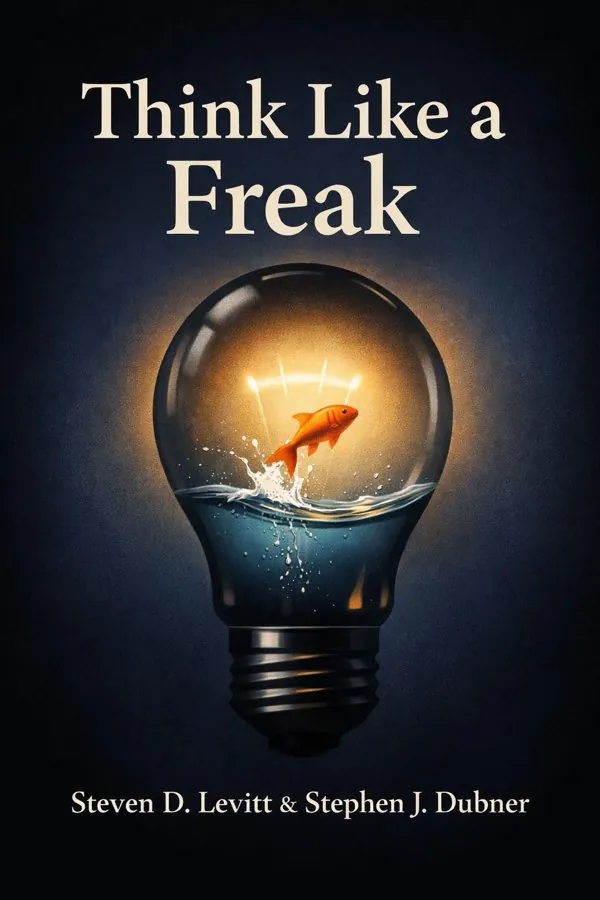
Freakonomics
by Steven Levitt
Why do people cheat in some situations but act generously in others? Why do smart policies sometimes fail, while simple changes create outsized results? These are the kinds of questions that made the Freakonomics approach famous. In this book, Steven D. Levitt and Stephen J. Dubner invite readers to go beyond surface explanations and learn a more useful skill: how to think clearly when the world seems confusing. Rather than offering motivational slogans or neat formulas, they show how curiosity, data, and a willingness to challenge assumptions can uncover the hidden logic behind human behavior. What makes this book matter is its practicality. The ideas are not limited to economics classrooms or policy debates; they apply to parenting, business, negotiation, career choices, and everyday decisions. Levitt, a University of Chicago economist known for his work on crime and incentives, teams up with Dubner, a journalist and storyteller, to translate complex insights into memorable lessons. Together, they make a compelling case that better thinking starts with humility, sharper questions, and a habit of following evidence instead of intuition. If you want to solve problems more creatively and understand why people do what they do, this book offers a powerful mental toolkit.
Key Takeaways
- 1The Value of Saying 'I Don’t Know' — Thinking like a Freak starts with the most radical admission you can make: acknowledging your ignorance. When Levitt and…
- 2Incentives and Human Behavior — One of the central ideas in the Freakonomics worldview is that incentives drive behavior, but not always in the way we e…
- 3Thinking Small — Big problems often tempt us into big, dramatic solutions. But one of the most useful lessons in this book is that meanin…
 10 min read
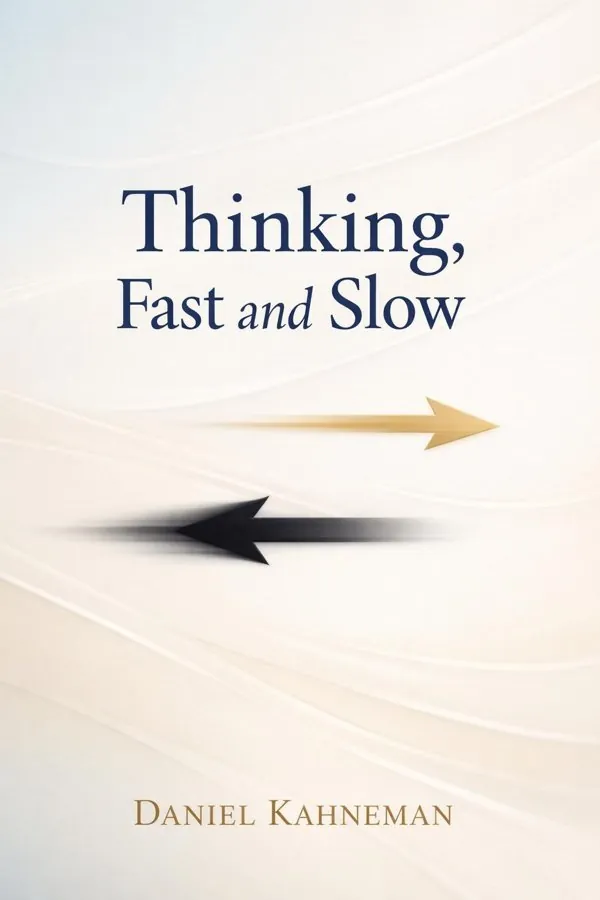
Thinking Fast and Slow
by Daniel Kahneman
Thinking Fast and Slow is one of the most influential books ever written about how the human mind works. In it, Daniel Kahneman distills decades of groundbreaking research in psychology and behavioral economics into a practical framework for understanding why people make smart decisions in some situations and surprisingly poor ones in others. His central insight is that our thinking is shaped by two systems: one that is fast, intuitive, and automatic, and another that is slow, effortful, and analytical. Most of the time, these systems cooperate efficiently. But just as often, the quick judgments of the mind lead us into predictable errors. What makes this book so powerful is that it changes how you see everyday life. From investing and hiring to relationships, planning, medicine, and public policy, Kahneman shows how biases quietly shape choices we assume are rational. He writes with the authority of a Nobel Prize-winning researcher whose work, much of it developed with Amos Tversky, transformed our understanding of judgment under uncertainty. This is not only a book about mistakes; it is a guide to better thinking, wiser decisions, and greater humility about the limits of human reason.
Key Takeaways
- 1The Two Systems That Shape Thought — Most of what you think feels deliberate, but much of it happens automatically. Kahneman’s most famous contribution is th…
- 2Heuristics Make Judgment Efficient and Flawed — The mind is built to simplify, not to calculate perfectly. To navigate uncertainty, we rely on heuristics, mental shortc…
- 3Confidence Often Exceeds What We Know — We are far better at creating explanations than at recognizing our ignorance. Kahneman shows that overconfidence is one …
Want the full summary?
Get instant access to this book summary and 100K+ more with Fizz Moment.
Get Free SummaryAvailable on App Store • Free to download
About This List
The books that shaped marketing legend Seth Godin's thinking on business, creativity, and making a difference.
This list features 8 carefully selected books. With FizzRead, you can read AI-powered summaries of each book in just 15 minutes. Get the key takeaways and start applying the insights immediately.
Ready to start reading?
Get instant access to all 8 book summaries and 100K+ more with FizzRead.