
Richard Branson's Lifetime Reading List: Adventure in Every Page
Richard Branson has shared over 65 books he believes everyone should read in a lifetime. His eclectic list spans science, history, adventure, and business — reflecting the curiosity that built the Virgin empire.
 10 min read
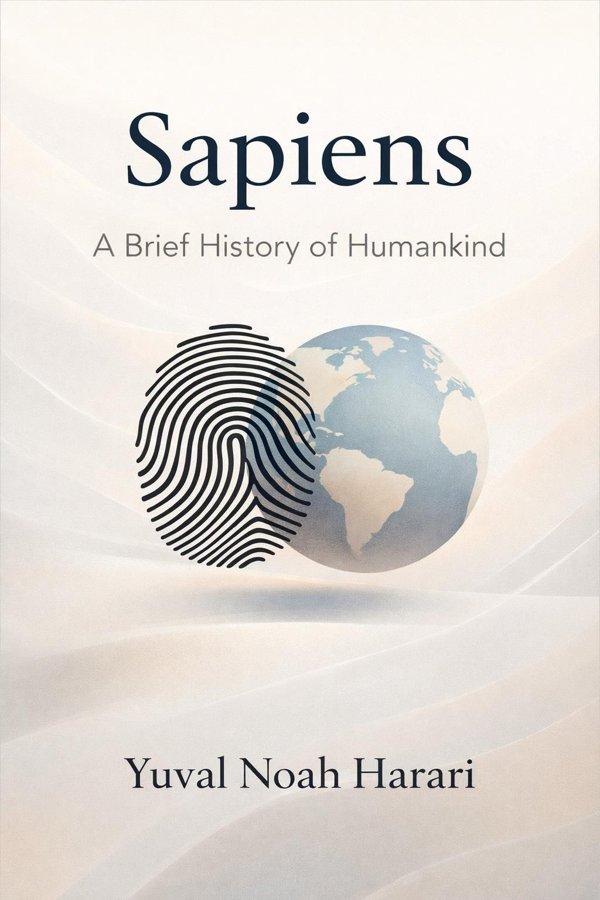
Sapiens
by Yuval Noah Harari
Sapiens: A Brief History of Humankind is an ambitious, big-picture history of our species, tracing how Homo sapiens rose from an unremarkable African ape to the dominant force on Earth. Yuval Noah Harari combines history, biology, anthropology, economics, and philosophy to explain the turning points that transformed human life: the Cognitive Revolution, the Agricultural Revolution, and the Scientific Revolution. Rather than offering a narrow chronological account, he asks a deeper question: what made humans uniquely capable of building empires, religions, markets, and nations? Harari’s answer is both provocative and memorable: our greatest power lies in our ability to create and believe shared stories. These collective fictions—such as money, laws, gods, and states—allow strangers to cooperate on a massive scale. The book matters because it challenges comforting assumptions about progress, happiness, and civilization. It invites readers to see modern society not as inevitable, but as the result of historical choices, accidents, and myths. As a historian and public intellectual, Harari brings scholarly range and narrative clarity to one of the most compelling questions in human history: how did we become who we are?
Key Takeaways
- 1The Cognitive Revolution and Shared Imagination — Human dominance did not begin with stronger bodies, sharper teeth, or faster legs; it began with a new kind of mind. Aro…
- 2The Agricultural Revolution: Progress or Trap? — What if one of history’s greatest achievements was also one of its greatest mistakes? Harari provocatively argues that t…
- 3Myths Make Large Societies Possible — Civilization runs not only on roads, crops, and armies, but on ideas that exist because people collectively agree they d…
 10 min read
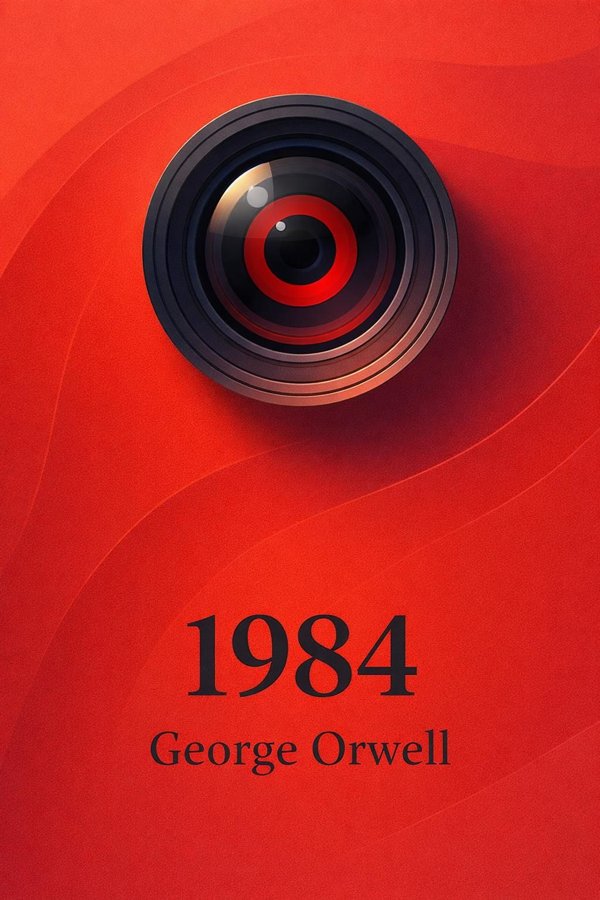
1984
by George Orwell
George Orwell’s 1984 is one of the defining novels of the modern age: a bleak, brilliant portrait of a society in which power seeks not only to control people’s actions, but to colonize their minds. Set in Oceania, a totalitarian superstate ruled by the ever-watchful figure of Big Brother, the story follows Winston Smith, a minor Party employee whose job is to falsify history so the regime always appears infallible. As Winston begins to doubt the Party’s version of reality, he embarks on a dangerous search for truth, memory, love, and freedom. What makes 1984 endure is not only its gripping story, but its deep insight into propaganda, surveillance, censorship, political language, and the fragility of objective truth. Orwell wrote with unusual authority, having witnessed imperialism, ideological extremism, war, and the manipulation of public opinion firsthand. The result is not merely a dystopian novel, but a lasting warning: when language is twisted, history rewritten, and fear normalized, human dignity itself is at risk.
Key Takeaways
- 1Oceania and Permanent War — A society is easiest to control when fear feels normal. Orwell opens 1984 by placing readers in a world divided into thr…
- 2Winston’s Job: Rewriting Reality — Who controls the past gains enormous power over the present. Winston Smith works at the Ministry of Truth, where his tas…
- 3Surveillance, Language, and Thought Control — The most effective prison is the one people carry inside themselves. In Oceania, control operates through more than poli…
 10 min read
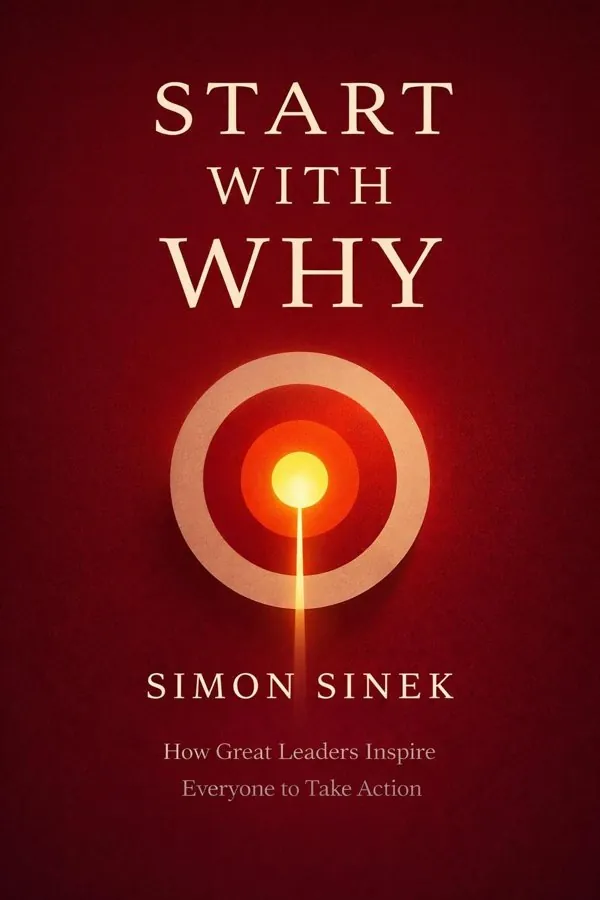
Start With Why
by Simon Sinek
Why do some leaders attract fierce loyalty while others struggle to gain genuine commitment, even when they offer better products or more resources? In Start With Why, Simon Sinek argues that the answer lies not in what organizations do, but in the deeper purpose that drives them. The book introduces a simple but powerful framework for understanding influence: the most inspiring leaders and companies think, act, and communicate from the inside out. They begin with why—the belief, cause, or mission that gives meaning to everything else. Sinek shows that when people connect to a clear purpose, they are more likely to trust, follow, and stay loyal over time. This matters in business, leadership, marketing, and even personal decision-making, because lasting success rarely comes from manipulation alone. It comes from inspiration. Drawing on examples from companies like Apple and leaders like Martin Luther King Jr., Sinek blends psychology, strategy, and storytelling into a memorable argument about how great leadership works. His authority comes from years of studying leadership patterns and helping organizations build cultures rooted in purpose rather than mere performance.
Key Takeaways
- 1The Golden Circle: Why, How, What — Most organizations know what they do, and many can explain how they do it, but very few can clearly articulate why they …
- 2Manipulation Creates Sales, Not Loyalty — It is surprisingly easy to get people to act once; it is much harder to make them believe. That is the difference betwee…
- 3People Buy Why You Do It — Human decisions are less rational than we like to believe. We often explain our choices with logic after the fact, but t…
 10 min read
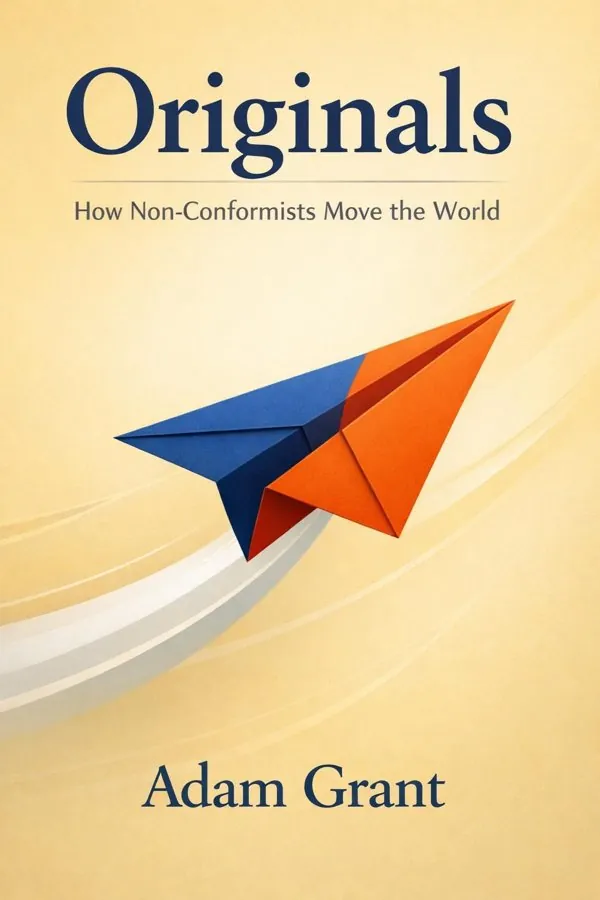
Originals
by Adam Grant
What makes someone challenge the default, question accepted wisdom, and push a new idea into the world when everyone else seems content to follow the script? In Originals, organizational psychologist Adam Grant explores exactly that question. Rather than treating creativity as a mysterious gift reserved for a few rare geniuses, Grant shows that originality is a set of behaviors, decisions, and habits that ordinary people can develop. The book examines how original thinkers spot opportunities for change, manage fear and risk, persuade skeptical audiences, and build cultures that welcome fresh thinking instead of punishing it. What makes the book especially valuable is its evidence-based approach. Grant draws on research in psychology, sociology, business, and history, while also using memorable stories from entrepreneurs, activists, executives, and artists. He argues that originality is not about reckless boldness or constant rebellion. It is about improving the status quo in intelligent, strategic ways. As one of the most influential organizational psychologists of his generation, Adam Grant brings both academic rigor and practical insight to the topic. Originals matters because in a world shaped by conformity, progress depends on people willing to think differently and act on it.
Key Takeaways
- 1Originality Begins With Questioning Defaults — Most people accept the world as it is; original thinkers ask why it has to stay that way. That simple difference is at t…
- 2Creative People Generate Many Bad Ideas — The people with the best ideas are rarely the ones with only a few ideas; they are usually the ones with the most ideas …
- 3Risk Is Often Smaller Than It Looks — Originals are not fearless gamblers; they are often skilled risk managers. One of the most surprising arguments in the b…
 10 min read
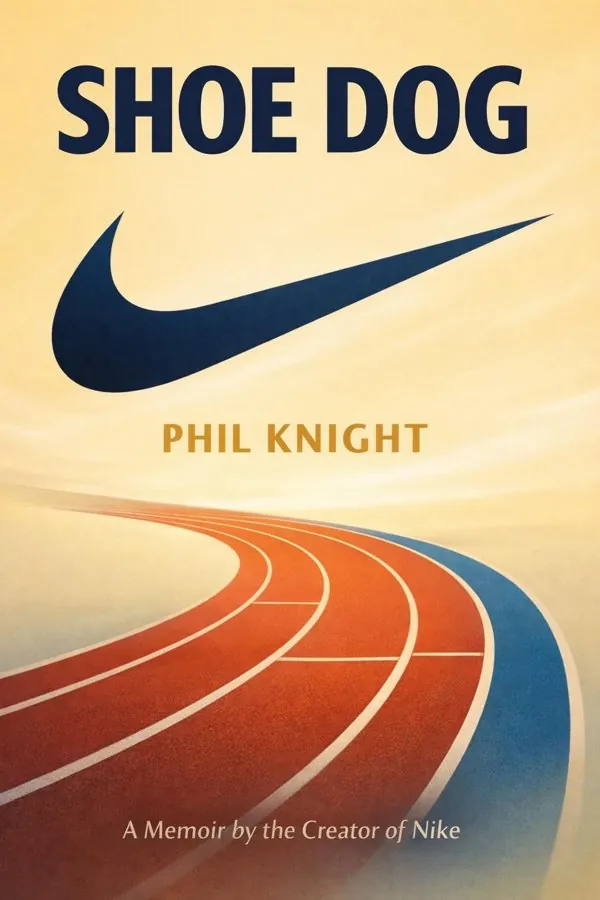
Shoe Dog
by Phil Knight
Shoe Dog es una memoria escrita por Phil Knight, fundador de Nike, que narra la historia de cómo transformó un pequeño préstamo de $50 en una de las marcas más reconocidas del mundo. El libro describe los desafíos, fracasos y triunfos que enfrentó mientras construía la empresa desde sus humildes comienzos como Blue Ribbon Sports hasta convertirse en un gigante global. Con humor, humanidad y franqueza, Knight ofrece una mirada íntima al espíritu emprendedor y la perseverancia detrás del éxito de Nike.
Key Takeaways
- 1The Crazy Idea: From Post-College Doubt to Bold Vision — After finishing my MBA at Stanford, I found myself drifting, restless. The world seemed vast and full of possibilities, …
- 2Building Blue Ribbon Sports: Hustle, Partnership, and Persistence — When I returned to Oregon, my grand dream shrunk to the size of a car trunk. I began selling Onitsuka Tiger shoes at tra…
- 3Breaking Away: Conflict with Onitsuka and the Birth of Nike
 10 min read
Thinking Fast and Slow
by Daniel Kahneman
Thinking Fast and Slow is one of the most influential books ever written about how the human mind works. In it, Daniel Kahneman distills decades of groundbreaking research in psychology and behavioral economics into a practical framework for understanding why people make smart decisions in some situations and surprisingly poor ones in others. His central insight is that our thinking is shaped by two systems: one that is fast, intuitive, and automatic, and another that is slow, effortful, and analytical. Most of the time, these systems cooperate efficiently. But just as often, the quick judgments of the mind lead us into predictable errors. What makes this book so powerful is that it changes how you see everyday life. From investing and hiring to relationships, planning, medicine, and public policy, Kahneman shows how biases quietly shape choices we assume are rational. He writes with the authority of a Nobel Prize-winning researcher whose work, much of it developed with Amos Tversky, transformed our understanding of judgment under uncertainty. This is not only a book about mistakes; it is a guide to better thinking, wiser decisions, and greater humility about the limits of human reason.
Key Takeaways
- 1The Two Systems That Shape Thought — Most of what you think feels deliberate, but much of it happens automatically. Kahneman’s most famous contribution is th…
- 2Heuristics Make Judgment Efficient and Flawed — The mind is built to simplify, not to calculate perfectly. To navigate uncertainty, we rely on heuristics, mental shortc…
- 3Confidence Often Exceeds What We Know — We are far better at creating explanations than at recognizing our ignorance. Kahneman shows that overconfidence is one …
 10 min read
Lean Analytics
by Alistair Croll, Benjamin Yoskovitz
Most startups do not fail because founders lack passion. They fail because they mistake motion for progress and opinions for evidence. Lean Analytics shows entrepreneurs how to replace guesswork with disciplined measurement, using data not as a reporting tool but as a way to discover what really drives growth. Building on the ideas of Lean Startup, Alistair Croll and Benjamin Yoskovitz argue that every business must identify the one metric that matters most at a given moment, then use it to guide product decisions, experiments, and strategy. The book matters because modern companies can track almost everything, yet that abundance often creates confusion rather than clarity. Instead of collecting endless dashboards, the authors offer a practical framework for deciding what to measure, when to measure it, and how to act on it. Their authority comes from direct experience advising startups, building products, and working with founders under real market pressure. The result is a highly usable playbook for entrepreneurs, product teams, and growth leaders who want to build companies based on evidence, learning, and traction rather than intuition alone.
Key Takeaways
- 1Find Your One Metric That Matters — What kills many startups is not a lack of data but too much of the wrong data. Founders can easily become obsessed with …
- 2Measure According to Startup Growth Stages — A startup is not one problem repeated over time; it is a sequence of very different problems. That is why metrics that m…
- 3Start With Empathy, Not Features — Before you can measure growth, you must first understand whose problem you are solving and why it matters deeply enough …
 10 min read
Long Walk to Freedom
by Nelson Mandela
Long Walk to Freedom is far more than the life story of Nelson Mandela. It is a firsthand account of one of the twentieth century’s most significant moral and political struggles: the fight against apartheid in South Africa. In this autobiography, Mandela traces his path from a rural childhood in the Transkei to his emergence as a lawyer, activist, political prisoner, negotiator, and ultimately the first democratically elected president of South Africa. Along the way, he reveals not only the public milestones of history, but also the private costs of commitment, leadership, and sacrifice. What makes this book so powerful is its combination of intimacy and historical weight. Mandela does not present himself as a flawless hero. Instead, he writes with humility about fear, error, discipline, grief, and endurance. His authority comes not from theory, but from lived experience: decades spent resisting racial oppression, including 27 years in prison. The result is a memoir that illuminates how courage is built, how dignity survives under pressure, and how reconciliation can become a political force. Long Walk to Freedom matters because it shows that freedom is never simply won once; it must be continually defended, shared, and deepened.
Key Takeaways
- 1Childhood, Tradition, and Early Identity — A leader’s public convictions are often rooted in private beginnings. Mandela’s early life in Mvezo and Qunu, in the Tra…
- 2Education as a Door to Awakening — Education does more than prepare a person for work; it can awaken a person to injustice. Mandela’s schooling, especially…
- 3Johannesburg and Political Consciousness — Sometimes freedom begins when comfort ends. Mandela’s move to Johannesburg transformed him from a sheltered young man in…
 10 min read
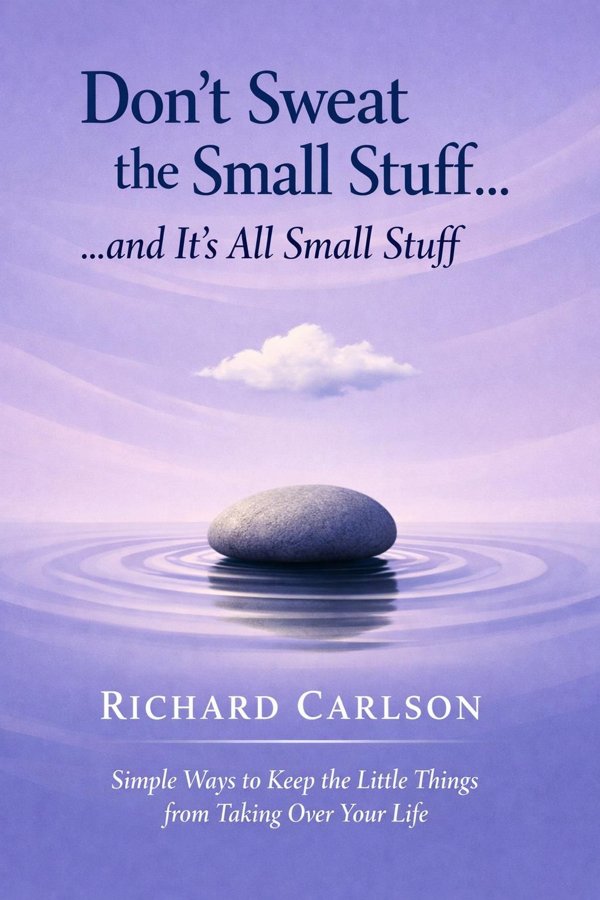
Don't Sweat the Small Stuff... and It's All Small Stuff
by Richard Carlson
Richard Carlson’s Don't Sweat the Small Stuff... and It’s All Small Stuff is a practical guide to reclaiming peace of mind in a world that constantly invites overreaction. Rather than offering a complex theory of happiness, Carlson presents a simple but powerful idea: much of our stress comes from how we respond to ordinary inconveniences, not from the inconveniences themselves. Through brief, accessible chapters, he shows readers how to let go of irritation, stop turning minor problems into emotional emergencies, and approach daily life with more perspective, patience, and kindness. What makes the book enduring is its focus on everyday psychology. Carlson was a psychotherapist who understood that people rarely collapse only under major crises; more often, they wear themselves down through constant mental friction—worrying, rushing, judging, controlling, and replaying small frustrations. His advice is gentle, practical, and deeply applicable, whether you are dealing with work pressure, relationship tension, family stress, or your own inner restlessness. This book matters because it reminds us that a calmer life is not built by eliminating every problem, but by changing the way we meet them.
Key Takeaways
- 1Perspective Creates Emotional Reality — A surprising amount of stress is self-created by the meaning we attach to events. Carlson’s central insight is that life…
- 2Let Go of the Need to Control — Much anxiety comes from trying to manage what was never fully ours to manage. Carlson argues that people often believe p…
- 3Live in the Present, Not the Projection — Many people miss the life they are living because they are busy mentally rehearsing the next problem. Carlson repeatedly…
Want the full summary?
Get instant access to this book summary and 100K+ more with Fizz Moment.
Get Free SummaryAvailable on App Store • Free to download
About This List
Richard Branson has shared over 65 books he believes everyone should read in a lifetime. His eclectic list spans science, history, adventure, and business — reflecting the curiosity that built the Virgin empire.
This list features 9 carefully selected books. With FizzRead, you can read AI-powered summaries of each book in just 15 minutes. Get the key takeaways and start applying the insights immediately.
Ready to start reading?
Get instant access to all 9 book summaries and 100K+ more with FizzRead.