
Bill Gates' Reading List: The Books That Shaped a Visionary
Bill Gates is one of the world's most voracious readers, sharing his favorites every year on GatesNotes. From science and history to business strategy, these are the books that shaped the mind behind Microsoft and the Gates Foundation.
 10 min read
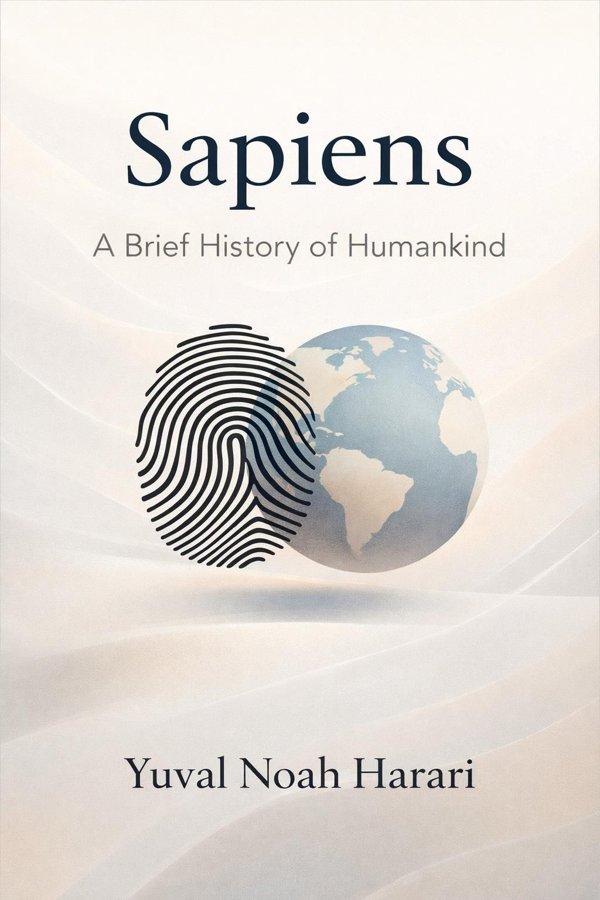
Sapiens
by Yuval Noah Harari
Sapiens: A Brief History of Humankind is an ambitious, big-picture history of our species, tracing how Homo sapiens rose from an unremarkable African ape to the dominant force on Earth. Yuval Noah Harari combines history, biology, anthropology, economics, and philosophy to explain the turning points that transformed human life: the Cognitive Revolution, the Agricultural Revolution, and the Scientific Revolution. Rather than offering a narrow chronological account, he asks a deeper question: what made humans uniquely capable of building empires, religions, markets, and nations? Harari’s answer is both provocative and memorable: our greatest power lies in our ability to create and believe shared stories. These collective fictions—such as money, laws, gods, and states—allow strangers to cooperate on a massive scale. The book matters because it challenges comforting assumptions about progress, happiness, and civilization. It invites readers to see modern society not as inevitable, but as the result of historical choices, accidents, and myths. As a historian and public intellectual, Harari brings scholarly range and narrative clarity to one of the most compelling questions in human history: how did we become who we are?
Key Takeaways
- 1The Cognitive Revolution and Shared Imagination — Human dominance did not begin with stronger bodies, sharper teeth, or faster legs; it began with a new kind of mind. Aro…
- 2The Agricultural Revolution: Progress or Trap? — What if one of history’s greatest achievements was also one of its greatest mistakes? Harari provocatively argues that t…
- 3Myths Make Large Societies Possible — Civilization runs not only on roads, crops, and armies, but on ideas that exist because people collectively agree they d…
 10 min read
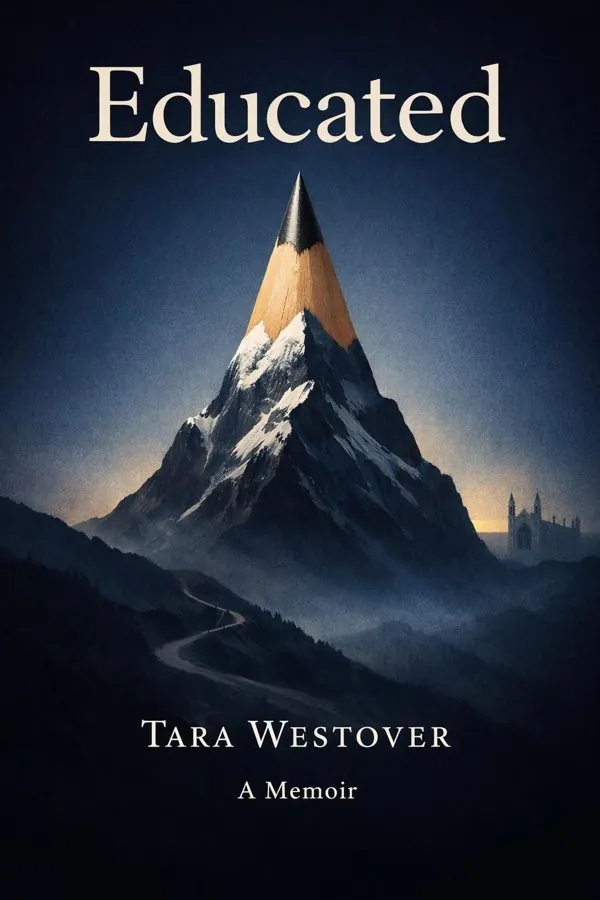
Educated
by Tara Westover
What does it mean to educate yourself when everything around you teaches you to stay small, silent, and obedient? In Educated, Tara Westover answers that question through one of the most striking memoirs of recent years. Her story begins in rural Idaho, in a survivalist Mormon household cut off from mainstream institutions, where hospitals, schools, and the government were treated as threats rather than supports. From that unlikely starting point, Westover eventually makes her way to Brigham Young University and later earns a doctorate in history from the University of Cambridge. What makes this memoir so powerful is that it is not simply a success story about academic achievement. It is a deeply human account of how knowledge changes a person from the inside out. Westover shows that education is not just the accumulation of facts; it is the painful, liberating process of learning to question the stories that shaped you. Her memoir matters because it speaks to anyone who has ever struggled to separate love from control, loyalty from self-betrayal, or family truth from personal truth. With honesty, emotional precision, and hard-won insight, Westover turns her life into a profound meditation on identity, memory, and the cost of becoming yourself.
Key Takeaways
- 1From the Mountain: Childhood and Isolation — Westover’s childhood at the foot of Buck’s Peak is the foundation of everything that follows. The mountain is more than …
- 2Work, Fear, and the Awakening of a Mind — In the junkyard, work becomes Westover’s first education in risk, hierarchy, and survival. She learns by doing, but what…
- 3Learning the World Beyond: From the Mountain to BYU — Westover’s move from her isolated upbringing to Brigham Young University marks one of the memoir’s most dramatic shifts.…
 10 min read
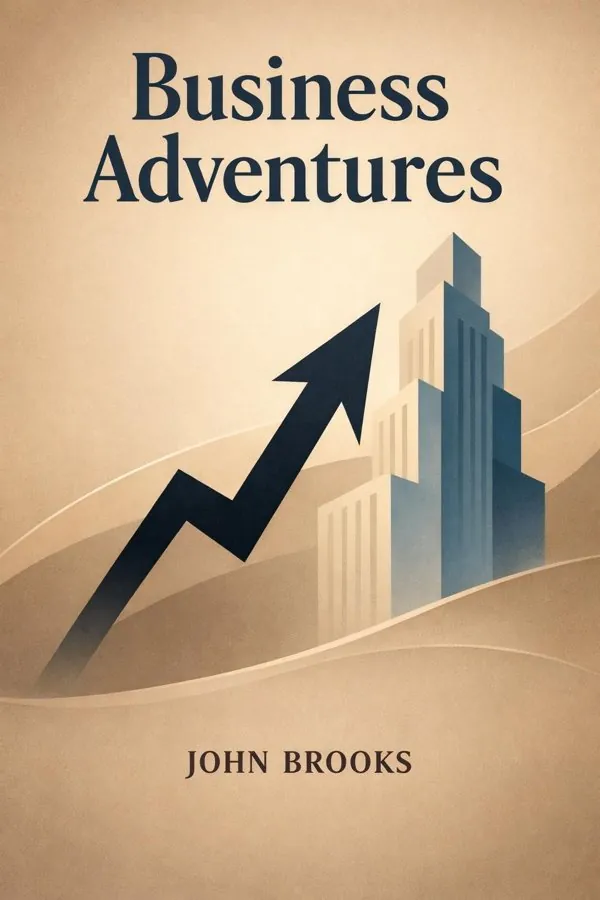
Business Adventures
by John Brooks
Business Adventures by John Brooks is a masterful collection of twelve narrative essays about some of the most revealing episodes in twentieth-century American business. First published in The New Yorker and later collected in book form, these stories move from market panics and product failures to currency crises, shareholder battles, and the hidden systems that keep modern capitalism running. Although the events took place decades ago, the book remains strikingly current because Brooks was never really writing only about stocks, cars, taxes, or corporate meetings. He was writing about people under pressure: executives defending bad decisions, investors chasing confidence, bureaucracies wrestling with complexity, and institutions trying to preserve credibility when events turn against them. That is why the book still resonates with leaders, founders, investors, and curious readers today. Brooks had a rare gift: he combined the reporting discipline of a financial journalist with the narrative grace of a novelist. The result is a business book that does not lecture in abstractions, but reveals enduring truths through vivid stories. Business Adventures matters because it shows that markets change, technologies evolve, but human nature in business barely does.
Key Takeaways
- 1Markets Run on Emotion as Much — A stock market decline is never only about numbers; it is also about the speed with which confidence can evaporate. In “…
- 2Great Products Can Still Fail Spectacularly — The Edsel is remembered as a punchline, but Brooks treats it as something more useful: a case study in how large organiz…
- 3Complex Systems Hide Everyday Fragility — One of Brooks’s most surprising achievements is making administrative machinery feel dramatic. In “The Federal Income Ta…
 10 min read
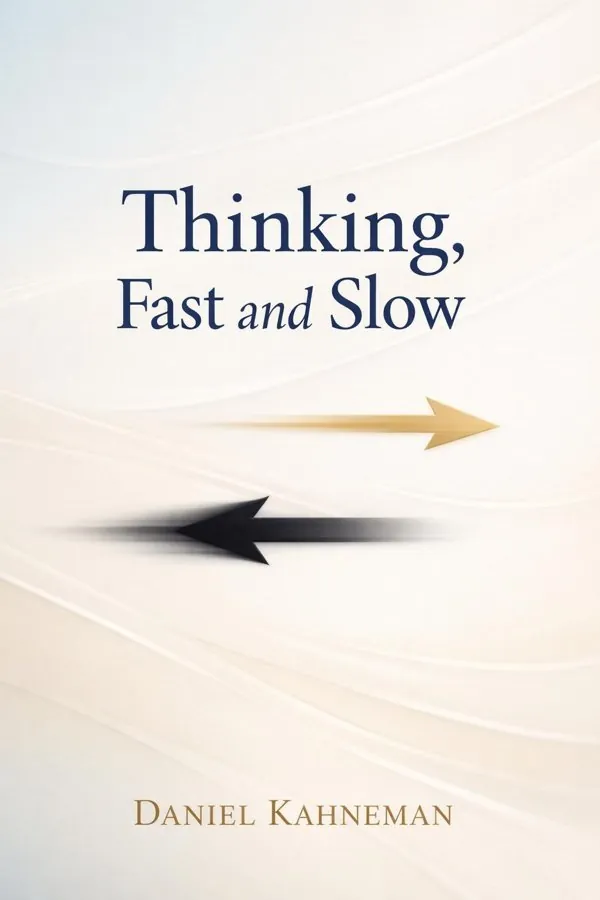
Thinking Fast and Slow
by Daniel Kahneman
Thinking Fast and Slow is one of the most influential books ever written about how the human mind works. In it, Daniel Kahneman distills decades of groundbreaking research in psychology and behavioral economics into a practical framework for understanding why people make smart decisions in some situations and surprisingly poor ones in others. His central insight is that our thinking is shaped by two systems: one that is fast, intuitive, and automatic, and another that is slow, effortful, and analytical. Most of the time, these systems cooperate efficiently. But just as often, the quick judgments of the mind lead us into predictable errors. What makes this book so powerful is that it changes how you see everyday life. From investing and hiring to relationships, planning, medicine, and public policy, Kahneman shows how biases quietly shape choices we assume are rational. He writes with the authority of a Nobel Prize-winning researcher whose work, much of it developed with Amos Tversky, transformed our understanding of judgment under uncertainty. This is not only a book about mistakes; it is a guide to better thinking, wiser decisions, and greater humility about the limits of human reason.
Key Takeaways
- 1The Two Systems That Shape Thought — Most of what you think feels deliberate, but much of it happens automatically. Kahneman’s most famous contribution is th…
- 2Heuristics Make Judgment Efficient and Flawed — The mind is built to simplify, not to calculate perfectly. To navigate uncertainty, we rely on heuristics, mental shortc…
- 3Confidence Often Exceeds What We Know — We are far better at creating explanations than at recognizing our ignorance. Kahneman shows that overconfidence is one …
 10 min read
The Great Gatsby
by F. Scott Fitzgerald
The Great Gatsby is a short novel with an unusually long shadow. Set in the glittering world of Long Island and New York during the Roaring Twenties, it follows Nick Carraway as he becomes entangled with his wealthy, enigmatic neighbor Jay Gatsby—a man who has built a dazzling life around a single impossible desire: to win back Daisy Buchanan, the woman he loved before the war. What begins as a story of romance and ambition gradually reveals itself as something darker: a study of class, self-invention, moral emptiness, and the fragile promises of the American Dream. Fitzgerald’s genius lies in how he turns parties, mansions, and social rituals into symbols of a culture intoxicated by money yet hollow at its core. More than a portrait of an era, the novel remains enduring because it asks timeless questions: Can we remake ourselves? Can love survive illusion? And what happens when our dreams are built on denial? Fitzgerald, one of the defining voices of the Jazz Age, gives these questions unforgettable emotional force.
Key Takeaways
- 1Nick’s Arrival in a Divided World — A new place often reveals more about a society than those born into it ever notice. Fitzgerald begins with Nick Carraway…
- 2Gatsby’s Entrance and a Secret Love — Some people do not simply enter a story; they arrive as if they have already become a legend. Gatsby’s introduction is c…
- 3Wealth, Class, and Invisible Barriers — Money can buy access, but it cannot always buy acceptance. One of the novel’s sharpest insights is that wealth is not a …
 10 min read
Stranger in a Strange Land
by Robert A. Heinlein
What would human society look like if examined by someone who was biologically human but culturally alien? That is the provocative premise of Robert A. Heinlein’s Stranger in a Strange Land, one of the most influential science fiction novels of the twentieth century. First published in 1961, the book follows Valentine Michael Smith, the sole surviving child of a lost Mars mission, who is raised by Martians and later returned to Earth. His encounter with human law, politics, religion, sex, and social custom becomes a powerful lens through which Heinlein challenges what most people take for granted. More than a story about first contact, this novel is a philosophical thought experiment disguised as speculative fiction. Heinlein uses Smith’s innocence and otherworldly perspective to ask unsettling questions: Why do people obey systems they barely understand? Why are love and possession so often confused? Why do religion and power become entangled? Heinlein, one of science fiction’s defining voices, brings his trademark mix of intellectual daring, social criticism, and narrative provocation to every page. The result is a book that remains controversial, ambitious, and deeply memorable.
Key Takeaways
- 1The Man from Mars — Sometimes the sharpest way to understand humanity is to look at it through the eyes of someone who does not belong to it…
- 2Learning Humanity at Jubal’s House — Education is not just the transfer of information; it is the painful and liberating process of learning how a society th…
- 3Language Shapes Reality and Consciousness — The words available to us do more than describe reality; they train us to notice some parts of experience and ignore oth…
 10 min read
Team of Rivals
by Doris Kearns Goodwin
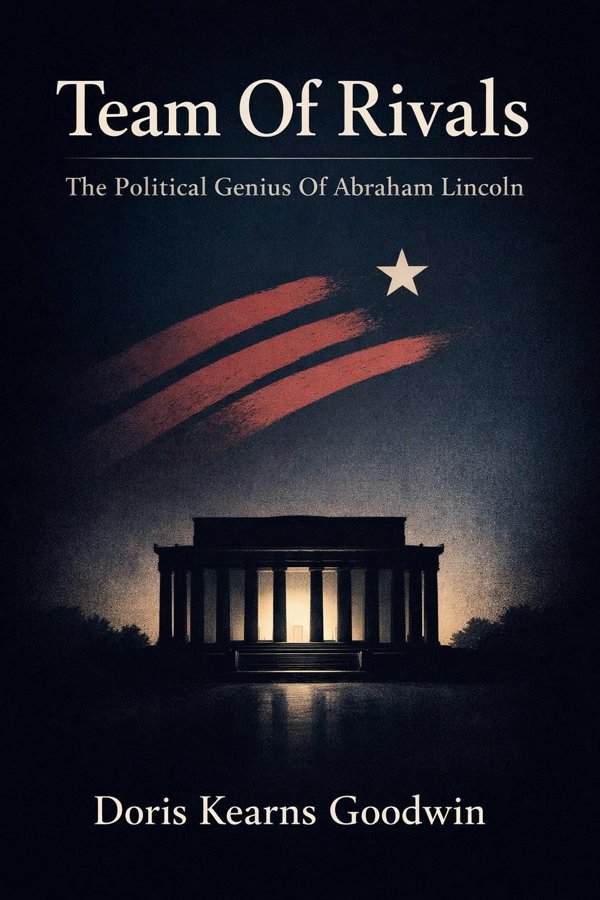
Team of Rivals by Doris Kearns Goodwin is a sweeping historical biography that examines how Abraham Lincoln rose from relative obscurity to become one of America’s greatest presidents by surrounding himself with strong-willed political opponents. Rather than choosing comfort, loyalty, or flattery, Lincoln built a cabinet that included the very men he had defeated for the Republican nomination in 1860. Goodwin shows how this unusual decision became one of his greatest strengths during the nation’s darkest crisis: the Civil War. The book is not only a portrait of Lincoln’s leadership, but also an exploration of ambition, ego, conflict, persuasion, and moral growth in public life. It matters because it reveals that effective leadership is rarely about dominating others; it is often about understanding them, channeling their talents, and holding a fractured coalition together under extreme pressure. Goodwin brings exceptional authority to the subject as a Pulitzer Prize-winning historian known for making complex political history vivid, human, and deeply relevant. Her account turns a familiar president into a living example of emotional intelligence, humility, and strategic courage.
Key Takeaways
- 1Great leaders welcome powerful rivals — A weak leader collects admirers; a strong leader recruits competitors. One of the most striking insights in Team of Riva…
- 2Emotional intelligence can outweigh pedigree — Brilliance opens doors, but emotional balance determines what happens after you enter. Goodwin contrasts Lincoln with ma…
- 3Ambition must be harnessed, not erased — Ambition is dangerous only when it has no worthy outlet. Team of Rivals presents a political world overflowing with ego,…
 10 min read
Mindset
by Carol Dweck
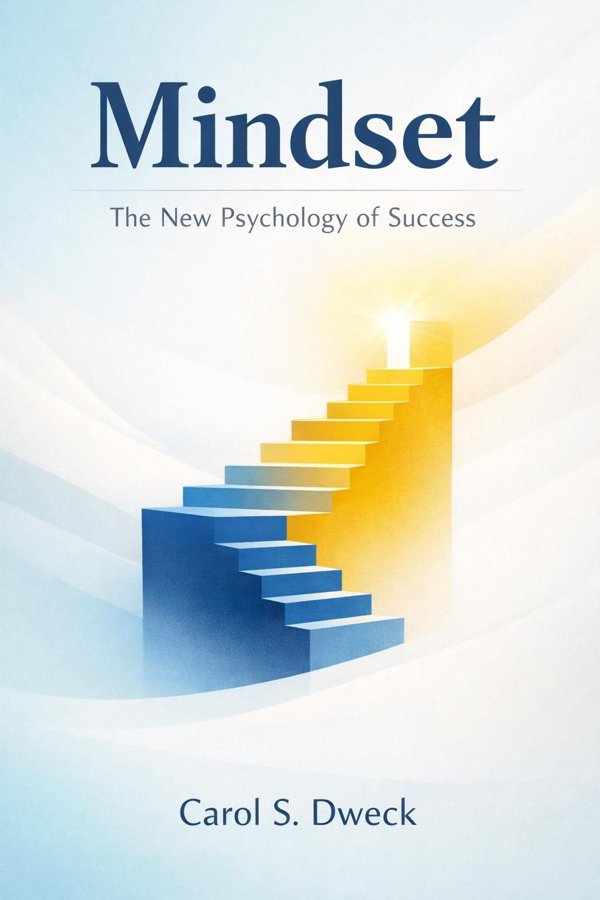
Why do some people bounce back from failure, while others shut down after one setback? Why do certain students, athletes, and professionals keep improving long after their early talent stops carrying them? In Mindset, psychologist Carol S. Dweck offers a powerful answer: the stories we tell ourselves about ability shape nearly everything we do. At the center of the book is a simple but life-changing distinction between a fixed mindset—the belief that intelligence, talent, and character are largely set—and a growth mindset, the belief that these qualities can be developed through effort, strategy, and feedback. That idea sounds straightforward, but its implications are profound. It affects how we handle criticism, how we parent, how we teach, how we lead, and even how we love. Drawing on decades of research in motivation and personality, Dweck shows that success is not just about natural gifts. It is also about how people interpret challenge, effort, and failure. This book matters because it replaces the myth of effortless genius with a more hopeful, practical truth: people can change, improve, and become more capable over time.
Key Takeaways
- 1The Nature of Mindset: Fixed versus Growth — From childhood onward, people absorb beliefs about what ability means. A child who hears “You’re so smart” may start to …
- 2Inside the Fixed Mindset: The Need to Prove — The fixed mindset often hides behind ambition. On the surface, it can look like confidence, high standards, or competiti…
- 3Discovering the Growth Mindset: The Power to Develop — The growth mindset is not blind optimism or the idea that anyone can become anything overnight. It is a practical belief…
Want the full summary?
Get instant access to this book summary and 100K+ more with Fizz Moment.
Get Free SummaryAvailable on App Store • Free to download
About This List
Bill Gates is one of the world's most voracious readers, sharing his favorites every year on GatesNotes. From science and history to business strategy, these are the books that shaped the mind behind Microsoft and the Gates Foundation.
This list features 8 carefully selected books. With FizzRead, you can read AI-powered summaries of each book in just 15 minutes. Get the key takeaways and start applying the insights immediately.
Ready to start reading?
Get instant access to all 8 book summaries and 100K+ more with FizzRead.